
Summary
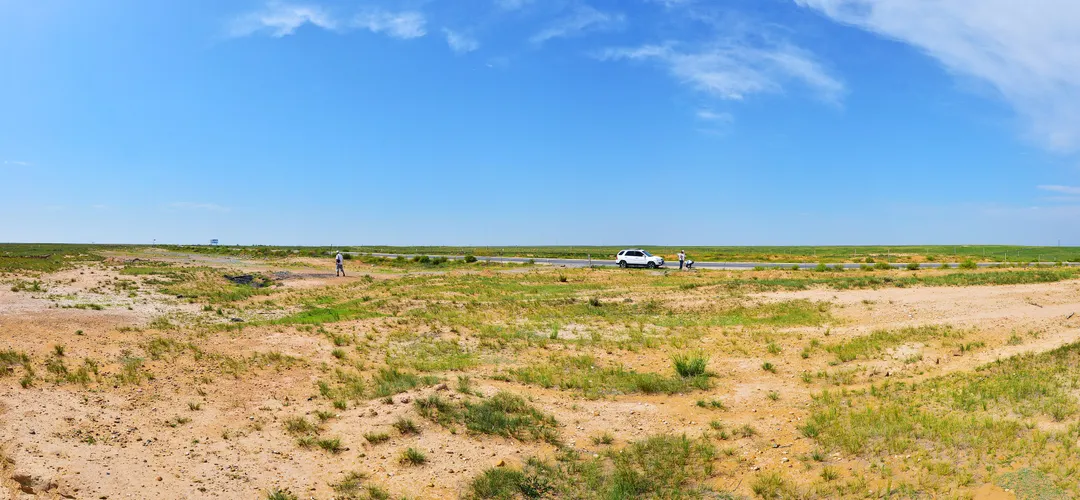
Ordos (鄂尔多斯) sits on the Ordos Plateau in southwestern Inner Mongolia, tucked inside the great northern bend of the Yellow River, roughly 700 km west of Beijing. The workable window runs from May into September: grassland turns green by June, summer afternoons rarely pass 30 °C, and winter is genuinely harsh. Two to three days cover the core — the museum quarter and lakeside squares of Kangbashi, the Genghis Khan shrine at Ejin Horo about 45 km south, and the singing dunes of Xiangshawan roughly 55 km north of Dongsheng, where the Kubuqi Desert runs along the Yellow River's south bank.
This guide is written for travelers deciding whether Ordos earns a stop on a Beijing–Xi'an–Yinchuan loop, and how to spend those days without a car-dependent failure. Every figure below was checked against current listings and our own 3-day Ordos itinerary; the page was last verified on 2026-10-12.
Why Ordos
Ordos is a prefecture-level city of about 2.2 million people spread across roughly 87,000 square kilometres — an area close to the size of Austria — so the first thing to internalise is that the sights are far apart and the "city" is three separate places: Dongsheng, the older commercial centre; Kangbashi, the purpose-built administrative district south of it; and the banner lands in between, where the shrines, deserts and grasslands sit.
The region's wealth is recent and visible. Coal output has run well over half a billion tonnes a year — the largest of any Chinese city — alongside natural gas and the cashmere industry that gave the Ordos knitwear brand its name. The money built a new district that outside media once called a ghost city; the fairer 2026 description is a spacious, under-filled capital with broad squares, a good museum and hotel rates well below coastal China's.
What pulls visitors off the highway is older than any of that. The name Ordos derives from ordo, the khan's tent; keepers called the Darkhad are said to have tended the Genghis Khan shrine continuously since 1227, and the current halls at Ejin Horo date from the 1954 rebuild. The plateau carries both of Inner Mongolia's contrasting desert faces — the Kubuqi, China's seventh-largest desert at about 18,600 square kilometres, pinned along the Yellow River's south bank, and the Mu Us sandy lands to the south — plus scattered grassland used for summer Naadam gatherings.
The honest trade-offs: distances are long and public transport between sights is thin, so day trips mean taxis, hired drivers or tour shuttles; signage in English is patchier than in Hangzhou or Chengdu; and winter (November through March) is for business travelers only, with January nights below −15 °C. Ordos rewards travelers with a full two or three days and punishes itineraries that treat it as a two-hour photo stop.
Top Attractions
Kangbashi: the museum quarter and the lakeside
Start at the Ordos Museum, opened in 2011 inside a rippled, molten-looking steel shell designed by the Beijing firm MAD. Its galleries walk through the plateau's grassland and nomad history, with good sections on the Northern Bronze culture and the Mongol period; entry is free with passport registration, and like most Chinese museums it expects a Monday closure. Give it two hours.
Around it, Kangbashi is a walkable cluster of sculptural buildings — the library stacked like tilted books, the opera house, the twin towers over Genghis Khan Square. The Ulanmulun lake promenade fills up after dusk in summer, when families and a fountain show draw the district's modest crowds; the restored-lanes dining strip at Kangzhen is the easiest place to end the evening. Kangbashi only became a formal city district in 2016, which explains the odd mixture of monumental planning and light foot traffic.
Genghis Khan Mausoleum at Ejin Horo
About 45 km south of Kangbashi on the Baotou–Xi'an highway corridor, this is the site Mongol families have made pilgrimage to for centuries. Be clear on what it is: the burial place of Genghis Khan is unrecorded and almost certainly unmarked, and this complex is a cenotaph shrine holding venerated objects, tended by the same keeper families since 1227. The present halls, with their three mongolian yurt-shaped gilded roofs, were rebuilt at the site in 1954 after wartime relocation.
Two ticketed units share the area and are easy to confuse. The shrine itself — a national key heritage site — charges around 90 CNY, and the surrounding 5A tourist area adds performances such as the Ordos Wedding show and horse displays for tickets in the 120 CNY range; opening hours run roughly 07:30-18:30 in season. Budget half a day including transport. Read the 5-day Ordos itinerary if you want to pair it with the deeper desert day that follows.
Xiangshawan: the singing sands
Xiangshawan (Whistling Dune Bay) sits at the eastern end of the Kubuqi, in Dalad Banner about 55 km north of Dongsheng — and, usefully, about 50 km south of Baotou, so it works as an excursion from either city. A cable car carries you over the river terrace onto the dune crest; sand walls rise around 100 metres, sled runs hum on dry afternoons — the acoustic trick that gives the place its name — and camel lines, zip lines and a lotus-shaped desert hotel occupy the bay below.
Recent listings put basic entry around 80-120 CNY by season, with the activity-island packages that most visitors actually need at roughly 260-380 CNY (cable car included); confirm on the official site before you go, and bring a closed face covering for wind. Half a day is enough; full-day visitors should chase the late-afternoon light, when the dune ridge line photographs best.
Seven-Star Lake and the deep Kubuqi
Ninety minutes further west, in Hanggin Banner, Seven-Star Lake strings seven lakes through the dune field, with boardwalks, bird hides and the only accommodation that puts you inside the desert overnight. It is the right third day for photographers and stargazers, and overkill for a first visit.
Where to Stay
Sleep in Kangbashi if this is your first visit: the museum, the square and the lake are walkable, the Ordos railway station is here, and mid-range chains run 200-350 CNY a night. Dongsheng costs a little less and eats better late at night, but adds 25-30 km to every sightseeing run. The desert lodges — the lotus hotel inside Xiangshawan and the camps at Seven-Star Lake — price from about 400 CNY and are worth one night rather than two. Peak pressure comes in July-August and the October holiday week; book two or three weeks out then, walk-in otherwise.
Gastronomy
The plateau table is Mongolian-Chinese: hand-held boiled mutton (shouba rou) dipped in nothing but salt, milk tea salted and stirred with fried millet, yogurt skin and dried cheese curds as snacks, and lamb stews with sand chives gathered from the dunes' edge. Yellow River fish appears on banquet menus in the banner towns. A breakfast of milk tea and fried dough runs 10-15 CNY; a proper mutton dinner runs 60-100 CNY per person. Kangzhen's lanes in Kangbashi compress the whole list into one evening's walk, with the caveat that prices there run tourist-level.
Practical Information
Getting there
Ordos Ejin Horo International Airport (DSN) sits 18 km from central Kangbashi — a taxi costs about 30-50 CNY and takes under half an hour. Direct flights reach Beijing in about an hour and a half, Xi'an in roughly 80 minutes, with a network of some 40 domestic cities including Shanghai, Chengdu and Guangzhou. Rail is slower: the daily K89/K90 sleeper covers the 921 km from Beijing Fengtai in about 12 hours 40 minutes, and there is no direct high-speed service — the fast path is HSR to Hohhot, then a 2-3 hour connection onward, five to six hours in total.
| Route | Best mode | Typical time | Notes |
|---|---|---|---|
| Beijing → Ordos | Direct flight | about 1 h 30 min | Cheapest in advance is often the sleeper instead |
| Beijing → Ordos | K89/K90 sleeper | about 12 h 40 min | 921 km, Beijing Fengtai ⇄ Ordos station, saves a hotel night |
| Beijing → Ordos | HSR via Hohhot | 5-6 h with transfer | Two changes of train, book the leg times together |
| Xi'an → Ordos | Direct flight | about 1 h 20 min | Natural pairing with a Xi'an itinerary |
| Hohhot → Ordos | Train or car | 2-3 h by rail | About 260 km by expressway |
Getting around
Within Kangbashi, taxis and the Didi app cover everything for 10-20 CNY a ride. Between sights — mausoleum, Xiangshawan, Seven-Star Lake — there is no useful bus spine: use a hired driver (about 500-700 CNY a day), join a tour shuttle, or self-drive; roads are wide, empty and signposted in pinyin. Distances that look trivial on a map of the plateau eat an hour each.
When to go
Ranked: first, June through August, when the grassland is green and Naadam events run; second, September, the driest light with thinning crowds; third, May and early October for desert-only trips, mindful that the first week of October is a national holiday crush. Winter is a hard avoid for leisure — January averages sit far below freezing, and dune activities shut in high wind anyway.
Money and connectivity
Alipay and WeChat Pay both bind international cards and work at every ticket window and stall; carry about 200 CNY in cash for desert vendors with weak signal. Tourist eSIMs work fine on the plateau; hotel Wi-Fi is routine.
Two-Day Core Itinerary
| Day | Base | Morning | Afternoon | Evening |
|---|---|---|---|---|
| 1 | Kangbashi | Ordos Museum at opening (free, closed Mon) | Genghis Khan Square, then Ulanmulun lake walk | Dinner in the Kangzhen lanes |
| 2 | Kangbashi or Dongsheng | Drive to Xiangshawan, cable car up before the crowds | Sand sledding, camel loop, dune-ridge photos | Return via Baotou or to DSN airport |
Two variations are worth making. With a third day, add Seven-Star Lake or a grassland evening west of the city — the 5-day Ordos itinerary shows the sequencing. With a week, the loop extends to Baotou's Wudang Lamasery and the Qin Direct Road ruins, a military courier road begun in 212 BC that ran roughly 700 km across the plateau; that version is laid out day by day in the 7-day Ordos itinerary. Travelling onward instead? The Hohhot travel guide and the Baotou travel guide cover the two neighbours, and the Inner Mongolia guide stitches the whole region together.
Pacing notes: book nothing that depends on a Monday (museum shut); put the mausoleum on a morning when performances run; and do not schedule Xiangshawan on a day with a forecast gale — the cable car stops first.
Beyond the Highlights
The Qin Direct Road remains the region's most under-visited site: earthworks and a visitor yard rather than a polished scenic area, but two thousand two hundred years of history under your feet, an hour from Dongsheng. Grassland tourist areas west of the city stage archery, horse shows and overnight yurt stays from about 150-300 CNY; the staged versions are touristy, the night skies are not. And in July or August, a Naadam-style gathering — wrestling, horse racing, archery — is the single most Inner Mongolian afternoon the plateau offers.
Decision Support
Map
Orient on two axes. North-south runs the Dongsheng–Kangbashi–airport–mausoleum corridor along the G65 expressway; east-west runs the Kubuqi's southern edge, with Xiangshawan at its eastern end and Seven-Star Lake near its heart. Amap (Gaode) has the best local routing; offline-download it, because plateau signal fades between towns.
Cost breakdown
Daily budget, mid-range, 2026, per person in CNY: accommodation 300-600; food 100-200; local transport 30-60; attractions 50-150 — a total of 500-1000 per day. Backpacker days (hostel-free cities are rare here, so this means the cheapest chains, buses within town and one paid sight) run 150-250. Luxury days — desert-hotel night, hired car, performance tickets — start around 1200. The swing item is the hired driver: shared between two, it is the best money on the plateau.
When to go
If you want one answer: July, for green grassland plus long evenings, with September as the crowd-free alternative. April-May and the September-October shoulders are the roster's "most pleasant" weather answer, and they are right for desert walking; just avoid the first week of October.
Practical
Five calls carry the trip. One: base in Kangbashi, two nights minimum. Two: reserve the museum slot and check its Monday closure before fixing the day order. Three: hire a driver for the mausoleum-and-dunes day rather than stitching taxis. Four: carry 200 CNY cash for the desert. Five: if a gale is forecast, swap the dune day with the museum day, in that order.
Glossary of Useful Terms
| Chinese | Pinyin | Meaning |
|---|---|---|
| 鄂尔多斯 | È'ěrduōsī | Ordos |
| 响沙湾 | Xiǎngshāwān | Xiangshawan, the singing-sand bay |
| 手把肉 | shǒubà ròu | hand-held boiled mutton |
| 多少钱 | duōshǎo qián | how much |
| 谢谢 | xièxie | thank you |
Emergency Contacts
- Police: 110
- Ambulance: 120
- Fire: 119
- Tourist hotline: 12301
Sources and Verification
Ticket figures for Xiangshawan and the mausoleum area were cross-checked in October 2026 against current listings, including the Xiangshawan official site (ixsw.cn) and aggregator fares for the 5A tourist area; transport times against current flight and rail schedules. Prices move with the seasons — reconfirm within a fortnight of travel.
Ordos rewards the traveler who gives it two real days: a museum morning, a shrine at midday, dunes at golden hour, and mutton after. Last verified 2026-10-12. For the full day-by-day versions of everything above, start at the Ordos trip hub and the 3-day Ordos itinerary.