Esta página está archivada y ya no se actualiza — consulta la guía actual: Ver la guía actual
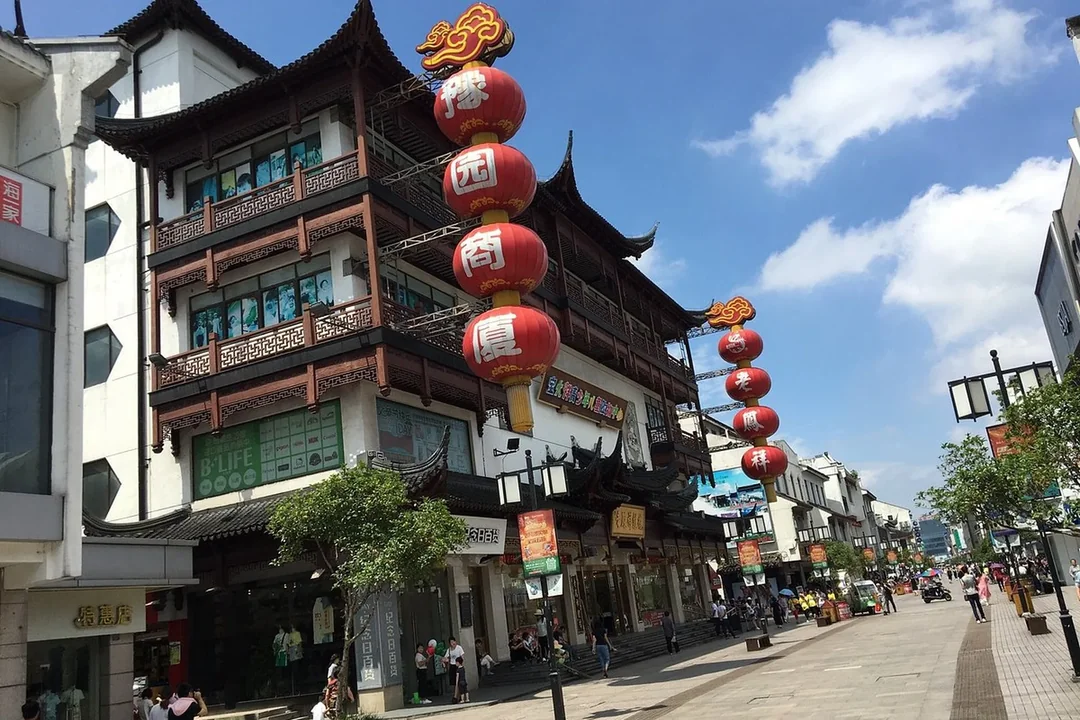
Guanqian Street观前街
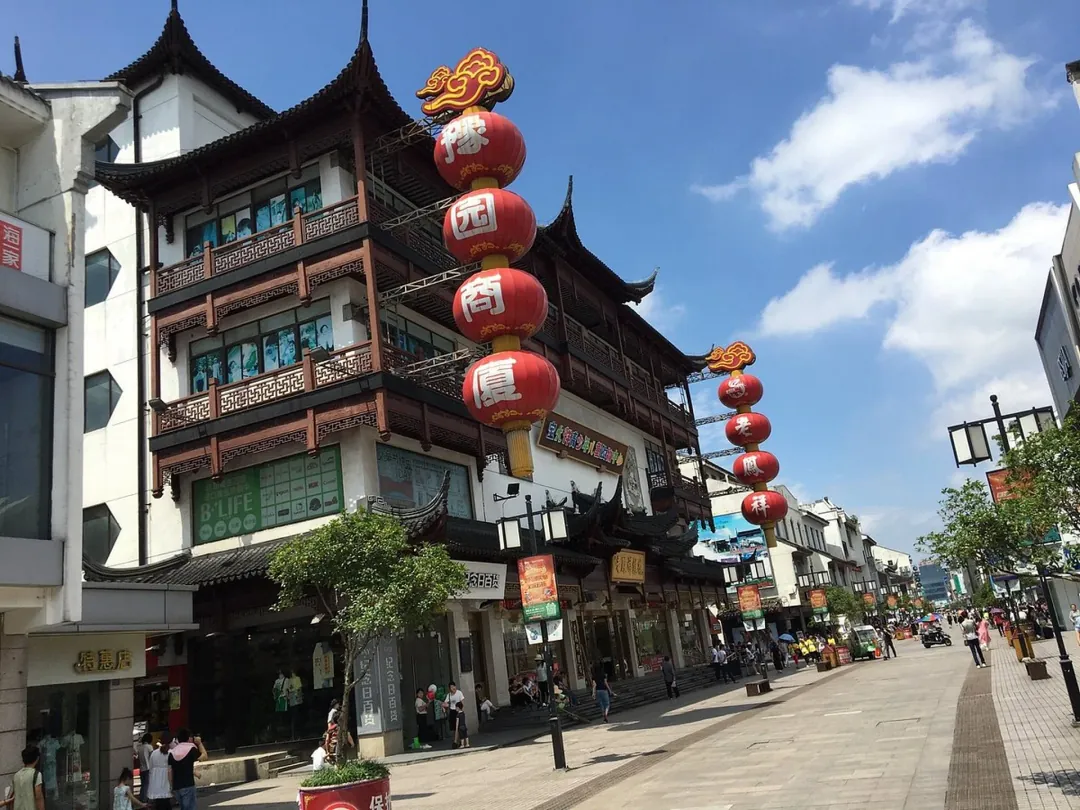
Guanqian Street (观前街) es el distrito comercial peatonal por excelencia de Suzhou, con 800 metros que van desde el Jardín de la Persistencia (Lingering Garden) hasta el antiguo Mercado Yuhe (御湖渔市). La calle toma su nombre del Templo Taoísta Xuanmiao (玄妙观), que se alza en su extremo norte: 'Guanqian' significa 'frente al templo'. Lleva más de 300 años siendo la principal arteria comercial de Suzhou, aunque la versión actual es una franja minorista moderna y totalmente peatonalizada. El tramo oriental, cerca del Jardín de la Persistencia, es más refinado; el occidental, junto al Mercado Yuhe, conserva más carácter local y casas de té tradicionales.
Suzhou · guía de visita2026-10-19
Respuesta rápida
¿Merece la pena visitar Guanqian Street?
La calle comercial peatonal más famosa de Suzhou — 800 m de moda, casas de té tradicionales y aperitivos locales, desde el Jardín de la Persistencia hasta el Mercado Yuhe. Gratis. 1–2 horas.
Datos rápidos
| Entrada | Gratis — sin entrada. Las compras en cada tienda corren por tu cuenta. |
|---|---|
| Horario | La mayoría de las tiendas abren de 10:00 a 22:00. Las casas de té tradicionales, de 08:00 a 21:00. Los restaurantes varían. La hora punta son las tardes de fin de semana (14:00–18:00). |
| Duración recomendada | 1–2 horas para una vuelta de compras; medio día si te detienes a comer dim sum, tomar té y comprar. |
| Mejor época para visitar | Tardes entre semana para ambiente sin multitudes. Tardes de fin de semana, energía pero aglomeraciones. Evita las fiestas nacionales chinas, cuando la calle se llena hasta el desborde. A primera hora (antes de que abran las tiendas, 08:00–10:00) es ideal para fotografiar la calle vacía con el telón de la arquitectura tradicional. |
| Cómo llegar | Metro línea 1 hasta Linlong Road (临顿路) o hasta la estación de Guanqian Street (观前街站, línea 6). Autobuses 1, 5, 8, 101, 202, 529, 811 hasta la parada de Guanqian Street. De punta a punta, la calle se recorre a pie desde el metro de Linlong Road hasta el Mercado Yuhe. |
| Señalización en inglés | parcial: los letreros callejeros están solo en chino; las tiendas principales tienen carteles en inglés. |
| Acceso en silla de ruedas | sí: calle peatonal de pavimento liso, aunque puede estar abarrotada. |
| Longitud | 800 metros (tramo peatonalizado) |
| Origen | Más de 300 años de historia comercial |
| Tipo de comercio | Moda, marcas tradicionales, aperitivos locales, casas de té |
| Patrimonio UNESCO cercano | Jardín de la Persistencia (entrada en el extremo este) |
| Especialidad local | Dim sum estilo Suzhou (苏式点心), seda, bordado de Suzhou |
Qué esperar
Guanqian Street es el principal distrito comercial de Suzhou desde la dinastía Qing, y debe su nombre al Templo Xuanmiao de su extremo norte. La calle se peatonalizó y renovó por completo en el año 2000, sustituyendo la mezcla original de tranvías, bicicletas y peatones por un paseo liso de losa de piedra. La renovación conservó la tipología tradicional de fachada de una planta con entresuelo (底层+阁楼), la que da a la calle su escala humana, aun cuando el comercio viró de la artesanía local a las cadenas nacionales de moda. Hoy compite con Suzhou Center (苏州中心) y el complejo de ocio Yuanfang como el primer destino de compras de la ciudad.
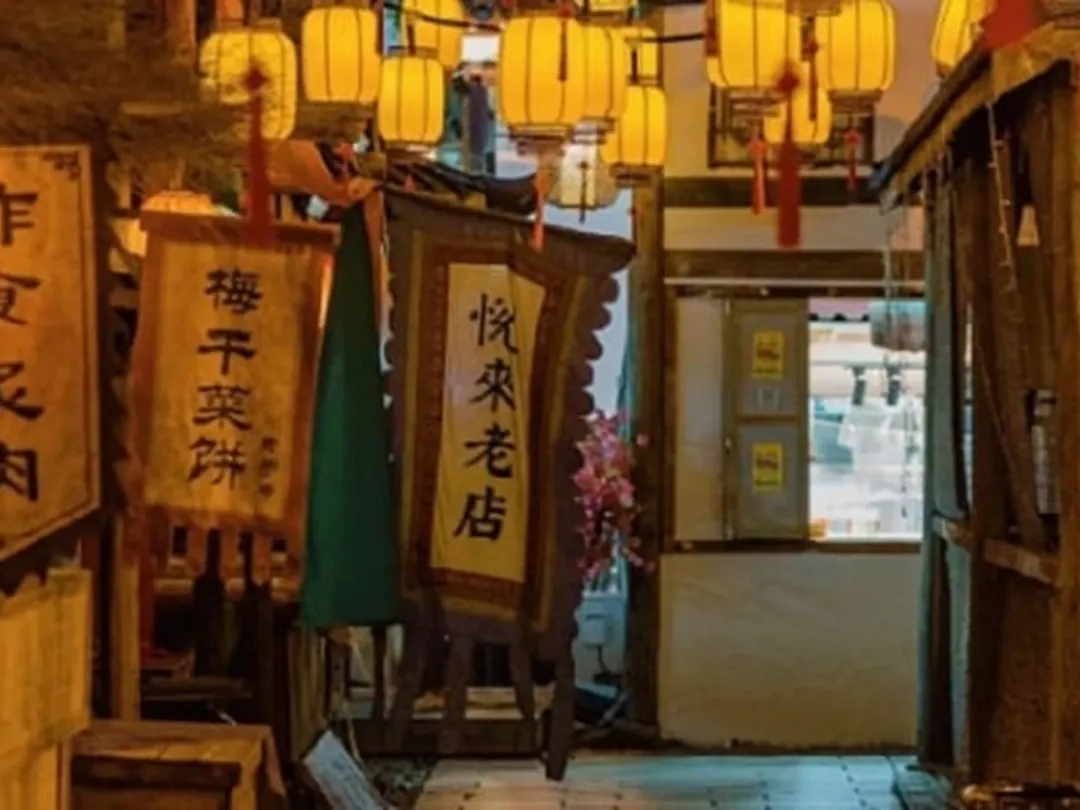
El tramo oriental, junto al Jardín de la Persistencia, es el más pulido: tiendas insignia de marcas chinas de moda, Starbucks y cadenas de comida rápida internacionales conviven con establecimientos tradicionales. Hacia el oeste cambia el carácter: sobresalen las casas de té antiguas (茶馆), las farmacias de medicina china (中药铺) y los sastres y mercaderes de seda supervivientes. El Mercado Yuhe, al final oeste, es un mercado cubierto con fruta y verdura fresca, productos secos y una pequeña zona de comida: lo más auténtico que queda de la vieja calle comercial.
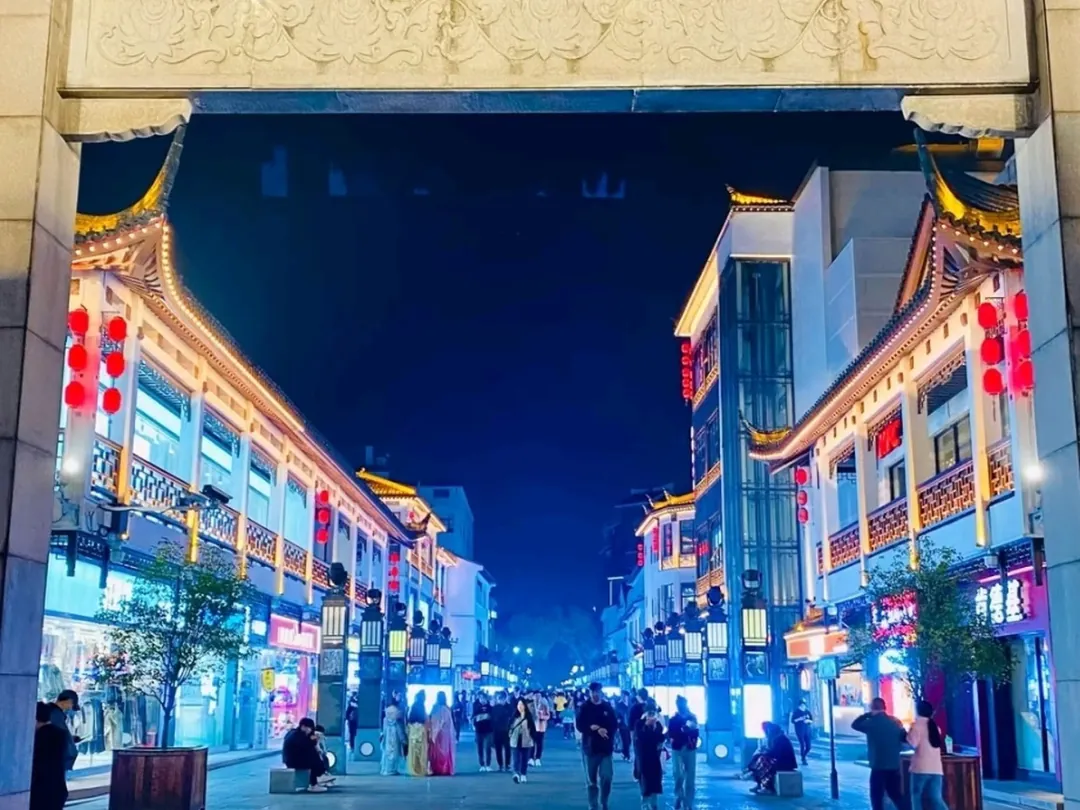
La cultura gastronómica tradicional es el rasgo más distintivo de la calle. El dim sum estilo Suzhou (苏式早点) en casas como el restaurante Deyue (得月楼) no se parece al cantonés: pasteles de arroz glutinoso más dulces (青团), xiaolongbao de hueva de cangrejo (蟹粉小笼) y rollitos de arroz de piel de seda (丝卷). Las casas de té sirven el té verde Biluochun (碧螺春), cultivado en la cercana montaña Dongting. Por la noche, la iluminación de la calle (instalada en la reforma de 2020) crea un ambiente agradable para el paseo.
Cómo llegar
Metro línea 1 hasta Linlong Road (临顿路), salida 4 — el extremo este de la calle queda a 5 minutos a pie hacia el oeste. Metro línea 6 hasta la estación de Guanqian Street (si está abierta: consulta el mapa de metro vigente). Los autobuses 1, 5, 8, 101, 202, 529 y 811 paran a lo largo de la calle. Es una calle lineal: 15 minutos a buen paso de punta a punta, o 30 con paradas.
Mejores puntos fotográficos
- La calle mirando al oeste desde la entrada del Jardín de la Persistencia — fachadas tradicionales sobre el entorno peatonal moderno
- La puerta del Templo Xuanmiao en el extremo norte — el homónimo de la calle, iluminado por la noche
- El tramo porticado cerca del cruce central — lo mejor para captar la escala humana y la vida local
- La calle vacía a primera hora (08:00–09:00) — arquitectura tradicional sin gente
Consejos
- Ven temprano (08:00–10:00) para las mejores fotos y para ver las casas de té de dim sum tradicionales en su estado más auténtico
- Visita primero el Jardín de la Persistencia (abre a las 07:30) y luego recorre la calle desayunando
- El tramo oriental, cerca del Jardín de la Persistencia, tiene el entorno de compras más limpio y cómodo
- Para comida suzhouí de verdad, ve al tramo occidental junto al Mercado Yuhe o pregunta a los locales por '本地人推荐' (recomendación de los locales)
- Las noches de fin de semana se llenan muchísimo — las tardes entre semana dan mejor ambiente
Estafas que evitar
- Tiendas de 'seda' barata que venden tejido sintético a precio premium — si compras seda, acude a marcas consolidadas como Luoxing (罗星) o a la tienda del Museo de la Seda de Suzhou
- Puestos de 'bordado auténtico de Suzhou' con bordado a máquina hecho en serie — el bordado manual de verdad es caro (más de ¥500 por una pieza pequeña)
- Tiendas de té que pesan y sellan delante de ti pero llenan la caja con producto inferior — compra en casas de té con solera, no en puestos callejeros
Preguntas frecuentes
¿Es gratis visitar Guanqian Street?
Sí — Guanqian Street es una vía pública peatonal sin entrada. Solo pagas lo que compres en tiendas y restaurantes. Se puede recorrer gratis a cualquier hora de comercio.
¿Qué debería comprar en Guanqian Street?
Lo más auténtico: productos de seda (de marcas establecidas, no de puestos), té Biluochun (碧螺春, en casas de té con solera) y aperitivos suzhouíes para llevar. Evita las tiendas de 'anticuarios' y los comerciantes de 'jade' salvo que seas experto — las reproducciones son habituales. La moda es de las mismas marcas que en cualquier ciudad china.
¿Cómo se compara con Nanjing Road de Shanghái?
Guanqian Street es más pequeña (800 m frente a varios km de Nanjing Road), más tradicional en arquitectura (baja, frente al Art Decó y las torres modernas de Shanghái) y más volcada en la comida y la artesanía local. Nanjing Road es un gran destino internacional de compras; Guanqian Street es una calle comercial local actualizada para el turismo. Para una experiencia suzhouí auténtica, gana Guanqian Street.
¿Es accesible en silla de ruedas?
Sí — la vía peatonal tiene pavimento liso en todo su recorrido y rampas en los cruces. Es más accesible que la mayoría de las calles comerciales chinas. La principal limitación son las aglomeraciones, que dificultan el paso en las noches de fin de semana.
¿Qué es el Templo Xuanmiao?
El Templo Xuanmiao (玄妙观) es un templo taoísta en el extremo norte de Guanqian Street, fundado en el siglo III y reconstruido en numerosas ocasiones. La sala principal actual data de la dinastía Song, en el siglo XII, lo que lo convierte en uno de los edificios taoístas más antiguos que se conservan en Suzhou. Sigue siendo un templo en actividad — la entrada es libre y los visitantes son bienvenidos, aunque no se permite fotografiar el interior de la sala principal.
Leer después
Otras cosas que hacer en Suzhou
Hanshan Temple
El templo inmortalizado por el poema del siglo VIII de Zhang Ji, 'Noche de amarre junto al Puente del Arce': la campana que suena a medianoche en Nochevieja. Entrada gratuita, 20 CNY por tocar la campana. 1–1,5 horas.
Humble Administrator's Garden
El mayor y más famoso de los jardines clásicos de Suzhou, Patrimonio de la Humanidad. Construido en 1513 y restaurado a lo largo de los siglos. Lotos en verano, silencio en invierno.
Jinji Lake
Un lago urbano gratuito y abierto 24/7, rodeado por un paseo marítimo de ~10 km en el Parque Industrial de Suzhou — reserva 2-4 horas y ven al anochecer para el espectáculo de fuentes.
Lingering Garden
El jardín clásico de Suzhou con el detalle más exquisito: más pequeño que el Jardín del Administrador Humilde, pero considerado el mejor en tallas de piedra y riqueza arquitectónica. … Verificado en 2026.
Luzhi Water Town
Un pueblo de agua vivo a 25 km de Suzhou: menos turístico que Zhouzhuang o Tongli, con auténtica vida de canal, 41 puentes y un famoso mercado matinal. Gratis pasear. ¥78 por las atracciones. 2–3 horas.
Master of Nets Garden
El más pequeño y elegante de los tres grandes jardines Unesco de Suzhou: media hectárea repleta de ingenio espacial. ¥40. Ópera nocturna ¥100 (marzo–noviembre). 1–2 horas.
Pan Gate Scenic Area
El último complejo de puertas de la ciudad antigua que sobrevive en Suzhou — un sistema doble de puerta de agua y puerta de tierra del siglo XIV con una pagoda de 40 m. ¥45. 1.5–2 horas.
Pingjiang Road Historic District
El barrio de canales conservado más auténtico de Suzhou — 1,6 km de canales Ming, puentes antiguos y tiendas con carácter en una zona residencial viva. Gratis. 1–2 horas.
Qinghua Temple
Un sereno templo budista del siglo VI en las colinas del oeste de Suzhou — mucho menos visitado que el templo Hanshan, con pagodas antiguas, jardines de camelias y senderos de montaña. Gratuito. 2–3 horas.
Shantang Street
La calle de canal más famosa de Suzhou: 360 m de arquitectura Ming-Qing a lo largo de una vía navegable viva, desde Pan Gate hasta Tiger Hill. Gratis a pie. 1–2 horas.
Suzhou Museum
El museo que I.M. Pei diseñó saliendo de su retiro (abierto en octubre de 2006), donde la geometría modernista dialoga con la estética de los jardines de Suzhou: el muro de piedra tallada del patio es la imagen por antonomasia.
Tiger Hill (Huqiu)
La colina con más historia de Suzhou, coronada por la pagoda Yunyan de mil años, inclinada 3,59 grados. Aquí descansa el rey Helü de Wu (496 a. C.). Merece los ¥70 y media jornada.
Tongli Water Town
Pueblo de agua milenario a 30 km de Suzhou: 15 ríos, 49 puentes, 7 islas. Entrada única de ¥100 para todas las atracciones. Mínimo 3–4 horas.
Zhouzhuang Water Town
El pueblo de agua jiangnan más famoso — 1 km² de canales, 100 puentes y arquitectura de 800 años. Entrada ¥100. Mínimo 3-4 horas. Se puede ir de excursión desde Shanghái.
Museos en Suzhou
Museo de Suzhou
Un museo de arte de clase mundial de Suzhou, en un edificio diseñado por I. M. Pei.
Museo de la Seda de Suzhou
Junto a la pagoda North Temple de Suzhou, el Museo de la Seda permite ver gusanos de seda tejer capullos y seguir 4.000 años de seda, de la hoja de morera a la túnica imperial del dragón, todo gratis.