This page is archived and no longer updated — see the current guide: See the current guide
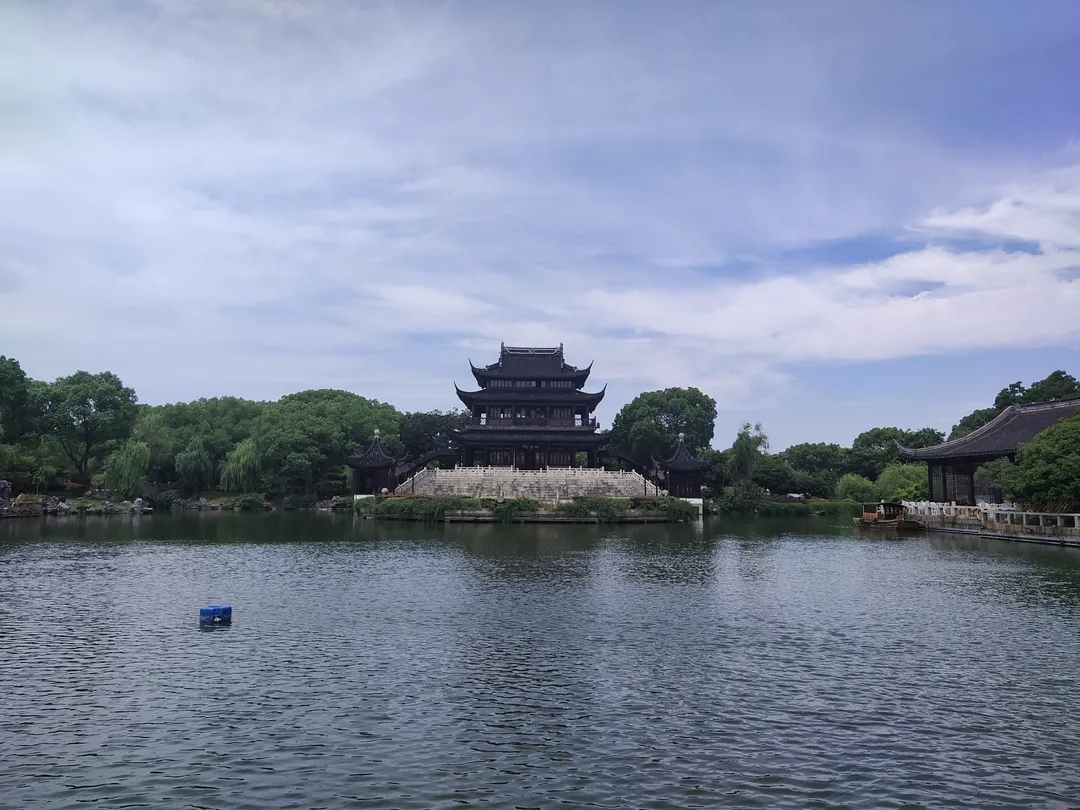
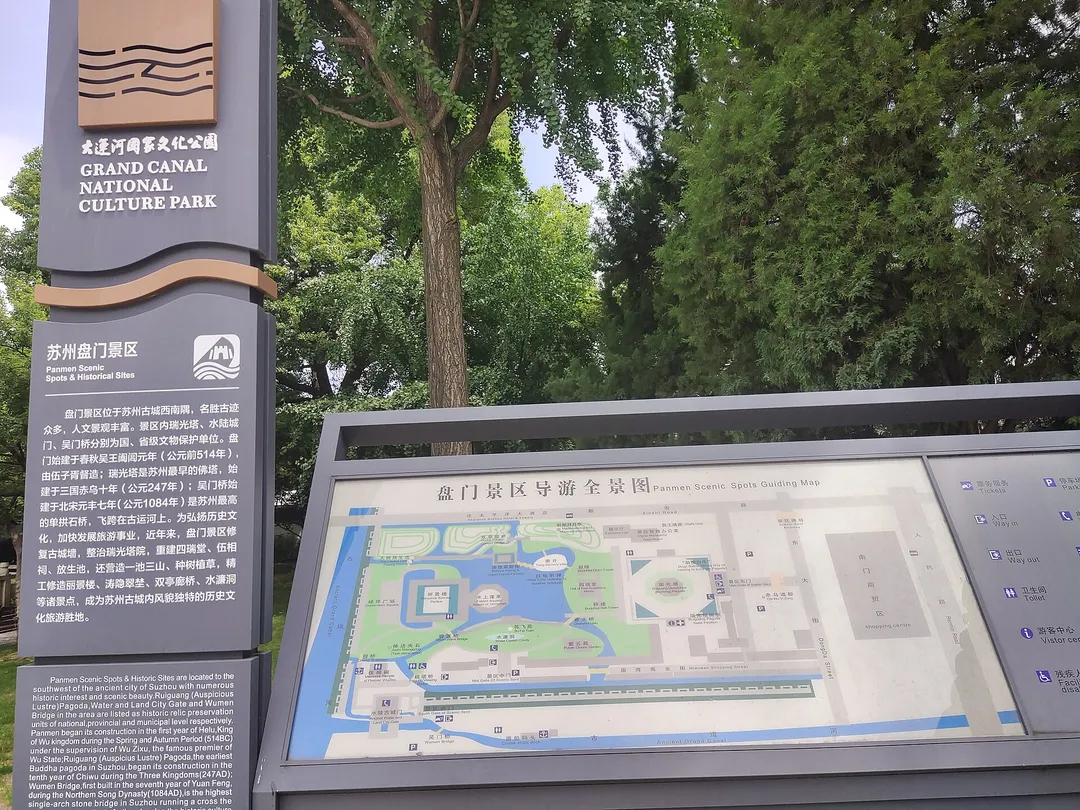
Pan Gate Scenic Area盘门景区
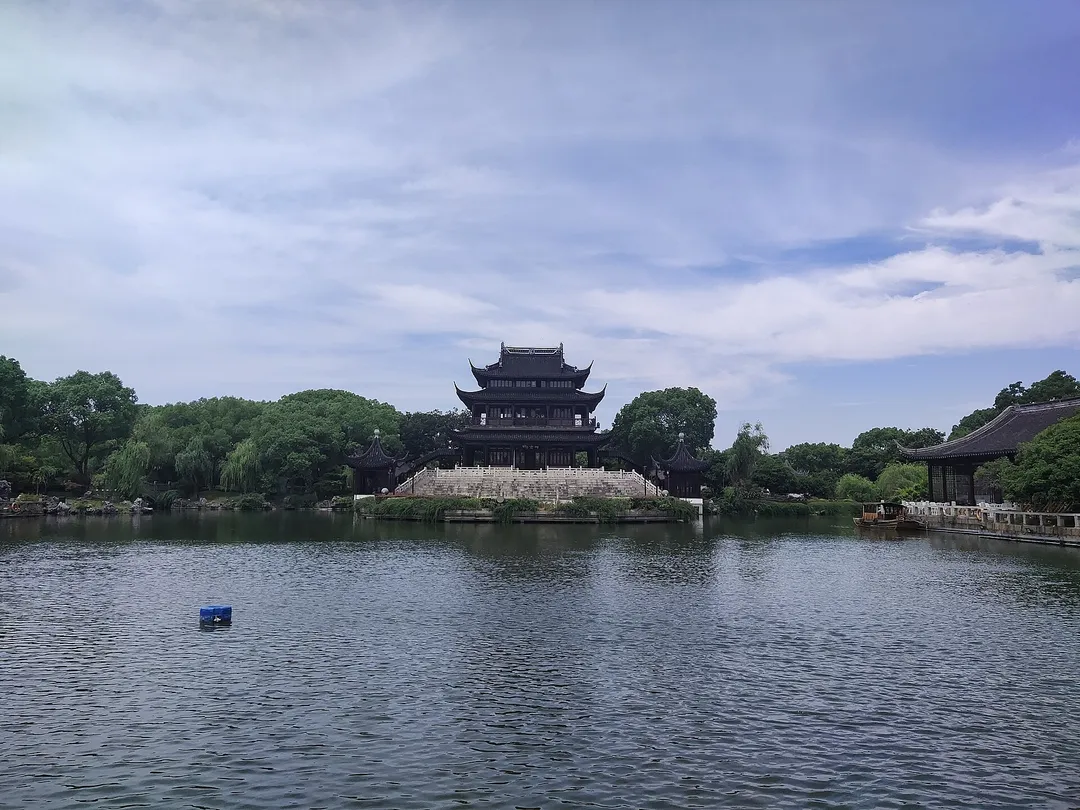
The Pan Gate Scenic Area (盘门景区) is Suzhou's best-preserved ancient fortification, combining a water gate and land gate in a single defensive complex dating to the 14th-century Ming Dynasty rebuilding. Unlike the city walls torn down in most Chinese cities, Suzhou's walls survived in part, and Pan Gate is the most impressive surviving section — the water gate still controls the canal entrance to the old city, the land gate has its original wooden doors and defensive mechanisms, and the Ruiguang Pagoda (瑞光寺塔) rises 40 meters above the inner courtyard. It is the only place in Suzhou where you can see the ancient city's defensive architecture intact.
Suzhou · Visitor Guide2026-10-19
Quick Answer
Is Pan Gate Scenic Area worth visiting?
pan-gate in Beijing: Suzhou's only surviving ancient city gate complex — a 14th-century water-gate and land-gate double system with a 40m pagoda. ¥45. 1.5–2 hours.
Quick facts
| Ticket | ¥45 (includes all structures — water gate, land gate, pagoda, and inner city wall walk). No advance booking needed. |
|---|---|
| Hours | 7:30–17:30 (Apr–Oct), 8:00–17:00 (Nov–Mar). Last entry 30 min before close. |
| Recommended duration | 1.5–2 hours. |
| Best time to visit | March–May and September–November for comfortable temperatures. The pagoda and gate are photogenic year-round but the canal is most scenic in spring and autumn. Early morning (before 9:00) for photos without crowds. |
| How to get there | Metro Line 5 to Pan Gate station (盘门站), Exit 3 — directly at the scenic area. Bus routes 1, 3, 5, 101, 308, 501, 602 to Pan Gate (盘门) stop. |
| English signage | Yes |
| Wheelchair accessible | Partial |
| Gate built | 14th century (Ming Dynasty, 1355 reconstruction) |
| Pagoda built | 1004–1024 (Song Dynasty, Zhao Yuán reign) |
| Pagoda height | 40 meters, 7 stories |
| Structure type | Combined water gate + land gate defense system |
| Suzhou city walls | Partially surviving; Pan Gate is the most complete section |
What to expect
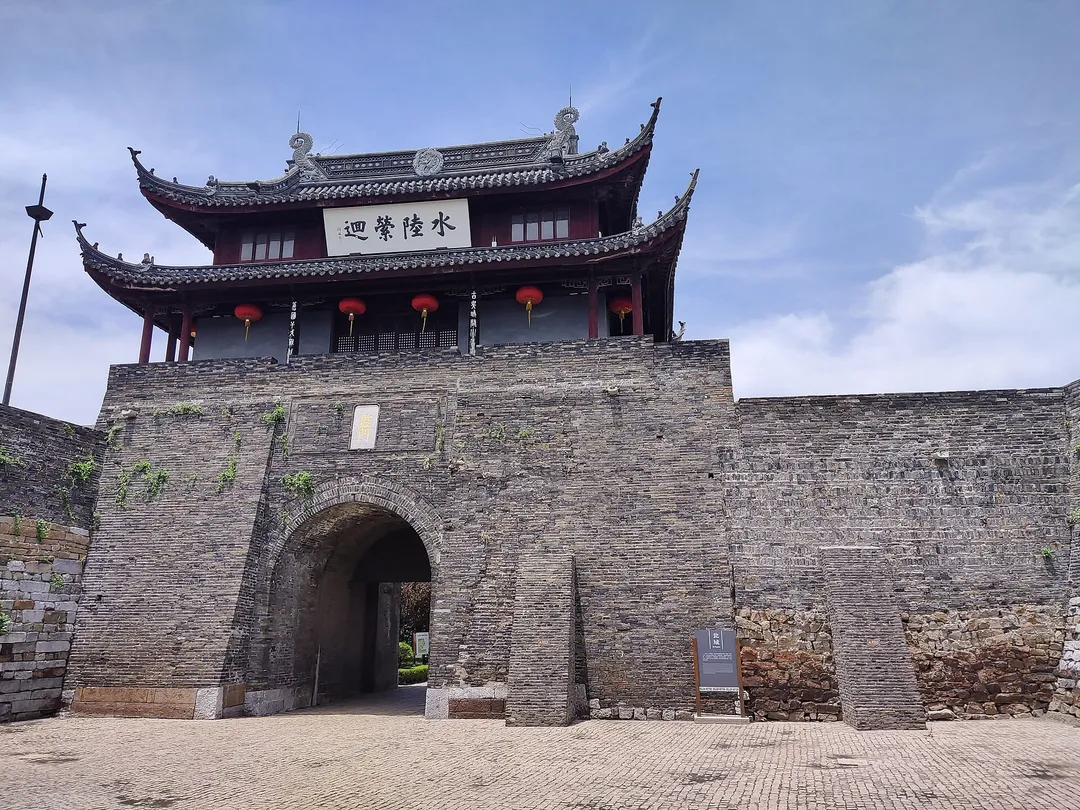
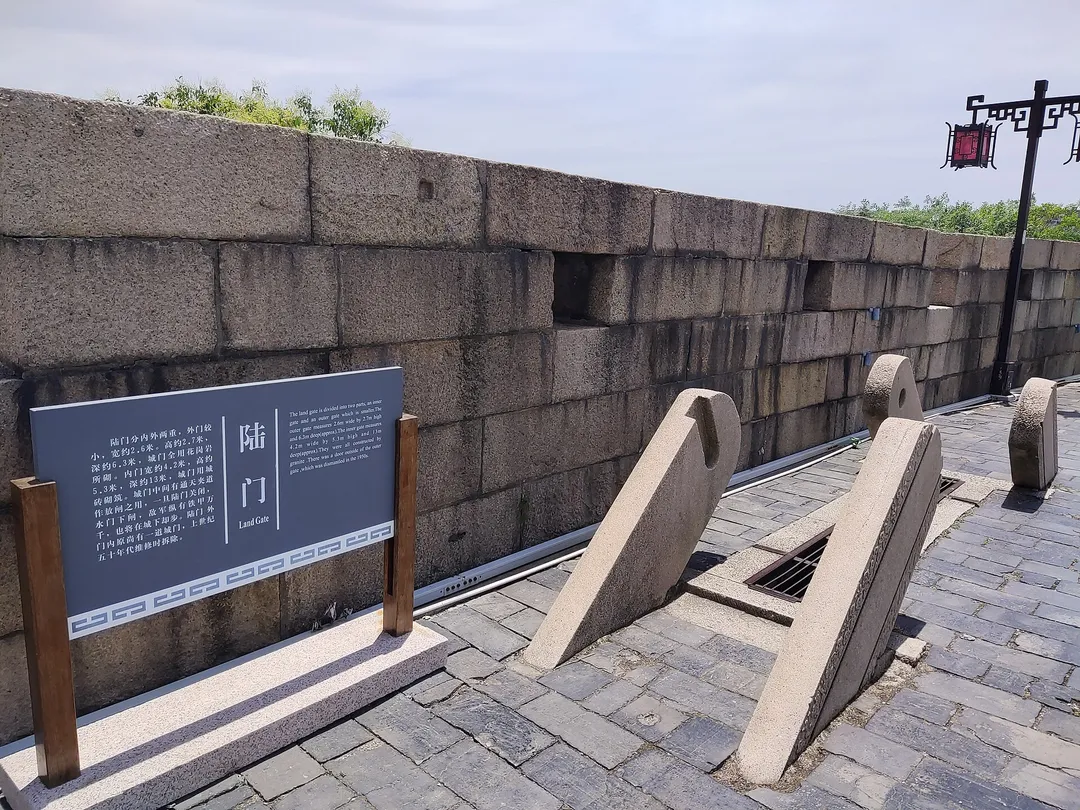
The Pan Gate (盘门) is unique among Chinese city gates for its double-gate defense system designed to control both land and water approaches simultaneously. The water gate on the south controls canal traffic into the old city through a channel that still functions — you can see the original sluice grooves in the stone walls. The land gate on the north has its original Ming Dynasty wooden doors, complete with defensive spike-studded boards that could be lowered to repel attackers. The inner courtyard between the gates was a kill zone where defenders could trap and eliminate invaders. This defensive sophistication was state-of-the-art in the 14th century.
The Ruiguang Pagoda (瑞光寺塔) inside the complex dates to the early 11th century Song Dynasty, making it older than the Ming Dynasty gate. The 40-meter seven-story pagoda leans slightly and has been restored multiple times, but retains its Song Dynasty octagonal form and original brick core. It was built to house a Buddhist relic — a tooth supposedly brought from Sri Lanka — and was an important Buddhist site before the gate became primarily a military installation.
The inner city wall walk (城墙步道) allows you to walk the remaining 200 meters of Suzhou's Ming Dynasty walls, with views over the canal system and the old city's southern approach. The site was heavily restored in the 1980s–2000s after decades of neglect during the Taiping Rebellion and subsequent development pressure. It is less polished than the classical gardens but more authentic as a historical site — the patina of centuries shows in the weathered stone.
How to get there
Metro Line 5 to Pan Gate (盘门站), Exit 3 — directly in front of the scenic area entrance. From Suzhou Railway Station: Bus 1 or 101, about 15 minutes. From Guanqian Street area: Bus 101 or 602, about 10 minutes. A DiDi from central Suzhou costs ¥12–18 (10–15 minutes).
Best photo spots
- The water gate from the canal approach — the double-gate system with the pagoda above, best in morning light from the canal path
- The land gate interior looking out through the original wooden doors
- The Ruiguang Pagoda from the inner courtyard — the seven-story octagonal form against sky
- The city wall walk — panoramic view over the old city's southern canal system
Tips
- Visit early morning for photos without tour groups — the site is most atmospheric at opening time
- Combine with Shantang Street (山塘街) — it is a 10-minute walk or one bus stop east along the canal
- The pagoda is closed to climbing — the exterior is the attraction
- Allow 1.5–2 hours — it is smaller than the gardens but has more variety (gate, pagoda, walls, canal)
- Evening light on the canal approach is also good for photography (but site closes at 17:30)
Scams to avoid
- Boat operators near the water gate may approach for "canal tours" — these are informal and prices are not regulated; agree on a price before boarding or walk away
- Street vendors selling "ancient coins" near the entrance — these are modern reproductions
Frequently asked questions
Is Pan Gate part of the UNESCO Classical Gardens of Suzhou?
No — Pan Gate is a separate heritage site (defensive architecture, not a classical garden). It is not on the UNESCO World Heritage list. The UNESCO inscription covers nine classical gardens in Suzhou, not the city walls or gates. Pan Gate is managed separately by the Suzhou City Wall Museum (苏州城墙博物馆).
Can I climb the Ruiguang Pagoda?
No — the pagoda has been closed to visitors for safety reasons for many years. The interior is not accessible, but the exterior can be photographed from all angles in the courtyard.
How does Pan Gate compare to the city walls in Xi'an?
Xi'an's walls are much more extensive (13.7 km of intact Ming wall vs. Suzhou's surviving fragments) and you can actually cycle the full Xi'an circuit. Pan Gate is a single defensive complex — smaller in scale but more intimate, with the pagoda and canal setting making it more scenic than Xi'an's flat wall top. Both are worth visiting for different reasons.
Is the site wheelchair accessible?
Limited. The ground-level courtyard and the land gate are accessible, but the city wall walk involves steps and uneven stone, and the pagoda interior is inaccessible. The water gate is reached via canal path that is mostly flat but can be narrow.
What is the difference between Pan Gate and the "city walls" in other Chinese cities?
Suzhou's city walls were largely demolished in the early 20th century for road construction, unlike Xi'an or Nanjing where substantial sections survived. Pan Gate represents what remains — the most defensively sophisticated and visually complete section. It is valued precisely because it is rare for Suzhou, not because it rivals the scale of other Chinese walls.
Read next
Other things to do in Suzhou
Guanqian Street
Suzhou's most famous pedestrian shopping street — 800m of fashion retail, traditional teahouses, and local snacks from Lingering Garden to Yuhe Market. Free. 1–2 hours.
Hanshan Temple
Suzhou temple made famous by Zhang Ji's 8th-century poem about the midnight bell; free entry with a 20-yuan bell-ringing fee, open 08:00-17:00, near Maple Bridge on the Grand Canal.
Humble Administrator's Garden
The largest and most famous of Suzhou's classical gardens, a UNESCO World Heritage Site. Built in 1513, restored over centuries. Peak lotus in summer, quietest in winter.
Jinji Lake
A free, 24/7 urban lake ringed by a ~10 km promenade in Suzhou Industrial Park — plan 2-4 hours, and come at dusk for the fountain show.
Lingering Garden
Suzhou's most exquisitely detailed classical garden, smaller than Humble Administrator's but considered the finest. Peak-season entry ¥55; allow 1–2 hours for a thorough visit.
Luzhi Water Town
A working water town 25 km from Suzhou — less touristy than Zhouzhuang or Tongli, with authentic canal life, 41 bridges, and a famous morning market. Free to walk. ¥78 for attractions. 2–3 hours.
Master of Nets Garden
The smallest and most elegant of Suzhou's three premier UNESCO gardens — 0.5 hectares packed with spatial ingenuity. ¥40. Evening opera ¥100 (March–November). 1–2 hours.
Pingjiang Road Historic District
Suzhou's most authentic preserved canal neighborhood — 1.6 km of Ming Dynasty canals, ancient bridges, and boutique shops in a living residential area. Free. 1–2 hours.
Qinghua Temple
A serene 6th-century Buddhist temple in Suzhou's western hills — less visited than Hanshan Temple, with ancient pagodas, camellia gardens, and mountain trails. Free. 2–3 hours.
Shantang Street
Suzhou's most famous canal street — 360m of Ming-Qing architecture lining a living waterway, from Pan Gate to Tiger Hill. Free to walk. 1–2 hours.
Suzhou Museum
I.M. Pei came out of retirement to design this museum (opened October 2006), where modernist geometry meets Suzhou garden aesthetics — the sliced-stone courtyard wall is the single most photogra.
Tiger Hill (Huqiu)
Suzhou's storied hill with the 1000-year-old Yunyan Pagoda leaning 3.59 degrees; tomb of King Helu from 496 BC, entry 70 yuan, allow half a day, 5 minutes from Tiger Hill metro station.
Tongli Water Town
A preserved 1,000-year-old water town 30 km from Suzhou — 15 rivers, 49 bridges, 7 islands. ¥100 for all attractions. 3–4 hours minimum.
Zhouzhuang Water Town
The most famous Jiangnan water town — 1 sq km of canals, 100 bridges, and 800-year-old architecture. ¥100 for entry. 3–4 hours minimum. Can be done as a day trip from Shanghai.
Museums in Suzhou
Suzhou Museum
Suzhou's world-class art museum in a landmark I.M. Pei building — Suzhou cultural relics, classical scholar objects, and rotating exhibitions. Free with passport; 2–3 hours.
Suzhou Silk Museum
suzhou-silk-museum in Suzhou: "Watch live silkworms spin cocoons, then trace 4,000 years of silk from mulberry leaf to imperial dragon robe — all free.