This page is archived and no longer updated — see the current guide: See the current guide
Lingering Garden留园
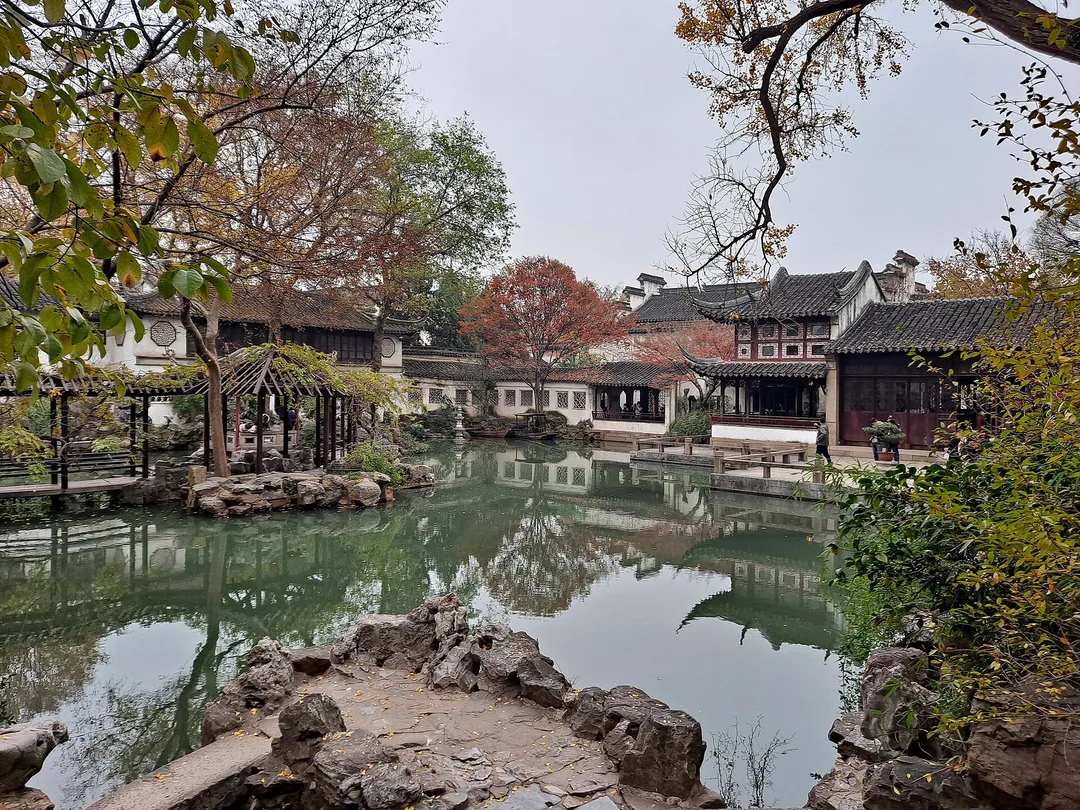
Lingering Garden (Liú Yuán) is the smallest of Suzhou's UNESCO classical gardens at 2.3 hectares, but by general critical consensus the most refined. Where Humble Administrator's Garden impresses with scale and lakeside vistas, Lingering Garden astonishes with architectural density: every hall, pavilion, corridor, window, and rock formation is labelled with a carved plaque, and the rock-and-staircase compositions in particular are considered the finest surviving examples of Song-dynasty garden aesthetics. The garden was built in 1593 by the retired official Wu Yigong and has been in continuous private and public ownership since.
Suzhou · Visitor Guide2026-10-19
Quick Answer
Is Lingering Garden worth visiting?
Suzhou's most exquisitely detailed classical garden, smaller than Humble Administrator's but considered the finest. Peak-season entry ¥55; allow 1–2 hours for a thorough visit.
Quick facts
| Ticket | Peak season (April, May, October, November): ¥55. Shoulder season (March, June, September): ¥45. Off-season (December–February): ¥45. Suzhou Garden Pass ¥100 covers 6 gardens. Children under 1.4m and seniors over 70 free with ID. |
|---|---|
| Hours | 07:30–17:30 (March–October), 08:00–17:00 (November–February); last entry 30 minutes before closing. |
| Recommended duration | 1–2 hours for a thorough visit. |
| Best time to visit | Weekday mornings year-round for quiet photography. April–May for azaleas. October–November for the ginkgo and maple in the rock gardens. Winters are bare but cheapest and emptiest. |
| How to get there | Metro Line 1 to Lindun Road (临顿路) Station, Exit 1, then Bus 311 or walk 20 minutes to the garden's east gate. City buses 40, 85, 313 also stop nearby. A DiDi from central Suzhou costs ¥15–20. |
| English signage | Yes |
| Wheelchair accessible | Partial |
| Area | 2.3 hectares |
| Founded | 1593 by Wu Yigong, retired official |
| UNESCO status | World Heritage Site since 1997 (Classical Gardens of Suzhou) |
| Buildings | 27 distinct structures, more per hectare than any other Suzhou garden |
| Key feature | "Qinghua Rock" - the finest surviving garden rock in China |
| Renovation | Major restoration after 1860 Taiping Rebellion damage |
What to expect
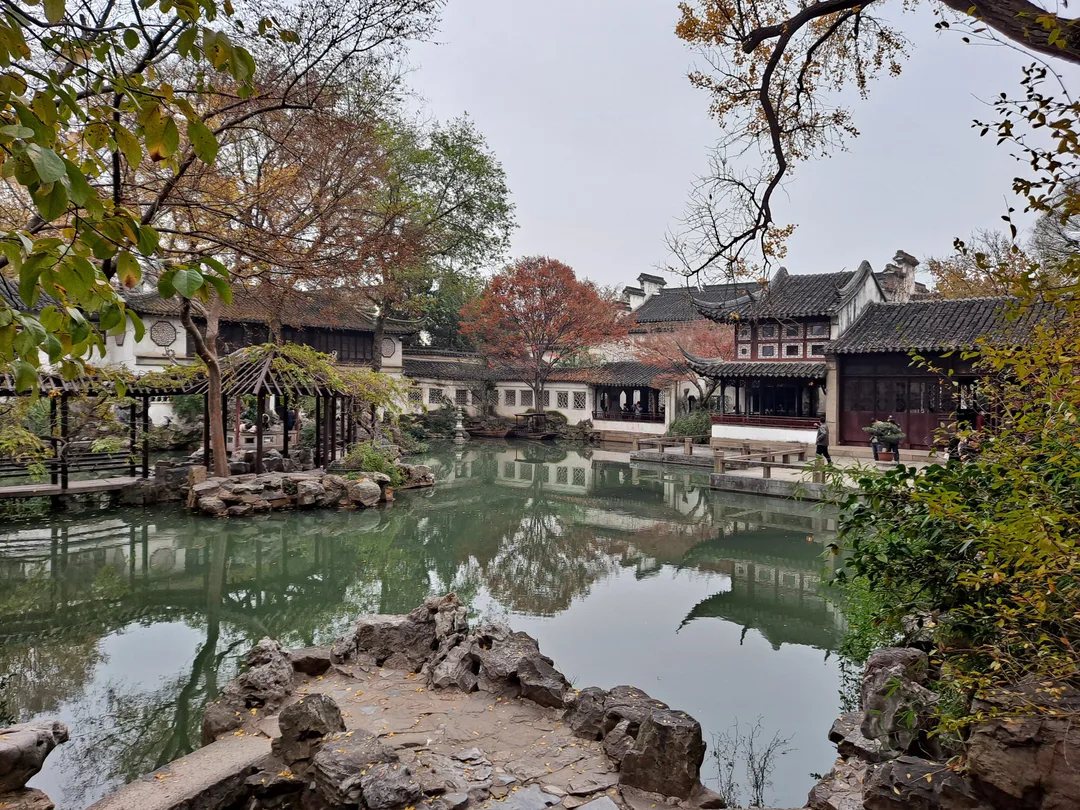
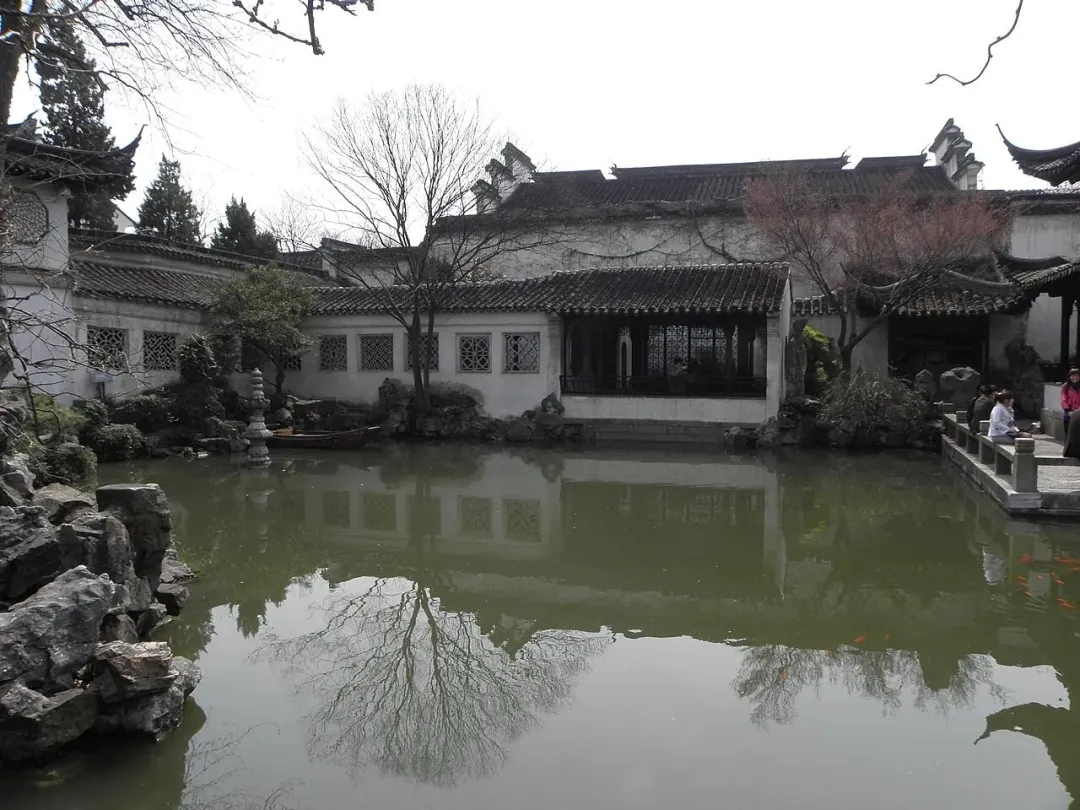
Lingering Garden's genius is compression: where Humble Administrator's spreads across 5.2 hectares, Lingering Garden concentrates an enormous amount of architectural and landscape complexity into 2.3. The garden is organised around a series of rocky hills (built from Taihu Lake limestone, perforated by centuries of water erosion) connected by narrow corridors, bridges, and step paths. The most famous single feature is the Qinghua Rock (青花瓷峰) in the central rock garden — a 6-metre perforated limestone formation considered the finest surviving garden rock in China, with a shape suggesting a dragon ascending through clouds.
The garden's 27 buildings are distinguished by their window latticework, which is different in every building — a concept called "changing scenes through windows." Looking through each window frame gives a different view of the garden outside: bamboo, rock, water, or courtyard, each framed like a Chinese painting. The garden also contains the oldest annotated garden rock in China, a stone inscribed with poems and dates from the Ming dynasty.
The architectural intricacy extends to the ceilings: the main halls have elaborate painted plasterwork and carved wooden lattice in patterns that vary from room to room. The main study hall has a ceiling painted with 100 different designs of swimming fish. The garden is best appreciated slowly — the labels on every significant feature (bilingual) tell the story of the garden's construction and meaning.
How to get there
Metro Line 1 to Lindun Road (临顿路) Station, Exit 1. From there, walk west along Guanyin Road to the east gate — approximately 15–20 minutes. Alternatively, take Bus 311 directly to the Lingering Garden stop (留园站). A DiDi from central Suzhou (Guanqian Street area) costs ¥15–20.
Best photo spots
- The Qinghua Rock in the central garden, photographed from the adjacent pavilion with the rock framed through the lattice window — the signature Lingering Garden composition
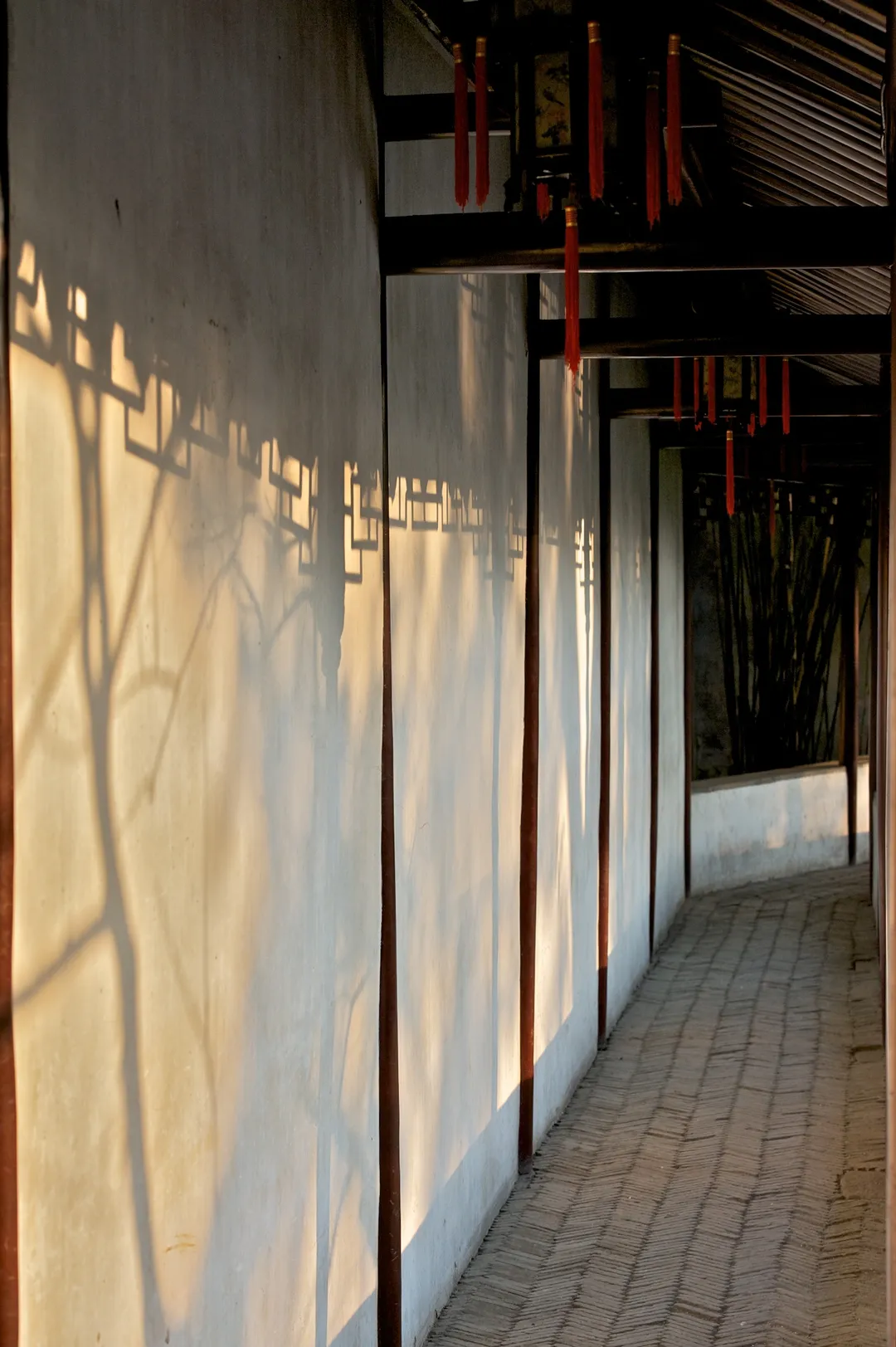
- The corridor of windows along the southern boundary — photographing through each different window lattice gives a different garden painting
- The painted ceiling in the main study hall — best photographed with a wide-angle lens and the room empty
- The garden's entrance corridor on a rainy morning — the grey sky and white walls create a classic Chinese ink-painting aesthetic
Tips
- Combine with Humble Administrator's Garden on the same day — the two are complementary (scale vs. intricacy) and a short cycle between them (15 minutes) makes a coherent full-day itinerary
- Go early morning in peak season (April, May, October) — Lingering Garden is smaller than Humble Administrator's and fills up faster with tour groups
- Rent the audio guide (¥30, bilingual) — the labels are good but the audio adds context that significantly enriches understanding of the rock and ceiling carvings
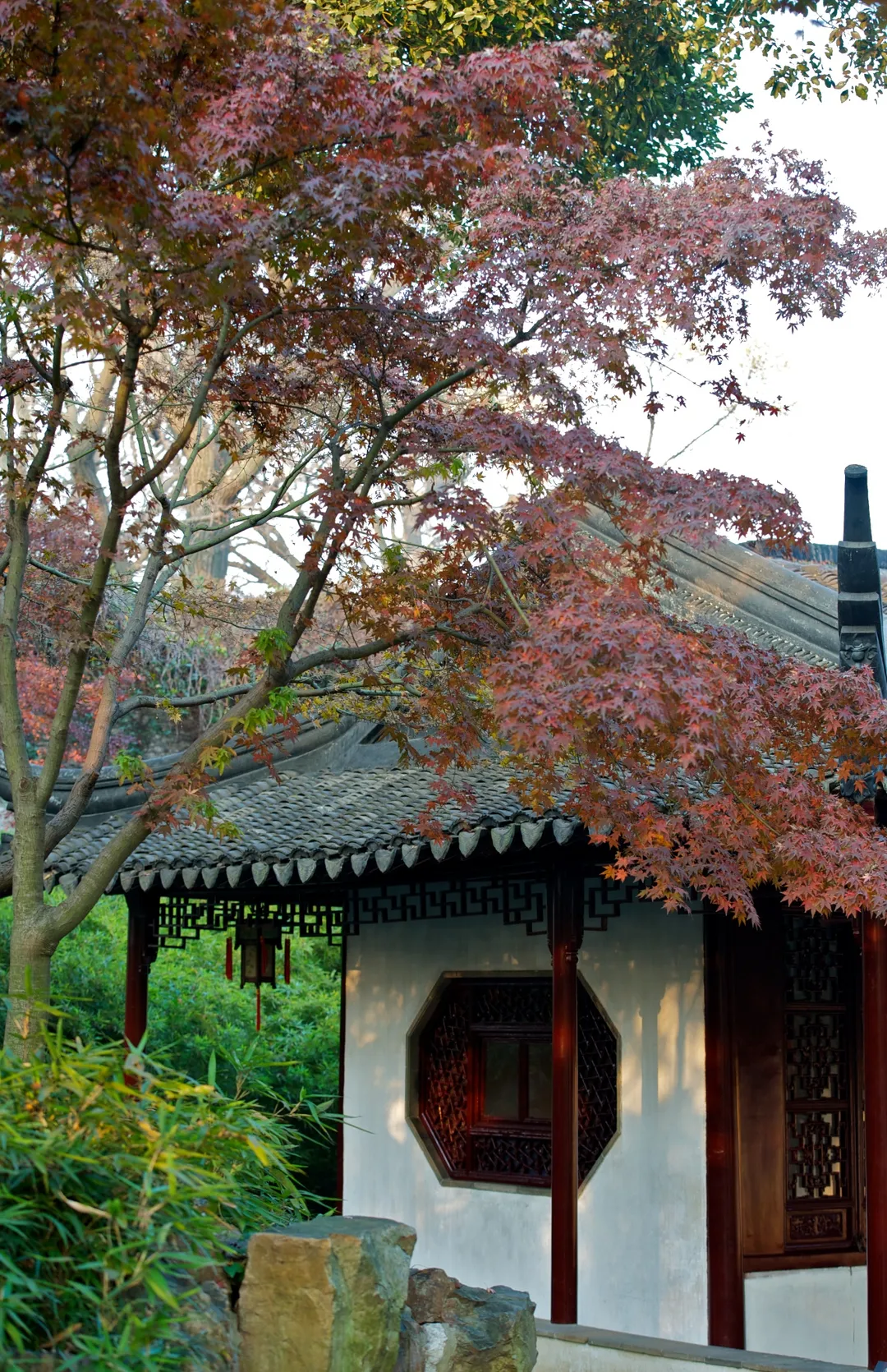
- The rock garden is most beautiful in October and November when the maple beside the Qinghua Rock turns orange and red
- Wear flat shoes — the garden paths are uneven and the small rock bridges are narrow
Scams to avoid
- None significant at the garden itself. Be cautious of "special tour" operators outside the metro station selling combined garden + silk factory tickets at inflated prices.
Frequently asked questions
Lingering Garden vs Humble Administrator's Garden — which should I visit?
If you have time for only one, Lingering Garden is the more refined experience — the architectural density and the Qinghua Rock are exceptional. If you have time for two, visit Humble Administrator's first (scale, lake, overview) and Lingering Garden second (intricacy, rock, detail). The two gardens complement each other perfectly.
Is one hour enough at Lingering Garden?
One hour covers the highlights (central rock garden, main halls, window corridors). For the full experience including the audio guide and ceiling paintings, allow 1.5–2 hours.
Is Lingering Garden wheelchair accessible?
Limited. The main paths are accessible but the rock bridges, narrow corridors, and stepped rock gardens are not. The garden staff can provide assistance at the entrance.
Read next
Other things to do in Suzhou
Guanqian Street
Suzhou's most famous pedestrian shopping street — 800m of fashion retail, traditional teahouses, and local snacks from Lingering Garden to Yuhe Market. Free. 1–2 hours.
Hanshan Temple
Suzhou temple made famous by Zhang Ji's 8th-century poem about the midnight bell; free entry with a 20-yuan bell-ringing fee, open 08:00-17:00, near Maple Bridge on the Grand Canal.
Humble Administrator's Garden
The largest and most famous of Suzhou's classical gardens, a UNESCO World Heritage Site. Built in 1513, restored over centuries. Peak lotus in summer, quietest in winter.
Jinji Lake
A free, 24/7 urban lake ringed by a ~10 km promenade in Suzhou Industrial Park — plan 2-4 hours, and come at dusk for the fountain show.
Luzhi Water Town
A working water town 25 km from Suzhou — less touristy than Zhouzhuang or Tongli, with authentic canal life, 41 bridges, and a famous morning market. Free to walk. ¥78 for attractions. 2–3 hours.
Master of Nets Garden
The smallest and most elegant of Suzhou's three premier UNESCO gardens — 0.5 hectares packed with spatial ingenuity. ¥40. Evening opera ¥100 (March–November). 1–2 hours.
Pan Gate Scenic Area
pan-gate in Beijing: Suzhou's only surviving ancient city gate complex — a 14th-century water-gate and land-gate double system with a 40m pagoda. ¥45. 1.5–2 hours.
Pingjiang Road Historic District
Suzhou's most authentic preserved canal neighborhood — 1.6 km of Ming Dynasty canals, ancient bridges, and boutique shops in a living residential area. Free. 1–2 hours.
Qinghua Temple
A serene 6th-century Buddhist temple in Suzhou's western hills — less visited than Hanshan Temple, with ancient pagodas, camellia gardens, and mountain trails. Free. 2–3 hours.
Shantang Street
Suzhou's most famous canal street — 360m of Ming-Qing architecture lining a living waterway, from Pan Gate to Tiger Hill. Free to walk. 1–2 hours.
Suzhou Museum
I.M. Pei came out of retirement to design this museum (opened October 2006), where modernist geometry meets Suzhou garden aesthetics — the sliced-stone courtyard wall is the single most photogra.
Tiger Hill (Huqiu)
Suzhou's storied hill with the 1000-year-old Yunyan Pagoda leaning 3.59 degrees; tomb of King Helu from 496 BC, entry 70 yuan, allow half a day, 5 minutes from Tiger Hill metro station.
Tongli Water Town
A preserved 1,000-year-old water town 30 km from Suzhou — 15 rivers, 49 bridges, 7 islands. ¥100 for all attractions. 3–4 hours minimum.
Zhouzhuang Water Town
The most famous Jiangnan water town — 1 sq km of canals, 100 bridges, and 800-year-old architecture. ¥100 for entry. 3–4 hours minimum. Can be done as a day trip from Shanghai.
Museums in Suzhou
Suzhou Museum
Suzhou's world-class art museum in a landmark I.M. Pei building — Suzhou cultural relics, classical scholar objects, and rotating exhibitions. Free with passport; 2–3 hours.
Suzhou Silk Museum
suzhou-silk-museum in Suzhou: "Watch live silkworms spin cocoons, then trace 4,000 years of silk from mulberry leaf to imperial dragon robe — all free.