Heihe at a Glance
Heihe (黑河) is a border city with one great asset: it stands on the Amur — the Heilongjiang — directly across from Blagoveshchensk, and the river runs about 750 m wide here. In 2-3 days you cover four registers. The waterfront, where the evening promenade faces another country across the water. Daheihe Island, with its border-trade market, and Central Street, where the shops sell Russian goods by the shelf. Aihui, 30 km southeast, the old treaty town where the Treaty of Aigun was signed on May 28, 1858, and where a museum now stands on the bank. And the Jinhe canyon, about 30 km inland, where forested walkways fill a morning.
Then there is the season that changes everything: from January to March, the river freezes road-hard, and the border becomes a sheet of ice you could drive across. Heihe is one of the few places in China where winter is not a drawback but the headline.
Why Heihe
Heihe earns its keep as an experience, not a checklist. The city is small enough to read in a day, and its subject — the river, the border, the country opposite — is visible from the embankment at all hours. Travellers who liked the Russian quarter of Harbin come here for the real thing at the source: the trade, the goods and the river that carried the region's history.
The practical case: our roster prices a backpacker day at 40 CNY and a mid-range day at 100 CNY, distances are short, and the border subject gives even a quick visit a theme. The trade-offs: English signage is limited outside main attractions, the short summer and the deep winter bracket the comfortable year tightly, and no high-speed line ends here — the journey is overland and part of the point.
Pair it with the province: Harbin as the gateway, Qiqihar on the western loop, and our Heilongjiang province guide for the full circuit. Heihe anchors its northern edge.
The Amur Waterfront
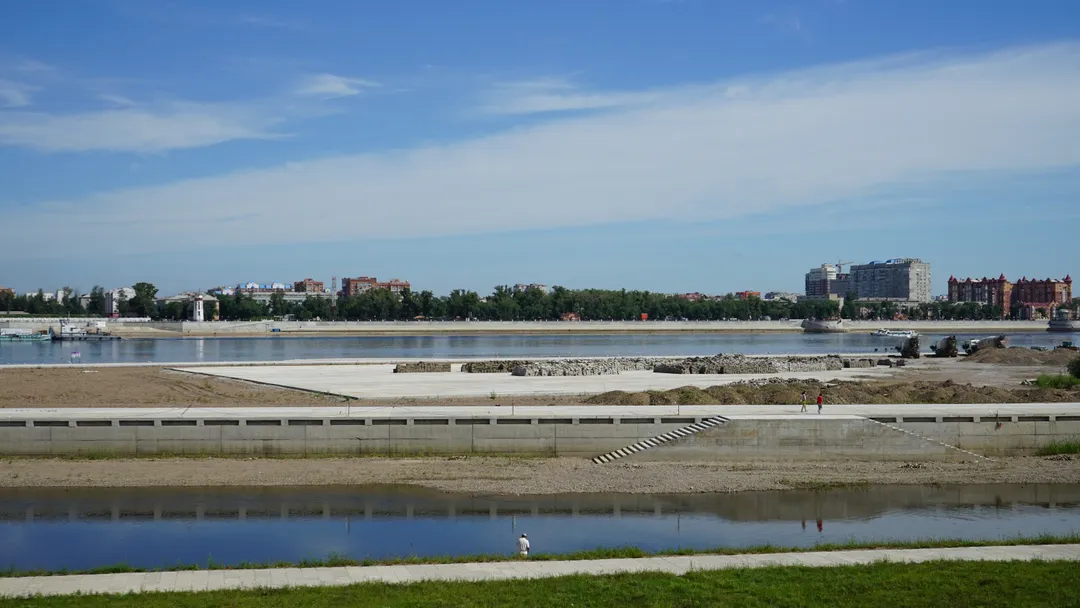
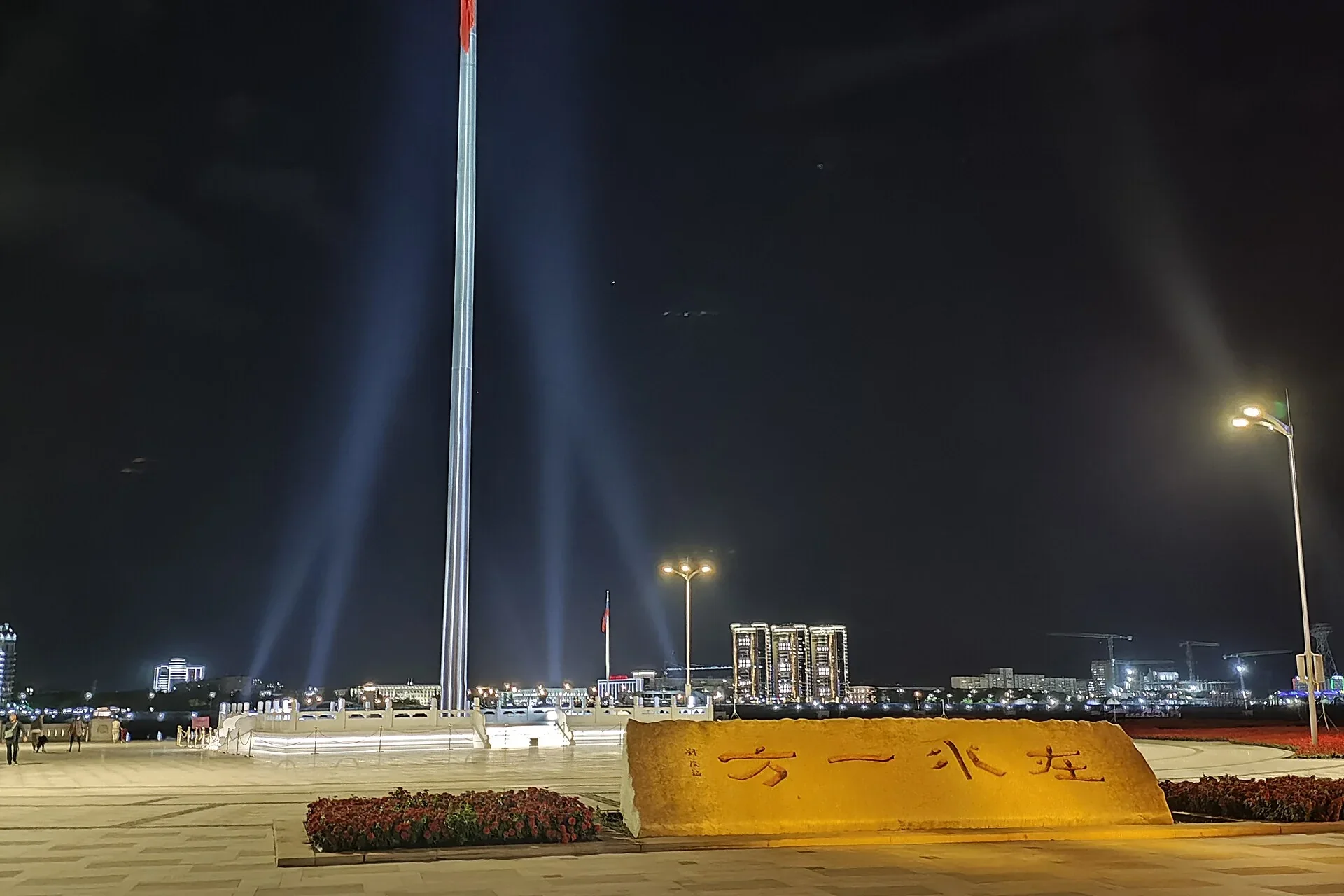
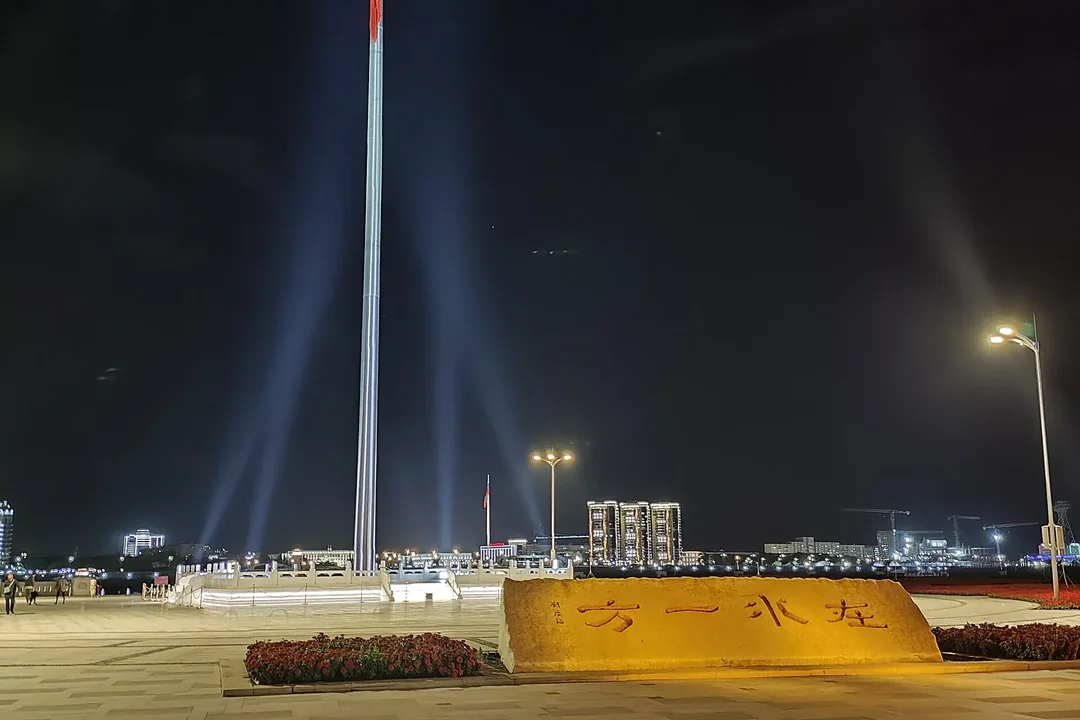
The embankment is Heihe's living room. The river — the Amur to Russians, the Heilongjiang at home — runs about 750 m wide here, wide enough that the city on the far bank reads as a low silhouette by day and a string of lights by night. The promenade carries the flagpole and the inscribed stones, the flower beds are rebuilt for every season, and the locals treat the bank as their evening circuit.
Walk it twice: at dusk, when the Russian side lights up first, and in the morning, when the water carries fog and the opposite bank reappears in layers. There is no ticket and no queue — the riverfront is free, always open, and the single best hour-per-yuan purchase in the city costs nothing at all.
Daheihe Island and Central Street
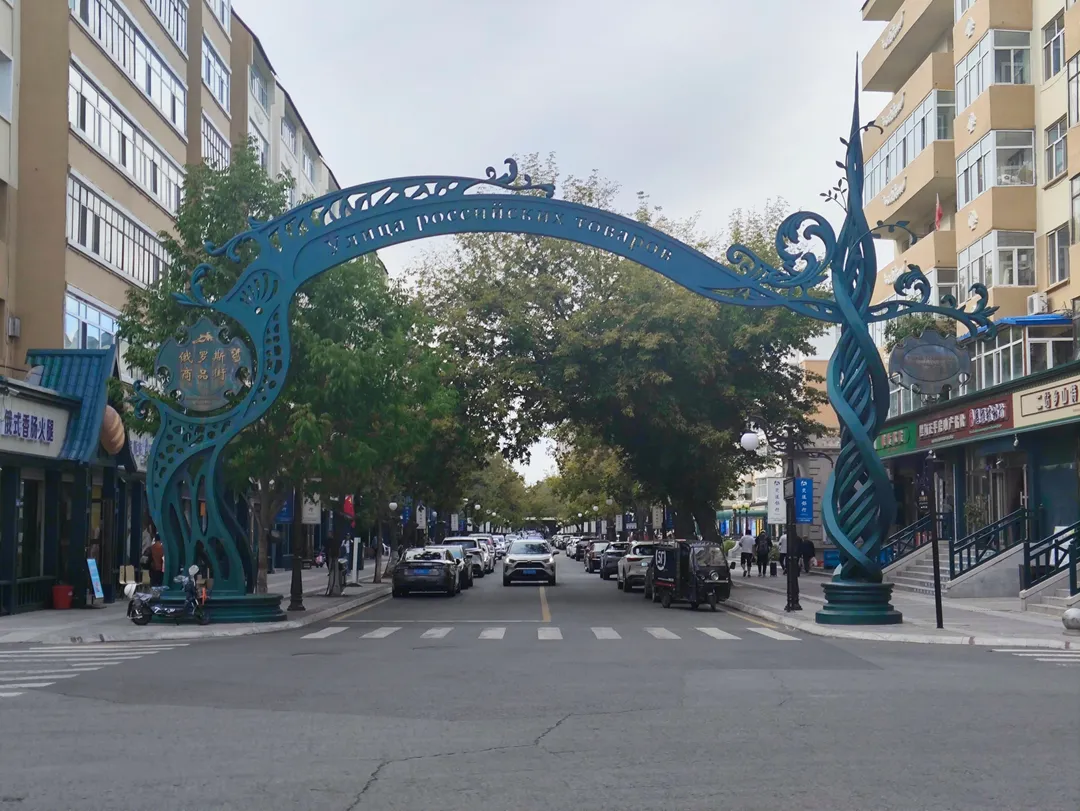
Border trade is Heihe's trade, and it happens in two places. Daheihe Island, in the river close to town, holds the border-trade market — goods moving in both directions, Russian chocolate and seafood and tools on one side, Chinese manufactured goods on the other. Closer to the centre, Central Street stacks the Russian-goods shops: telescopes, Baltic cosmetics, candy, and the paraphernalia of the cross-river trade.
Take an hour in the market and an hour on the street, and buy what you cannot read the label of — that is the local pastime too. The trade waxes and wanes with the border rules; check what is current when you arrive rather than planning purchases in advance. It is a working market first and a sight second, which is exactly why it is worth your hour.
Aihui: the Treaty Town
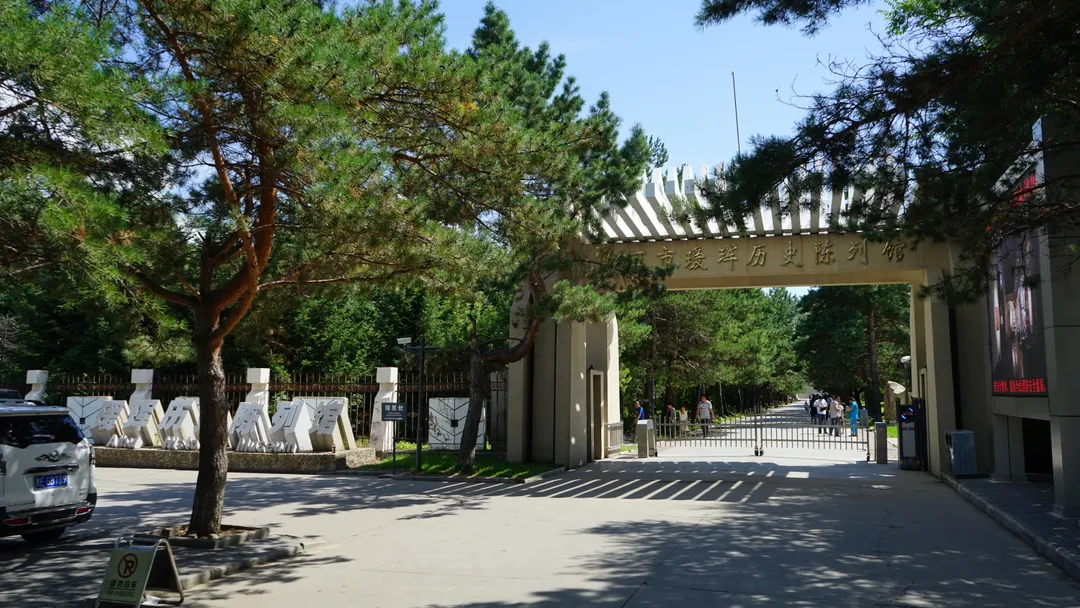
Thirty kilometres southeast, the suburb town of Aihui carries the weight of the river's history. On the bank here, on May 28, 1858, the Treaty of Aigun was signed — the document that redrew the border along the Amur — and the history museum now stands at the site, tracing the river's border story from the Qing garrison seat established in 1683. The rebuilt Kuixing Pavilion marks the old town's outline, and the river in front of the museum is the same water that carried the negotiations.
The museum is the necessary stop and takes 1-2 hours; labels lean Chinese, so a translation app earns its space. Pair the visit with the bank outside — standing at the treaty site with the river in front of you does more than any caption. Half a day covers Aihui comfortably.
Jinhe Canyon and the Culture Park
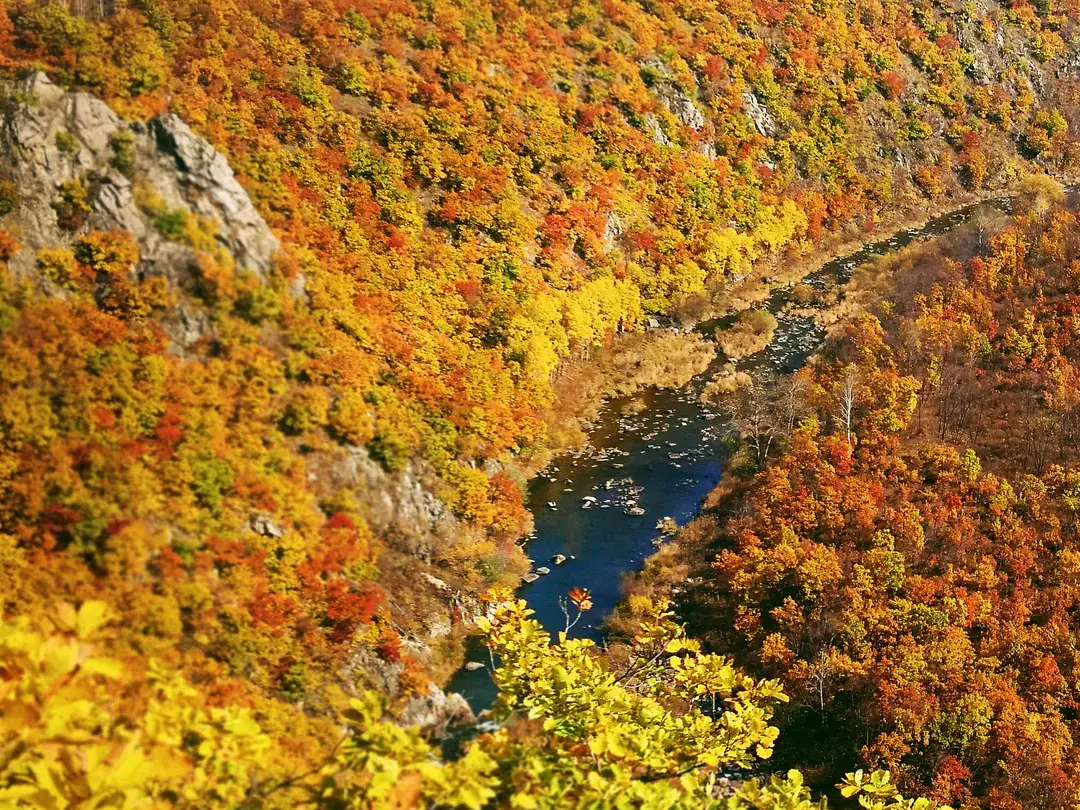
About 30 km inland, the Jinhe Grand Canyon changes the subject from river to forest: a wooded gorge with walkways along the water, cool air in summer and loud with birds in the morning. It is a nature half-day rather than a spectacle — the paths are gentle, the gorge is green, and in the short summer it is the place locals go to be outside.
On the way back toward town, the China-Russia culture park rounds out the afternoon: an open-air site built around the two cultures that meet at this crossing. Pair the two and the inland day is full; in winter the canyon walk shortens to its hardened paths, and the culture park takes the larger share.
The Frozen River: January to March
From January to March, Heihe becomes a winter border town in earnest. January means sit below -20 °C, and the Amur freezes to a depth that carries cars — the ice road becomes an event in itself, and the frozen river turns the 750 m of water into a white highway between two countries. Winter visitors come for exactly this: the city at its most singular, wrapped up and out on the ice.
The rules of the season are hard: dress in real winter layers, keep outdoor stints short, and let the locals tell you when and where the ice is safe. In exchange you get the photograph and the experience most of China never sees — standing mid-river, one country at your back and another ahead.
A Two-Day Plan (and a Third)
- Day 1 — river, island, street. Morning on the embankment, the border-trade market on Daheihe Island at midday, Central Street's Russian-goods shops in the afternoon, and the waterfront again after dark.
- Day 2 — Aihui. The 30 km run southeast to the treaty town: museum first (1-2 hours), Kuixing Pavilion and the bank after, back to town for a riverside dinner.
- Day 3 — canyon and out. The Jinhe Grand Canyon's walkways in the morning, the China-Russia culture park toward town in the afternoon, departure by evening.
The day-by-day version with legs and bookings lives in our Heihe 3-day trip builder, and the 7-day plan extends north and east through the province. The full circuit — Harbin, Qiqihar, the border towns — assembles in our Heilongjiang guide.
Getting There and Around
Heihe sits at the top of the province, and reaching it is an overland affair through Harbin or the regional cities; check timetables close to travel, since northern schedules shift with the seasons. Within the city, the waterfront, Central Street and the market sit close enough together to walk; Aihui and the Jinhe canyon need a car, a driver or a local tour — book the driver a day ahead and agree the return leg when you hire.
In winter, driving belongs to those who do it daily; take taxis and tours and keep your own hands in your pockets. Distances inside the city are short year-round, and taxis remain inexpensive by national standards.
Where to Stay
Stay central, within walking distance of the waterfront: the evening embankment is the city's best asset and you will use it daily. Hotel stock is practical mid-range, and the 300-600 CNY band our roster lists for a mid-range month buys comfortable rooms here — the city is not a resort market and prices stay level most of the year. Book ahead for the January-March frozen-river window and the July-August summer; both bring visitors for opposite reasons.
What to Eat in Heihe
The table is Northeastern Chinese with a Russian aisle. The base is the region's: dumplings, stews and noodles sized for hard winters, freshwater fish from the Amur system when the season allows, and barbecue streets in the short warm nights. The Russian layer is the border's own: chocolate, candy and pantry goods from the shops, and Russian dishes in the restaurants that face the trade.
Mobile payment works nearly everywhere — Alipay linked to an international card covers restaurants and markets — but keep 50-100 CNY in small notes for the market stalls. English menus are rare outside hotels; pointing and translation apps carry the day.
What a Day Costs
| Item | Price band | Notes |
|---|---|---|
| Backpacker day | 40 CNY | budget rooms, buses, noodle shops |
| Mid-range day | 100 CNY | rated hotels, taxis, fuller meals |
| Luxury day | 300 CNY | top local hotels, private car |
| Accommodation (mid-range month) | 300-600 CNY/night | central hotels near the water |
| Food | 100-200 CNY/day | dumpling lunches to riverside dinners |
| Local transport | 30-60 CNY/day | short hops in a small city |
| Attractions | 50-150 CNY/day | museum, canyon, culture park |
At mid-range, count on roughly 500-1,000 CNY per person per day including accommodation — our roster's estimate — with the waterfront and the streets, the city's best parts, costing nothing. The day trips to Aihui and Jinhe add modest entry fees and shared-car costs.
When to Go
Two seasons split the year. June-August is the short summer: green, cool by southern standards, with the canyon and the embankment at their best. January-March is the frozen-river season: January means below -20 °C, the ice road runs, and the city is at its most itself. Between them, May and September are quiet shoulders with the fewest crowds and the thinnest schedules.
Avoid the national holiday weeks of early February, early May and early October — the whole country moves at once, and in a border town the hotels feel it. Winter visitors should book the frozen-season window early; summer visitors should pack a layer for the evenings, whatever the forecast says.
Practical Tips
- Payment: link an international card to Alipay or WeChat Pay before arrival; carry 50-100 CNY in small notes for markets and small eateries.
- Connectivity: a tourist data eSIM (about 5-30 USD) avoids the phone-shop queue; install a VPN before you fly, since Google, WhatsApp and Instagram are blocked on the mainland.
- Language: English signage is limited outside main attractions — screenshot addresses in Chinese and keep your hotel's name written down.
- Cold: in the frozen season, dress for below -20 °C — real layers, windproof outer, and short outdoor stints until acclimatised.
- Emergencies: police 110, ambulance 120, fire 119, national tourist hotline 12301.
Frequently Asked Questions
How many days do I need in Heihe?
Two cover the city: the waterfront, the trade market, Central Street and the day out to Aihui. The third adds the Jinhe canyon and the culture park without hurry. In the frozen season, add slack — everything takes longer at -20 °C — and protect one full morning for the ice itself.
Can you cross to Blagoveshchensk from Heihe?
The border crossing exists and the two cities face each other across about 750 m of river, but crossing rules, documents and schedules change with policy and season — check the current requirements with official sources and local operators before you build a day around it. The waterfront and the trade market give you the border experience without crossing.
Why is Aihui important?
Aihui is the town where the Treaty of Aigun was signed on May 28, 1858 — the agreement that set the border along the Amur. The history museum stands on that bank and traces the story from the Qing garrison seat established in 1683, with the rebuilt Kuixing Pavilion marking the old town. For anyone interested in how this border came to be, it is the essential half-day.
Is Heihe really cold in winter — and is that a reason to go?
January means sit below -20 °C, so yes: it is seriously cold. It is also the reason to go — from January to March the Amur freezes road-hard, and the frozen river between two countries is the experience the city is singular for. Come with real winter kit and short outdoor stints, and the cold becomes the point rather than the obstacle.
Do I need cash in Heihe?
Mostly no — Alipay or WeChat Pay linked to an international card works at nearly every restaurant and shop. Keep 50-100 CNY in small notes for market stalls and the smallest eateries, where QR codes sometimes lag.
How does Heihe pair with Harbin?
As the far end of a good line. Harbin gives you the arrival city, the Russian quarter and the ice festival; Heihe gives you the border itself — the river, the trade and Aihui's treaty history. Our Heilongjiang province guide links the two with Qiqihar and the rest of the circuit.
What should I buy at the border market?
Whatever you cannot read the label of: Russian chocolate and candy, Baltic cosmetics, and the small tools and telescopes that move through the trade. Prices move with the border rules, so check what is current when you arrive — and treat the market as a working one, not a souvenir row.
Useful Phrases
| Chinese | Pinyin | Meaning |
|---|---|---|
| 你好 | nǐhǎo | hello |
| 谢谢 | xièxie | thank you |
| 多少钱 | duōshǎo qián | how much |
| 黑河 | Hēihé | Heihe |
| 黑龙江 | Hēilóngjiāng | the Amur / Heilongjiang river |
| 瑷珲 | Àihuī | Aihui (the treaty town) |
| 大黑河岛 | Dàhēihé dǎo | Daheihe Island |
| 中央街 | Zhōngyāng jiē | Central Street |
Final Notes
Every figure above — the 2-3 day frame, the roughly 750 m river, the 30 km to Aihui and the 30 km to the canyon, the treaty date of May 28, 1858, the 1683 garrison seat, January's -20 °C and the 40/100/300 CNY daily bands — was checked in October 2026 against our city roster data and the Heihe trip itineraries. Prices move; reconfirm within a fortnight of travel. Come for the river and Heihe overpays you: a border you can watch from a park bench, a market where two economies share an aisle, a treaty town where the border was drawn, and a winter when the border itself turns to road.
- Source: China National Tourism Administration — policy and seasonal notices.
- Source: Trip.com — live hotel and ticket listings for cross-checks.
Last verified 2026-10-14.