
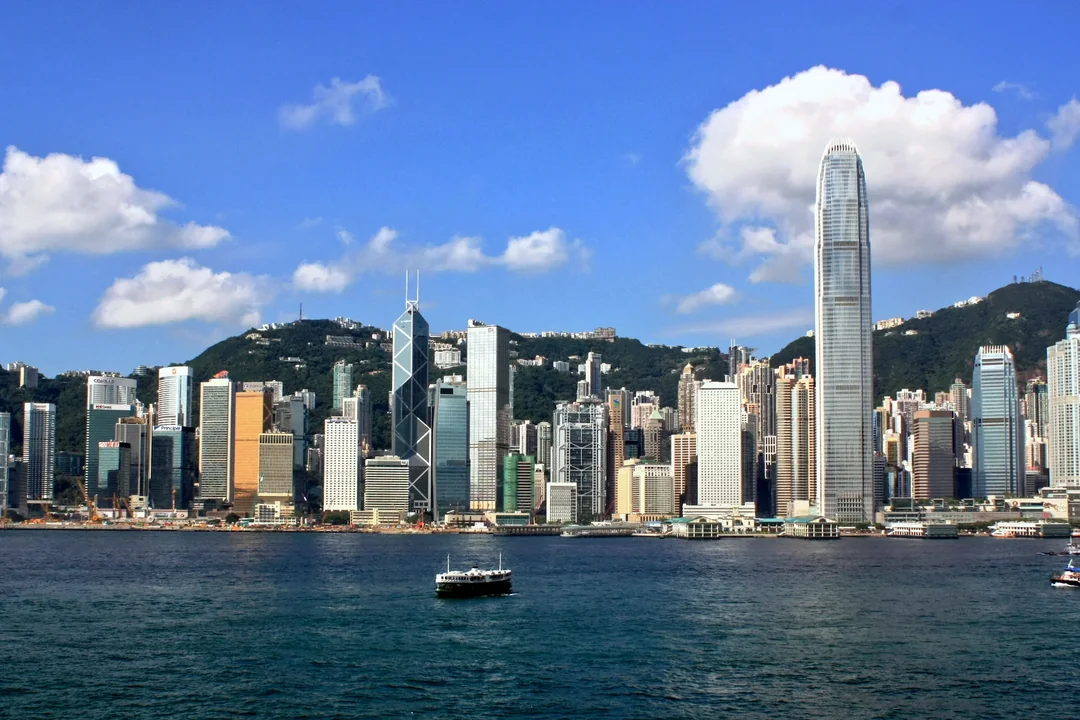
Hong Kong is not one city. It is at least three pressed against each other along a sliver of coast and a wall of granite — the financial district's glass-and-steel grid, the older Cantonese neighbourhoods of Kowloon climbing toward the harbour, and the New Territories' fishing villages and country parks that most visitors never reach. Add a layer of British colonial architecture, dim sum halls that have been frying har gow since the 1950s, and a tram system that has not changed since 1904, and you have a place that rewards both the checklist tourist and the wanderer.
This guide is written for someone landing at HKIA with three to five days and a desire to see Hong Kong as it is, not just the version on the harbourfront promenade. Recommended stay: 3-4 days for first-timers, 5-7 if you include Lantau, the eastern islands, or a day hike. Anything shorter and you will be sprinting; anything longer and you should plan to leave the city at least once.
essential Attractions
Victoria Peak and the Peak Tram
The Peak (太平山, 552 m) is the most touristy thing in Hong Kong, and you should still do it. The reason is not the summit itself — it is the tram ride up and the view back across the harbour. The Peak Tram has been grinding up the same slope since 1888, and the new six-car funicular completed in 2022 cuts the ascent to under five minutes. You will be packed in with everyone else, but the gradient is genuinely steep, and the floor-to-ceiling glass of the new cars makes it feel like you are tilting into the city.
What to do at the top: walk the Lugard Road loop (about 3 km, flat, 45 minutes) for a forested ridge walk with intermittent harbour views, then return to the Peak Tower complex for a meal or drink. The Sky Terrace 428 observation deck charges HK$88 (about US$11) and gives you the postcard view; whether that is worth the price is a personal call. The free viewing platform on the terrace level of the mall gives roughly 80% of the same photograph.
Tickets in 2026: Peak Tram return HK$99 (adult), HK$49 (child), HK$79 (senior). Sky Terrace 428 is extra. Combined Peak Pass (tram + Sky Terrace + Madame Tussauds) is HK$329 — skip unless you have children. There is also a Peak Tram Sky Pass annual ticket for HK$799 that locals use; not worth it for visitors.
How to get there: Central (exit K, then walk five minutes up Garden Road to the Peak Tram terminus) or take bus 15 from the Star Ferry pier in Central. Bus 15 is cheaper and gives a more interesting ride through old Mid-Levels; allow 40 minutes up, 25 down.
Skip the early morning. Go at dusk. Hong Kong at 6:30 p.m. with the harbour lights coming on is one of the great urban spectacles in Asia, and you will not get it from the summit in daylight.
Star Ferry and the Harbour Crossing
The Star Ferry (天星小輪) has run between Kowloon and Hong Kong Island since 1888. The crossing takes eight minutes and costs HK$6 upper deck / HK$5 lower deck (cash, Octopus, or QR). It is the cheapest harbour view in Asia and the best.
Use it. The Star Ferry is not just transport — it is the single best way to feel the scale of the harbour, the density of Kowloon, and the ridiculousness of the skyline on the Island side. Board at the TST Star Ferry Pier (next to the Hong Kong Cultural Centre and the Avenue of Stars promenade) and ride the eight minutes to Wan Chai or Central. Sit on the right side going from Kowloon to the Island for the best skyline view.
The Avenue of Stars on the Tsim Sha Tsui waterfront (free, 24 hours) has been refreshed since the protests-era controversies of 2020 and includes a Bruce Lee statue, an Anita Mui statue, and views across the harbour that compete with anything you can buy a ticket for. Walk the full 400m of it at night. Do not skip this for any "harbour view" hotel bar — they are looking at the same thing, and you are paying for the privilege.
Practical: ferries run every 6-12 minutes from 6:30 a.m. to 11:30 p.m. Avoid the 5-7 p.m. weekday rush hour if you cannot handle the crush.
Wong Tai Sin Temple and Chi Lin Nunnery
Most guidebooks list Wong Tai Sin (黃大仙祠) as a generic "famous temple," which undersells it. The temple at the top of the MTR station of the same name is the most-visited religious site in Hong Kong, and it works. Taoist, Buddhist, and Confucian deities sit under one roof, and the main courtyard is full of fortune-tellers, incense sellers, and devotees shaking bamboo cylinders until one of the 60 numbered sticks falls out — the fortune stick oracle, a genuine ritual with a two-century history. It is also a working temple, not a museum, so on weekends and Lunar festivals it is genuinely crowded. Admission is free.
How to get there: MTR Wong Tai Sin Station, Exit B2, two minutes' walk.
Combine it with Chi Lin Nunnery (志蓮淨苑), three kilometres south in Diamond Hill. Chi Lin is a Buddhist nunnery rebuilt in the 1990s in Tang-dynasty timber style, with no nails in the structure and a lotus pond that frames the high-rises of Kowloon in a way that feels deliberately surreal. Admission is free, and the adjoining Nan Lian Garden (南蓮園池) is a six-hectare classical Chinese garden, also free, with a teahouse in the middle that serves decent dim sum at tourist-but-not-bad prices (HK$80-150 per person).
Plan two to three hours for both together. This is the closest you get to "old Hong Kong" without leaving Kowloon.
Man Mo Temple and the Sheung Wan Walk
For something older and quieter, take the MTR to Sheung Wan and walk uphill. Man Mo Temple (文武廟) is a 1847 Taoist-Manichean temple on Hollywood Road, dedicated to the gods of literature (Man) and war (Mo). The smell of the hanging incense coils — some burning for weeks at a stretch — is the thing you remember. Admission is free; donations appreciated.
From Man Mo, walk east along Hollywood Road past the antique shops and Tai Ping Shan, then up Pottinger Street (the "stone-slab street" with granite steps laid in the 1840s), and into the PMQ (former Police Married Quarters, now a design and crafts centre with small studios that are worth browsing if you like independent retail) and then to the Mid-Levels Escalator — the world's longest outdoor covered escalator, 800 metres long, running uphill from 10:20 a.m. to midnight (downhill only from 6 a.m. to 10 a.m.). Take it to Hollywood Road, then walk down through the Tai Ping Shan area to the dried-seafood and ginseng shops on Wing Lok Street — the smell alone is worth the detour.
This whole loop is two to three hours and shows you a Hong Kong most tourists miss.
Lantau Island: Tian Tan Buddha and the Wisdom Path
Tian Tan Buddha (天壇大佛) at Ngong Ping is the world's largest seated outdoor bronze Buddha, 34 metres tall, completed in 1993. It is reached by the Ngong Ping 360 cable car from Tung Chung (HK$235 one-way / HK$360 round-trip for the standard cabin, more for the crystal cabin with glass floor — skip unless you really want it). The cable car ride is 25 minutes and crosses two mountains and the South China Sea; on a clear morning you can see the airport runways below.
At the top: climb the 268 steps to the Buddha's platform (free), then walk the 2.5 km loop through the Wisdom Path (心經簡林), a forest of wooden steles inscribed with the Heart Sutra in calligraphy by the late Professor Jao Tsung-I. The walk is flat and takes 30 minutes each way; it is one of the most peaceful spots in Hong Kong.
Combine with a meal at the Po Lin Monastery vegetarian restaurant (HK$150-250 per person for set menus) — the food is genuinely good, and you are supporting an actual monastic operation. Allow half a day for this side trip; a full day if you also walk to Tai O fishing village via bus 11 (30 minutes from Ngong Ping).
How to get there: MTR to Tung Chung, then either cable car or bus 23 from the Tung Chung bus terminal.
Where to Stay
Hong Kong's hotel market is weirdly stratified. The headline international chains (Mandarin Oriental, Four Seasons, Peninsula, Ritz-Carlton) charge US$500-1,500 per night and are mostly worth it for service and location. The mid-range (HK$1,500-3,000, US$190-380) is where you find the best value — older Asian chains, boutique hotels in Sheung Wan and Causeway Bay, and the newer design-led properties around Sheung Wan and Sai Ying Pun.
For first-timers, the choice is really Central/Sheung Wan (on Hong Kong Island, walkable to the harbour, Peak Tram, and Man Mo Temple) versus Tsim Sha Tsui / Yau Ma Tei (in Kowloon, denser, more Cantonese, walking distance to the Star Ferry, Wong Tai Sin, and night markets). Both are fine. The Island side is more expensive and quieter at night; the Kowloon side is louder and cheaper.
Specific recommendations
-
Mandarin Oriental Hong Kong (Central, 5★): HK$3,800-7,500 per night depending on season. The original Mandarin, still arguably the best hotel in the city. The Clipper Lounge dim sum is the single best hotel dim sum in Hong Kong and is open to non-guests if you can get a reservation.
-
The Mira Hong Kong (Tsim Sha Tsui, 4★): HK$1,400-2,600 per night. Design hotel in the middle of TST, walkable to Star Ferry, Harbour City, and the MTR. Restaurant on-site (WHISK) is solid.
-
Butterfly on Prat (Tsim Sha Tsui, 3★): HK$800-1,400 per night. Reliable mid-range, three minutes from TST MTR Exit B, clean rooms, no surprises. Good value for the area.
-
Hotel Stage (Yau Ma Tei, 4★): HK$1,000-1,800 per night. Newer boutique hotel near the Temple Street night market and Tin Hau temple; walkable to Yau Ma Tei MTR.
-
The Fleming (Wan Chai, 4★): HK$1,600-2,800 per night. Independent boutique in a converted 1970s office tower, design-led, central location between Wan Chai MTR and the Star Ferry pier.
For backpackers and budget travellers: Yesinn @Yau Ma Tei (HK$300-600 per bed) and the Hong Kong Hostel chain in Mong Kok and Causeway Bay are the cleanest and quietest of the dorm options. Capsule hotels like Sleep@ (HK$400-700 per capsule) exist but are cramped.
Book at least three weeks ahead for October-April; six weeks ahead for Lunar New Year and the Rugby Sevens weekend in late March / early April.
Getting Around
Hong Kong's public transport is the best in Asia, and you will use it.
MTR (Subway)
The MTR runs 11 lines, clean, frequent (every 2-4 minutes at peak), and reasonably priced. A single trip on the Island Line costs HK$6-13 depending on distance. Daily caps: HK$50 on the urban lines. Get an Octopus card at any MTR station (HK$50 deposit, refundable, plus you can load HK$100-500). The Octopus works on the MTR, buses, trams, ferries, and most convenience stores. In 2026, the Octopus also works on Apple Pay and Google Pay, but the physical card is still easier for tourists.
The lines you will use most: Tsuen Wan Line (red, Central-TST-Shatin), Island Line (blue, HKU-Wan Chai-Causeway Bay-Quarry Bay), East Rail Line (red border, Hung Hom-Lo Wu border crossing to Shenzhen).
Trams (Ding Ding)
The double-decker trams on Hong Kong Island (the "ding ding") have run since 1904. They are slow (30 km/h on average), cheap (HK$3 flat fare), and one of the most pleasant ways to see the Island's northern shore. Board at the back, pay at the front exit. Use Octopus or exact change. The full east-west run from Kennedy Town to Shau Kei Wan takes about 80 minutes.
Buses
Buses are double-deckers and cover everywhere the MTR doesn't. KMB runs Kowloon and the New Territories; Citybus and New World First Bus run Hong Kong Island and the airport. Use Octopus. Fares are distance-based, HK$4-15.
Taxis
Urban taxis (red) start at HK$29 (HK$23 for the first 2 km in 2026). Lantau taxis (blue) start at HK$24 and only run on Lantau. New Territories taxis (green) start at HK$23.50 and are useless to most visitors. Drivers do not typically speak English; have your destination written in Chinese characters, or use the MTR. Tipping not expected but appreciated (round up to the nearest HK$5-10).
DiDi works in Hong Kong but local taxis are usually faster and cheaper.
Airport access
Airport Express (AEL) from HKIA to Central: 24 minutes, HK$115 (HK$100 if you buy in advance). Free in-town check-in at Central and Kowloon stations. Bus routes A11 (HK$40, to Central) and A21 (HK$33, to Kowloon) are cheaper if you have light luggage. A taxi from the airport to Central is HK$280-340 and takes 35-50 minutes depending on traffic.
Where to Eat
Hong Kong is one of the great food cities of the world, and you should eat accordingly. The default move is dim sum (點心) for lunch or brunch, dai pai dong (大排檔, open-air cooked-food stalls) for dinner, and cha chaan teng (茶餐廳, Hong Kong-style cafés) for breakfast or a quick meal. Cantonese seafood and roast goose are the headline dishes.
Specific places
-
Tim Ho Wan (multiple branches; the original is in Sham Shui Po, 2-8 Kwong Wa Street). The cheapest Michelin-starred dim sum in the world. Four-piece baked barbecue pork buns (HK$50 for four) are the headline item. Get there before 10 a.m. or wait an hour. The Mong Kok and West Kowloon branches have shorter waits.
-
Mak's Noodle (Central, 77 Wellington Street). Wonton noodles (HK$60), springy egg noodles in a clear prawn broth. One of the original 1940s wonton shops. Order the small wonton soup and add a side of beef brisket noodles.
-
Lung King Heen (Four Seasons Hong Kong, Central). Three Michelin stars. Cantonese fine dining, dim sum included. Set lunch HK$600-1,000. Worth it for the steamed lobster dumpling and the crispy sugar cane pork. Book two to four weeks ahead.
-
Kam's Roast Goose (Wan Chai, 226 Hennessy Road). Roast goose over rice (HK$110), the only Hong Kong roast goose shop to keep a Michelin star after the original Yat Lok controversy. Get there before noon or after 2 p.m. to avoid the queue.
-
Tin Heung Lau (Causeway Bay, 8 Cannon Street). Dai pai dong in a converted tenement. Open late. Salt-baked chicken (HK$280 for half), garlic prawns, stir-fried clams. Cash only.
-
Australia Dairy Company (Jordan, 47 Parkes Street). Cha chaan temple. The scrambled eggs with white pepper and the steamed milk pudding are the items. Breakfast only, closes at 4 p.m., expect a wait. Service is famously brisk; do not ask questions, just point.
-
Mido Café (Yau Ma Tei, 63 Temple Street). 1950s cha chaan teng that survived modernization because it refused to renovate. Pork chop bun, condensed-milk toast, HK$30-60 per person. Closed Wednesdays.
-
Sevva (Central, 25/F Prince's Building). Not local, but the best rooftop view in Central. Cocktails HK$150-220. Lunch set HK$380. Worth a sunset drink even if you don't eat.
Local rules: queue where locals queue. If a stall has 30 people and the place next door is empty, the queue wins. Use Octopus at every cha chaan teng. Eat at the times locals do (dim sum 7-11 a.m., lunch 12-1:30 p.m., dinner 6:30-8 p.m.). Outside those hours, many places close.
When to Visit
The best windows are late September to early December (autumn, low humidity, typhoon season is winding down) and February to mid-April (spring, before the May rains). The worst windows are June to early September (hot, humid, typhoon risk) and the Lunar New Year week in late January or early February (everything closes for 3-5 days, prices spike, attractions are packed).
Hong Kong's subtropical climate means January temperatures can drop to 8°C with biting wind chill on the Peak, and July can hit 34°C with 90% humidity. Pack a light jacket year-round — air conditioning is aggressive indoors, and the harbour wind cuts through thin fabrics in winter.
Key annual events to plan around or build into your trip:
-
Lunar New Year (late Jan-early Feb): most impressive in Victoria Park flower market and at Wong Tai Sin. Streets are decorated, fireworks over the harbour on New Year's Eve (Feb 17-18, 2026 is the year of the Horse). Hotels triple in price. Plan ahead or avoid.
-
Hong Kong Sevens (late March / early April 2026): a rugby tournament that takes over the city. Worth attending if you like sport and partying. Book hotels six months ahead.
-
Tin Hau Festival (April-May, lunar calendar): sea goddess festivals at fishing villages, especially Sai Kung and Tai O. Genuinely local.
-
Dragon Boat Festival (June, lunar calendar): races in Stanley and Aberdeen.
-
Mid-Autumn Festival (Sept-Oct, lunar calendar): lantern displays in Victoria Park, mooncakes everywhere.
Practical Info
Visa
Citizens of about 170 countries can enter Hong Kong visa-free for 7-180 days depending on nationality. Most Western passport holders get 90 days. China-mainland visas are separate. Crossing into Shenzhen or Guangzhou requires a separate Chinese visa.
Payment
Hong Kong is one of the easiest cities in Greater China for foreign visitors to pay. Credit cards (Visa, Mastercard, Amex) are accepted at hotels, restaurants, and chain stores. Octopus is the local prepaid card. AlipayHK and WeChat Pay HK both work with foreign-issued credit cards in 2026, after the linkage reforms of 2024-2025 — bind your card in the app before you arrive. Cash (HK$) is still useful for dai pai dong, wet markets, and small shops. ATMs at HSBC, Hang Seng, and Bank of China accept foreign cards.
SIM and Wi-Fi
Free Wi-Fi is widespread: govWiFi at most MTR stations and public buildings, plus free Wi-Fi at most malls and chain cafes. For data, an eSIM (Airalo, Ubigi, or Holafly) for HK$30-100 for 5-30 days is the easiest option. Local prepaid SIMs from CSL, 3HK, or SmarTone are available at the airport kiosk and downtown stores (HK$88-198 for 30 days with 10-30 GB).
Language
Cantonese is the dominant spoken language. English is widely understood in tourist areas, MTR announcements, hotels, and most restaurants. Mandarin is spoken but less common than in mainland China. Tipping not customary except at hotels (HK$10-20 for porter, HK$50-100 for housekeeping).
Safety
Hong Kong is one of the safest cities in Asia. Violent crime against tourists is rare. Pickpocketing risk is low but exists in TST, Mong Kok, and at peak MTR stations. The political situation has stabilized since 2020-2021; demonstrations are rare in 2026. The main risk is pedestrian traffic — cross at signals, look both ways, do not assume cars will stop.
Health
Tap water is safe to drink (Hong Kong draws from Dongjiang reservoirs in Guangdong and treats to WHO standards). Pharmacies (Mannings, Watsons) are everywhere and staff speak English. Hospitals: Queen Mary, Queen Elizabeth, Prince of Wales are the public teaching hospitals; private options include Hong Kong Sanatorium and Matilda International. Travel insurance recommended.
Hidden Gems and Local Knowledge
The Eastern Islands
Cheung Chau (長洲), Lamma (南丫島), and Peng Chau (坪洲) are accessible by ferry from Central. Lamma is the easiest — 25 minutes from Central pier 4, walk the 4 km Family Trail from Yung Shue Wan to Sok Kwu Wan, eat seafood at one of the waterfront restaurants in Sok Kwu Wan (HK$200-400 per person for a fresh catch), and ferry back. The seafood restaurants share a kitchen in some cases — Man Wah and Rainbow are the most reliable. Avoid the weekends with mainland tour groups; go on a Tuesday or Wednesday.
Cheung Chau is sleepier, smaller, and famous for the Cheung Chau Bun Festival (May, lunar calendar) with its 60-foot bamboo tower of buns. Worth it as a day trip from Central (40-minute fast ferry, HK$30-50).
The Mai Po Nature Reserve
Most visitors have no idea Hong Kong has one of the best birdwatching sites in East Asia. Mai Po Marshes, in the northwestern New Territories, is a 380-hectare wetland managed by WWF Hong Kong. From October to April, 50,000-100,000 migratory birds pass through — including black-faced spoonbill, Saunders's gull, and the occasional black-headed ibis. Access is by permit (HK$130-200) and guided walks only; book via WWF Hong Kong. Combine with a visit to the walled village of Tai Fu Tai in San Tin.
This is the single most under-the-radar thing you can do in Hong Kong, and most locals under 40 have never done it.
The Dragon's Back Hike
Hong Kong's country parks contain over 500 km of marked hiking trails. The Dragon's Back (龍脊) is the most accessible and arguably the best — 8.5 km, 2.5-3 hours, mostly flat with one short climb, ending at Big Wave Bay beach where you can swim and eat at the beachside restaurants. Get there: MTR to Shau Kei Wan, then bus 9 to the trailhead at Pottinger Gap. Do it in November-December when the trail is firm and the humidity is bearable.
Where Locals Actually Eat Dim Sum
Avoid the Peak or IFC Mall dim sum places; the locals do not eat there. The list of cha chaan teng and dim sum halls where Hong Kongers queue: Tim Ho Wan (above), Lin Heung Tea House (Sheung Wan, 162 Wellington Street — the older, more traditional experience, bamboo steamer towers, HK$50-150, expect a queue), Star Seafood (multiple branches; cheaper than Lung King Heen, Cantonese classics done well), Fook Lam Moon (Wan Chai, expensive but the historical Cantonese banquet institution since 1972), Yung Kee (Central, the roast goose institution, simpler than Lung King Heen, more local). At any of them, point at what other tables have ordered, or order the classics: har gow (HK$40-60 per basket of four), siu mai, char siu bao, cheung fun (rice noodle rolls), and lo mai gai (sticky rice in lotus leaf).
Final Reflections
Hong Kong rewards walking. The grid in Central is dense and walkable; Kowloon's streets are full of surprises; the harbour is most felt on a ferry rather than from a viewing platform. Three days is the minimum, four is better, and a week with one day on Lantau, one on Lamma, and one in the New Territories is the version of the trip you will remember in five years.
Avoid peak-season hotel markups, eat where the queue is, and do not skip the Star Ferry. Everything else follows from there.
Practical Travel Notes
Getting around the city
The metro is the backbone of the urban transport network and the cheapest way to move between major districts. Trains run from around 6 a.m. to 11 p.m. with frequent service in the central business district. We always keep a small stash of coins or a transit card topped up; the line queues at peak hours can be long but the carriages themselves are well air-conditioned and clearly announced in Mandarin and English. A single journey typically costs between 2 and 9 CNY depending on distance, and transfers are usually free within the same station complex. If you plan to ride more than five times a day, a day pass is the better value and saves the hassle of buying individual tickets.
Buses fill in the gaps the metro does not cover. They are slower, often crowded, and the routes take some learning, but they reach almost every neighborhood and run deep into the evening. We use buses when we want to see the city at street level and to reach the older residential districts that lack metro stations. Route numbers and stops are listed in Chinese only at the stop, so a translation app is helpful. Taxis are inexpensive by international standards. Insist on the meter, or use DiDi (the Chinese ride-hailing app) to lock in the price. We avoid unmarked cabs and always carry a card with our hotel name and address in Chinese characters for the driver.
Where to stay
Accommodation is concentrated in a few distinct neighborhoods, each with its own character. The city center offers the most convenience for first-time visitors, with major attractions within walking distance and a wide range of restaurants and shops. Mid-range hotels in this area typically cost between 500 and 900 CNY per night, with international chains at the higher end. Boutique hotels and guesthouses cluster around the older lanes, where restored courtyard homes (siheyuan) and traditional architecture provide a more atmospheric stay. We recommend booking at least a month ahead during peak travel seasons, and two to three months ahead for the autumn festival period.
For budget travelers, hostels with dormitory beds are widely available in the central district and around the major university areas, typically charging 80 to 200 CNY per night. Private rooms in hostels run from 200 to 400 CNY. The newer chain hotels at the periphery of the city are reliable and clean, with rooms from 250 to 450 CNY, and they often have better access to the high-speed rail stations. Wherever you stay, confirm that the hotel accepts foreign guests (you will need to show your passport at check-in) and that they can store luggage after checkout if you have a late flight.
Food and dining
Local cuisine is one of the great reasons to visit this part of China, and the range of options reflects both regional traditions and the cosmopolitan character of the city. Street food is everywhere, particularly in the evening markets and around the older neighborhoods. We always look for stalls with a high turnover of local customers; the food is fresher and the recipes are more authentic. Hot pot, dumplings, and the regional noodle dishes are staples. Vegetarians should note that many dishes contain pork or beef by default, but most restaurants will accommodate a no-meat request if you ask. Tipping is not customary, but a small token of appreciation for a guide or a particularly attentive server is welcome.
For Western food, the international hotels and the expat neighborhoods have restaurants serving everything from Italian to Mexican. Prices are higher than the local equivalents, but the quality is generally good. Cafes have proliferated in the past decade, and the third-wave coffee scene is well established; the barista culture is taken seriously, and the espresso is often better than what you find in cities three times the size. We recommend trying at least one local tea house for the full sensory experience. Chinese tea service is a ritual in itself, and the better houses will walk you through the leaves, the water temperature, and the brewing times.
Practicalities
The currency is the Chinese Yuan (CNY), and while major hotels and some restaurants accept credit cards, cash and mobile payment dominate. We always carry a small amount of cash for taxis, street food, and small shops. Alipay and WeChat Pay are the standard mobile payment platforms, and most foreigners can now link an international Visa or Mastercard to either app. ATMs are widely available at bank branches and inside the airport, but check the withdrawal fee with your home bank before traveling. We recommend carrying a small amount of US dollars as an emergency backup, easily exchangeable at major bank branches.
Connectivity is excellent on 4G and 5G networks, with China Mobile and China Unicom offering the widest coverage. Tourist SIM cards are available at the airport on arrival, and eSIM options from Airalo and Holafly work well for shorter stays. Note that Google, Facebook, Instagram, YouTube, Twitter, and most Western news sites are blocked without a VPN, so install and test your VPN before you arrive. Public Wi-Fi is widely available in hotels, cafes, and shopping malls, but the speeds are inconsistent. We rely on a local SIM for daily navigation and use Wi-Fi for video calls back home.
For visas, check the latest requirements with your local Chinese consulate well in advance of your trip. Most Western passport holders need a visa, and processing times vary by country. The 144-hour visa-free transit policy applies to many major hubs if you are passing through en route to a third country, but it does not allow independent travel within the city. Carry your passport with you at all times; hotels are required by law to register foreign guests with the local police, and you will need your passport to buy certain tickets, to enter restricted areas, and to register at major events.
Health and safety
China is generally a very safe country for foreign travelers, with violent crime against tourists being rare. The most common issues are petty: pickpocketing in crowded markets and bus stations, taxi scams (insist on the meter or use DiDi), and the occasional overcharge at souvenir shops. Tap water is not drinkable, so use bottled water for drinking and brushing your teeth. The major hospitals have international clinics with English-speaking staff, and the larger hotel chains can help you find one in an emergency. Travel insurance that covers medical evacuation is highly recommended, particularly for those with pre-existing conditions or for travelers planning high-altitude excursions.
Pharmacies are widely available, and many common Western medications are sold over the counter. Bring any prescription medication in its original packaging, along with a copy of the prescription, and check the import rules for controlled substances before you travel. Air quality varies by season and weather, with the worst readings during winter in the northern cities; a basic mask is useful if you are sensitive to particulates. The sun can be intense in summer; sunscreen, a hat, and water are essential for outdoor sightseeing. We pack a small first-aid kit with bandages, antiseptic, and a few doses of the medications we use most often.
Local culture and etiquette
China has a rich cultural heritage that varies dramatically by region, and the cities we cover each have their own distinctive character shaped by geography, history, and the people who have called them home for generations. The dominant philosophies of Confucianism, Daoism, and Buddhism have shaped the social norms and the architecture, and many public spaces incorporate elements that reflect these traditions. Local temples, museums, and cultural centers offer a window into the regional history and provide context for the food, the dialects, and the daily rhythms you will encounter.
Etiquette varies, but a few common courtesies apply almost everywhere. Greet elders first when entering a room. Use both hands when passing something to another person, particularly in formal settings. Avoid pointing with a single finger; the open hand is more polite. When visiting a temple or a private home, remove your shoes if you see others doing so. Public displays of affection are uncommon in many parts of the country, and a modest demeanor is appreciated. In restaurants, it is fine to share dishes family-style, and the host typically orders for the table. Tipping is not expected but increasingly accepted in international hotels and high-end restaurants.
Suggested day plans
For travelers with limited time, we recommend a three-day plan that covers the major highlights without rushing. Day one focuses on the historical center: the imperial palace, the old town, and the principal museums. Start early to beat the crowds, and plan to spend at least three to four hours at the main historical site. Lunch at a local restaurant, then a relaxed walk through the surrounding lanes and gardens. Day two covers the natural scenery or the cultural venues that require a half-day excursion; book transportation in advance. Day three is for the neighborhoods you found most interesting on the first two days, with a long lunch and a slow afternoon.
For a one-week stay, add a side trip to a nearby town, a hiking area, or a scenic river cruise. Most major cities in China have well-developed high-speed rail connections, and a two- to three-hour train ride can take you to a dramatically different landscape, from mountain temples to coastal villages. The off-the-beaten-path destinations are often where the most memorable experiences happen, particularly if you can spend at least two nights to let the place reveal itself. We always recommend a buffer day at the end of the trip for the unexpected: a new museum, a festival you did not know about, or simply a quiet morning at a favorite cafe.
Photography and content
China offers extraordinary photographic opportunities, from the dramatic skylines of the major cities to the rural landscapes that have been farmed for thousands of years. Most public spaces are open to photography, but restrictions apply in museums, religious sites, and government buildings. Drones are heavily regulated; you will need a permit for any commercial or even semi-professional use, and personal drones are sometimes confiscated at airports. We always check the local rules before flying, and we never fly near airports, military installations, or over crowds.
For social media content, remember that many Western platforms are blocked in China without a VPN. Posting live updates from a VPN connection is technically against the local rules, but enforcement is inconsistent and the practical risk is low for tourists. We always recommend a respectful approach to local customs, particularly when photographing children, religious ceremonies, and rural villages. A smile and a brief conversation go a long way, and most people are happy to be photographed if you ask. The light is best in the early morning and the golden hour before sunset, and the worst midday light is a good time for an indoor museum or a long lunch.
What to pack
Pack light, especially if you plan to use the high-speed rail network, where luggage space in the carriages is limited. A small rolling suitcase plus a daypack is our standard kit. Comfortable walking shoes are essential, particularly for the older neighborhoods where the streets are often cobblestone or uneven. A light rain jacket or a compact umbrella handles most weather, and a warm layer is necessary for winter visits in the north. Modest clothing is appreciated when visiting religious sites, and a scarf or a sarong can double as a shoulder covering for both sun and respectful entry.
Bring a universal power adapter, and note that China uses Type A, Type C, and Type I plugs at 220V and 50Hz. A small first-aid kit, your prescription medications, sunscreen, and a reusable water bottle complete the essentials. We also pack a small bag of snacks for the long train rides; while the dining cars serve food, the quality is variable and a favorite chocolate bar or a handful of nuts can rescue a delayed journey. A small notebook is useful for the address of your hotel in Chinese, the emergency numbers, and the names of any guides you have worked with.
Sources
- Source: China National Tourism Administration: cnta.gov.cn — official tourism statistics and policy.
- Source: Trip.com: trip.com — booking platform with verified user reviews.
- Source: Lonely Planet China: lonelyplanet.com/china — guidebook recommendations.