Jilin City at a Glance
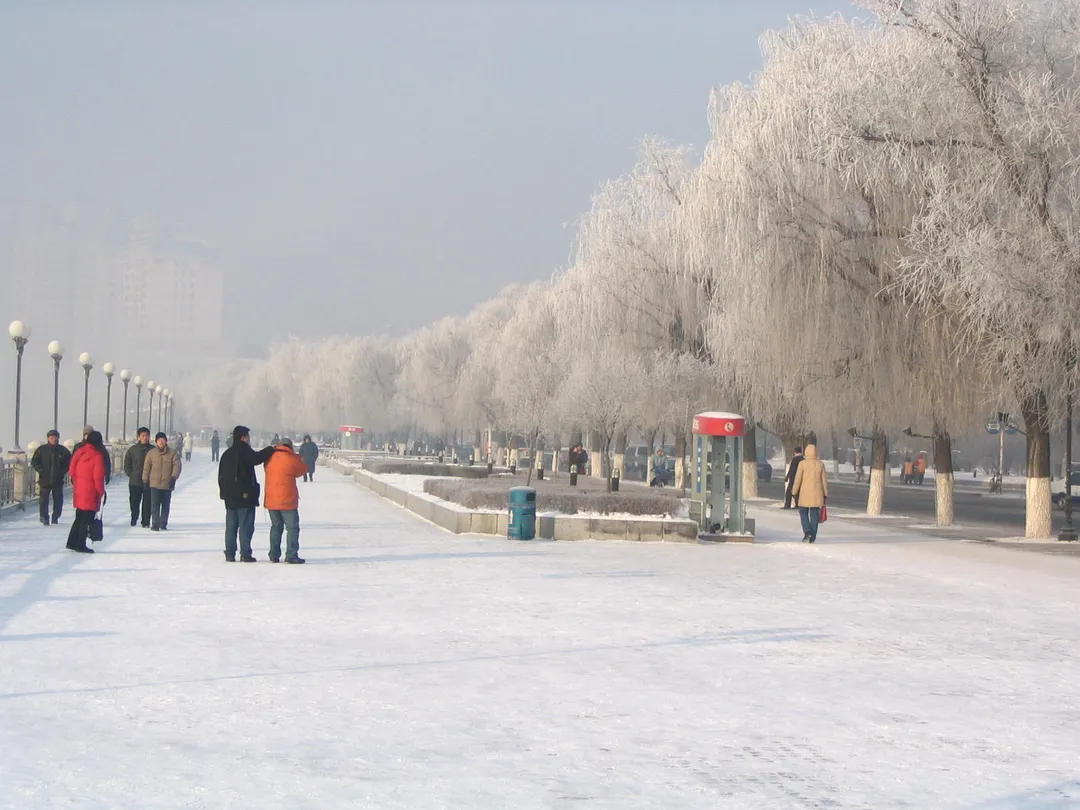
Jilin City (吉林市) is the river city in central Jilin province that most of the country knows through one image: rime — 雾凇, the frost that ices every willow along the Songhua embankment on the right winter morning, the scene in the photo above. The city is one of the few in China named after a river rather than the other way round, and its year splits cleanly in two: December-February belongs to the rime dawns, when the mist off the dam outflow — held at a steady 2-4°C — freezes onto the trees on cold, clear, windless mornings below about -15°C; July-August belongs to Songhua Lake, the drowned valley behind the dam begun in 1937. Two to three days cover it: temple hill and the 1736 Confucian temple in town, a dawn on Rime Island 35 km north, and the lake.
A mid-range day runs 500-1000 CNY per person — accommodation 300-600 CNY, food 100-200 CNY, transport 30-60 CNY, tickets 50-150 CNY. Come for the frost if you come for one thing; everything else is a quiet bonus.
Why Jilin City
Jilin City sits in a bowl of hills where the Songhua bends into an S through town — four "guardian" mountains ring the old grid, Zhuque to the south with Xuanwu, Qinglong and Baihu at the other points, and the temple pavilions on their slopes give the skyline its punctuation. It was the provincial capital until 1954, and the early industrial years left it a working city rather than a museum one — which is exactly why the riverbank in winter still belongs to locals doing morning walks, not tour groups.
The rime is the headliner, and it has real credentials: on the "four natural wonders of China" lists that travel agencies cite, the Jilin rime is the entry that recurs. The physics are local. The Fengman dam, begun in 1937 about 20 km upstream, keeps water moving through the winter; where it exits, the water sits around 2-4°C, and on still mornings below about -15°C the mist rising off it freezes onto every branch along the banks downstream. The show concentrates December to February, peaks after cold, clear, windless nights, and melts by late morning.
The honest trade-offs: summer is the weaker season unless the lake is the plan; English signage is thin; and the rime is weather, not a ticket — you can miss it, which is why the smart play is giving yourself two dawns.
Beishan Park and the Temple Hill
Beishan (北山), the temple hill inside the northwest of the city, is where Jilin City goes for its festivals. Temple courts climb the slope — Buddhist, Taoist and folk halls stacked in stages — and on the big fair days, the 18th and 28th of the fourth lunar month, the courts fill with incense, vendors and opera. The rest of the year it is a steep, cheap city climb with the grid laid out below; the lakes at the foot freeze into skating and sledding space in winter.
Give it 2-3 hours, most of it uphill walking. Entry is free to modest, and the hill sits close enough to the centre for a short taxi ride. Pair it with the Confucian temple near the river.
The Confucian Temple of 1736
The Jilin Confucian temple (吉林文庙) was founded in 1736, under the Qianlong emperor, and it is one of the larger Confucian complexes in the northeast — a walled compound of gates, courtyards and the main hall on the east bank of the Songhua. It rewards 45-60 quiet minutes, and the exhibition halls inside walk through the examination system that fed officials to the Qing frontier. Photography is easy in morning light, and the riverside embankment walk runs nearby — which makes temple and riverfront a natural single loop.
Rime Island: the Dawn Trip
Rime Island (雾凇岛) — actually a stretch of the Songhua at Wula Street township, about 35 km north of the city — is where the frost lands heaviest and the photographers point their trips. The routine: leave town in the dark, cross to the farmhouses opposite the island, and wait for the sky to turn. On a proper morning the willows carry centimetres of ice, the river steams, and the light builds for about an hour after sunrise before the frost starts falling.
The odds improve with a farmhouse night across the river — two dawn chances instead of one, since the rime needs still, frosty air and refuses schedules. Dusk over the frozen channel is its own reward. Dress for -15°C and below: layered, windproof, with hand warmers and spare batteries, which drain fast in the cold. Local guesthouses serve farmhouse dinners that double as the warmest welcome you will meet at this end of the province.
Songhua Lake and the 1937 Dam
Southeast of the city, about 20 km out, the Songhua pools behind the dam begun in 1937 into a long drowned-valley lake ringed by forest hills. Summer is the season: boat piers work the water, the lakeshore drive runs along the north bank, and the air at the water runs several degrees cooler than the city. The dam itself is worth the viewpoint for the story it carries — it powers the region, and its warm outflow is the reason the rime exists downstream.
Half a day covers the lake in any season. In deep winter the shoreline freezes into a grey-white corridor, and the same drive becomes an ice road with the wind coming straight down the valley.
The Guardian Hills and City Walks
If the weather turns, the city itself holds a day. Longtan Mountain, on the northeastern edge, keeps a 388-metre hill-fort with Goguryeo-era walls and a rock-cut pool; Zhuque, the southern guardian hill, walks forest paths past temple pavilions with the city grid below. Between them, the Songhua riverfront — the frosted promenade of the hero photo — connects the temples, bridges and embankment markets on foot. None of this competes with the rime; all of it makes the non-rime hours worthwhile.
A Two-Day Plan (and a Third)
- Day 1 — the river city. Beishan Park in the morning, the Confucian temple after lunch, then the embankment walk through dusk — in December the lamps come on over the ice and the first frost may already be forming.
- Day 2 — the dawn. Out before first light to Rime Island (35 km), sunrise among the frosted willows, farmhouse breakfast, back to town by noon. Afternoon at Longtan or the riverfront, depending on what the cold allows.
- Day 3 — the lake or the hills. Songhua Lake and the dam viewpoint in summer; the guardian hills and museums in winter.
Our 3-day Jilin trip builder lays this out hour by hour; the 5-day and 7-day versions add a farmhouse night by the island and a Changchun forest-lake day — Changchun is 40 minutes west by train, and Changbaishan extends the province east; the province-wide frame is in our Jilin guide.
Getting There and Around
Jilin City sits 40-90 minutes east of Harbin and Changchun by train — check 12306 for the day's times — with the city sights clustered along the river.
| Route | Time | Notes |
|---|---|---|
| Jilin City ↔ Changchun (train) | about 40 min-1 h | frequent corridor; times on 12306 |
| Jilin City ↔ Harbin (train) | 1-1.5 h | times on 12306 |
| City → Rime Island (Wula Street) | about 35 km, 1 h by car | leave in the dark; charter or driven car |
| City → Songhua Lake / dam | about 20 km, 30-40 min | taxi or driven car |
| Beishan Park ↔ Confucian temple (taxi) | about 10-15 min | ¥15-25 |
| Songhua riverfront walk | on foot, 1-2 h | free; ice underfoot in winter |
Write destinations in Chinese — 雾凇岛, 北山, 文庙 — and book the island dawn run a day ahead in December-February; the driven-car capacity around the farmhouses is finite.
Where to Stay
Stay along the river between the bridge district and the embankment: mid-range rooms run about 300-600 CNY a night, the winter riverfront is out the door, and the dawn run to the island starts from here. For the rime, book one farmhouse night at Wula Street across from the island — simple rooms, big dinners, and the difference between one dawn and two. Reserve 1-2 weeks ahead for the December-February rime weeks and the early-February holiday.
What to Eat
Northeast cooking in its river-and-maize register: stews that arrive in iron pots, dumplings, sour-cabbage with pork, and cold-water fish from the Songhua. Winters run on hotpot and clay pots; summers on the lakeside fish towns near Songhua Lake. The farmhouse dinner at Wula Street — home-raised pork, maize bread, pickles — is part of the island dawn ritual rather than a restaurant meal.
Eat where the queues are local, pay by Alipay or WeChat Pay linked to an international card, and carry 50-100 CNY in small notes for the market stalls that do not scan.
What a Day Costs
| Item | Price | Notes |
|---|---|---|
| Beishan Park | free to modest | fair days busiest |
| Confucian temple | within the 50-150 CNY ticket band | closed Mondays in some seasons |
| Rime Island dawn run | within the 50-150 CNY ticket band | plus driven car; farmhouse night extra |
| Mid-range hotel | 300-600 CNY/night | riverfront band |
| Farmhouse night (Wula Street) | budget band | dinner by arrangement |
| Meals | 100-200 CNY/day | iron-pot stews to dumplings |
| Local transport | 30-60 CNY/day | taxis; more on dawn runs |
The mid-range total of 500-1000 CNY per person per day matches our roster's estimate for the city. A backpacker day on buses and noodle shops holds near 40 CNY — but budget for the island dawn; it is the trip.
When to Go
December-February for the rime, full stop: the season peaks after cold, clear, windless nights below about -15°C, and the frost melts by late morning, so dawns are the whole game. July-August is the second season, for Songhua Lake's boats and cool air. Spring and autumn are mild but characterless here. Avoid the national holiday weeks — early February, early May, early October — when the fairs swell and the ice parks queue.
Practical Tips
- Payment: link an international card to Alipay or WeChat Pay before arrival; keep 50-100 CNY in small notes for stalls and farmhouse stays.
- eSIM: a tourist data eSIM (about 5-30 USD) avoids the phone-shop passport queue; install a VPN before you fly, since Google, WhatsApp and Instagram are blocked on the mainland.
- Cold discipline: on rime mornings dress for -15°C and below — layered and windproof, with hand warmers, and spare batteries for cameras and phones, which die fast in the cold.
- Dawn logistics: the island run starts in the dark; agree the car and the wake-up the evening before, and let the farmhouse call you when the frost forms.
- Emergencies: police 110, ambulance 120, fire 119, national tourist hotline 12301.
Frequently Asked Questions
How many days do I need in Jilin City?
Two is the working minimum: the city day (Beishan, the 1736 Confucian temple, the riverfront) and the Rime Island dawn. A third buys Songhua Lake in summer or the guardian hills in winter. Rime hunters should count dawns, not days — two dawn chances double the odds.
When and where is the rime?
The season runs December to February, peaking on cold, clear, windless mornings below about -15°C, when mist off the dam outflow — held near 2-4°C — ices the trees. The heaviest show is on the Songhua at Wula Street township, Rime Island, about 35 km north of the city; the city embankment also frosts, more lightly. The frost falls by late morning.
How cold does it get?
Colder than the number suggests: -15°C is the working benchmark for a rime morning, and cold snaps run lower. Dress in windproof layers, protect phone and camera batteries, and let the farmhouse hold your spare gear while you shoot.
Is Jilin City worth it in summer?
If Songhua Lake is the plan, yes: boat piers, the lakeshore drive and air several degrees cooler than the plains, with the dam viewpoint telling the origin story of the winter rime. Without the lake, summer Jilin City is a pleasant green river town — thinner reasons than the rime season.
How do I get to Rime Island?
About 35 km north to Wula Street township, roughly an hour by driven car, leaving town in the dark. Most visitors book the dawn run through their hotel or the farmhouse — public transport does not serve a pre-dawn arrival, and the river crossing runs on foot over the ice or by boat depending on conditions.
Can I combine Jilin City with Harbin or Changchun?
Easily — both are the same rail corridor: Harbin 1-1.5 hours northeast, Changchun about 40 minutes to an hour west, with Changbaishan as the eastern extension and the province framed in our Jilin guide. A classic winter week threads Harbin's ice festival and Jilin's rime dawns.
Do I need cash in Jilin City?
Mostly no: Alipay or WeChat Pay linked to an international card covers hotels, restaurants and ticket windows. Keep 50-100 CNY in small notes for market stalls and the farmhouse, where a scan can be a family phone.
Useful Phrases
| Chinese | Pinyin | Meaning |
|---|---|---|
| 你好 | nǐhǎo | hello |
| 谢谢 | xièxie | thank you |
| 多少钱 | duōshǎo qián | how much |
| 吉林市 | Jílín Shì | Jilin City |
| 雾凇 | wùsōng | rime frost |
| 雾凇岛 | Wùsōng Dǎo | Rime Island |
| 北山 | Běishān | Beishan (North Hill) |
| 文庙 | Wénmiào | Confucian temple |
| 松花湖 | Sōnghuā Hú | Songhua Lake |
Final Notes
Every figure above — the 1736 Confucian temple, the fair days of the 18th and 28th of the fourth lunar month, Rime Island's 35 km, the -15°C and 2-4°C thresholds of the frost, the 1937 dam 20 km upstream, Longtan's 388 metres — was checked in October 2026 against our trip-days data for the city. Prices move; reconfirm within a fortnight of travel.
- Source: China National Tourism Administration — policy and seasonal notices.
- Source: Trip.com — live train and hotel listings for cross-checks.
Last verified 2026-10-16.