Luoyang · history museum
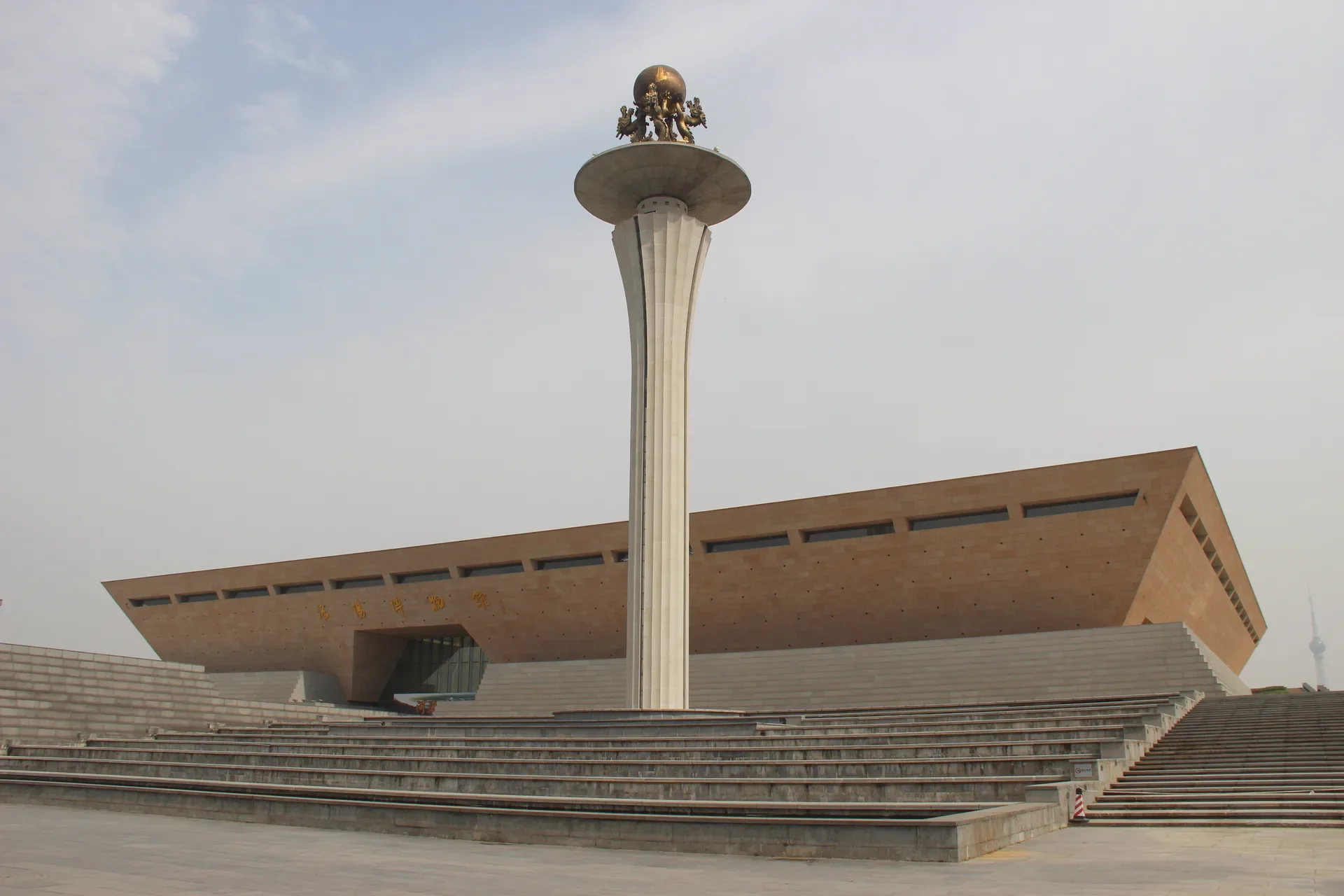
Luoyang Museum (洛阳博物馆, Luòyáng Bówùguǎn)
"\"The Luoyang Museum (洛阳博物馆) is located in Luoyang, the former capital of China for more dynasties than any other Chinese city — the \\\"Nine Dynasties\\\" (九朝古都) that gave Luoyang its nickname. Situated on the Luo River at the eastern end of the Silk Road and the start of the Grand Canal, Luoyang has been a capital since the Eastern Zhou (770 BCE) and was the imperial capital for the Eastern Han, Cao Wei, Northern Wei, Sui, and Tang dynasties. The museum's collections span: (1) Eastern Zhou bronze and ritual jade; (2) Han Dynasty tomb objects; (3) Northern Wei Buddhist sculpture — the period when Luoyang was the Northern Wei capital and Buddhist Buddhism was adopted as state religion; (4) Tang Dynasty funerary objects.\".".
Last updated:
Quick Answer
Is Luoyang Museum worth visiting?
"China's most historically layered city museum — 13 dynasties of capital city archaeology from the \"Nine Dynasties\" (九朝古都) city, plus the Longmen Grottoes context. Free.".
Quick facts
| Category | history |
|---|---|
| Ticket | Free. Passport required. Walk-in from the south gate. |
| Hours | 9:00-17:00 (last entry 16:00). Closed Mondays. |
| Recommended duration | 2-3 hours. |
| Best time to visit | April through June and September through November. Luoyang is very hot in summer (June-August, 35-40°C) and cold in winter (December-February, -5°C to 8°C). Spring is the best season. Peony festival (洛阳牡丹花会) is April-May — the city is at its most beautiful. |
| How to get there | Bus routes 1, 5, 27, 37, 49, 56, 60, 66, 69, 75, 77, 78, 81, 101, 118 to Luoyang Museum stop (洛阳博物馆站). From Luoyang Railway Station by DiDi: ¥15-20. From Luoyang Beijiao Airport: ¥30-40. |
| English signage | partial |
Why visit
The Northern Wei Buddhist sculpture is the highlight — the period from 494-534 CE when Luoyang was the Northern Wei capital coincided with the height of Buddhist artistic production. Longmen Grottoes (龙门石窟), which the museum provides context for, is one of China's four great cave temple sites. The Tang Dynasty section is equally strong.
Collection highlights
- Northern Wei Buddhist sculpture — stone steles and figures from the period when Luoyang was the Northern Wei capital and Buddhism became the state religion
- Tang Dynasty tri-color glazed ceramics (唐三彩) — the museum has an exceptional collection of Tang sancai horses, camels, and court figures from Luoyang-area tombs
- Eastern Zhou bronze ritual vessels — inscribed bronze vessels from the Eastern Zhou capital period when Luoyang was the center of the Zhou world
- Han Dynasty tomb objects — tomb furnishings and burial objects from the Eastern Han period when Luoyang was the Han capital
- Longmen Grottoes context gallery — models and maps showing the Longmen Grottoes cave complex (龙门石窟) which is 12km south of Luoyang
- Tang Dynasty silver and gold vessels — luxurious metal objects from Tang noble tombs near Luoyang
Tips
- Combine with the Longmen Grottoes (龙门石窟) — 12km south of the city, one of China's four great cave temple sites, UNESCO World Heritage
- The "Peony Festival" (牡丹花会) in April-May is Luoyang's most famous cultural event — the city is covered in peonies
- The museum provides excellent context for the Longmen Grottoes — visit the museum before going to the caves
- Luoyang is a 1-hour high-speed train from Zhengzhou (Henan Museum connection) and 2 hours from Xi'an (Shaanxi History Museum connection)
- The museum is adjacent to the Luoyang New District (洛龙新区) and the Luo River waterfront
Frequently asked questions
Why is Luoyang called the "Nine Dynasties" capital?
Luoyang has been the capital of more dynasties than any other Chinese city — Eastern Zhou, Eastern Han, Cao Wei, Northern Wei, Sui, Tang, Later Liang, Later Tang, and Later Jin — hence the "Nine Dynasties" (九朝). The exact count depends on how you count the fragmentation periods, but no other Chinese city has more distinct imperial periods.
How does Luoyang Museum compare to the Henan Museum in Zhengzhou?
The Henan Museum (河南博物院) in Zhengzhou has a broader provincial collection including the famous Houmuwu Ding (largest bronze vessel in the world). Luoyang Museum is more focused on Luoyang's specific history as a capital city. For Bronze Age artifacts (Henan Museum's strength), go to Zhengzhou. For Buddhist art and Tang Dynasty culture (Luoyang's strength), go to Luoyang.
What are the Longmen Grottoes?
The Longmen Grottoes (龙门石窟, "Dragon Gate Grottoes") are one of China's four great Buddhist cave temple sites (with Dunhuang Mogao, Yungang, and Tianlongshan). They contain over 100,000 Buddhist images and 2,800 inscriptions carved between 493 CE and the Tang Dynasty. They are a UNESCO World Heritage Site. The Luoyang Museum provides context before visiting.
Does Luoyang Museum have English signage?
Partial — the Northern Wei Buddhist section has some English. The Tang Dynasty section has limited English. No English audio guide as of 2026.
Is Luoyang worth staying overnight?
Yes — Luoyang deserves 2 days: Day 1 (morning): Luoyang Museum + Longmen Grottoes; Day 2 (morning): White Horse Temple (China's oldest Buddhist temple) + afternoon: Luoyang old city and Luo River waterfront. Luoyang is a major food city — try the famous Luoyang water banquet (洛阳水席, 24-course banquet of soup dishes).
Read next
Other things to do in Luoyang
Baiyun Mountain
baiyuan-mountain in Beijing: 中原第一峰玉皇顶海拔2216米,云海日出壮观,秋季红叶似火,避暑胜地。
Longmen Grottoes
longmen-grottoes in Beijing: 中国四大石窟之一,10万尊佛像雕刻在伊河两岸,香山寺与白园点缀其间。
Luoyang Old Street
luoyang-old-town in Beijing: 隋唐洛阳城遗址上的夜市文化,灯火阑珊处品尝洛阳水席与小吃。. 2026 verified.
Shaolin Temple
shaolin-temple in Beijing: 天下第一名刹,少林功夫发源地,中国武术的代表与象征。. 2026 verified.
Museums in Luoyang
Luoyang Ancient Tombs Museum
"Walk through 25 reconstructed underground tombs spanning 1,500 years — from Han Dynasty brick chambers to Song Dynasty frescoed vaults — in the world's only museum dedicated to ancient burial.".
Longmen Grottoes Museum
The museum documenting the Longmen Grottoes (龙门石窟) — one of China's four great Buddhist cave temple sites with 100,000+ Buddhist images carved between 493 CE and the Tang Dynasty. ¥90.