Luoyang · specialty museum
Luoyang Ancient Tombs Museum (洛阳古墓博物馆, Luòyáng Gǔmù Bówùguǎn)
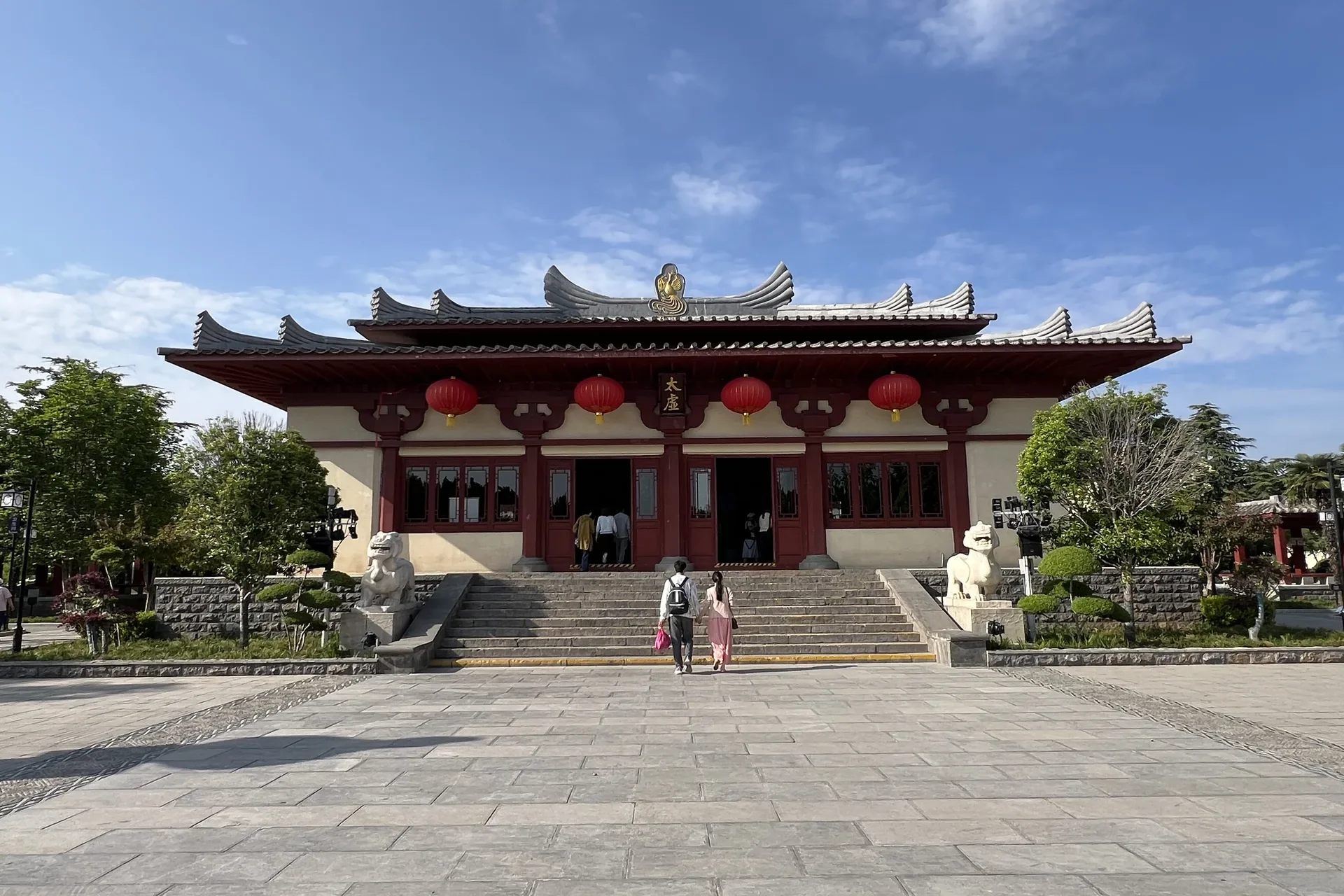
"The Luoyang Ancient Tombs Museum (洛阳古墓博物馆), officially the Luoyang Ancient Art Museum, sits on Mangshan Hill (邙山) north of Luoyang — a location historically known as \"China's Valley of the Kings\" due to the thousands of imperial and noble tombs concentrated here. The museum relocates and reconstructs 25 authentic tombs excavated from the surrounding hillsides, dating from the Han Dynasty (206 BC–220 AD) through to the Northern Song Dynasty (960–1127). Each tomb is reassembled underground in the museum's subterranean complex, connected by dimly lit corridors that recreate the sensation of a real archaeological site. You stoop through low doorways, squint at Han Dynasty stone-carved doors depicting door gods, and stand inside Tang Dynasty chambers painted with murals of ladies-in-waiting whose pigments still hold color after 1,300 years. The museum grounds also include the actual mausoleum of Emperor Xuanwu of Northern Wei (北魏宣武帝, reigned 499–515 AD), an earthen pyramid you can climb for views across the Luoyang basin.".
Last updated:
Quick Answer
Is Luoyang Ancient Tombs Museum worth visiting?
"Walk through 25 reconstructed underground tombs spanning 1,500 years — from Han Dynasty brick chambers to Song Dynasty frescoed vaults — in the world's only museum dedicated to ancient burial.".
Quick facts
| Category | specialty |
|---|---|
| Ticket | Free. Passport required for entry registration. |
| Hours | 9:00–17:00, Tuesday–Sunday. Last entry 16:00. Closed Mondays. |
| Recommended duration | 2–3 hours. |
| Best time to visit | Weekday mornings, 9:00–11:00 — the underground corridors are quietest and the tomb lighting feels most atmospheric. |
| How to get there | Bus 83 from Luoyang Railway Station goes directly to the museum (40 minutes). By Didi from central Luoyang: about ¥30–40, 25 minutes. The museum is on Mangshan Hill north of the city center. |
| English signage | partial |
Why visit
There is no museum like this anywhere else in the world. In June 2026, I crouched through a Han Dynasty tomb doorway so low I had to bend double — the physical act of entering the burial chamber made the ancient funerary architecture feel viscerally real in a way glass-case museums never achieve. The Tang Dynasty mural tombs are the highlight: the pigments are faded but legible, and being alone in a 1,300-year-old underground chamber with painted figures watching you from the walls is genuinely haunting. Luoyang gets overshadowed by Xi'an, but this museum alone justifies the detour.
Collection highlights
- 25 authentic reconstructed tombs — Han Dynasty brick chambers, Wei-Jin painted vaults, Tang Dynasty fresco tombs, and Song Dynasty hexagonal chambers.
- Tang Dynasty mural tombs — three chambers where the original wall paintings of court ladies, musicians, and dancers are still visible in mineral pigments.
- Han Dynasty stone tomb doors — carved with protective door gods (门神, ménshén), still mounted in their original frames.
- Emperor Xuanwu of Northern Wei's mausoleum — a massive earthen pyramid tomb on the museum grounds, climbable for panoramic views.
- The underground corridor itself — dimly lit, winding, tomb doors opening off both sides, replicating the experience of an active archaeological dig.
Tips
- Bring a flashlight or ensure your phone torch is working — some tomb interiors are very dim, and the detail is in the shadows.
- The underground corridors stay cool year-round (around 15–18°C). In summer, this is a welcome break from Luoyang's heat. In winter, it feels cold — bring a layer.
- Combine with the Longmen Grottoes (龙门石窟) which are 30 minutes south by taxi. The museum and grottoes make a perfect one-day Luoyang itinerary.
- The museum is small enough that you do not need a guide, but the ¥30 audio guide provides useful context for the tomb symbols and burial customs.
Frequently asked questions
Are these real tombs or replicas?
They are real tombs — each was archaeologically excavated from Mangshan Hill or surrounding sites, then dismantled brick-by-brick and reassembled inside the museum's underground complex. The bricks, stone doors, murals, and architectural structures are authentic. This relocation technique, developed in the 1980s, was designed to preserve tombs that would otherwise have been destroyed by agricultural expansion.
Is the museum dark or claustrophobic?
Some tomb chambers require stooping through low doorways, and the underground corridors are intentionally dimly lit. If you have claustrophobia, stay in the main corridors (wider and better-lit) and avoid the smaller Han Dynasty chambers where the doorways are under 1.5 meters. The museum has emergency exits every 50 meters along the corridors.
Can I take photos inside the tombs?
Yes, photography is permitted throughout. Flash is discouraged (not prohibited, but staff frown on it) to protect the mural pigments. A steady hand or phone night mode produces atmospheric results in the low light.
How does this compare to the Terracotta Warriors?
They are fundamentally different experiences. The Terracotta Army is overwhelming in scale — thousands of full-size figures in enormous pits. The Luoyang Ancient Tombs Museum is intimate — you enter small chambers alone and meet ancient funerary art at arm's length. Xi'an's warriors impress through scale; Luoyang's tombs haunt through intimacy.
Is Emperor Xuanwu's tomb worth the climb?
Yes. The earthen pyramid itself is a 15-minute walk from the museum building. The climb takes 5 minutes. From the top, you see the entire Luoyang basin and understand why Mangshan was chosen as burial ground for emperors — the feng shui (风水) of the location is immediately apparent.
What is the best season to visit?
Spring (April–May) and autumn (September–October). Mangshan Hill catches breezes and the museum gardens are pleasant. Summer is manageable because the underground complex is naturally cool. Winter can feel cold inside the corridors. Luoyang's peony festival in April brings crowds to the city, but the museum remains relatively uncrowded.
Read next
Other things to do in Luoyang
Baiyun Mountain
baiyuan-mountain in Beijing: 中原第一峰玉皇顶海拔2216米,云海日出壮观,秋季红叶似火,避暑胜地。
Longmen Grottoes
longmen-grottoes in Beijing: 中国四大石窟之一,10万尊佛像雕刻在伊河两岸,香山寺与白园点缀其间。
Luoyang Museum
luoyang-museum in Beijing: 国家一级博物馆,河洛文明5000年,最早的中国历史见证。
Luoyang Old Street
luoyang-old-town in Beijing: 隋唐洛阳城遗址上的夜市文化,灯火阑珊处品尝洛阳水席与小吃。. 2026 verified.
Shaolin Temple
shaolin-temple in Beijing: 天下第一名刹,少林功夫发源地,中国武术的代表与象征。. 2026 verified.
Museums in Luoyang
Longmen Grottoes Museum
The museum documenting the Longmen Grottoes (龙门石窟) — one of China's four great Buddhist cave temple sites with 100,000+ Buddhist images carved between 493 CE and the Tang Dynasty. ¥90.
Luoyang Museum
"China's most historically layered city museum — 13 dynasties of capital city archaeology from the \"Nine Dynasties\" (九朝古都) city, plus the Longmen Grottoes context. Free.".