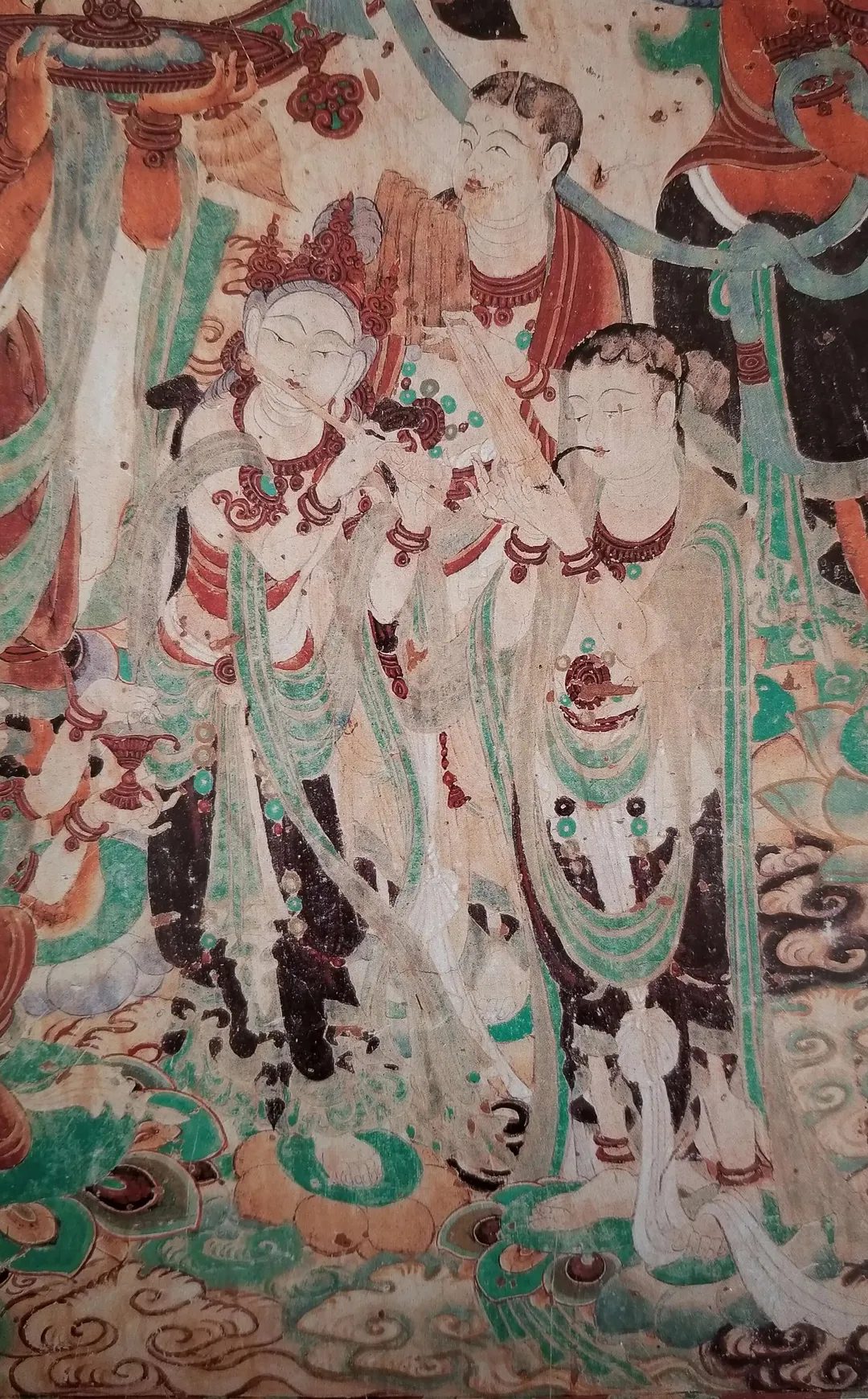
Mogao Grottoes莫高窟
The Mogao Grottoes, dug into a cliff of the Daquan River valley 25 km southeast of Dunhuang, carry a continuous record of Buddhist art from the Sixteen Kingdoms period (documents begin 366 AD) through the Yuan dynasty. There are 735 caves in the cliff, of which 492 hold murals and painted clay sculpture — some 45,000 square meters of wall painting in total, the largest single body of ancient painting in China. Visiting is strictly managed: a named reservation bought weeks ahead, two orientation films at the Digital Exhibition Center, and a guide-led walk through a rotating set of eight open caves. The Library Cave (Cave 17) — sealed around the early 11th century and opened in 1900 with over 50,000 manuscripts — is the site's most storied single room.
Dunhuang · Visitor Guide2026-11-17
Quick Answer
Is Mogao Grottoes worth visiting?
A thousand years of Buddhist cave art in a Gobi cliff face — 492 decorated caves, the finest mural and painted-sculpture treasury in China.
Quick facts
| Ticket | Class-A ticket ¥238 (peak season): two 20-minute films at the Digital Exhibition Center + guided visit to 8 open caves. Class-B emergency tickets are released when A sells out and cover fewer caves with no films. Students, seniors, and children get discounts. Prices and quotas per official announcements at mgk.org.cn. |
|---|---|
| Hours | Peak season (April 1–November 30) roughly 08:00–18:00; off-season hours shorten and specific slot times are assigned with your reservation. Arrive 30 minutes before your booked slot at the Digital Exhibition Center. |
| Recommended duration | Half-day: 40 min of films + 75–90 min cave circuit + transfers between the two sites (about 15 km apart). |
| Best time to visit | May, September, and October for manageable heat; winter (December–March) sells A-tickets cheaply with fewer visitors and a special winter itinerary that opens more caves in smaller groups. |
| How to get there | From Dunhuang city, the scenic-area shuttle bus leaves from near the Digital Exhibition Center on the eastern outskirts; taxis/DiDi run 25–30 minutes to the visitor center (around ¥40–60). The caves themselves are a further 15 km by the site's shuttle. There is no city bus direct to the caves in most seasons. |
| English signage | Partial |
| Wheelchair accessible | Partial |
| Caves | 735 in the cliff; 492 with murals |
| Wall painting | About 45,000 m² — China's largest single mural corpus |
| Span | c. 366 AD (Sixteen Kingdoms) to Yuan dynasty |
| Library Cave | Cave 17, sealed c. early 11th c., reopened 1900; 50,000+ manuscripts |
| UNESCO status | World Heritage (1987) |
What to expect
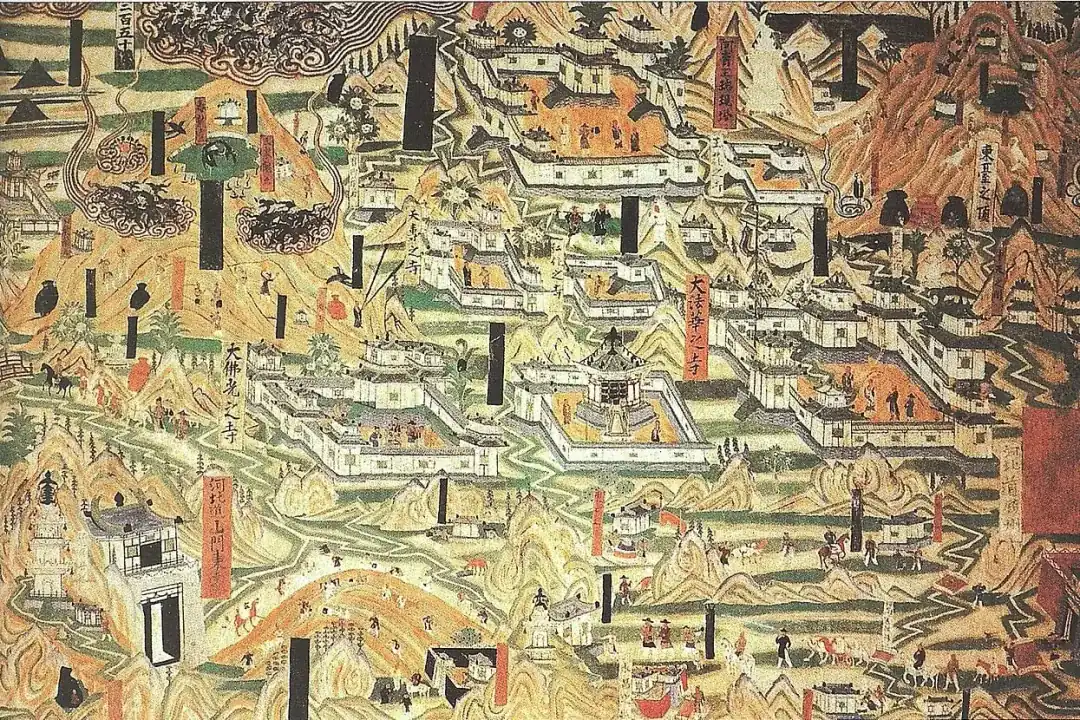
Mogao began, tradition says, with a vision: the monk Le Zun crossing the Daquan valley in 366 AD saw the cliff shimmer with the light of a thousand Buddhas and cut the first cave. Whether or not the date is exact, the record is real — construction ran for a millennium across sixteen dynasties, financed by merchants, garrisons, and pilgrimage guilds along the northern Silk Road. Each cave is a self-contained chapel: painted clay Buddhas and bodhisattvas sculpted against the wall, murals flooding every surface with paradise scenes, donor portraits, and — invaluable to historians — the everyday world of camels, harvests, weddings, and hospitals on the empire's far edge.
The walls are a chronological atlas. The Northern Wei caves show the austere, sinewy style that came in from Central Asia; Sui introduces dense geometric star patterns; the Tang caves — Mogao's golden age — breathe with courtly elegance and lifelike secular scenes; the Tibetan-occupied period and the late-Tang Guiyi Army caves add Esoteric Buddhist icons; Five Dynasties, Song, and Western Xia recede into stylization, and Yuan closes the sequence. Because guides rotate the eight-cave itinerary daily to distribute wear and humidity, no two visits see exactly the same caves — a conservation policy that also makes the Library Cave's story, sealed circa 1035 and found intact in 1900, feel like the site's secret diary.
The modern experience is engineered, not casual. The Digital Exhibition Center's two films — a dome-screen history of Dunhuang and a ball-screen fly-through of the painted caves — set context before you board the shuttle to the cliff. Photography inside the caves is forbidden (breath-humidity and flash damage the pigment), so put the camera away and read the walls. The Dunhuang Academy, which has run the site since 1944, digitizes caves for the 'Digital Dunhuang' archive, and replicas of famous caves are shown at the center — a fair preview for visitors who want to see specific treasures like the ninth-century 'Buddhas of Ten Thousand Buddhas' wall or the dancing-figured frescoes of Cave 220.
How to get there
Book a named ticket on the official reservation site (mgk.org.cn) or its WeChat mini-program — up to 30 days ahead in peak season; everything else is an unofficial reseller and discouraged by the Dunhuang Academy. From Dunhuang city, take the scenic-area shuttle from the Digital Exhibition Center area or a taxi (25–30 min, ¥40–60). Films run at fixed times tied to your slot; arrive 30 minutes early with the same ID used for booking.
Best photo spots
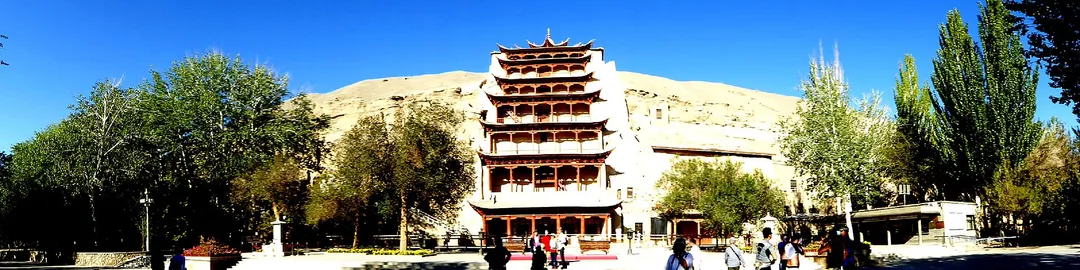
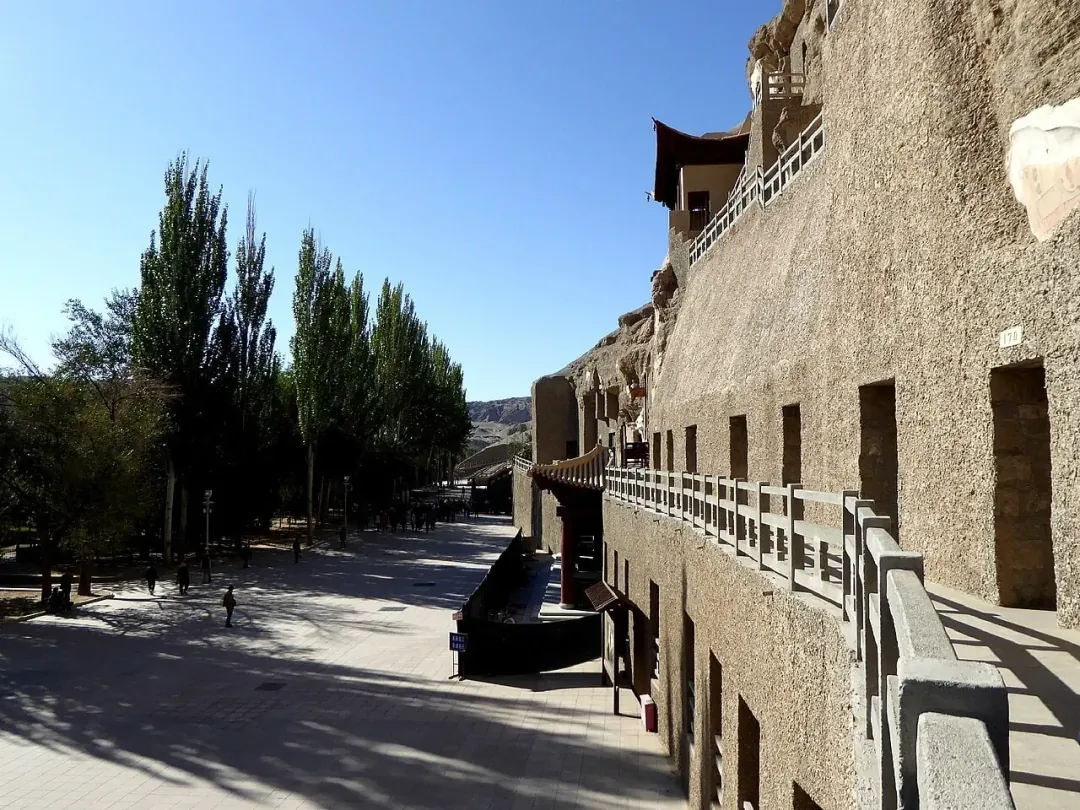
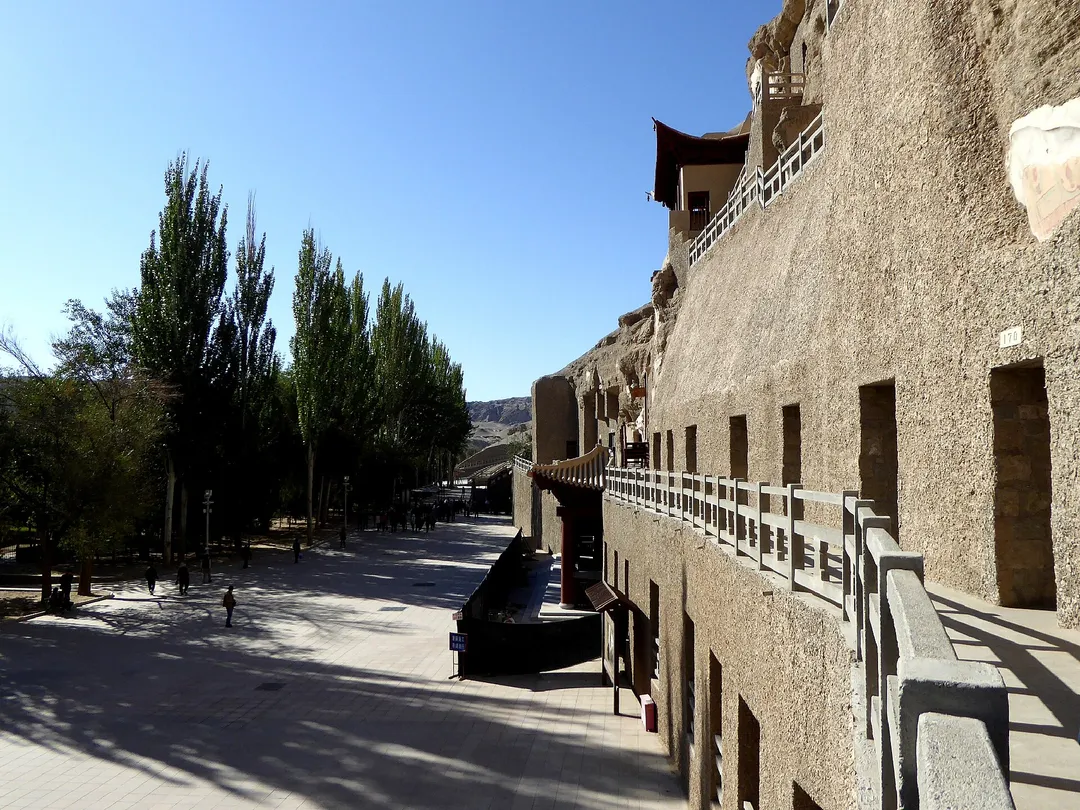
- The cliff face from the central bridge — rows of numbered doorways and the nine-story pavilion (Cave 96) towering left
- The nine-story pavilion's giant seated Buddha entrance — the iconic exterior shot (exterior only; no photos inside caves)
- Mingsha dunes at dusk from the return road — the desert backdrop the grottoes were sited against
- The Digital Exhibition Center's ball-screen theater lobby, hung with mural reproductions
Tips
- Reserve the A-ticket as early as the system allows — in July–August the peak quota sells out days in advance, and B emergency tickets see fewer caves
- Bring the ID/passport you booked with; checks are strict and mismatched documents are refused
- No photography inside any cave — this is enforced; spend your photo time on the cliff exterior and pavilion
- Winter visits (off-season tickets) often enter more caves in smaller groups — a trade worth considering if you can handle the cold
- Pair with Crescent Moon Spring and the Mingsha dunes in the late afternoon; both sit on the city side of the loop
Scams to avoid
- Third-party platforms reselling 'Mogao tickets' at a markup — the Dunhuang Academy has publicly warned that only the official site and mini-program are legitimate
- 'Private guides' at the gate promising extra caves — official guides are assigned with your ticket; pay twice and you will simply be refused entry
- Sandalwood-bracelet 'temple blessings' sold near the shuttle stop — nothing to do with the site
Frequently asked questions
Why do I need to book so far ahead?
Mogao caps daily visits to protect the murals from humidity and CO2. In peak season the Class-A quota sells out days or weeks ahead, so the reservation system opens bookings up to 30 days early. Off-season quotas are looser and tickets can be had days ahead.
Can I take photos inside the caves?
No. Flash and breath humidity degrade the pigments, and the rule is enforced without exception. The exterior cliff and the nine-story pavilion are fair game, and the Digital Exhibition Center displays mural reproductions you may photograph.
What is the difference between A and B tickets?
The A-ticket (¥238 peak) includes two films at the Digital Exhibition Center and a guide-led tour of 8 open caves. B emergency tickets are released when A sells out; they cover fewer caves, usually without the films, and use a simpler itinerary. There are also concession tickets for students, seniors, and children.
How do I see famous caves like the Library Cave or Cave 220?
The open-cave itinerary rotates, so which caves you enter depends on the day. The Library Cave (No. 17) and several landmark caves are shown in the Digital Exhibition Center's replica halls and in the 'Digital Dunhuang' archive online. Specialist deep-cave tours are offered seasonally for an additional fee — check the official site.
How much time should I budget?
Half a day: 40 minutes of films, 75–90 minutes in the caves, plus 15 km of transfers between the two sites (about 15 km apart). Most visitors pair it with Crescent Moon Spring and the Mingsha dunes in the late afternoon; both sit on the city side of the loop.
Read next
Other things to do in Dunhuang
White Horse Pagoda
A quiet nine-tier stupa on Dunhuang's southwestern outskirts — Around ¥15-20 adult.
Dunhuang Han Great Wall Ruins
The 2,100-year-old Han-dynasty frontier wall of reeds and gravel still standing waist-high on the Gobi — visited with the Yumen Pass circuit west of Dunhuang.
Leiyin Temple (Thunderclap Monastery)
The free working monastery at the foot of Mingsha dunes, sharing its name with Journey to the West's 'Great Leiyin Temple' — the original was buried by blowing sand — Summer roughly 7:30–20:00.
Mingsha Dunes and Crescent Spring
Dunhuang's classic pairing — the singing dunes of Mingsha Mountain and the crescent-shaped spring that has survived a millennium of sand — The 3-day ticket invites returns.
Dunhuang Museum
The free city museum that decrypts the Silk Road before you see it — Han frontier documents, tomb murals and a silken sutra hall, an easy morning stop near the dunes. 1.5–2 hours.
Shazhou Night Market
Dunhuang's silk-road night bazaar: lamb skewers, apricot-juice drinks, camel-wool crafts and jade stalls a short walk from downtown. Free entry, liveliest 19:00–23:00. 1–2 hours.
Western Thousand-Buddha Caves
A Northern Wei-era grotto complex in the Danghe river cliffs about 35 km southwest of Dunhuang — 16 surviving caves, usually 4 open, visited with a guide; ¥30 incl. guiding, 1-1.5 hours.
Dunhuang Yadan National Geopark
The 'Devil City' — a wind-carved field of yardang landforms 180 km northwest of Dunhuang, toured by mandatory park shuttle past formations named for peacocks, sphinxes and a fleet of stone ships.
Yangguan Pass Scenic Area
The southern gate of the Han dynasty's western frontier, 70 km southwest of Dunhuang — the surviving Yangguan beacon tower.
Yumen Pass
The Han-dynasty Jade Gate in the Gobi 90 km northwest of Dunhuang — Small Fangpan city ruin, Han Great Wall, Hechang granary.
Mingsha Sand Dunes & Crescent Lake
Dunhuang's Mingsha Sand Dunes and the crescent spring that survived millennia among the dunes — camels, sand sledding and desert sunsets. ¥110 peak (ticket valid 3 days); best at dawn or dusk.
Mogao Caves (alias)
The Mogao Caves — alias page. See the full guide at dunhuang-mogao-grottoes.
Mingsha Sand Dunes & Crescent Moon Lake
Singing sand dunes and a spring-fed crescent lake in the Gobi Desert. Sunset camel rides, sandboarding. 5 km from Dunhuang. ¥120. Half-day to full day.
Mogao Caves (alias)
The Mogao Caves — alias page. See the full guide at dunhuang-mogao-grottoes.
Mogao Caves
A 1,600-year-old cliff-face complex of 492 painted Buddhist cave-temples holding 45,000 m² of murals and about 2,400 clay statues, 25 km southeast of Dunhuang.
Yardang National Geopark
Wind-carved rock spires spread across ~346 km² of Gobi, 180 km northwest of Dunhuang. ¥190 (entrance + shuttle).
Yumen Pass (Jade Gate Pass)
A 2,100-year-old rammed-earth frontier post 90 km northwest of Dunhuang, marking where the Han empire's Silk Road ended and the Western Regions began.
Museums in Dunhuang
Dunhuang Museum
The essential Silk Road context museum before visiting Mogao Caves. Free entry. Rich collection of Han Dynasty wooden slips, Silk Road coins, and Mogao replica caves. Allow 1.5–2 hours.
Dunhuang Academy Research Center
The research institute for the Mogao Caves in Dunhuang, holding definitive Buddhist art manuscripts, paintings and artifacts plus cave conservation history; verified in 2026.