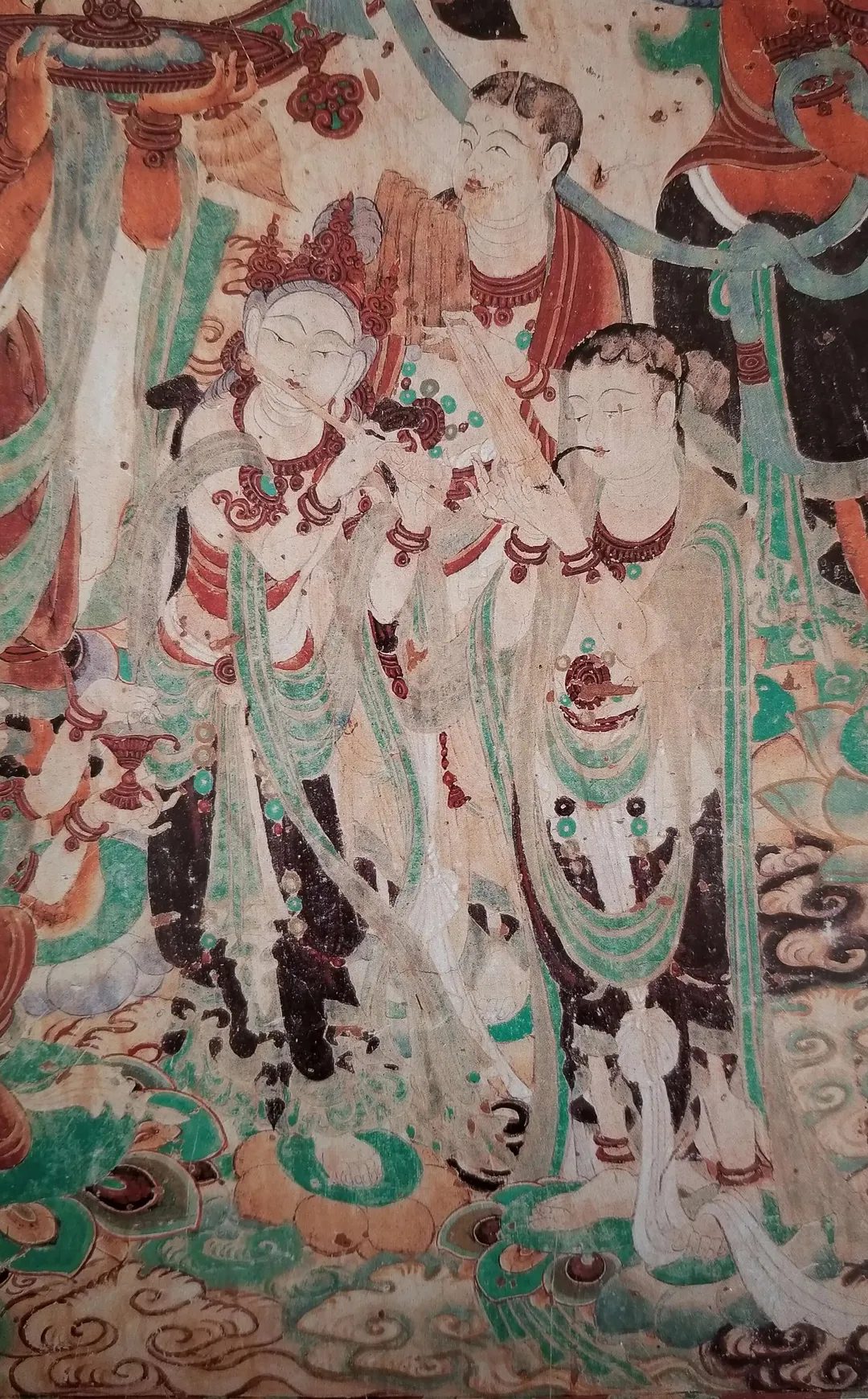
Mogao Caves (alias)莫高窟
The Mogao Caves of Dunhuang are China's greatest Buddhist cave-art site — 492 decorated grottoes with a millennium of murals and sculptures along the old Silk Road. This page is an alias: the complete guide — ticketing (Class-A ¥238 with two films and 8 guided caves), transport, best times and cave-by-cave highlights — lives at dunhuang-mogao-grottoes.
Dunhuang · Visitor Guide2026-11-17
Quick Answer
Is Mogao Caves (alias) worth visiting?
The Mogao Caves — alias page. See the full guide at dunhuang-mogao-grottoes.
What to expect
How to get there
Frequently asked questions
Read next
Other things to do in Dunhuang
White Horse Pagoda
A quiet nine-tier stupa on Dunhuang's southwestern outskirts — Around ¥15-20 adult.
Dunhuang Han Great Wall Ruins
The 2,100-year-old Han-dynasty frontier wall of reeds and gravel still standing waist-high on the Gobi — visited with the Yumen Pass circuit west of Dunhuang.
Leiyin Temple (Thunderclap Monastery)
The free working monastery at the foot of Mingsha dunes, sharing its name with Journey to the West's 'Great Leiyin Temple' — the original was buried by blowing sand — Summer roughly 7:30–20:00.
Mingsha Dunes and Crescent Spring
Dunhuang's classic pairing — the singing dunes of Mingsha Mountain and the crescent-shaped spring that has survived a millennium of sand — The 3-day ticket invites returns.
Mogao Grottoes
A thousand years of Buddhist cave art in a Gobi cliff face — 492 decorated caves, the finest mural and painted-sculpture treasury in China.
Dunhuang Museum
The free city museum that decrypts the Silk Road before you see it — Han frontier documents, tomb murals and a silken sutra hall, an easy morning stop near the dunes. 1.5–2 hours.
Shazhou Night Market
Dunhuang's silk-road night bazaar: lamb skewers, apricot-juice drinks, camel-wool crafts and jade stalls a short walk from downtown. Free entry, liveliest 19:00–23:00. 1–2 hours.
Western Thousand-Buddha Caves
A Northern Wei-era grotto complex in the Danghe river cliffs about 35 km southwest of Dunhuang — 16 surviving caves, usually 4 open, visited with a guide; ¥30 incl. guiding, 1-1.5 hours.
Dunhuang Yadan National Geopark
The 'Devil City' — a wind-carved field of yardang landforms 180 km northwest of Dunhuang, toured by mandatory park shuttle past formations named for peacocks, sphinxes and a fleet of stone ships.
Yangguan Pass Scenic Area
The southern gate of the Han dynasty's western frontier, 70 km southwest of Dunhuang — the surviving Yangguan beacon tower.
Yumen Pass
The Han-dynasty Jade Gate in the Gobi 90 km northwest of Dunhuang — Small Fangpan city ruin, Han Great Wall, Hechang granary.
Mingsha Sand Dunes & Crescent Lake
Dunhuang's Mingsha Sand Dunes and the crescent spring that survived millennia among the dunes — camels, sand sledding and desert sunsets. ¥110 peak (ticket valid 3 days); best at dawn or dusk.
Mingsha Sand Dunes & Crescent Moon Lake
Singing sand dunes and a spring-fed crescent lake in the Gobi Desert. Sunset camel rides, sandboarding. 5 km from Dunhuang. ¥120. Half-day to full day.
Mogao Caves (alias)
The Mogao Caves — alias page. See the full guide at dunhuang-mogao-grottoes.
Mogao Caves
A 1,600-year-old cliff-face complex of 492 painted Buddhist cave-temples holding 45,000 m² of murals and about 2,400 clay statues, 25 km southeast of Dunhuang.
Yardang National Geopark
Wind-carved rock spires spread across ~346 km² of Gobi, 180 km northwest of Dunhuang. ¥190 (entrance + shuttle).
Yumen Pass (Jade Gate Pass)
A 2,100-year-old rammed-earth frontier post 90 km northwest of Dunhuang, marking where the Han empire's Silk Road ended and the Western Regions began.
Museums in Dunhuang
Dunhuang Museum
The essential Silk Road context museum before visiting Mogao Caves. Free entry. Rich collection of Han Dynasty wooden slips, Silk Road coins, and Mogao replica caves. Allow 1.5–2 hours.
Dunhuang Academy Research Center
The research institute for the Mogao Caves in Dunhuang, holding definitive Buddhist art manuscripts, paintings and artifacts plus cave conservation history; verified in 2026.