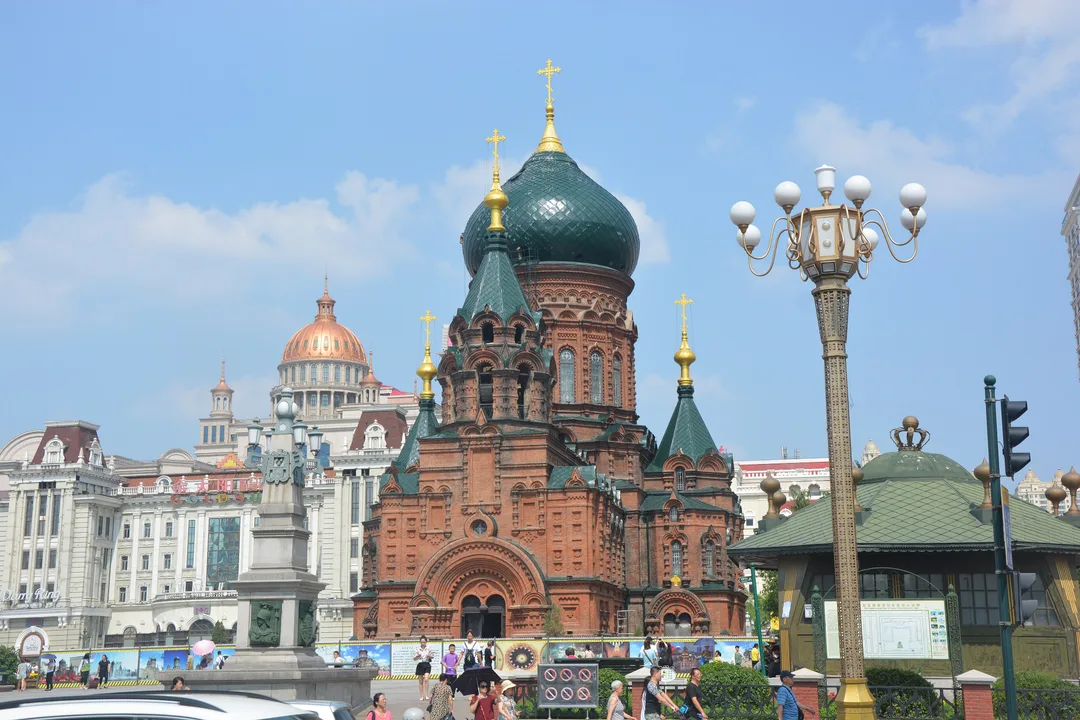
Saint Sophia Cathedral圣索菲亚大教堂
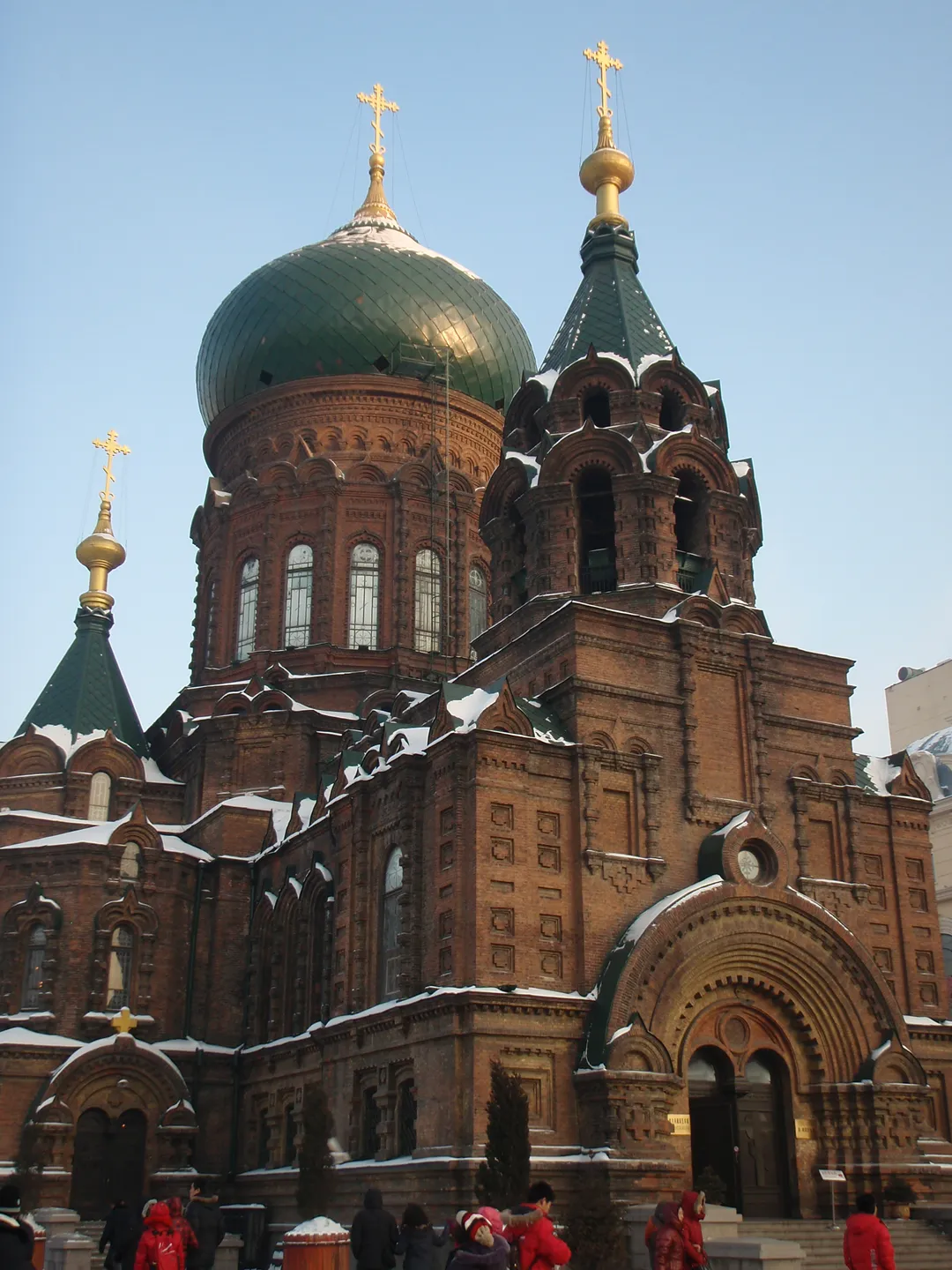
Harbin's landmark Russian Orthodox cathedral — built 1907 and rebuilt in brick in 1923 during the Chinese Eastern Railway era — its green onion dome and Byzantine façade anchor one of Asia's most atmospheric old squares. Now a photography and architecture museum.
Harbin · Visitor Guide2026-11-17
Quick Answer
Is Saint Sophia Cathedral worth visiting?
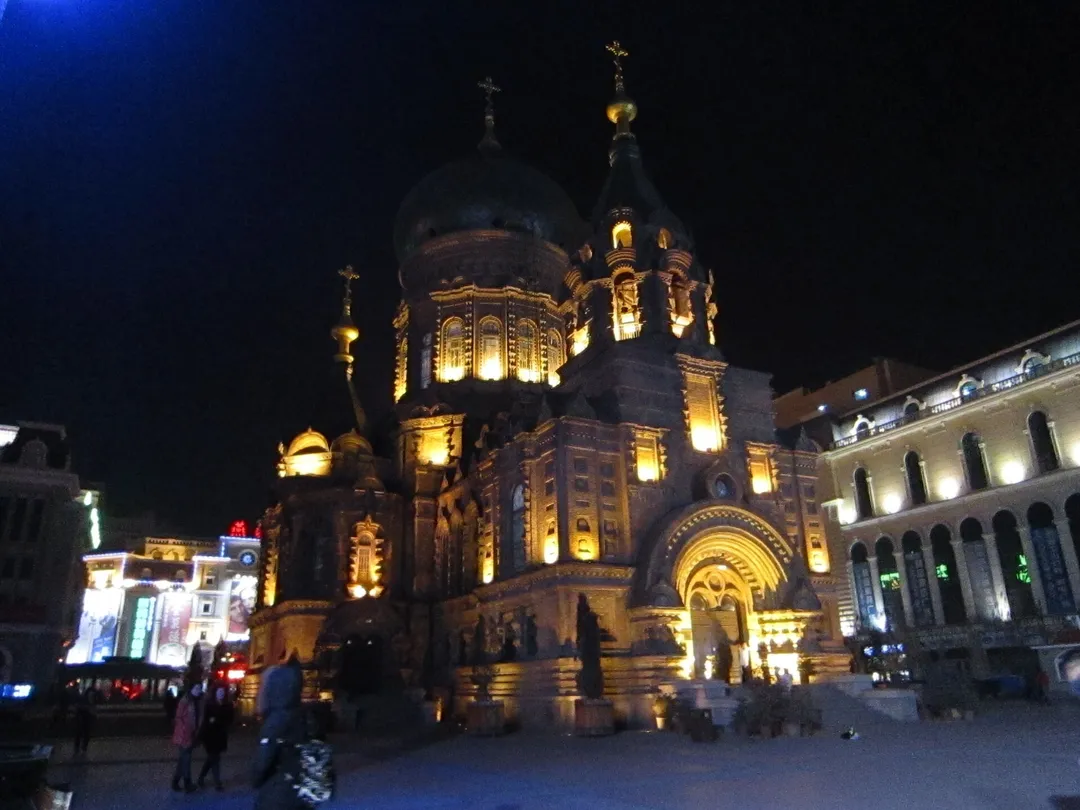
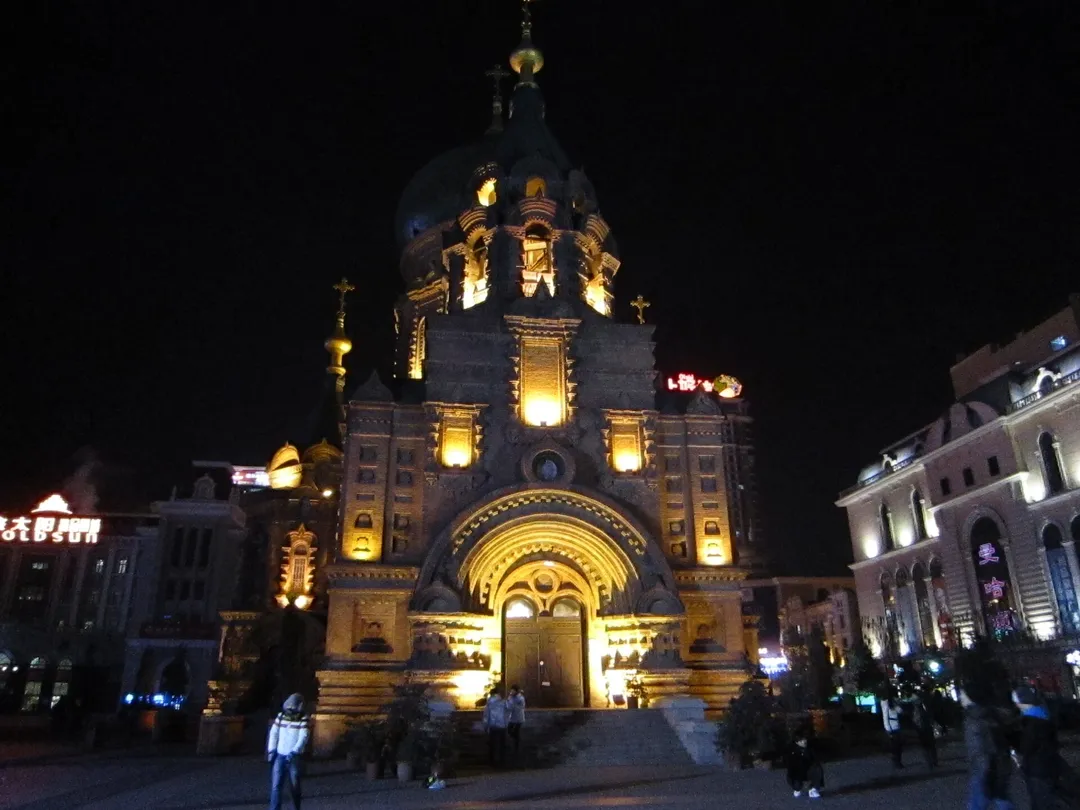
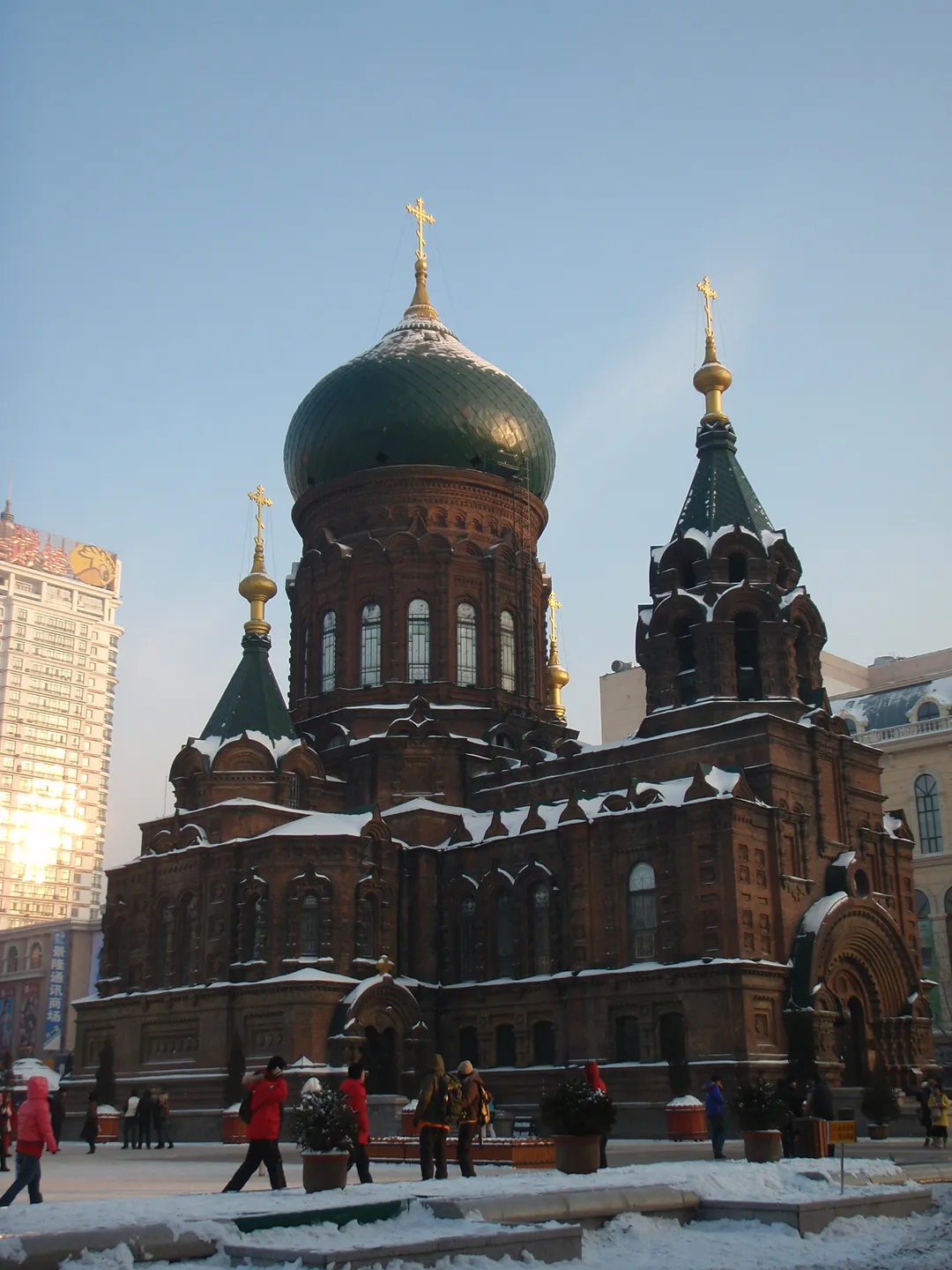
Harbin's green-domed Russian Orthodox cathedral (1907/1923) on a red-brick square — the city's most photographed landmark, now an architecture museum. Magically lit at night and best with snow.
What to expect
The cathedral served the Russian community of the Chinese Eastern Railway era; after decades as a warehouse it was restored in 1997 as Harbin's Architecture Art Museum. The brick Byzantine shell with its 21-meter green onion dome survived; the interior is now an exhibition hall of Harbin's old photographs rather than a church.
The square around it draws photographers at every hour — pigeons at dawn, wedding shoots by day, and night lighting that turns the dome green-gold. In the Ice Festival season, snow and the red brick make the most famous postcard in Northeast China.
How to get there
Central Harbin near Zhongyang (Central) Street — Metro Line 2 to Shanghai Street station, then a 5-minute walk through the old district.
Best photo spots
- The onion dome at night with lights
- Red brick façade with pigeons at dawn
- Snow-covered square in January
Tips
- Interior is a museum, not an active church — the exterior and square are the draw
- Pairs with Central Street and the Songhua riverfront in one walk
Frequently asked questions
Is Saint Sophia Cathedral still a church?
No — it was restored in 1997 as an architecture and photography museum; services no longer take place here.
Read next
Other things to do in Harbin
Central Street (Zhongyang Dajie)
Harbin's 1.45-km cobblestone street of Baroque and Art Nouveau buildings — Russian-era shops, Madie'er ice pops and kvass bakeries, running from the old district to the Songhua River promenade.
Harbin International Ice and Snow Festival
The world's largest ice and snow art festival — open from January 5 to late February, best over 2-4 days, drawing tens of millions of visitors.
Harbin Ice-Snow World
The world's largest ice-and-snow theme park, rebuilt each winter in Harbin's Songbei district — city-scale ice architecture, light shows and the famous super ice slide. Best at dusk; 3–5 hours.
Harbin Polar Park
China's first polar aquarium, opened in 2005; adults CNY 160. The original beluga show, Ocean Love, runs about 15-20 minutes and is genuinely moving. Allow 2-3 hours.
Harbin Ice and Snow World
The world's largest ice-and-snow theme park in Harbin, founded in 1999 using 120,000+ cubic metres of ice each winter; tickets 298-499 yuan, open 11:00-22:00, mid-December to mid-February.
Siberian Tiger Park
A 144-hectare drive-through reserve on Harbin's north bank holding 500+ Siberian (Amur) tigers, viewed from a wire-mesh caged bus.
Songhua River
The Songhua River, Harbin's mother waterway, runs 1927 km with about 70 km through the city; free riverside, boat rides 60-120 yuan, ice over 1 m thick in winter.
Sun Island
A roughly 38 km² river-island park that hosts the Harbin Snow Sculpture Expo every winter; allow a half-day in summer, a full day during snow season (December–February).
Harbin Railway Station
A living relic of the Chinese Eastern Railway, built in 1899 in Art Nouveau style — about 70,000 sq m, 8 platforms, 14 tracks and some 100,000 daily passengers. Free and open around the clock.
Museums in Harbin
Harbin Jewish History Museum
Documents the 20,000-strong Jewish community that flourished in Harbin 1898–1960s. Inside the old Main Synagogue. Free, 1 hour.
Heilongjiang Provincial Museum
Russian influence, Manchurian history, and the cultures of China's far northeast. Free entry in a historic 1904 building. Harbin's unique cross-cultural story.
Songhua River Museum
The museum of the Songhua River (松花江) — the Amur River's main Chinese tributary and Harbin's defining waterway. Allow 1 hour.