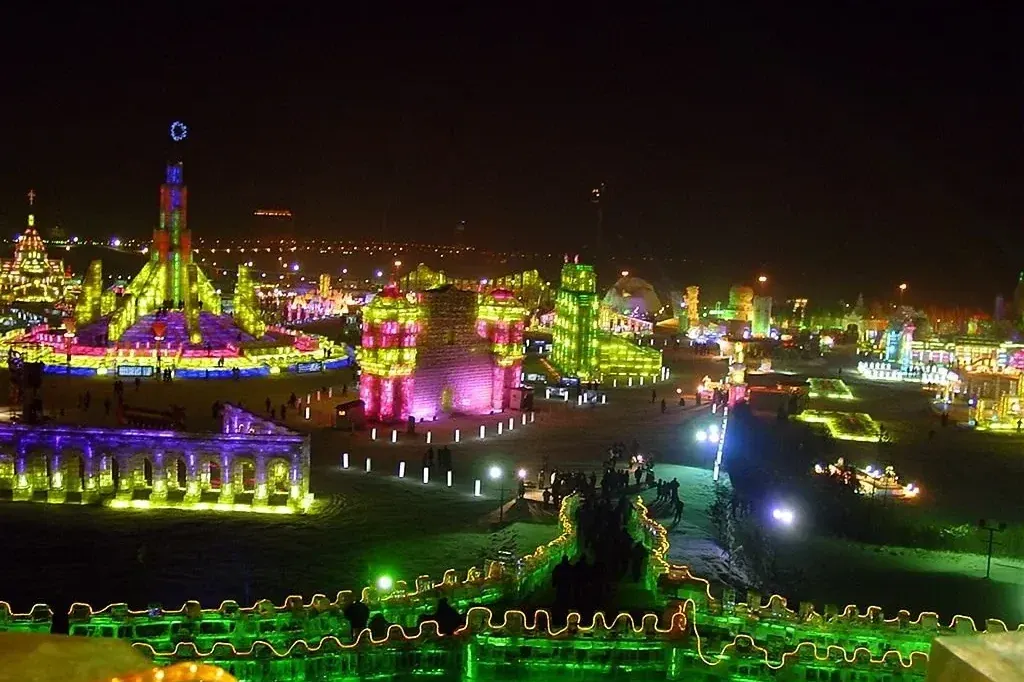
Harbin International Ice and Snow Festival国际冰雪节
Founded in 1985, the Harbin International Ice and Snow Festival is the world's largest ice-and-snow art event, ranked alongside Japan's Sapporo Snow Festival and Canada's Quebec Winter Carnival as one of the world's three great ice festivals. During the festival, major attractions across the city take part, together displaying thousands of ice and snow sculptures. The program also includes the international ice sculpture competition, winter forums and trade fairs — the festival is Harbin's most important calling card.
Harbin · Visitor Guide2026-10-18
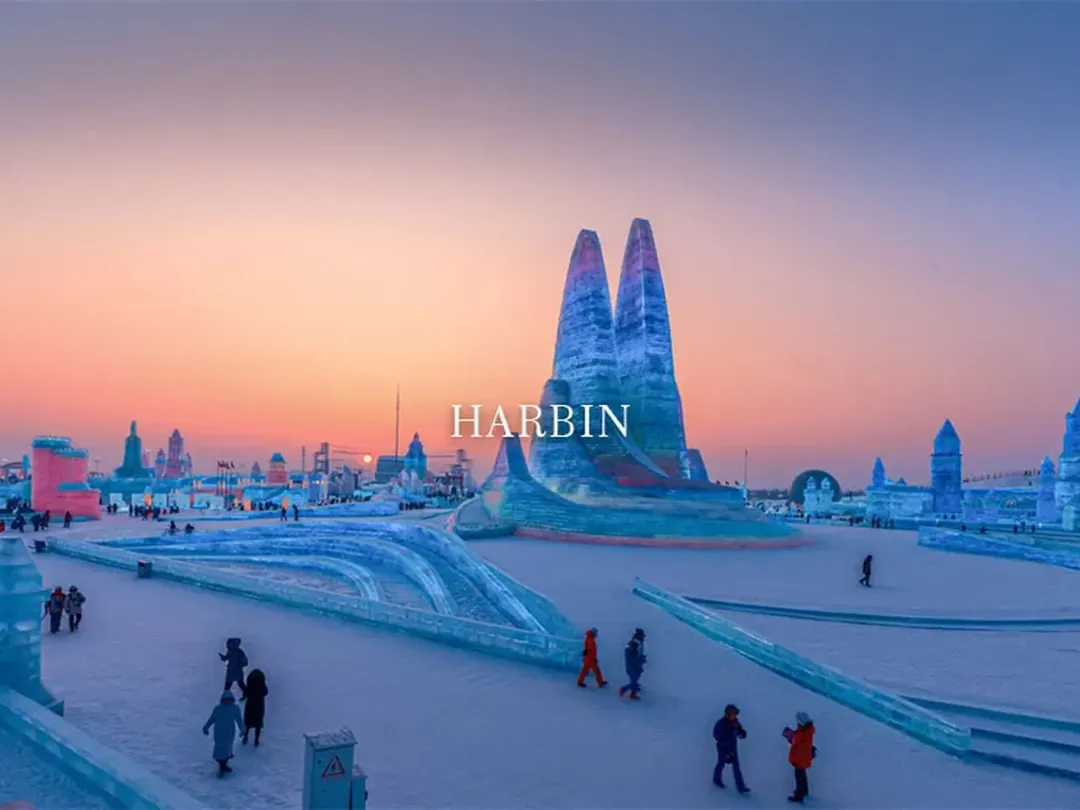
Quick Answer
Is Harbin International Ice and Snow Festival worth visiting?
The world's largest ice and snow art festival — open from January 5 to late February, best over 2-4 days, drawing tens of millions of visitors.
Quick facts
| Ticket | Ticket: sold individually at each venue; combo tickets offer savings |
|---|---|
| Hours | Hours vary by venue; generally 09:00-22:00 |
| Recommended duration | 2-4 days recommended |
| Best time to visit | January 5 through late February each year |
| How to get there | All venues are reachable by public transport; with a combo ticket, use the official sightseeing buses |
| English signage | Partial |
| Wheelchair accessible | Partial |
| Founded | 1985 |
| Status | One of the world's three great ice and snow festivals |
| Main venues | Ice and Snow World, Sun Island Snow Sculpture Park, Ice Lantern Garden Party |
| Ice sculptures | Thousands on display |
| Opening date | January 5 each year |
| Visitors | Over 10 million a year |
What to expect
The Harbin International Ice and Snow Festival is China's earliest international festival themed on ice and snow, and the largest ice-and-snow art event in the world. For the duration of the festival the whole city becomes one vast frozen playground; the main venues — Ice and Snow World, Sun Island Snow Sculpture Park and the Ice Lantern Art Expo — display thousands of works on themes from architecture and figures to animals and mythology.
The international ice sculpture competition held during the festival is one of the world's top ice-carving contests, drawing artists from dozens of countries. Working against the clock, competitors carve pure ice blocks into exquisite artworks for the title. The festival also hosts winter-economy trade fairs and ice-and-snow industry forums.
Harbin residents join in from start to finish: streets and lanes are decked out with ice sculptures and colored lanterns. The winter carnival on the banks of the Songhua River, Russian song-and-dance shows and northeastern folk snow activities let visitors take in the full charm of China's frozen north. After dark the city glitters like a fantasy kingdom.
How to get there
Each venue is reached separately — Ice and Snow World sits on the south bank of the Songhua River, Sun Island Snow Sculpture Park on the north bank, and the Ice Lantern Garden Party in Zhaolin Park.
Best photo spots
- The main tower at Ice and Snow World
- Panoramas of the Sun Island snow sculptures
- The Ice Lantern Garden Party after dark
- Ice sculpture clusters along the Songhua River
Tips
- Hotel prices soar during the festival — book two to three months ahead
- A combo ticket saves money and covers the official sightseeing buses
- The lights come on around 4 pm, the best window for photos
- Dress for serious cold; pack heat pads and a power bank
Scams to avoid
- Unlicensed taxis and guides are active in peak season — buy tickets and transport through official channels
- Book lodging on reputable platforms to avoid last-minute price hikes or phantom listings
Frequently asked questions
When is the festival held?
It opens on January 5 each year and runs through late February or early March, with exact dates depending on that winter's temperatures.
How many days do I need?
Plan on 2-4 days. The main venues each have their own character, and a single day covers only one or two of them properly.
Is the festival the same thing as Ice and Snow World?
No. Ice and Snow World is the festival's flagship venue, but the festival also takes in the Sun Island snow sculptures, the Ice Lantern Garden Party and more.
Read next
Other things to do in Harbin
Central Street
Century-old Russian-style pedestrian street in Harbin, 1450 m long, built in 1898 with 71 historic buildings; free to stroll, shops 10:00-22:00, best in winter for ice sculptures.
Harbin Polar Park
China's first polar aquarium, opened in 2005; adults CNY 160. The original beluga show, Ocean Love, runs about 15-20 minutes and is genuinely moving. Allow 2-3 hours.
Harbin Ice and Snow World
The world's largest ice-and-snow theme park in Harbin, founded in 1999 using 120,000+ cubic metres of ice each winter; tickets 298-499 yuan, open 11:00-22:00, mid-December to mid-February.
Saint Sophia Cathedral
Harbin's largest Orthodox church, completed in 1907 with a dome 53.35 m high; entry 20 yuan, students 10 yuan, open 8:30-17:00, a 5-minute walk from Shangzhi Dajie metro station.
Songhua River
The Songhua River, Harbin's mother waterway, runs 1927 km with about 70 km through the city; free riverside, boat rides 60-120 yuan, ice over 1 m thick in winter.
Harbin Railway Station
A living relic of the Chinese Eastern Railway, built in 1899 in Art Nouveau style — about 70,000 sq m, 8 platforms, 14 tracks and some 100,000 daily passengers. Free and open around the clock.
Museums in Harbin
Heilongjiang Provincial Museum
Northeast China's northernmost provincial museum — documenting the Amur river frontier, Manchu culture, and the Russian border trade. Free with passport; 1.5–2.5 hours.
Songhua River Museum
The museum of the Songhua River (松花江) — the Amur River's main Chinese tributary and Harbin's defining waterway. Allow 1 hour.