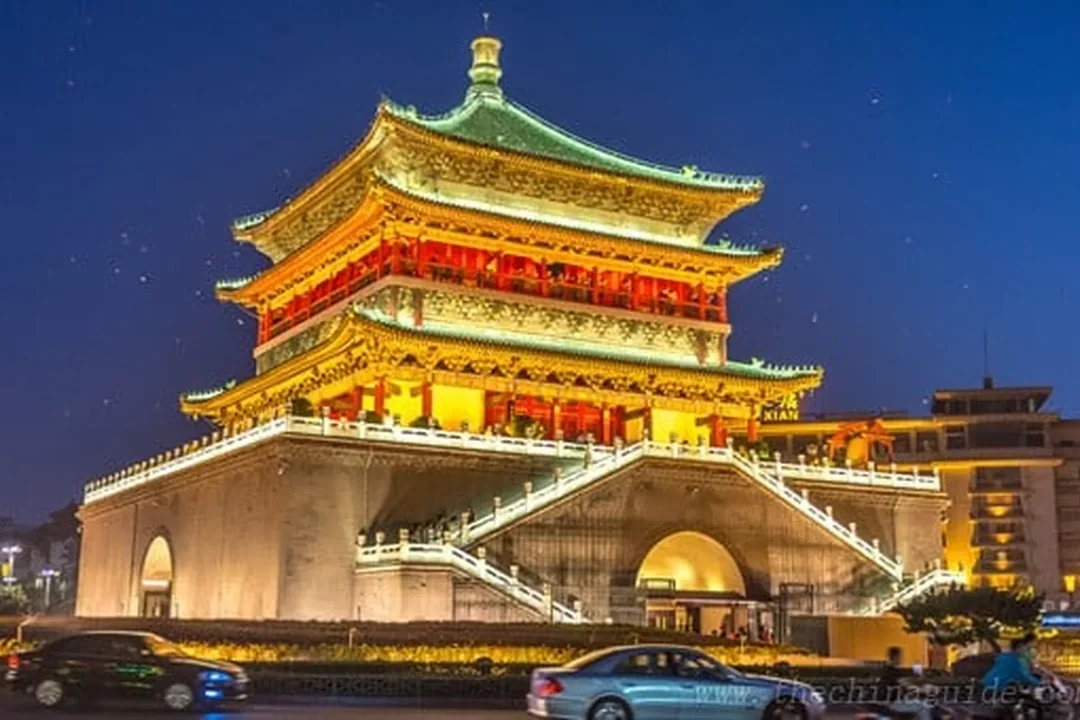
Drum Tower鼓楼
Xi'an Drum Tower stands on West Street in the heart of the city, facing the Bell Tower 200 m to its east. Built in 1380 (Ming Hongwu 13), four years before the Bell Tower, it once kept time for the city; only fragments of the great original drum survive, themselves Ming relics.
Xi'an · Visitor Guide2026-10-18
Quick Answer
Is Drum Tower worth visiting?
A Ming-dynasty landmark facing the Bell Tower across the old city; tower admission CNY 30, drum show CNY 10, combo with the Bell Tower CNY 50. A must-visit.
Quick facts
| Ticket | Tower admission CNY 30; Bell Tower + Drum Tower combo CNY 50 |
|---|---|
| Hours | 08:30-20:30 (until 21:00 in summer); last entry 20:00 |
| Recommended duration | 30 minutes to 1 hour |
| Best time to visit | Year-round. Drum performances at 10:00, 15:00 and 17:00 |
| How to get there | Metro Line 2 to Zhonglou Station Exit B, then about a 10-minute walk; buses 4, 7, 8, 11 and 15 to Zhonglou |
| English signage | Yes |
| Wheelchair accessible | Partial |
| Built | Ming Hongwu 13 (1380) |
| Height | 9.7 m |
| Structure | Brick and timber |
| Area | 1,804 sq m |
| Original drum | 2.83 m in diameter, a Ming relic |
| Protection | National key cultural relic site |
What to expect
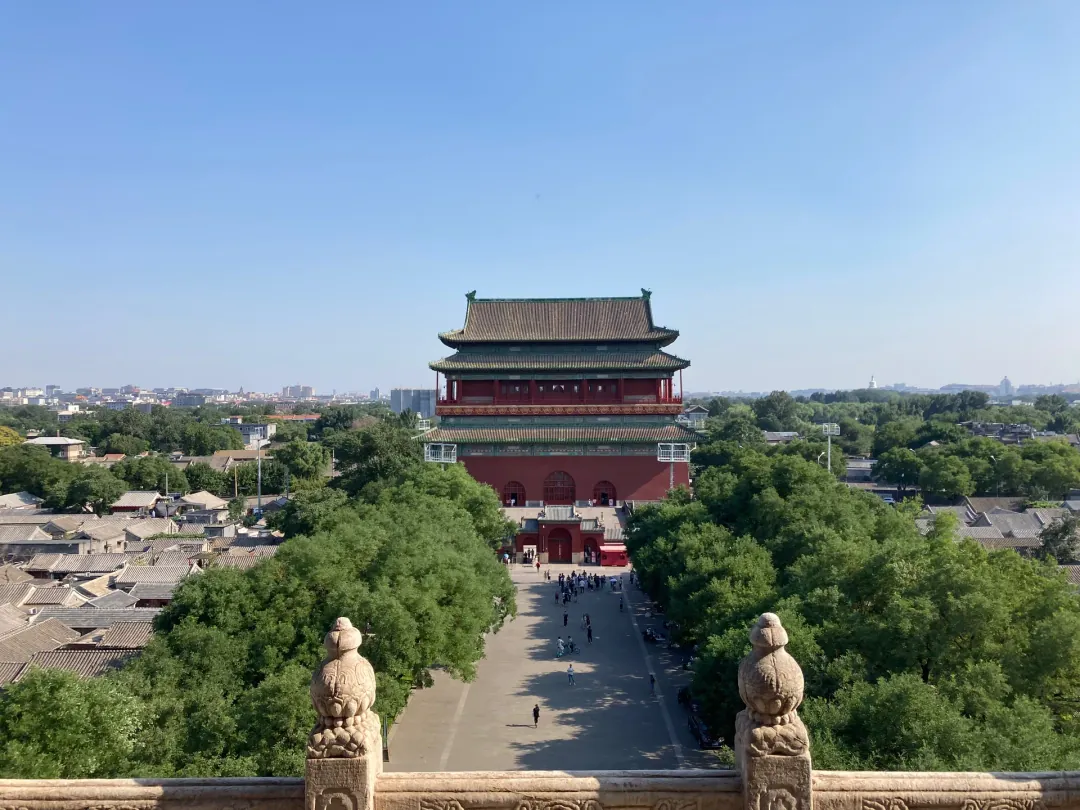
Xi'an Drum Tower stands on West Street at the center of the old city, built in 1380 (Hongwu 13) — four years before the Bell Tower. A brick-and-timber structure 9.7 m tall on a square masonry base, it carries a two-story pavilion with a hip-and-gable roof in grey tiles, close to the Bell Tower's style yet more rustic.
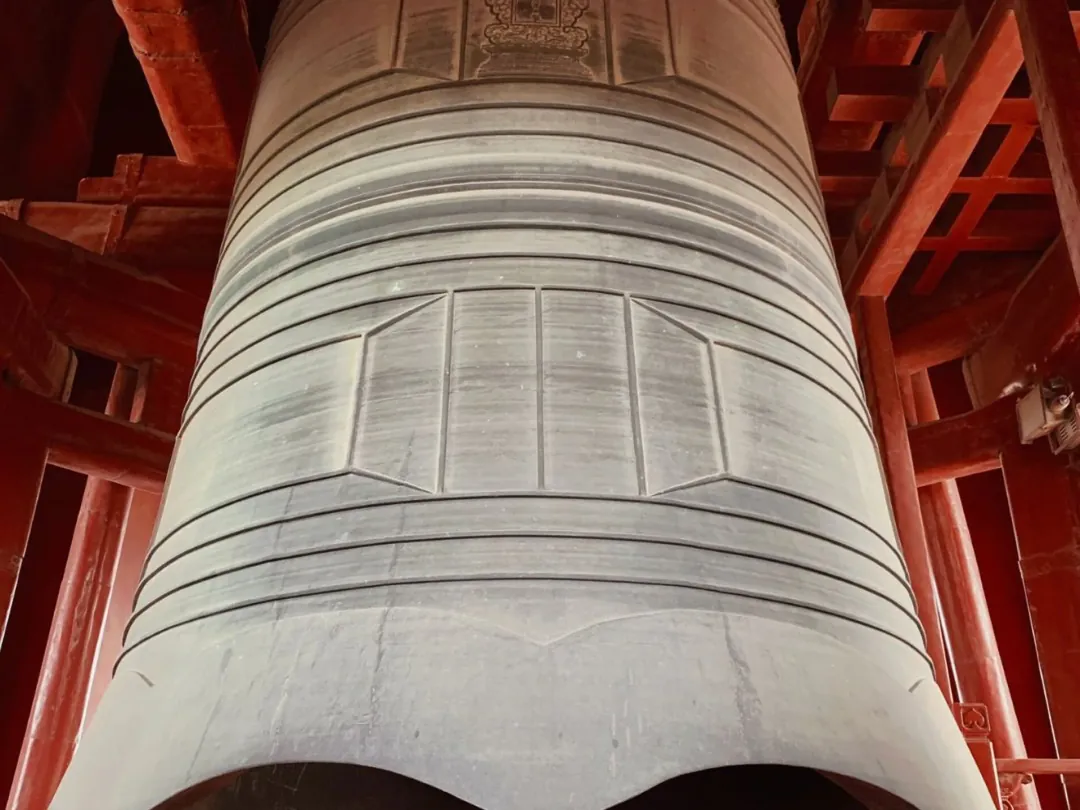
The tower takes its name from a great drum, the dingeng drum, once beaten to mark the night watches. Records give its face as 2.83 m across and a good foot thick — a Ming relic of which only fragments remain. The ground floor now displays a replica, along with exhibits on the tower's history.
Drum performances are staged daily at 10:00, 15:00 and 17:00, each about 10 minutes. Directly north the Huifang food quarter begins — after the tower you can walk straight into Muslim Street for dinner. A combo ticket with the Bell Tower makes the pairing easy.
How to get there
Metro Line 2 to Zhonglou Station Exit B, then about a 10-minute walk west along West Street. Buses 4, 7, 8, 11 and 15 stop at Zhonglou or Gulou (Drum Tower).
Best photo spots
- Head-on panorama of the tower
- The drum performance (shoot during the show)
- The tower framed with the Muslim Street archway
- The view from the top (the City Wall shows on clear days)
Tips
- The drum performances are free to watch, about 10 minutes each
- Buy the Bell Tower combo ticket — it saves CNY 10
- From the tower you can walk straight into the Huifang food quarter
Scams to avoid
- No major scam risks; the site is well managed
Frequently asked questions
Which is better to climb, the Bell Tower or the Drum Tower?
They are similar in style, so either works — the Bell Tower is more central, the Drum Tower connects directly to the Muslim Quarter. The combo ticket covers both; climb both.
Where are the drum performances?
On the platform at the tower's main entrance, three shows a day (10:00/15:00/17:00), free to watch.
Is it open in the evening?
Yes, generally until 20:30 (21:00 in summer); come at dusk for the night views.
Read next
Other things to do in Xi'an
Anren Fang (Tang Dynasty Residential Complex)
One of the 108 warded quarters of Tang Chang'an, now an archaeological park where ordinary Tang residents lived and traded; new exhibit areas opened in 2023.
Banpo Neolithic Museum
A 6,000-year-old Neolithic village excavation on Xi'an's eastern edge — walkways over the pits of a 45-house settlement of the Yangshao culture, plus a re-creation village with thatched huts.
Banpo Museum
A 6,000-year-old Yangshao-culture village of a matrilineal clan — the essential stop for understanding China's Neolithic. Admission CNY 47, students CNY 27.
Beilin Museum
Xi'an's Stele Forest Museum holds China's greatest collection of ancient inscribed stelae — a pilgrimage site for calligraphy lovers. Admission CNY 65. A five-star must for anyone who loves the brush.
Bell Tower
The landmark at the very centre of Xi'an, built in the Ming dynasty. Admission CNY 30 to climb, or CNY 50 combined with the Drum Tower 200 m away. The night view is superb.
Big Wild Goose Pagoda
7th-century Buddhist pagoda built to house scriptures brought from India by the monk Xuanzang (the real Tripitaka). ¥50. Evening fountain show is free.
Xi'an City Wall
China's most complete ancient city wall: Ming-built, 13.7 km around the old city, with a full circuit by bike in about 2 hours. Admission CNY 54. A must-see.
Da Ci'en Temple
A Tang-dynasty royal monastery built under Master Xuanzang and home to the Giant Wild Goose Pagoda. Admission CNY 40; a memorial to the great monk.
Drum and Bell Towers
Two 14th-century Ming-dynasty towers anchoring Xi'an's old-city centre — the Bell Tower (1384) at the crossroads, the Drum Tower (1380) at the Muslim Quarter gate. ¥30 each to climb, 1-1.
Xi'an Beilin Museum (Forest of Steles)
China's largest collection of ancient stone tablets and a mecca for calligraphy lovers, set within the old Confucian temple complex. Admission CNY 65. A must-see.
Grand Tang Mall (Datang Everbright City)
A 1.5-km free pedestrian avenue of lit-up Tang-style pavilions, costumed performers, and food stalls running south from the Big Wild Goose Pagoda through Xi'an's Qujiang district.
Great Mosque of Xi'an
A 1,280-year-old mosque site down Huajue Lane that looks like a Ming temple but serves Xi'an's Hui Muslim community — four courtyards, a pagoda-style minaret, no domes.
Han and Tang Dynasty Street
The core stretch of Xi'an's Great Tang All Day Mall, about 2.1 km long and opened in 2008; free entry, light shows run 19:00-23:00, next to the Giant Wild Goose Pagoda.
Huaqing Palace
Tang Dynasty imperial hot springs resort — Yang Guifei's bathing pool, scene of the 1936 Xi'an Incident. ¥120 entry. 30 km east of Xi'an. Combine with Terracotta Army.
Huaqing Pool
Royal hot springs from the Zhou through the Tang dynasty, setting of Emperor Xuanzong's romance with Consort Yang. CNY 120 covers the grounds; the Song of Everlasting Sorrow show plays at night.
Mount Hua
The most perilous of the Five Great Mountains — 5-6 hours to the summit on foot, or take the cableway to save your legs. Entry CNY 160 plus CNY 40 shuttle; a five-star must-see.
Muslim Quarter
Xi'an's 1,200-year-old Hui Muslim food district — 10+ blocks of lamb skewers, hand-pulled noodles, persimmon cakes, and the 1,300-year-old Great Mosque. Free entry. Food ¥5–50 per item.
Muslim Street (Huimin Street)
Famous food street in Xi'an's Muslim Quarter; free entry, shops open about 09:00-23:00, a 10-minute walk from Zhonglou metro station, famed for paomo, liangpi and lamb skewers.
Shaanxi Grand Theater
Northwest China's largest theater, opened in 2017 with 1,800 seats and show tickets CNY 80-380. Tang-inspired architecture in the Grand Tang Ever-Bright City, 10 minutes from Dayanta station.
Shaanxi History Museum
China's first large modern history museum, opened in 1991 in Xi'an with over 1.71 million relics; free with 3-day advance booking, Hejiacun exhibit 30 yuan, murals hall 270 yuan.
Small Wild Goose Pagoda
Tang-dynasty brick pagoda in Xi'an built 707-710 and rising 43 m over 15 tiers; free with reservation, tower climb 30 yuan, open 9:00-17:00 and closed Tuesdays.
The Song of Everlasting Sorrow
A large-scale outdoor drama staged on the lake at Huaqing Pool, retelling the romance of Emperor Xuanzong and Consort Yang. Tickets CNY 188-588. A visual feast that is well worth watching.
Tang West Market Site
The excavated heart of Tang Chang'an's commerce — origin of the phrase dongxi, 'east-west' — with a museum recreating Silk Road trade at its peak. Free entry; allow 1-2 hours.
Terracotta Army
UNESCO site with 8,000+ life-sized warriors buried 2,200 years ago. 1.5 hours from Xi'an. Allow 3-4 hours.
Xi'an City Wall
The best-preserved ancient city wall in China — 13.7 km of Ming Dynasty fortifications you can bike on top of. ¥54 entry, ¥45 bike rental. 2–3 hours to bike the full loop.
Museums in Xi'an
Banpo Museum
A 6,000-year-old Neolithic village preserved in situ — walk through a matriarchal Yangshao Culture settlement with houses, kilns, and a burial ground. ¥65. China's first prehistoric site museum.
Emperor Qinshihuang's Mausoleum Site Museum (Terracotta Warriors)
About 8,000 life-size clay soldiers buried in 210 BCE to guard China's first emperor — plan 3 to 4 hours on site plus 90 minutes each way from central Xian.
Shaanxi History Museum
China's most historically significant provincial museum for ancient Chinese civilization — built on the Shaanxi province that hosted 13 imperial dynasties.
Shaanxi History Museum — Qin-Han Branch
New branch opened 2024 near the Qin Dynasty palace ruins. Focuses exclusively on the Qin and Han dynasties (221 BC-220 AD). Free. Book ahead.
Emperor Qinshihuang's Mausoleum Site Museum
The world-famous Terracotta Army viewed through the museum lens: excavation in progress, bronze chariot conservation, and the science behind 2,200-year-old polychrome preservation. ¥120.
Forest of Steles Museum (Xi'an Beilin Museum)
Xi'an's 1,094-year-old "Forest of Steles" holds more than 3,000 carved stone tablets and rewards 2–3 hours of close looking — most visitors should skip the calligraphy trance and head strai.
Xi'an City Wall Museum
The museum on top of China's most complete Ming Dynasty city wall — documenting the wall's construction, military history, and the "Ming Great Wall" system. Included in wall ticket.".. 20.
Xi'an Museum
Tang Dynasty artifacts inside the Small Wild Goose Pagoda temple complex — a calmer, more intimate alternative to the Shaanxi History Museum. Free entry with garden and pagoda access.".. 2026.
Terracotta Army Museum (Museum of the Terracotta Army and Mausoleum of Qin Shi Huang)
The 8th Wonder of the World — 8,000+ life-size terracotta warriors, horses, and chariots buried to guard the tomb of China's first emperor (210 BCE).
Yongle Palace Museum (Yongle Gong)
Yuan-dynasty Taoist complex at Ruicheng (Yuncheng, Shanxi) — the largest surviving ensemble of Yuan murals in China, led by the 'Procession of Immortals'. About 2 hours from Xi'an by rail. ¥60.