Xi'an · history museum
Xi'an Museum (西安博物院, Xī'ān Bówùyuàn)
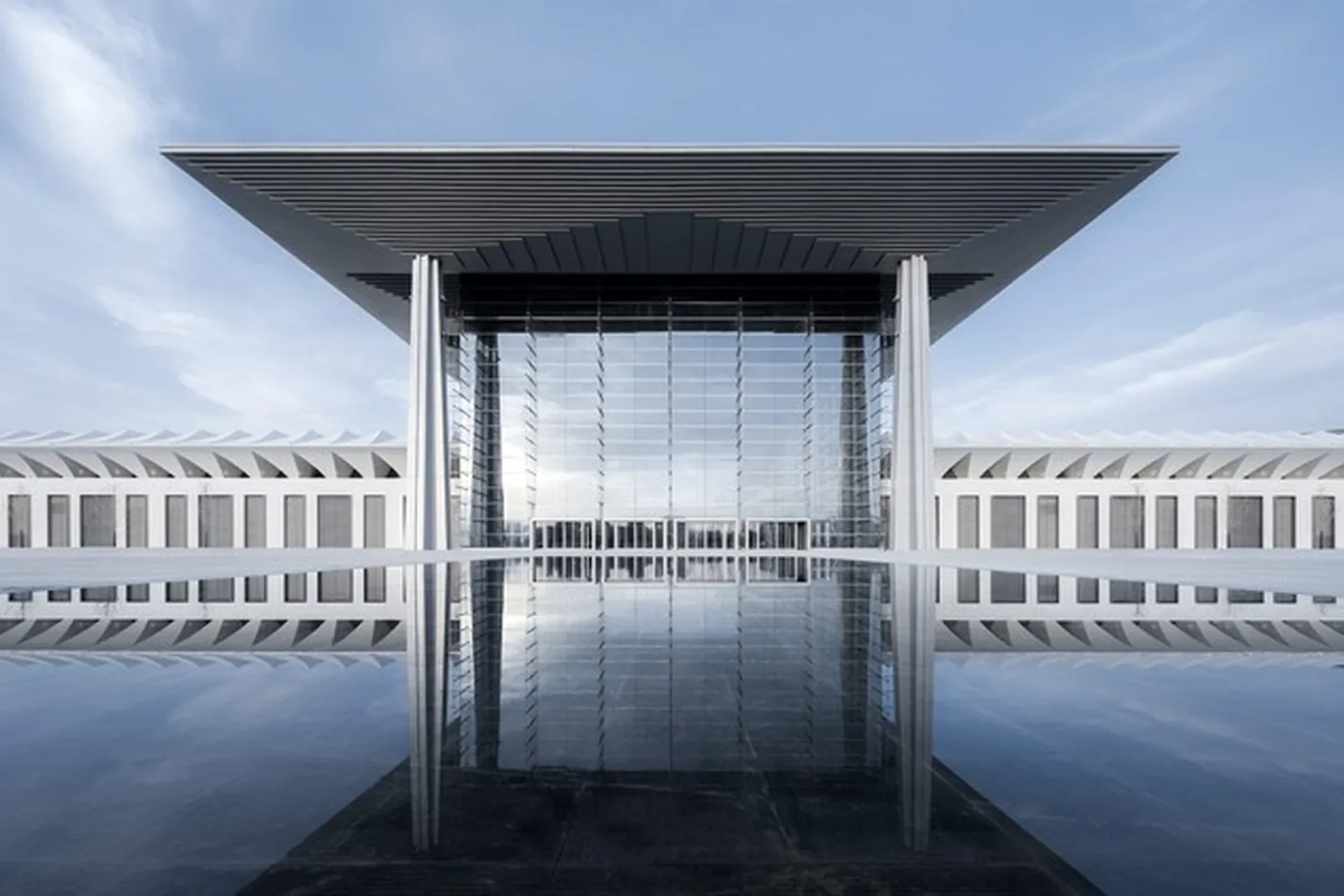
"The Xi'an Museum sits within the Jianfu Temple (荐福寺) complex, a 684 AD Tang Dynasty Buddhist temple whose centerpiece is the Small Wild Goose Pagoda (小雁塔, Xiǎo Yàn Tǎ), a 43-meter brick pagoda that survived dozens of earthquakes across 1,300 years. The museum building itself is semi-subterranean, designed by architect Zhang Jinqiu to respect the temple landscape, and houses 130,000 objects with an emphasis on Tang Dynasty daily life — gold and silver vessels, tri-colored glazed pottery, and Buddhist sculpture. Unlike the Shaanxi History Museum across town (which draws 6,000+ visitors daily and requires booking a month ahead), the Xi'an Museum receives a fraction of the crowds. The temple gardens with ancient pagoda trees (Sophora japonica, some over 1,000 years old) are as much a reason to visit as the collection.".
Last updated:
Quick Answer
Is Xi'an Museum worth visiting?
"Tang Dynasty artifacts inside the Small Wild Goose Pagoda temple complex — a calmer, more intimate alternative to the Shaanxi History Museum. Free entry with garden and pagoda access.".. 2026...
Quick facts
| Category | history |
|---|---|
| Ticket | Free. Passport required. No advance reservation needed — walk in and scan passport at the entrance. Climbing the Small Wild Goose Pagoda costs ¥30 (as of June 2026). |
| Hours | 9:00-17:30 (last entry 17:00). Closed Tuesdays. |
| Recommended duration | 2-2.5 hours. Add 30 minutes if climbing the pagoda. |
| Best time to visit | Weekday mornings, especially Wednesday-Friday. The temple gardens are loveliest in April (pagoda tree blossoms) and October (autumn foliage). March-early June and September-November for comfortable outdoor walking. |
| How to get there | Metro Line 2 to Nanshaomen (南稍门), Exit A2. Walk west 5 minutes on Youyi West Road. Bus routes 18, 21, 203, 204, 218, 224, 229, 258, 407, 410, 508, 713 to Small Wild Goose Pagoda stop. DiDi from central Xi'an costs ¥15-25. |
| English signage | partial |
Why visit
You get a Tang Dynasty pagoda, Buddhist temple gardens, and a quality museum collection — all without the reservation battles of the Shaanxi History Museum. The Small Wild Goose Pagoda is one of Xi'an's two famous Tang pagodas, and you can climb it (¥30 extra) for a view over the southern city. On a June 2026 weekday morning, I counted 12 other visitors in the entire museum.
Collection highlights
- Small Wild Goose Pagoda (小雁塔) — 43 m, 15-tier Tang Dynasty brick pagoda (originally 45 m, top two tiers lost in a 1556 earthquake). Climb to the 13th floor for a view of Xi'an's southern wall and the modern skyline
- Tang Dynasty gold and silver banquet vessels — wine cups, plates, and ewers from the Hejiacun hoard, showing Central Asian influence in Tang elite dining
- Tang sancai (三彩) glazed pottery horses and camels — Xi'an is the spiritual home of Tang tri-color ware, and this collection rivals any in the city
- Buddhist stone sculpture hall — Northern Zhou through Tang Dynasty Buddha heads and stelae recovered from temples around the Guanzhong plain
- Jianfu Temple Morning Bell — one of the "Eight Views of Guanzhong" (关中八景), the iron bell cast in 1192 AD is still in the bell tower
- Ancient pagoda trees (国槐) in the temple courtyard — several over 1,000 years old, with twisted trunks and shady canopies
Tips
- Combine with the Shaanxi History Museum if you got a reservation — if not, this museum covers similar Tang content with zero booking stress
- The Small Wild Goose Pagoda climb is 15 stories of increasingly narrow brick stairs — not for anyone with mobility concerns or claustrophobia
- I visited on a Wednesday morning in June 2026 and found the Buddhist sculpture hall completely empty — the silence inside the dim gallery, with Tang-era Buddha faces emerging from the darkness, was the most meditative museum moment I have had in China
- The temple grounds host occasional shadow puppet (皮影) performances near the south gate — check the schedule board at the entrance
- Bring your own water — the only drinks seller is a small kiosk near the entrance that closes at 16:00
- The museum shop sells Small Wild Goose Pagoda-themed washi tape and bookmarks — surprisingly tasteful souvenirs at ¥15-30
Frequently asked questions
How is the Xi'an Museum different from the Shaanxi History Museum?
The Shaanxi History Museum covers all periods from prehistory to Qing, with 370,000 objects and overwhelming crowds (6,000+ daily visitors, tickets must be booked weeks ahead). The Xi'an Museum focuses on Tang Dynasty Xi'an specifically, has 130,000 objects, and receives far fewer visitors. It is also set inside a Tang Dynasty temple with a climbable pagoda and gardens — the Shaanxi History Museum is a modern building. If you cannot get Shaanxi History Museum tickets, this is your best alternative, and in some ways (atmosphere, intimacy) it is actually better.
Can I climb the Small Wild Goose Pagoda?
Yes, for ¥30 (price as of June 2026). The climb involves 15 floors of brick stairs that become progressively narrower — the final few flights are tight. The view from the top looks south over Xi'an's modern high-rises and north toward the Bell Tower. The pagoda leans slightly to the west (a 0.5-degree tilt) from centuries of earthquake settlement.
What is the Hejiacun hoard?
The Hejiacun hoard (何家村窖藏) was discovered in 1970 when construction workers in southern Xi'an unearthed two large ceramic jars containing over 1,000 Tang Dynasty gold, silver, and jade objects. The hoard includes coins from as far as the Byzantine Empire and Sassanian Persia, gold wine cups with grape-and-vine motifs, and a gilded silver ewer with a lifelike horse-head spout. It is considered the most important Tang Dynasty treasure find. Items from the hoard are split between the Shaanxi History Museum and the Xi'an Museum.
Why is it called the Small Wild Goose Pagoda?
The name "Small Wild Goose" (小雁) distinguishes it from the Big Wild Goose Pagoda (大雁塔, Dà Yàn Tǎ) 3 km to the east. The names come from a folk story: a group of wild geese flew over the Big Pagoda and one fell dead, so monks buried it there. In reality, both names were attached centuries after construction. The Small Pagoda (built 707-709 AD) is actually slightly older than the Big Pagoda (rebuilt 704 AD, expanded 701-704).
Is the Xi'an Museum free?
Yes, the museum and temple grounds are free. You only pay if you want to climb the Small Wild Goose Pagoda (¥30 as of June 2026). No advance reservation is required — just bring your passport and walk in.
How much time should I spend at the Xi'an Museum?
Allow 2-2.5 hours for the museum galleries and temple grounds. Add 30 minutes if you plan to climb the pagoda. It pairs well with a morning visit to the nearby Xi'an City Wall (South Gate, 2 km east, ¥54) for a half-day itinerary.
Read next
Other things to do in Xi'an
Anren Fang (Tang Dynasty Residential Complex)
anyang-palace in Beijing: "唐长安城坊遗址,展示唐代居民生活。2023年开放新景区。唐风体验新选择。必去指数★★★.".
Banpo Museum
banpo-village in Beijing: "仰韶文化遗址,六千年前母系氏族村落。门票0元。了解新石器时代必去。必去指数★★★.".
Beilin Museum
beilin-museum in Beijing: "西安碑林博物馆别名,收藏历代碑石书法瑰宝。门票65元。书法爱好者圣地。必去指数★★★★★.".
Bell Tower
bell-tower in Beijing: "西安市中心地标,明代建筑。登楼票30元。与鼓楼相距200米,联票50元。夜景绝美。必去指数★★★★.".
Big Wild Goose Pagoda
"7th-century Buddhist pagoda built to house scriptures brought from India by the monk Xuanzang (the real Tripitaka). ¥50. Evening fountain show is free.".
Xi'an City Wall
city-wall in Beijing: "中国现存最完整古代城垣。明代建成,周长13.7公里。骑车环城约2小时。门票54元。必去指数★★★★★.".
Da Ci'en Temple
daCi-en-temple in Beijing: "唐代皇家寺院,玄奘主持修建。大雁塔所在地。门票40元。玄奘法师纪念地。必去指数★★★★.".
Drum and Bell Towers
Two 14th-century Ming-dynasty towers anchoring Xi'an's old-city centre — the Bell Tower (1384) at the crossroads, the Drum Tower (1380) at the Muslim Quarter gate. ¥30 each to climb, 1-1.…
Drum Tower
drum-tower in Beijing: "西安明代建筑,与钟楼东西相望。登楼票30元,击鼓表演10元/次。与钟楼联票50元。必去指数★★★★.".
Xi'an Beilin Museum (Forest of Steles)
forest-of-steles in Beijing: "中国最大石碑博物馆,书法爱好者圣地。门票65元,孔庙古建筑群。必去指数★★★★★.".
Giant Wild Goose Pagoda
giant-wild-goose-pagoda in Beijing: "唐代佛塔地标,玄奘译经之所。门票50元,登塔另付。建议傍晚前往看夜景。必去指数★★★★★.".
Great Mosque of Xi'an
great-mosque in Beijing: "西安最古老清真寺,唐代建立。门票25元。回坊核心景点,非穆斯林可参观。必去指数★★★.".
Great Mosque of Xi'an
A 1,280-year-old mosque site down Huajue Lane that looks like a Ming temple but serves Xi'an's Hui Muslim community — four courtyards, a pagoda-style minaret, no domes.…
Huaqing Palace
"Tang Dynasty imperial hot springs resort — Yang Guifei's bathing pool, scene of the 1936 Xi'an Incident. ¥120 entry. 30 km east of Xi'an. Combine with Terracotta Army.".
Huaqing Pool
huaqing-pool in Beijing: "唐玄宗与杨贵妃爱情故事发生地,周秦汉唐皇家温泉。门园一票通120元,内有《长恨歌》演出。必去指数★★★★.".
Mount Hua
mount-hua in Beijing: "五岳最险,天下第一奇险。徒步登顶约5-6小时,乘索道省力。门票160元+摆渡车40元+索道另行。必去指数★★★★★.".
Muslim Quarter
"Xi'an's 1,200-year-old Hui Muslim food district — 10+ blocks of lamb skewers, hand-pulled noodles, persimmon cakes, and the 1,300-year-old Great Mosque. Free entry. Food ¥5–50 per item.".
Shaanxi Grand Theater
shaanxi-grand-theater in Beijing: 西北最大综合性剧院,2017年建成,1800座。演出票80-380元,唐代风格现代建筑。地铁3号线/4号线大雁塔站C口步行10分钟。大唐不夜城核心区。
The Song of Everlasting Sorrow
tang-dynasty-show in Beijing: "华清池实景舞剧,唐玄宗与杨贵妃绝世恋歌。演出188-588元。视觉盛宴,建议观看。必去指数★★★★★.".
Tang West Market Site
tang-west-market in Beijing: "唐代长安城商业中心遗址,买东西典故来源。博物馆展示丝路贸易盛况。免费参观。必去指数★★★.".. 2026 verified.
Terracotta Army
UNESCO site with 8,000+ life-sized warriors buried 2,200 years ago. 1.5 hours from Xi'an. Allow 3-4 hours.
Xi'an City Wall
"The best-preserved ancient city wall in China — 13.7 km of Ming Dynasty fortifications you can bike on top of. ¥54 entry, ¥45 bike rental. 2–3 hours to bike the full loop.".
Yanmenguan Pass
yanmenguan in Beijing: "长城重要关隘,天下九塞之一。门票50元。位于太原以北,路途较远。建议自驾或跟团。必去指数★★★.".
Museums in Xi'an
Banpo Museum
"A 6,000-year-old Neolithic village preserved in situ — walk through a matriarchal Yangshao Culture settlement with houses, kilns, and a burial ground. ¥65. China's first prehistoric site museum.".
Shaanxi History Museum
"China's most historically significant provincial museum for ancient Chinese civilization — built on the Shaanxi province that hosted 13 imperial dynasties.".
Shaanxi History Museum — Qin-Han Branch
"New branch opened 2024 near the Qin Dynasty palace ruins. Focuses exclusively on the Qin and Han dynasties (221 BC-220 AD). Free. Book ahead.".
Emperor Qinshihuang's Mausoleum Site Museum
"\"The world-famous Terracotta Army viewed through the museum lens: excavation in progress, bronze chariot conservation, and the science behind 2,200-year-old polychrome preservation. ¥120.\".".
Xi'an City Wall Museum
"The museum on top of China's most complete Ming Dynasty city wall — documenting the wall's construction, military history, and the "Ming Great Wall" system. Included in wall ticket.".. 20...
Terracotta Army Museum (Museum of the Terracotta Army and Mausoleum of Qin Shi Huang)
"The 8th Wonder of the World — 8,000+ life-size terracotta warriors, horses, and chariots buried to guard the tomb of China's first emperor (210 BCE).".
Xi'an Beilin Museum (Stele Forest)
The "Stele Forest" (碑林) — China's largest collection of stone steles and calligraphy, including the famous "Classic of Tea" (茶经) and Tang Dynasty calligraphy. ¥65.