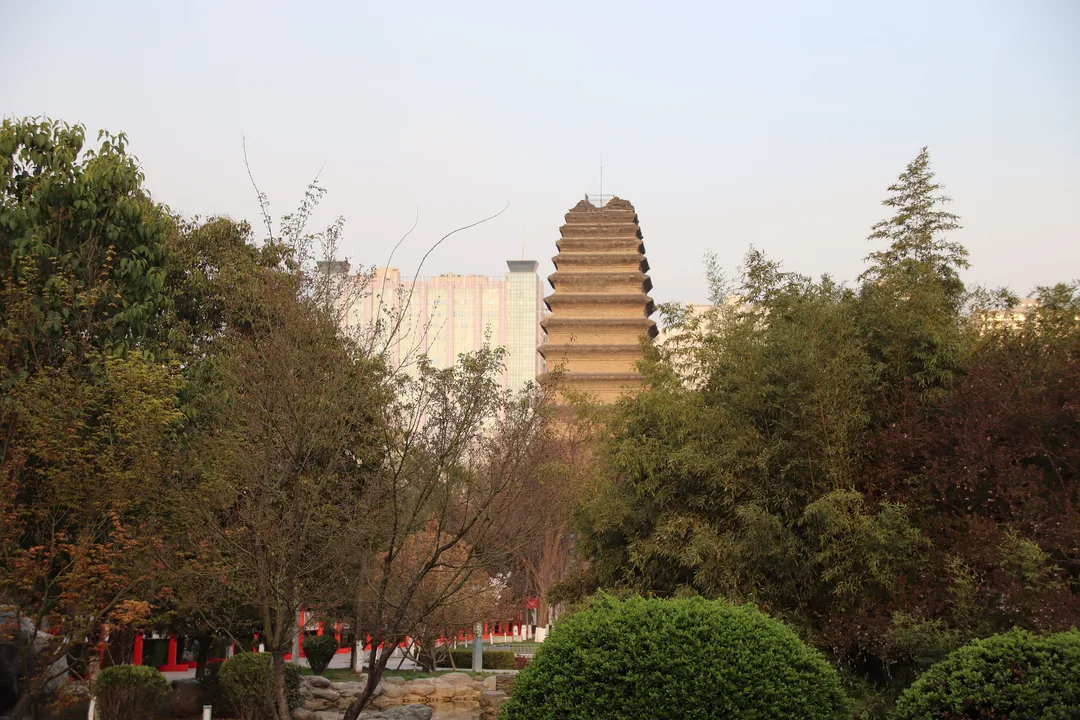
Small Wild Goose Pagoda小雁塔
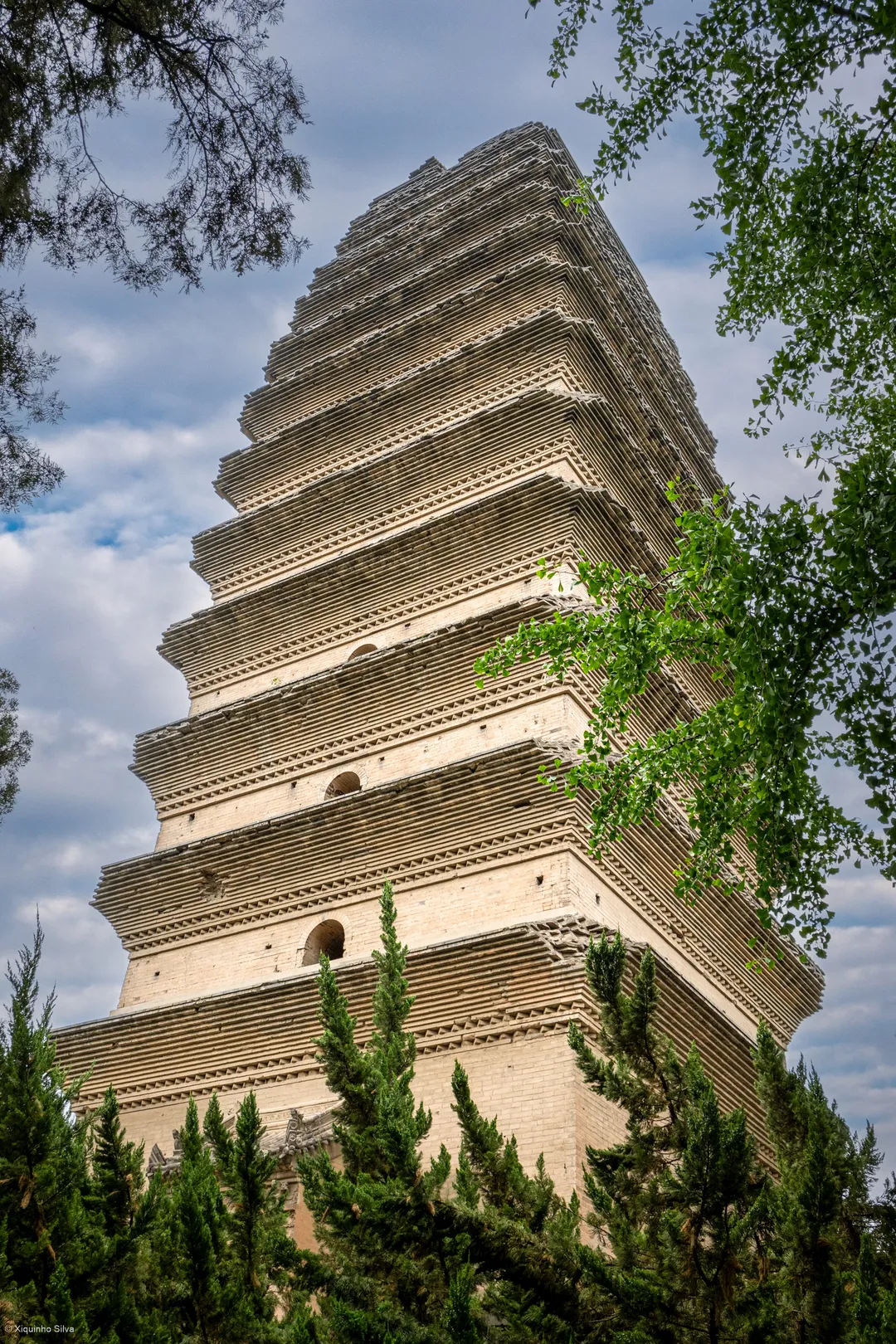
The Small Wild Goose Pagoda stands in Jianfu Temple in Beilin District, first built in the Tang Jinglong era (707-710) — a key surviving Buddhist structure of Tang Chang'an. The 43 m, fifteen-tier dense-eave brick tower is the Big Wild Goose Pagoda's quieter, more rustic sister.
Xi'an · Visitor Guide2026-10-18
Quick Answer
Is Small Wild Goose Pagoda worth visiting?
Tang-dynasty brick pagoda in Xi'an built 707-710 and rising 43 m over 15 tiers; free with reservation, tower climb 30 yuan, open 9:00-17:00 and closed Tuesdays.
Quick facts
| Ticket | Free (reserve ahead on the official mini-program); tower climb ¥30 extra |
|---|---|
| Hours | 09:00-17:00, last entry 16:30. Closed Tuesdays (except public holidays) |
| Recommended duration | 1-1.5 hours |
| Best time to visit | Spring (Mar-May) and crisp autumn days — climb the tower for the view in fine weather |
| How to get there | Metro Line 2 or 5 to Nanshaomen Station, then about 10 minutes on foot. Buses 18/21/29/32 to the Small Wild Goose Pagoda stop |
| English signage | Yes |
| Wheelchair accessible | Partial |
| Dynasty | Tang (707-710) |
| Height | 43 m |
| Tiers | Fifteen (thirteen survive) |
| Type | Dense-eave brick pagoda |
| Temple | Jianfu Temple |
| Heritage status | UNESCO World Heritage Site |
What to expect
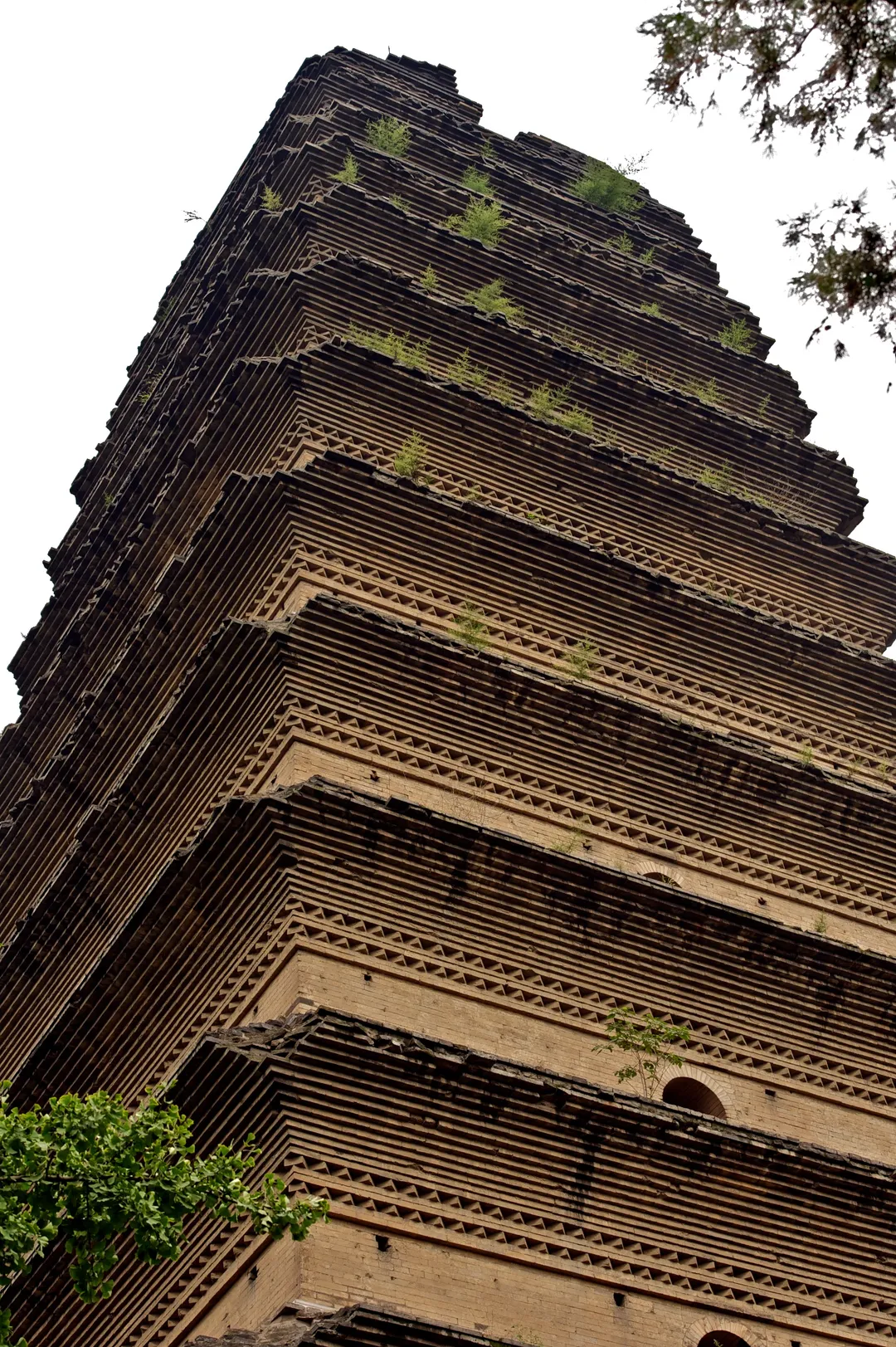
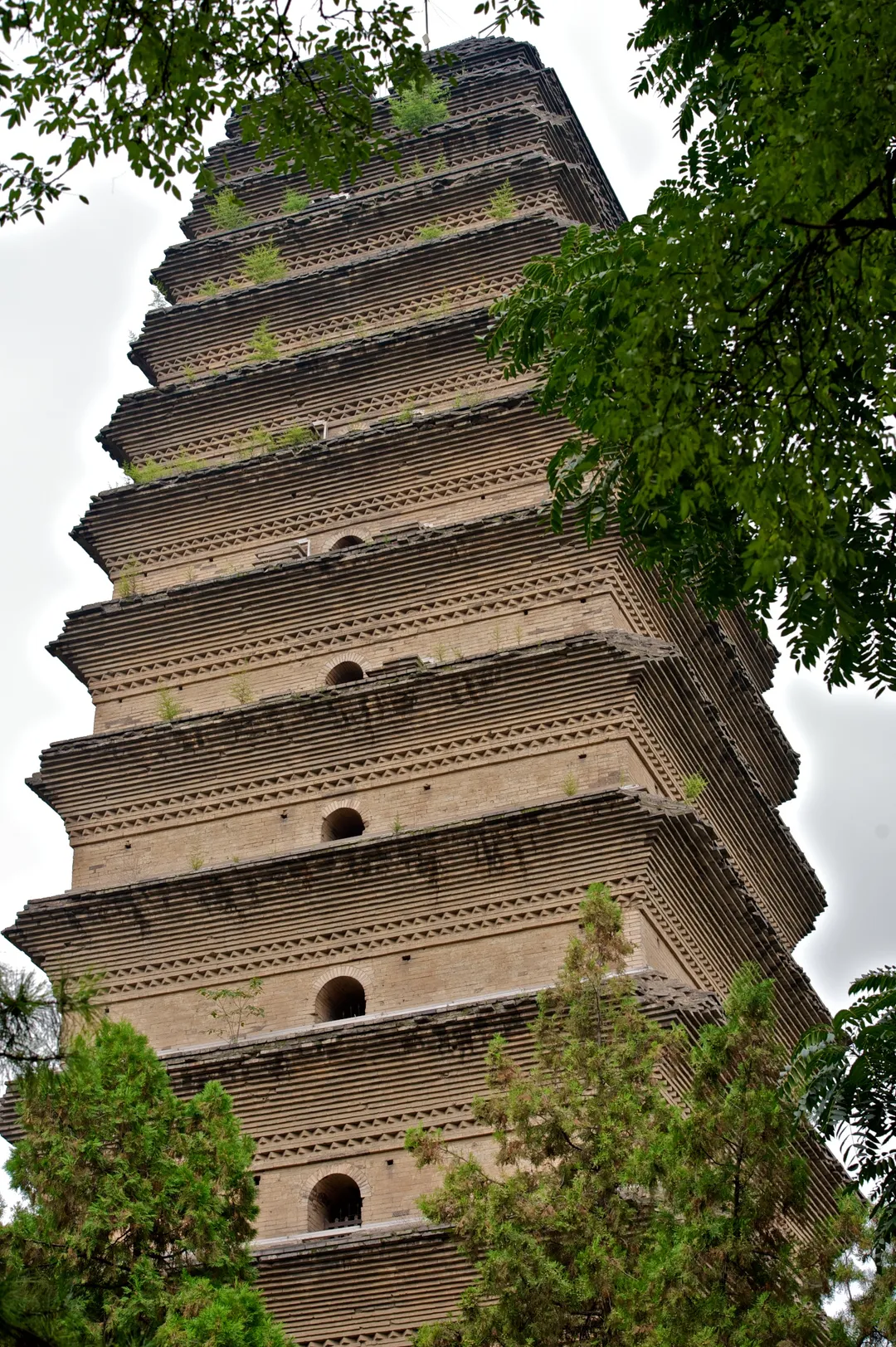
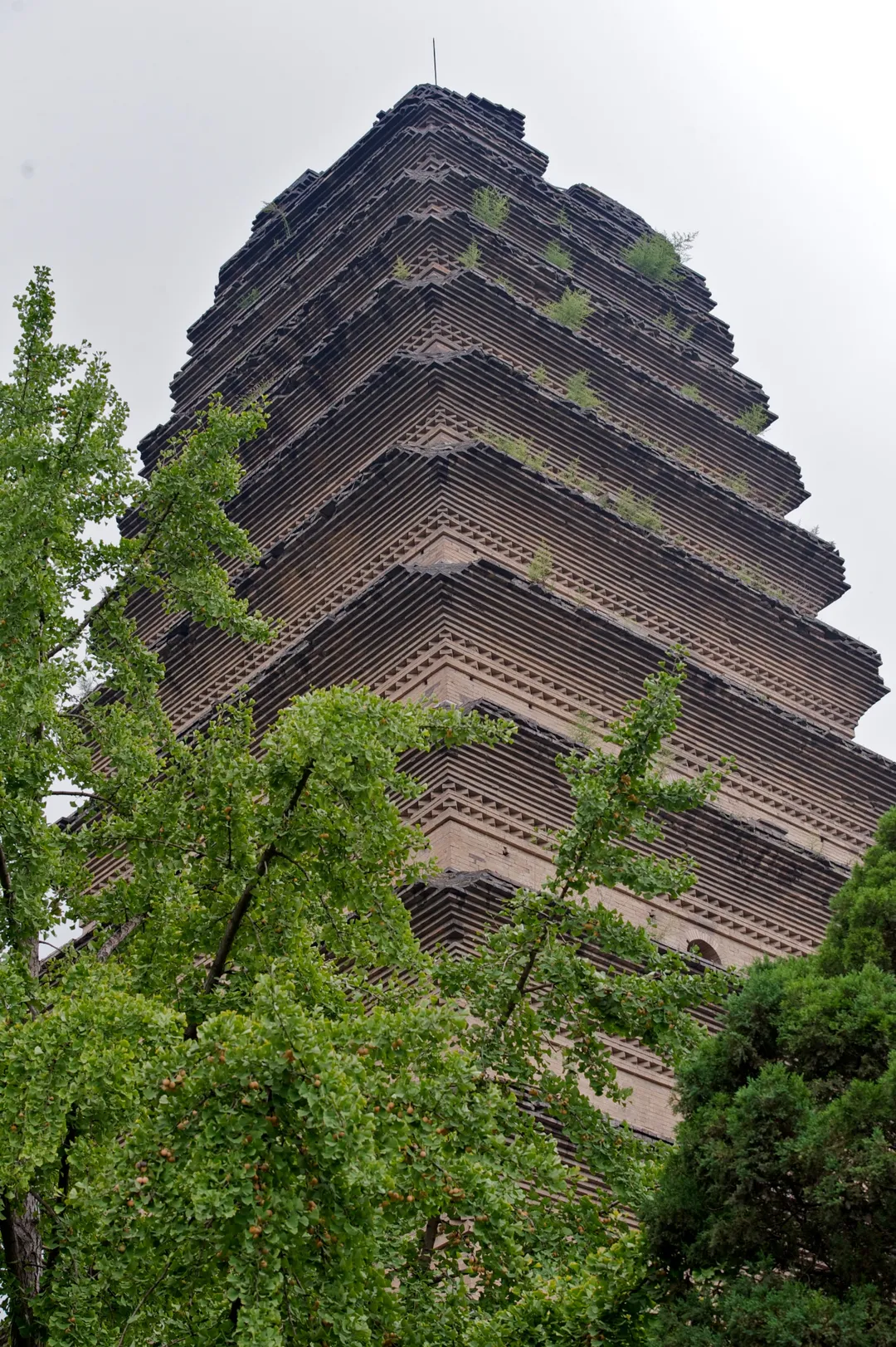
The Small Wild Goose Pagoda sits in Jianfu Temple at 72 Youyi West Road in southern Xi'an and, like the Big Wild Goose Pagoda, is a key surviving piece of Buddhist Chang'an. Built during Emperor Zhongzong's Jinglong era, it originally had fifteen tiers (thirteen survive) and is a textbook dense-eave brick pagoda — slender and graceful beside its grander sibling.
The pagoda has lived through several earthquakes and, legend says, split open three times and healed itself — the 'miraculous reunion' story still told today. The carved stone lintels at the base are fluid and well preserved. Jianfu Temple also keeps a great bell cast in the Jin Dynasty that sets off the pagoda.
A visit here is about quiet ancient atmosphere rather than the commercial buzz around the Big Wild Goose Pagoda. The temple grounds are leafy and a favorite morning-exercise spot for locals; old trees tower over the pagoda and the Jin-era bell hangs in the bell tower. Come early to beat the crowds.
How to get there
Metro Line 2 to Nanshaomen Station Exit A, then about 10 minutes west on foot. Buses 18, 21, 29, 32 and 46 to the Small Wild Goose Pagoda stop.
Best photo spots
- The pagoda framed by ancient trees (magnolia blossom in spring)
- The Jin-dynasty bell in Jianfu Temple's bell tower
- Small Wild Goose Pagoda together with the Xi'an Museum
- Close-up of the carved stone lintel at the base
Tips
- Free but reservation required — book 1-2 days ahead in peak season
- Pair it with the adjacent Xi'an Museum — reserve the museum first, then the pagoda
- Plum blossoms and magnolias bloom in the temple each March — the best photo season
- Ringing the bell costs an extra ¥10 per strike
Scams to avoid
- No notable scam risk; the site is well managed
- If an unlicensed guide insists on guiding you, decline and tour on your own
Frequently asked questions
Small Wild Goose or Big Wild Goose Pagoda?
Different styles: the Small is quiet, rustic and free; the Big is grand and ticketed. With time to spare, see both; short on time, prioritize the Big Wild Goose Pagoda.
Is tower climbing capacity-controlled?
Yes — 20 people per batch, with a queue of roughly 15-30 minutes. Go early.
Do I need a guide?
Rent the audio guide (¥20) or use the official app instead of informal guides.
Read next
Other things to do in Xi'an
Anren Fang (Tang Dynasty Residential Complex)
One of the 108 warded quarters of Tang Chang'an, now an archaeological park where ordinary Tang residents lived and traded; new exhibit areas opened in 2023.
Banpo Neolithic Museum
A 6,000-year-old Neolithic village excavation on Xi'an's eastern edge — walkways over the pits of a 45-house settlement of the Yangshao culture, plus a re-creation village with thatched huts.
Banpo Museum
A 6,000-year-old Yangshao-culture village of a matrilineal clan — the essential stop for understanding China's Neolithic. Admission CNY 47, students CNY 27.
Beilin Museum
Xi'an's Stele Forest Museum holds China's greatest collection of ancient inscribed stelae — a pilgrimage site for calligraphy lovers. Admission CNY 65. A five-star must for anyone who loves the brush.
Bell Tower
The landmark at the very centre of Xi'an, built in the Ming dynasty. Admission CNY 30 to climb, or CNY 50 combined with the Drum Tower 200 m away. The night view is superb.
Big Wild Goose Pagoda
7th-century Buddhist pagoda built to house scriptures brought from India by the monk Xuanzang (the real Tripitaka). ¥50. Evening fountain show is free.
Xi'an City Wall
China's most complete ancient city wall: Ming-built, 13.7 km around the old city, with a full circuit by bike in about 2 hours. Admission CNY 54. A must-see.
Da Ci'en Temple
A Tang-dynasty royal monastery built under Master Xuanzang and home to the Giant Wild Goose Pagoda. Admission CNY 40; a memorial to the great monk.
Drum and Bell Towers
Two 14th-century Ming-dynasty towers anchoring Xi'an's old-city centre — the Bell Tower (1384) at the crossroads, the Drum Tower (1380) at the Muslim Quarter gate. ¥30 each to climb, 1-1.
Drum Tower
A Ming-dynasty landmark facing the Bell Tower across the old city; tower admission CNY 30, drum show CNY 10, combo with the Bell Tower CNY 50. A must-visit.
Xi'an Beilin Museum (Forest of Steles)
China's largest collection of ancient stone tablets and a mecca for calligraphy lovers, set within the old Confucian temple complex. Admission CNY 65. A must-see.
Grand Tang Mall (Datang Everbright City)
A 1.5-km free pedestrian avenue of lit-up Tang-style pavilions, costumed performers, and food stalls running south from the Big Wild Goose Pagoda through Xi'an's Qujiang district.
Great Mosque of Xi'an
A 1,280-year-old mosque site down Huajue Lane that looks like a Ming temple but serves Xi'an's Hui Muslim community — four courtyards, a pagoda-style minaret, no domes.
Han and Tang Dynasty Street
The core stretch of Xi'an's Great Tang All Day Mall, about 2.1 km long and opened in 2008; free entry, light shows run 19:00-23:00, next to the Giant Wild Goose Pagoda.
Huaqing Palace
Tang Dynasty imperial hot springs resort — Yang Guifei's bathing pool, scene of the 1936 Xi'an Incident. ¥120 entry. 30 km east of Xi'an. Combine with Terracotta Army.
Huaqing Pool
Royal hot springs from the Zhou through the Tang dynasty, setting of Emperor Xuanzong's romance with Consort Yang. CNY 120 covers the grounds; the Song of Everlasting Sorrow show plays at night.
Mount Hua
The most perilous of the Five Great Mountains — 5-6 hours to the summit on foot, or take the cableway to save your legs. Entry CNY 160 plus CNY 40 shuttle; a five-star must-see.
Muslim Quarter
Xi'an's 1,200-year-old Hui Muslim food district — 10+ blocks of lamb skewers, hand-pulled noodles, persimmon cakes, and the 1,300-year-old Great Mosque. Free entry. Food ¥5–50 per item.
Muslim Street (Huimin Street)
Famous food street in Xi'an's Muslim Quarter; free entry, shops open about 09:00-23:00, a 10-minute walk from Zhonglou metro station, famed for paomo, liangpi and lamb skewers.
Shaanxi Grand Theater
Northwest China's largest theater, opened in 2017 with 1,800 seats and show tickets CNY 80-380. Tang-inspired architecture in the Grand Tang Ever-Bright City, 10 minutes from Dayanta station.
Shaanxi History Museum
China's first large modern history museum, opened in 1991 in Xi'an with over 1.71 million relics; free with 3-day advance booking, Hejiacun exhibit 30 yuan, murals hall 270 yuan.
The Song of Everlasting Sorrow
A large-scale outdoor drama staged on the lake at Huaqing Pool, retelling the romance of Emperor Xuanzong and Consort Yang. Tickets CNY 188-588. A visual feast that is well worth watching.
Tang West Market Site
The excavated heart of Tang Chang'an's commerce — origin of the phrase dongxi, 'east-west' — with a museum recreating Silk Road trade at its peak. Free entry; allow 1-2 hours.
Terracotta Army
UNESCO site with 8,000+ life-sized warriors buried 2,200 years ago. 1.5 hours from Xi'an. Allow 3-4 hours.
Xi'an City Wall
The best-preserved ancient city wall in China — 13.7 km of Ming Dynasty fortifications you can bike on top of. ¥54 entry, ¥45 bike rental. 2–3 hours to bike the full loop.
Museums in Xi'an
Banpo Museum
A 6,000-year-old Neolithic village preserved in situ — walk through a matriarchal Yangshao Culture settlement with houses, kilns, and a burial ground. ¥65. China's first prehistoric site museum.
Emperor Qinshihuang's Mausoleum Site Museum (Terracotta Warriors)
About 8,000 life-size clay soldiers buried in 210 BCE to guard China's first emperor — plan 3 to 4 hours on site plus 90 minutes each way from central Xian.
Shaanxi History Museum
China's most historically significant provincial museum for ancient Chinese civilization — built on the Shaanxi province that hosted 13 imperial dynasties.
Shaanxi History Museum — Qin-Han Branch
New branch opened 2024 near the Qin Dynasty palace ruins. Focuses exclusively on the Qin and Han dynasties (221 BC-220 AD). Free. Book ahead.
Emperor Qinshihuang's Mausoleum Site Museum
The world-famous Terracotta Army viewed through the museum lens: excavation in progress, bronze chariot conservation, and the science behind 2,200-year-old polychrome preservation. ¥120.
Forest of Steles Museum (Xi'an Beilin Museum)
Xi'an's 1,094-year-old "Forest of Steles" holds more than 3,000 carved stone tablets and rewards 2–3 hours of close looking — most visitors should skip the calligraphy trance and head strai.
Xi'an City Wall Museum
The museum on top of China's most complete Ming Dynasty city wall — documenting the wall's construction, military history, and the "Ming Great Wall" system. Included in wall ticket.".. 20.
Xi'an Museum
Tang Dynasty artifacts inside the Small Wild Goose Pagoda temple complex — a calmer, more intimate alternative to the Shaanxi History Museum. Free entry with garden and pagoda access.".. 2026.
Terracotta Army Museum (Museum of the Terracotta Army and Mausoleum of Qin Shi Huang)
The 8th Wonder of the World — 8,000+ life-size terracotta warriors, horses, and chariots buried to guard the tomb of China's first emperor (210 BCE).
Yongle Palace Museum (Yongle Gong)
Yuan-dynasty Taoist complex at Ruicheng (Yuncheng, Shanxi) — the largest surviving ensemble of Yuan murals in China, led by the 'Procession of Immortals'. About 2 hours from Xi'an by rail. ¥60.