Summary
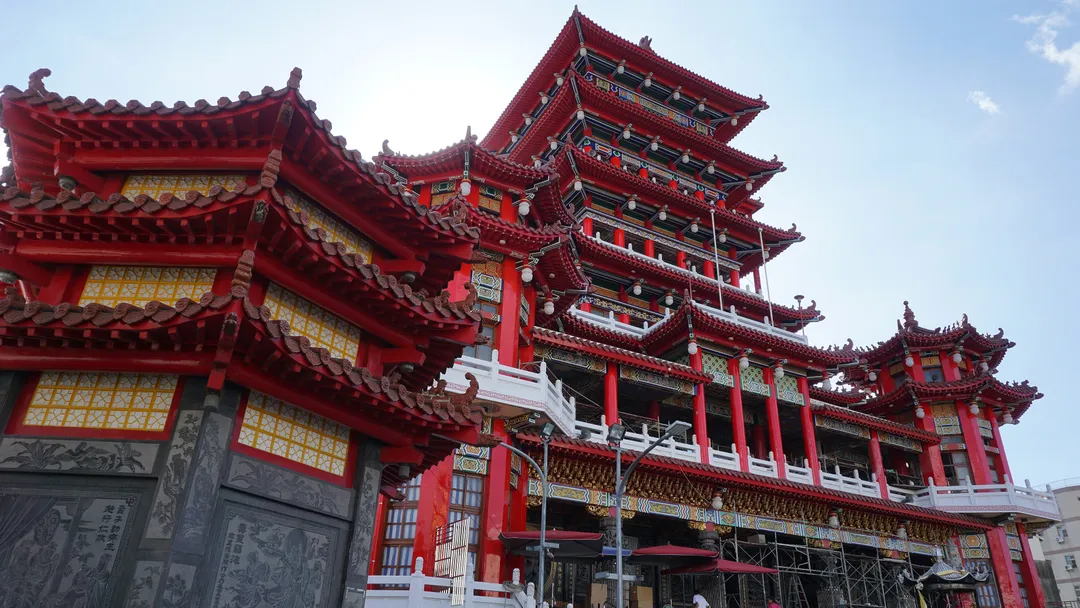
Chizhou earns its stop in southern Anhui for one headline reason: Jiuhua Mountain, one of China's four sacred Buddhist mountains, where roughly 99 registered temple courts climb the slopes about 40 km from downtown. A first visit works in 2-3 days: one full day for the mountain's courts and ridges, a city-side half-day for Xinghua Village — the park that keeps the name from Du Mu's Tang-dynasty "Qingming" poem, written while he governed here from 844 to 846 — and, with a third day, the primeval Guniujiang reserve in Shitai County. Aim for April-May or September-November. The rail line opened in April 2024 also puts Huangshan under an hour away, which makes pairing easy.
This guide is written for travelers deciding whether Chizhou earns a stop on an Anhui or Yangtze-loop route, and how to chain the mountain, the city sights and Shitai without a car-dependent failure. Every figure below was cross-checked against current listings and our own 3-day Chizhou itinerary; the page was last verified on 2026-10-12.
Why Chizhou
Chizhou is a prefecture-level city of about 2.4 million people on the south bank of the Yangtze. It is really three destinations wearing one name: the river-side city itself (Guichi district), the mountain — Jiuhuashan, technically in Qingyang County to the northeast — and the karst-and-forest country of Shitai County to the south. The rail geography only sharpened this split: since April 2024 the Chizhou–Huangshan high-speed line (about 125 km, stations at Chizhou, Jiuhuashan, Huangshan West and Yixian East) runs through all three corners, and Jiuhuashan station sits roughly 14 minutes from Chizhou station and about 6 km from the scenic-area entrance.
What pulls travelers off the train is old. Jiuhua Mountain has been a pilgrimage target since a Korean monk, Kim Gyo-gak, settled here in the Tang dynasty; the mountain later counted him as the bodhisattva Ksitigarbha (Dizang) in flesh, which is why every court on the hill carries his name somewhere. In the city, the Xinghua Village park trades on Du Mu, the Tang governor of 844-846 whose "Qingming" quatrain — "the rain falls thick on the Qingming day" — fixed the name in the language. And Li Bai wrote his seventeen Qiupu songs along the Qiupu River in Shitai in the 750s, which makes Chizhou one of the densest small-city clusters of Tang poetry in China.
The honest trade-offs: downtown Chizhou is workmanlike rather than charming, so the city functions as a base rather than a sight; English signage thins out fast away from the mountain's ticket halls; and before the 2024 rail opening the bus was the only practical link between city and mountain. Two real days reward the trip; a rushed half-day on Jiuhua between two trains rewards almost nobody, because the queues at the cableways eat the margin.
Top Attractions
Jiuhua Mountain: the temple courts
The mountain's old core is Jiuhua Street, a temple-dense terrace at around 600 metres elevation where the courts chain together on foot. Start at Huacheng Temple, the mountain's oldest and its head monastery: its origins trace to a hermitage from 401 AD, the current name was fixed in the Tang (the 750s), and the building — four courtyards in Hui-style housing — now doubles as the mountain's history museum. From there the walk passes the Dabeilou complex and the funnel of incense shops on the old street; a funicular lifts visitors up to Baisheng Palace, a cliff-perched court whose narrow staircases are part of the experience. Round-trip funicular fares run around 100 CNY at current listings.
Facts matter for planning: the entry ticket is the whole-mountain pass, roughly 160 CNY in peak season and 140 CNY off-peak at current listings, with the scenic shuttle inside the mountain another 50 CNY. Temple courts open in daylight hours — plan on roughly 07:00-17:00 in season — and active halls ask visitors to dress with shoulders and knees covered and to skip photography where posted. Morning chanting is audible around opening time near Huacheng Temple; incense is lit in the courtyards, and nobody should feel required to take part. Expect genuine crowds on the first to the seventh days of the lunar new year, around the Qingming holiday, and on summer weekends.
Tiantai Peak and Huatai: the ridge day
The high route is the mountain's second half and the part most day-trippers wrongly skip. Tiantai Peak, the traditional pilgrimage summit, tops out at 1,306 metres — below the forest reserve of Shiwang Peak, 1,342 metres, the massif's highest point. The Tiantai cableway removes most of the stair work (round trip about 160 CNY, one way 85 CNY, current listings); on foot the ridge is a several-hour stair climb, and the steps are the point for pilgrims, not a defect. Set aside most of a day if you walk the ridge.
Huatai is the photographic half: a bare-granite crest with boardwalks stitched along the cliff faces, reached by its own cableway (round trip about 160 CNY at current listings; at the time of checking the Huatai area itself took no separate gate ticket). The two cableways sit at opposite ends of the mountain, so do Tiantai and Huatai on the same day only if you start early and use the shuttle between them.
The 99-metre Ksitigarbha statue at Dayuan Culture Park
At the mountain's northern foot, near the visitor centre at Ke Village, the 99-metre bronze Ksitigarbha statue has stood over its own hill since its consecration in 2013 — its height chosen to echo the mountain's traditional count of 99 peaks. It is the largest open-air Ksitigarbha statue in the world and works as either the first stop off the train at Jiuhuashan station or the last hour before leaving. Entry policy at the park has shifted over the years, so check current listings on arrival rather than trusting older guides.
Xinghua Village and Pingtian Lake: the city-side half-day
Back in the city, the Xinghua Village park is the literary stop: rebuilt lanes, wine-press memorabilia and Huanggong Well, all anchored on the Du Mu story of 844-846. The park is pleasant rather than essential, and the honest advice is to pair it with the lakeside paths of Pingtian Lake, an easy hour before an evening train. Both sit close enough to downtown to reach by taxi for a few yuan.
Guniujiang and Shitai: the third day
Ninety minutes south by road, Guniujiang National Nature Reserve has protected one of east China's last tracts of primary forest since 1988; its main peak reaches 1,727 metres, and the boardwalk trails through the valleys are the right pacing for a slow day. Pair it with the Penglai cave near Shitai town — about 3 km of lit chambers and passages — or a raft section on the Qiupu River, the water Li Bai wrote along. Shitai needs its own day; squeezing it into a Jiuhua afternoon means seeing neither.
Where to Stay
Three bases, three trips. On the mountain, Jiuhua Street puts you inside the temple courts at dawn and after the day crowds leave — the trade is higher prices and luggage dragged up funiculars — while Ke Village by the northern gate is cheaper and level, and works best with the statue park next door. Downtown Chizhou is the practical base for rail travellers: mid-range chains run roughly 200-350 CNY a night near Chizhou station, and the April-2024 line means the mountain is a short hop away. Qingyang county town splits the difference for drivers. Peak pressure follows the same calendar as the crowds above; book two or three weeks out for holiday weeks, walk in otherwise.
Gastronomy
The table is Anhui cooking with a river correction: fish from the Yangtze system — the mandarin fish of the Qiupu is the local name dish — mountain vegetables and tofu from Shitai, and the city's breakfast habit, chizhou xiaoba — small pan-fried buns with savoury fillings, a few yuan a plate. On the mountain, temple kitchens serve vegetarian set meals around lunchtime at modest prices; in town, look for Qiupu mandarin fish on banquet menus and one-pot country cooking (Shitai's yipin guo) in the counties. A breakfast of xiaoba and soy milk runs 5-10 CNY; a proper river-fish dinner runs 60-100 CNY per person. Eat where the queue is local and long.
Practical Information
Getting there
Rail now does almost all the work. Chizhou station sits on the Nanjing–Anqing high-speed line (through services from Shanghai and Hefei since 2015); since April 2024 the Chizhou–Huangshan line adds Jiuhuashan station, about 6 km from the scenic-area entrance, with direct trains to Hefei, Shanghai, Hangzhou, Nanjing and Wuhan. Jiuhuashan Airport (JIH), in Qingyang County, carries a modest domestic schedule. Long-distance buses still connect the city bus station with the mountain's visitor centre in around an hour.
| Route | Best mode | Typical time | Notes |
|---|---|---|---|
| Shanghai → Chizhou | HSR | about 3-3.5 h | Direct services, several daily |
| Hefei → Chizhou | HSR | about 1-1.5 h | Frequent; simplest feeder |
| Nanjing → Chizhou | HSR | about 1.5 h | Nanjing–Anqing line |
| Chizhou → Jiuhuashan station | HSR | about 14 min | April 2024 line; station is about 6 km from the scenic area |
| Chizhou → Huangshan North | HSR | about 40 min | Pair with the Huangshan guide |
| Downtown → Jiuhua Mountain | Bus or taxi | about 40-70 min | Roughly 40 km; bus to the visitor centre |
Getting around
Inside the mountain, the 50 CNY shuttle is not optional — the courts and both cableways sprawl across valleys, and walking the road between them burns hours. In town, taxis and the Didi app cover everything for 10-20 CNY a ride. Shitai County has buses from the city bus station, roughly every half-hour in season, but a hired car or driver (about 400-600 CNY a day) is the sane way to combine Guniujiang, the cave and the river in one day.
When to go
Ranked: first, April-May, when the mountain azaleas run and the air is clear; second, September-November, the driest light with thinning crowds; third, summer, which is cool on the ridge at 1,300 metres but crowded at the cableways. Winter is quiet and the off-peak ticket drops to about 140 CNY, but ice closes ridge sections and cableways stop in high wind. Avoid the first week of May and the first week of October entirely.
Money and connectivity
Alipay and WeChat Pay both bind international cards and work at every ticket window and temple stall; carry about 200 CNY in cash for small vendors in the villages around the mountain. Tourist eSIMs work fine in the city and on the mountain; hotel Wi-Fi is routine.
Two-Day Core Itinerary
| Day | Base | Morning | Afternoon | Evening |
|---|---|---|---|---|
| 1 | Jiuhua Street or Ke Village | Huacheng Temple at opening, then the old-street courts | Funicular to Baisheng Palace; shuttle to the statue park for the 99-metre Ksitigarbha | Jiuhua Street lanes after the day groups leave |
| 2 | Mountain, then Chizhou | Tiantai cableway up, ridge walk under Shiwang Peak | Huatai's granite boardwalks (or swap for the statue park if day 1 ran long) | Down the mountain; Xinghua Village or Pingtian Lake if the train allows |
For a first visit, the mountain sequence that wastes the least time:
- Buy the mountain pass and shuttle ticket together at the visitor centre; check that day's cableway status (wind stops them first).
- Enter at Jiuhua Street by 08:00 and walk Huacheng Temple and the old-street courts before the tour groups land.
- Ride the funicular to Baisheng Palace, walk the cliff court, come down by shuttle.
- Take the Tiantai cableway up after 11:00, when the morning queue has drained, and walk the ridge as far as time allows.
- Give the statue park its own hour — it is lit best late in the day — and leave the Huatai cableway for a second morning if the schedule is tight.
Two variations worth making. With a third day, go south to Guniujiang and Shitai — the 5-day Chizhou itinerary shows the sequencing with the statue park moved to day three. With a week, the loop extends naturally along the April-2024 rail line to Huangshan West and the Hangzhou + Huangshan itinerary; the day-by-day Chizhou versions are in the 3-day, 5-day and 7-day itineraries, and the Anhui guide stitches the province together.
Pacing notes: put the courts on a morning and the ridge on a clear one; do not schedule the statue park on a holiday afternoon; and if rain is forecast, swap the ridge day with the city-side day, in that order.
Beyond the Highlights
The Qiupu River is the region's most under-sold asset: a raft section drifts past karst walls that have barely changed since Li Bai wrote the seventeen Qiupu songs in the 750s. The Penglai cave near Shitai town runs about 3 km of chambers, cool in any weather. In the city itself, the evening riverside and the streets around the old town are the honest way to spend a night between mountain days. The lunar calendar still matters here — temple fairs around Qingming and the seventh lunar month bring pilgrims and prices up together.
Decision Support
Map
Orient on two axes. The rail line runs northwest-southeast from Chizhou through Jiuhuashan station toward Huangshan West; the mountain, the statue park and Shitai fan out from the city like a hand of cards — mountain northeast, Shitai south, Xinghua Village and Pingtian Lake in town. Amap (Gaode) has the best local routing; offline-download it, because signal fades in the reserve valleys.
Cost breakdown
Daily budget, mid-range, 2026, per person in CNY: accommodation 300-600; food 100-200; local transport 30-60; attractions 50-150 — a total of 500-1000 per day. The mountain resets the math: add roughly 160 for the pass, 50 for the shuttle and 100-160 per cableway, and subtract it from the next day. Backpacker days on 150-250 are realistic in town; luxury days with a mountain-view room and a hired driver start around 1200.
When to go
If you want one answer: late April, for azaleas plus pre-holiday calm, with October's second half as the crowd-free alternative. The roster's "most pleasant" answer — spring (April-May) and autumn (September-October) — is right for the ridge; just avoid the first weeks of May and October.
Practical
Five calls carry the trip. One: base in town for rail flexibility, or on the mountain only if dawn courts are the point. Two: buy the pass and shuttle together and check cableway status before fixing the day order. Three: courts in the morning, ridge when the forecast is clear. Four: carry 200 CNY cash for the villages. Five: if rain wins, swap the ridge for Shitai's cave — underground is weather-proof.
Glossary of Useful Terms
| Chinese | Pinyin | Meaning |
|---|---|---|
| 池州 | Chízhōu | Chizhou |
| 九华山 | Jiǔhuáshān | Jiuhua Mountain |
| 化城寺 | Huàchéng sì | Huacheng Temple, the mountain's head monastery |
| 杏花村 | Xìnghuā cūn | Xinghua Village, "apricot-blossom village" |
| 多少钱 | duōshǎo qián | how much |
| 谢谢 | xièxie | thank you |
Emergency Contacts
- Police: 110
- Ambulance: 120
- Fire: 119
- Tourist hotline: 12301
Sources and Verification
Ticket and cableway figures were cross-checked in October 2026 against current listings, including the Jiuhua Mountain scenic area's published price notices and aggregator fares; rail times against post-April-2024 timetables for the Chizhou–Huangshan line. Prices move with the seasons — reconfirm within a fortnight of travel.
Chizhou rewards travelers who give it two real days: courts at dawn, a ridge at midday, the statue at golden hour, and river fish after. Last verified 2026-10-12. For the full day-by-day versions of everything above, start at the Chizhou trip hub and the 3-day Chizhou itinerary.