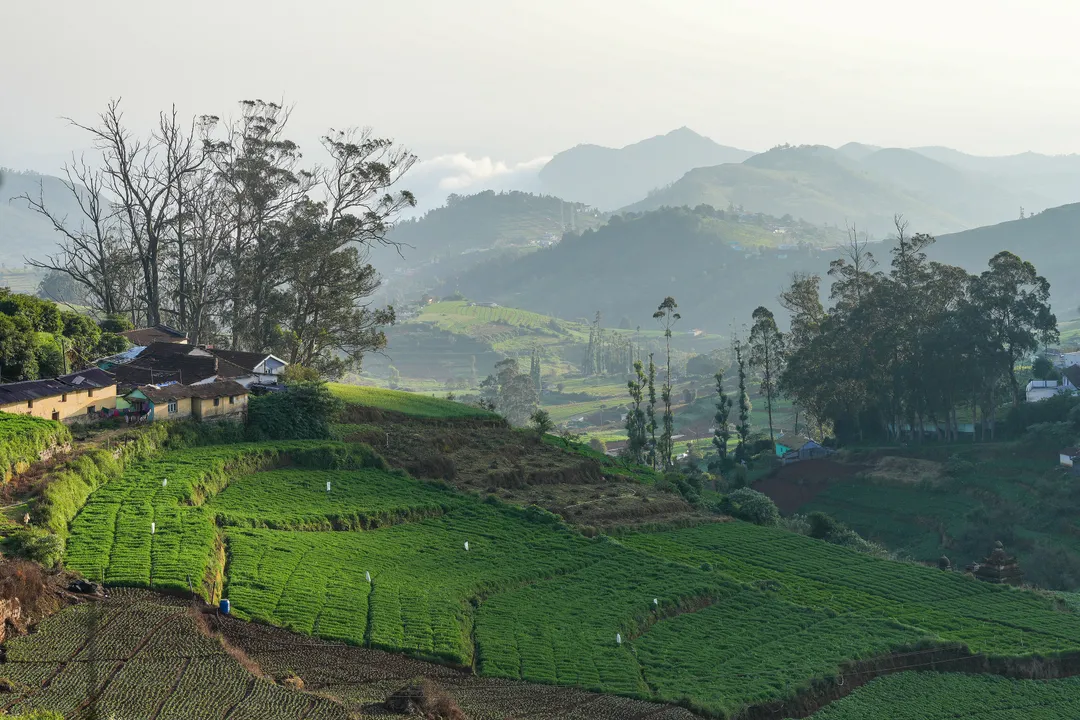
Summary
This guide concentrates on the decisions that actually shape a trip to Wuhan (武汉): which bank of the Yangtze to sleep on, how many days the headline sights deserve, what a bowl of hot dry noodles should cost in 2026, and whether the cherry-blossom crowds in late March are worth joining. We write from the perspective of travelers who plan trips city by city, not from a brochure, and we flag every number that is likely to move.
Wuhan is the capital of Hubei province and one of the largest cities in central China, with an urban population that passes eleven million once the three historic towns of Wuchang, Hankou and Hanyang are counted together. The city sits where the Han River meets the Yangtze, and that geography explains almost everything a visitor sees: two rivers, a dozen bridges, a lake district the size of a small national park, and a food culture built around quick, hot, carbohydrate-heavy breakfasts eaten on the move. In the concession era foreign merchants called it the Chicago of China; the comparison has faded, but the rail crossroads underneath it has only grown.
The practical case for visiting is straightforward. The Hubei Provincial Museum holds two of the most remarkable bronze objects ever excavated in China and charges nothing for admission. East Lake offers more than a hundred kilometres of car-free greenway inside the city limits. The 1957 Yangtze River Bridge remains one of the great works of twentieth-century Chinese engineering, and you can walk across it for free at sunset. Add a breakfast tradition that locals treat as a competitive sport, and two full days start to feel short rather than long.
Why Wuhan
Wuhan earns its place on an itinerary for reasons that are easier to state precisely than the usual generalities. The Wuchang Uprising of October 10, 1911 began here, in a military town on the east bank of the river, and the revolt ended two thousand years of imperial rule within months. The bridge completed in 1957 was the first road-and-rail crossing of the Yangtze anywhere along its six-thousand-kilometre course. The city hosts one of the largest student populations in China — well over a million enrolled across its universities — which shows up as an unusually deep bench of cheap eateries, indie venues and cafes. And because Wuhan sits near the geographic centre of the country's high-speed rail network, it is a natural stop between Beijing, Shanghai, Guangzhou and Chengdu rather than a detour.
What the city does not offer is polish of the kind found in Shanghai or Hangzhou. Signage in English is thin outside the major sights, haze settles over the river basin on some days, and a few headline attractions lean hard on their fame. Our view, after weighing the trade-offs, is that Wuhan rewards travelers who like their cities working rather than curated: the museum, the lake, the bridge walk and the breakfast streets are genuinely excellent, and they are connected by a metro system that has grown to roughly five hundred route-kilometres across more than a dozen lines.
The short list of what Wuhan does well:
- A world-class museum with free admission and two artifacts — the Sword of Goujian and the chime bells of Marquis Yi — that justify the trip on their own
- East Lake, one of the largest urban lakes in China, ringed by a greenway built for walking and cycling
- A breakfast culture with its own verb, guozao, practiced at street level every morning
- River geography you can read on foot: bridges, working ferries and a nightly light show along both banks
- Direct high-speed connections in half a day to almost every major city in eastern China
Top Attractions
The sightseeing core divides cleanly by river bank. Wuchang, on the east side of the Yangtze, holds the museum, East Lake, the university belt and Yellow Crane Tower. Hankou, on the north-west side, keeps the old concession streets and the busiest riverfront. Hanyang, the smallest of the three towns, has two quiet sights worth an hour each. If you have two days, give the first to Wuchang and the second to Hankou with a walk across the bridge in between.
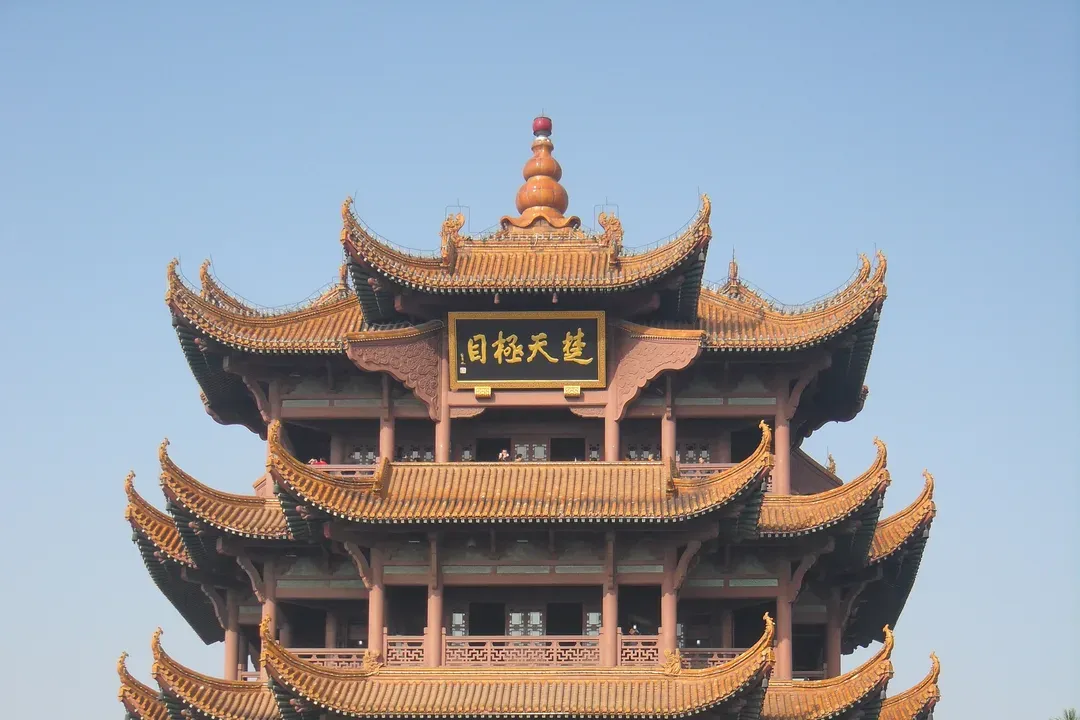
Yellow Crane Tower (黄鹤楼)
The tower that appears on every Wuhan postcard was first built in 223 AD, during the Three Kingdoms period, as a military watchtower on Snake Hill. It burned and was rebuilt repeatedly over the following centuries; the Qing-dynasty version was destroyed in 1884, and the structure standing today dates from 1985, rebuilt about a kilometre from the last historical site on the same hill. Purists note that it is a modern reconstruction with an elevator inside. They are correct, and it hardly matters: the five floors rise just over fifty metres above the hill, the upper galleries frame the Yangtze and both of its modern bridges, and the poetry associated with the site — Cui Hao's eighth-century lament and Li Bai's reply — gives the climb a literary weight that few rebuilt landmarks carry.
Admission runs about 70 CNY, with discounts for students and seniors, and the park opens roughly 08:00 to 17:30, later in summer. Buy tickets through the official WeChat account or at the gate; during holidays the online channel is the only reliable one. Our advice on timing is simple: come either at opening or in the last two hours before closing. Tour groups arrive mid-morning and the narrow upper staircases jam solid. A separate evening light-show ticket exists at a higher price; it is popular with local families but changes the character of the place completely, so treat it as entertainment rather than sightseeing.
Allow ninety minutes, more if you want to walk the free sections of Snake Hill below the tower, where old city walls and pavilions thread through the trees toward the bridge approach.
Hubei Provincial Museum (湖北省博物馆)
On the west shore of East Lake stands the best museum in central China and one of the few anywhere whose two headline objects live up to advance billing. The first is the Sword of Goujian, forged roughly 2,500 years ago for the King of Yue and unearthed in 1965 near Jiangling, its blade uncorroded and still sharp enough to slice paper — archaeologists have debated the reason for decades. The second is the set of sixty-five bronze chime bells cast in 433 BC for Marquis Yi of Zeng, excavated intact from his tomb at Suigudun near Suizhou in 1978. The full set weighs about two and a half tonnes, covers five octaves, and remains playable; a replication ensemble performs on a stage beside the originals several times a day for an extra charge of around 30 CNY. Attend one if the schedule fits. Hearing the tones that entertained a Warring States aristocrat is the single most memorable fifteen minutes the museum offers.
Admission is free but strictly reservation-based. Book through the museum's official WeChat mini-program or website a few days ahead — foreign visitors can register with a passport number, and the passport itself is checked at the entrance. The museum closes on Mondays, opens 09:00 to 17:00, and the new exhibition halls opened in recent years have doubled the display space, with the sword and bells each holding their own dedicated galleries. Budget at least two and a half hours; four is not excessive if you enjoy bronzes, lacquerware and the tomb reconstructions.
East Lake (东湖)
East Lake covers about thirty-three square kilometres, making it one of the largest urban lakes in China, and the eastern third of Wuhan is organized around it. The practical introduction is the East Lake Greenway, a car-free network of walking and cycling paths that has been extended in stages past one hundred kilometres, connecting the Listening-to-Waves banks near the museum with Moshan Hill to the south-east. Shared bikes can be unlocked along the route for a few yuan per half hour, and the flat western sections suit families and casual riders; the Moshan climbs are longer but shaded.
Moshan holds the lake's botanical attractions, including a large cherry garden with thousands of trees that becomes the city's second cherry-blossom venue each spring after the university campus, and plum groves that flower earlier, in February. Access to the core lakeshore is free; the Moshan scenic area charges in the region of 60 CNY, with premium pricing during peak blossom weeks. Even outside flower season the lake rewards a half day: rent a bike at the greenway entrance near Liyuan Plaza, ride the causeway to Moshan, and finish with tea in one of the pavilions on the summit. On summer weekends the lawns fill with tents and picnics by mid-morning, so start early if you want open paths.
Hubu Alley and the Wuchang Breakfast Streets (户部巷)
Hubu Alley is a short pedestrian lane a few minutes' walk from the east gate of Yellow Crane Tower, lined end to end with stalls selling the classic Wuhan breakfast lineup: hot dry noodles, doupi, mianwo, soy milk, soup dumplings and skewers. It is the convenient first stop and unapologetically aimed at visitors — prices run slightly above street level and the queue physics are tourist-queue physics. Eat here once for the density of options, then graduate.
The locals' alternative is nearby Liangdao Street, a workaday food street ten minutes' walk north where offices and schools generate the customer base, prices stay at neighborhood levels and the doupi stall queues move with practiced speed. Our rule of thumb for breakfast anywhere in Wuhan: if the counter has a queue of people holding their own bowls before 08:00, join it; if the stall advertises in English, walk on. Between Hubu Alley and Liangdao Street you can assemble a full tour of the breakfast canon for under 40 CNY per person.
Wuhan Yangtze River Bridge (武汉长江大桥)
Completed in October 1957 with Soviet engineering assistance in its final design phase, the double-deck bridge between Snake Hill in Wuchang and Turtle Hill in Hanyang was the first permanent crossing of the Yangtze, road traffic above and rail below, about 1.6 kilometres end to end. It is a working monument: freight trains still cross on the lower deck, and the phrase first bridge over the ten-thousand-li Yangtze is printed on a stele at the Wuchang approach.
The visitor move is to walk it. Pavements run the full length on both sides, take about thirty-five minutes at an unhurried pace, and put you level with the river traffic — sand barges, ferries, container ships — with Yellow Crane Tower rising behind you and the cable-stayed Second Bridge (1995) and the Yangsigang Bridge (2019) visible up and downstream. Time the walk for late afternoon so you arrive on the Hanyang side near sunset, then descend to the riverside parks below Turtle Hill. Coming back, take the commuter ferry from the Hanyang side bank or ride Line 4 between the bridge-end metro stations; walking both directions is only for the committed.
Gude Temple (古德寺)
Tucked into a residential block of Hankou well off the sightseeing routes, Gude Temple looks like nothing else in China. Founded in the late Qing period and largely built in the 1920s, its main hall mixes Buddhist layouts with architectural detail drawn from Indian and Southeast Asian traditions — rounded dome forms, dense column clusters, rose-window tracery that reads almost Gothic until you notice the lotus capitals. The result confused classification committees for decades and now anchors the temple's quiet fame on Chinese social media, which means a steady trickle of photographers in Han dress but still nothing like tower-level crowds.
Admission is a token few yuan — around 8 CNY at recent counts, sometimes quoted with a bundle of incense included — and the temple remains an active place of worship, with resident monastics and morning recitations. Dress modestly, keep your voice low in the courtyards, and ask before photographing worshippers at close range. Reach it by metro to the nearby Line 1 or Line 8 stations and a ten-minute walk through streets that have not been tidied for tourism. Half an hour suffices for the architecture; an hour if you sit in the courtyard.
Where to Stay
Wuhan's three-town layout makes the accommodation question a river-bank question. All three areas carry the full price range; the difference is what is outside the lobby door.
Wuchang
Stay in Wuchang if sightseeing drives the itinerary. The clusters around Simenkou station below Yellow Crane Tower and along Chu River Han Street put you within fifteen minutes of the tower, the museum corridor and the East Lake greenway, with Line 5 and Line 4 stitching them together. The university belt around Luojia Hill adds bookshops and cheap food, and the per-night rates run below Hankou's for comparable quality. Trade-off: the riverfront here is a bridge approach, not a promenade, and the nightlife is thinner and earlier.
Hankou
Hankou is where the city eats, walks and shows off after dark. The grid between Jianghan Road pedestrian street and the Yanjiang riverfront holds the old concession architecture, the highest density of good restaurants, and the Jiangtan parks where the nightly light show is best watched. Line 2 runs through the area and connects directly to the airport and onward to Wuchang. Trade-off: room rates near Jianghan Road run above the city average, and weekend crowds on the pedestrian street are heavy. For a first visit of two nights, we would book Hankou and commute to the sights — the metro rides are short and the evenings are better spent here.
Hanyang
Hanyang, west of the Han River, is the quiet default. Its sightseeing is limited to Guiyuan Temple, Qingchuan Pavilion and the old-factory art quarter, but hotel value is the best of the three towns and Line 6 reaches the Hankou action in minutes. Choose it for a relaxed stay, a longer trip where you want a calm base, or when rates elsewhere spike during exhibitions or the tennis open.
Price anchors for 2026, per night for two: hostels 60 to 120 CNY for a dorm bed; reliable three-star Chinese chains 200 to 350 CNY; upper-mid international brands 350 to 600 CNY; the luxury tier 600 to 1,200 CNY. Book two to three weeks ahead for April and October; walk-in rates soften in deepest winter and high summer.
Gastronomy
Wuhan runs on breakfast. The local dialect has a dedicated verb for it — guozao, doing the morning meal — and the standard practice is to do it standing at a counter or walking to work with a bowl in hand, which elsewhere might draw stares and here draws imitators. Evenings belong to banquet-style Hubei cooking and the late-night food streets. Lunch is whatever breakfast stalls still have left.
Hot Dry Noodles (热干面)
The city's signature dish is austere and addictive: alkaline wheat noodles blanched to order, dressed with sesame paste, soy sauce, chopped scallion and pickled long beans, and served without broth. The technique is in the toss — the paste must coat every strand before it stiffens — so a good stall mixes the bowl in front of you rather than handing over a pre-sauced one. Cai Lin Ji, a brand founded in 1928, is the historic name and runs spotless branches across the city; locals will tell you, correctly, that the best bowl is at the neighborhood stall with the 07:00 queue, where a portion costs 6 to 10 CNY. Order the large only if committing; the paste sits heavy.
Doupi, Mianwo and the Breakfast Lineup
Doupi is the second pillar: a sheet of egg and mung-bean batter crisped on a flat iron pan, wrapped around a filling of glutinous rice, diced mushroom, bamboo and pork — the classic three-fresh version — and cut into squares that sell by weight for 8 to 12 CNY. Lao Tong Cheng is the heritage brand; the stall matters less than pan turnover, because doupi degrades within minutes of leaving the fire. Alongside it sit mianwo, deep-fried dough rings with a crisp rim and custardy centre at 2 to 3 CNY; sweet fermented rice soup; and the local soup dumplings, smaller and brothier than Shanghai's. A full guozao circuit of four items costs about 25 CNY.
Beyond Breakfast: Lake, River and Duck
Hubei's dinner table is water-minded. Lotus root and pork rib soup, simmered until the roots go floury and the broth turns milky, is the province's homey centrepiece; order it wherever it appears. Steamed Wuchang fish, a bream from the lake district, is the classic banquet dish — order it whole and expect it to arrive plainly steamed with ham and mushroom. Crayfish season runs late spring through summer, and the riverside crawfish halls are a scene unto themselves. And the duck neck, braised in chilli and numbing spice, is the takeaway emblem: Zhou Hei Ya, the brand that spread the snack nationwide, began as a Wuhan stall in the 1990s, and vacuum packs are sold at every railway station for gifts. For a sit-down Hubei dinner with English-capable staff, the larger restaurants around Jianghan Road and in the mall clusters are safe picks; expect 80 to 150 CNY per person with a fish and a soup on the table.
Practical Information
Visa
China's entry rules have loosened steadily and, as of 2026, cover three realistic paths for a Wuhan trip. First, unilateral visa-free entry of thirty days applies to ordinary-passport holders of a long list of countries across Europe, the Asia-Pacific and the Americas — if your nationality is on the current list, you simply enter with a passport valid for the stay plus a booked onward ticket within the window. Second, the 240-hour (ten-day) transit-without-visa scheme remains available to fifty-plus nationalities arriving with confirmed tickets to a third country; Tianhe airport and the rail border facilities handle it, and Wuhan slots neatly into a Beijing-Wuhan-Bangkok style routing. Third, a standard L tourist visa from an embassy or visa centre still works everywhere. The lists change with little notice, so verify against the National Immigration Administration announcements within a fortnight of booking. Our strong advice: do not plan a tight connection on the assumption that a scheme still runs — confirm it first.
Currency and Payments
The currency is the renminbi, CNY. Daily life in Wuhan is close to cashless: every stall, taxi and ticket window shows QR codes for Alipay or WeChat Pay, and both apps now accept binding to international Visa, Mastercard, Amex and JCB cards, which covers a visitor's ordinary spending with no local bank account. Set the binding up before arrival, and keep a note of the daily transaction limits for foreign-linked cards in case a hotel bill exceeds them. Cash still matters in three places: very small breakfast stalls with poor signal, some temple donation boxes, and as fallback anywhere a card network wobbles — withdraw a few hundred yuan at a Bank of China or ICBC ATM on day one and hold it as insurance rather than primary spending money. Credit cards at hotel front desks are routine; at restaurants they are not universal outside malls.
Getting There
Tianhe International Airport (WUH) sits about twenty-six kilometres north of the centre and handles the full domestic network plus a growing set of Asian international routes; Line 2 of the metro runs from the terminal to Hankou in roughly fifty minutes for under 10 CNY, while a taxi costs 100 to 150 CNY depending on traffic and destination bank. The rail story is the real headline: Wuhan Station serves the Beijing-Guangzhou high-speed spine, with Beijing reached in about four to five hours and Guangzhou in four to five; Shanghai takes four to five hours via the riverside line; Changsha is ninety minutes, Yichang two hours for Three Gorges connections, and Chengdu and Chongqing six to eight. Hankou and Wuchang stations carry additional high-speed and conventional services and sit closer to their respective town centres. For a multi-city China itinerary that runs north-south, Wuhan is the natural midpoint overnight.
Getting Around
The metro is the spine: more than a dozen lines, roughly five hundred route-kilometres, fares 2 to 8 CNY by distance, with security X-rays at every entrance. Two lines matter most to visitors — Line 5 stops at Simenkou below Yellow Crane Tower, and Line 2 crosses the river from the airport through Jianghan Road to the Wuchang university belt. Ride with the Alipay or WeChat transport QR codes or buy single-journey tokens from machines; station signage gives station names in pinyin, and line-transfer signage is manageable without Chinese. Two older experiences deserve protecting in your plan: the commuter ferries across the Yangtze still cost about 1.5 CNY between the Zhonghua Road and Wuhan Guan piers and function as the cheapest river cruise in Asia, and the suspended sky train out at Optics Valley, opened in 2023, is a curiosity ride rather than useful transport. Taxis start around 10 CNY for the first two kilometres; Didi works with an international number and an English interface. Shared bikes unlock the greenway and the concession grid.
Best Time to Visit
Cherry season, roughly mid-March to early April, is the city's tourism peak: campuses and lake gardens flower, hotel rates jump, and the weather is unsettled enough that an umbrella is part of the dress code. Late April and May bring the most reliable mild weather. June and July sit under the East Asian plum rains — grey, damp, suddenly flooded streets some weeks. July and August are the furnace months, when daytime temperatures run 35 to 40 degrees and locals retreat indoors until evening; Wuhan's inclusion in China's traditional list of furnace cities is earned. September, October and early November are the second sweet spot, drier and bright, coinciding with the tennis open and the autumn light shows. Winter is damp, 0 to 10 degrees, thinly touristed and cheap — indoor hours are long, but the museum and the breakfast streets carry the season. Avoid the first weeks of May and October and Chinese New Year outright: the whole country is moving, and the headline sights jam.
Cultural Considerations
A few local norms are worth knowing before you arrive. Eating while walking is not merely tolerated during guozao hours, it is the default; nobody will remark on a noodle bowl in your hand at 08:00. The Wuhan dialect sounds loud and clipped to ears trained on Beijing Mandarin — volume reads as engagement, not anger. Queueing at breakfast counters is loose and contact-shaped; a firm but polite presence at the counter works better than an orderly line. Smoking remains common in doorways, at outdoor tables and, despite indoor bans, occasionally inside smaller venues. At Gude Temple and Guiyuan Temple, keep shoulders and knees covered, accept incense with the right hand if offered, and photograph ritual spaces rather than worshippers.
Two historical notes frame the city with more care. First, the 1911 Wuchang Uprising is celebrated here openly and well — the Red Chamber memorial near Yellow Crane Tower is free, informative and worth the hour — so questions about the revolution land warmly. Second, the city's ordeal in early 2020, when it spent seventy-six days under the world's first pandemic lockdown, remains a defining memory for residents; the subject is not taboo, but it is personal. We follow the locals' lead: if a host raises it, listen; do not open with it. On ordinary politics, the standard traveler's rule applies everywhere in China — steer light conversation to food, football and the relative merits of rival noodle stalls, of which every resident holds at least three strong opinions.
Two-Day Itinerary
Day one belongs to Wuchang. Start at the Hubei Provincial Museum for opening at 09:00 — reservation made days ahead — and spend the morning with the sword, the bells and one chime performance. Take a taxi or short metro ride to the East Lake greenway at midday, rent a bike, ride the western causeway and eat lunch at a lakeside food court or carry Liangdao Street breakfast logic forward with street snacks. In mid-afternoon, walk the free sections of Snake Hill up to Yellow Crane Tower, then continue directly onto the Yangtze River Bridge for the sunset crossing to Hanyang. Descend to the riverside, ride the ferry back across to the Wuchang bank or onward to Hankou, and have dinner at a Hubei restaurant near Jianghan Road before watching the light show from the Jiangtan park.
Day two belongs to Hankou. Do guozao properly at a workaday breakfast street — doupi, mianwo and a bowl of hot dry noodles, in walking order. Walk it off down Li Huangpi Road and the surrounding concession grid of early-twentieth-century bank buildings and consulates, then continue to Jianghan Road pedestrian street and the Wuhan Guan ferry pier. If temples are on your list, detour midday to Gude Temple while the light is high; otherwise take the afternoon for the East Lake cherry garden or plum groves in season, or the museum shops and older galleries. In the evening, board the Zhiyin Hao if a sailing fits, or take the ordinary night river cruise for the skyline at a fraction of the price, and finish late at a duck-neck stall or a crawfish hall, depending on the season. This two-day frame leaves the Mulan hills, Wudang and the Red Cliffs as clean third-day extensions.
Pacing notes: the museum reservation is the single booking that can sink day one — confirm it before you finalize hotels. The bridge walk is best westbound toward sunset; doing it eastbound at noon is a hotter, flatter experience. And keep breakfast venues within walking distance of wherever you sleep, because the guozao hour is also the commuter hour for taxis.
Beyond the Highlights
Tanhualin (昙华林)
A short lane running off the streets below the old Wuchang city wall, Tanhualin preserves a scatter of late-Qing and missionary-period buildings — a former grammar school, church compounds, a Catholic philanthropy hall — now holding indie cafes, studios and craft shops patronized by the university population. It is the closest thing Wuchang has to a flâneur street, and it slots naturally between Yellow Crane Tower in the morning and the museum in the afternoon. Expect a fifteen-to-thirty-minute stroll unless you stop for coffee, which you should; the lane's small roasters take their work seriously.
Li Huangpi Road (黎黄陂路)
This two-hundred-metre street in the former Russian concession, named for a Hubei-born president of the early republic, concentrates restored townhouses, coffee counters and wine bars under plane trees, and it anchors a walkable quarter of consulates and bank headquarters that survived the century. Come in the late afternoon when the light is on the facades, then drift east to Jianghan Road for the full old-city circuit. Of Wuhan's heritage streets, this is the one that rewards slow looking rather than shopping.
The 1911 Trail: Red Chamber and the Uprising Sites
The Red Chamber — the former Hubei military government building, instantly recognizable by its red facade and clock tower — stands opposite Yellow Crane Tower park and served as the rebel headquarters after the October 1911 rising. The free memorial inside walks through the uprising with bilingual panels and period artifacts, and the adjacent modern exhibition hall adds context and sculpture. It is the best thirty-to-sixty-minute history lesson in the city and rarely crowded. Closed Mondays, like the provincial museum.
Quieter Hanyang: Guiyuan Temple and Qingchuan Pavilion
Across on the Hanyang bank, Guiyuan Temple is a working Buddhist monastery whose hall of five hundred arhat statues — each figure distinct in posture and expression, arranged in concentric ranks — is the sort of room you circumnavigate twice. Admission runs about 10 CNY; mornings bring worshippers and incense rather than tour groups. Ten minutes north on the river stands Qingchuan Pavilion, a compact riverside terrace complex facing the bridge, free with registration, and nearly always quiet — the place to see the 1957 spans from below without the walk.
Nightlife
Wuhan's evenings are organized around the river. The light show runs along both banks on key buildings, with the densest alignment between the Jiangtan parks of Hankou and the Wuchang shore opposite; showings cluster around 19:30 to 21:00 on weekends and holidays, and the free viewing spots along the Hankou embankment fill an hour early on national holidays. The working ferries stop in the early evening, but tourist night cruises ply the same water for roughly 60 to 150 CNY depending on deck and duration — worth it once for the bridge floodlights from mid-river.
The Zhiyin Hao is the theatrical option: a period-dressed steamship production set in 1920s Wuhan, with passengers wandering decks and saloons while actors play out intertwined stories around them. Boarding is from the Hankou riverfront near Wuhan Port; tickets run roughly 200 to 400 CNY by deck and show, sell out on weekends, and reward booking days ahead. Formal dress is optional; the crew hands out props.
After the river, two scenes compete. Jiqing Street in Hankou is the classic late-night food street, where supper runs past midnight and strolling musicians worked the tables for decades — tamer now, still loud, still the place to end with crayfish or duck necks and a beer. And Wuhan holds an unlikely status as one of China's indie-rock capitals, powered by the student population; Vox Livehouse, operating for roughly two decades, remains the institution, with a calendar that runs from local post-rock to national touring acts. Check listings for your dates — a good show is the most authentic late night the city offers. Craft beer bars cluster along Li Huangpi Road and its side lanes for a quieter close.
Day Trips
The Mulan Hills (Huangpi District)
North of the city in Huangpi district, a cluster of scenic areas — Mulan Mountain, Mulan Grassland and Mulan Sky Lake among them — trades on the regional claim to the Hua Mulan legend. The sites are a drive of one to two hours from central Wuhan depending on which one and on traffic, reachable by tourist bus lines from Hankou or easiest by ride-hire for the day. Expect temple complexes on the mountain, horse riding and grassland activities at the steppe site, and reservoir scenery at the lake; combined admission across sites runs 60 to 100 CNY each. The appeal is scale and greenery rather than antiquity — a fair-weather outing for a third day, strongest in spring and autumn.
Chibi: the Red Cliffs (赤壁)
The Battle of Red Cliffs of 208 AD, the engagement that broke Cao Cao's fleet and shaped the Three Kingdoms period, is commemorated at Chibi on the Yangtze, south of Wuhan and about forty minutes by high-speed train to Chibi North station plus a short transfer. The riverside cliff inscriptions and the modern bronze sculpture park stand near the traditional battle site, and a modest museum fills in the history; honesty requires noting that much of the built environment is recent and the landscape itself — bluffs over a broad brown river — carries the atmosphere. Half the pleasure is the train ride through Hubei's lake country. Admission in the region of 100 CNY for the composite site.
Wudang Mountain (Overnight Extension)
The Taoist temple complex of Wudang Shan, a UNESCO World Heritage site of Ming-dynasty halls spread across a sacred mountain, lies two to three hours from Wuhan by high-speed rail to Shiyan or a direct bus, and cannot be done justice as a day trip. Treat it as a two-day extension: the Golden Hall at the summit, the Purple Cloud Palace and the long stone ascents need a dawn start and an overnight near the mountain gates. Fit it onto a Wuhan itinerary when your China route runs west toward Chengdu or Xi'an, not as a bolt-on.
Closer to hand, Yichang — two hours west by high-speed train — is the practical gateway for Three Gorges Dam visits, though the dam tour itself wants a full day and the gorge cruise wants three or four. Both Chibi and Yichang trains leave from the Wuhan-area stations multiple times hourly, so even spontaneous versions of these trips are logistically painless by Chinese standards.
Events and Festivals
The calendar has one towering peak. Cherry-blossom season, from roughly mid-March to early April, draws national crowds to two venues: the Wuhan University campus on Luojia Hill, entry managed by advance reservation through the university's official channels during blossom weeks only, and the East Lake cherry garden at Moshan, ticketed at a premium of roughly 60 to 100 CNY at peak. Book accommodation six weeks ahead for these weeks and expect queues that move steadily but long. The blossoms themselves, against early-twentieth-century campus architecture or the lake's shoreline, justify the logistics — go on a weekday morning if you possibly can.
The rest of the year: the Wuhan Marathon fills the streets in spring with a river-crossing course locals are proud of; Dragon Boat Festival in June brings races on the lakes and the river, with drum crews audible from the greenway; the Wuhan Open, a top-tier WTA tennis tournament, runs in late September or early October at the Optics Valley tennis centre and is the city's biggest international sporting fixture; Mid-Autumn Festival puts moon-viewing crowds on the bridges and embankments; and the National Day week in October delivers the full light-show programme on both river banks along with the year's densest domestic tourism. Chinese New Year belongs to families — the city empties into reunion dinners, fireworks policy shifts year by year, and the breakfast stalls close for a day or two, which locals consider the season's genuine hardship.
Shopping
Wuhan's shopping maps onto four distinct districts. Jianghan Road pedestrian street is the old commercial spine of Hankou, a riverfront promenade of early-twentieth-century facades holding mid-market fashion chains and snack shops — walk it for the architecture, buy little. The Wushang mall cluster around Jiefang Avenue in Hankou is the traditional department-store heartland, dependable for mid-range goods and a proper food court, and joined in recent years by a new SKP luxury mall (opened in 2024) that anchors the high-end segment citywide. Chu River Han Street, the waterside retail street between the lake and the river in Wuchang, trades on its canal-side setting and cinema-plex scale; it has quieted since its opening decade but still serves as the Wuchang default. Optics Valley to the south-east is the student frontier — a vast pedestrian axis, the sky train overhead, and the youngest storefront mix in the city.
For gifts, the pragmatic list is short and edible: vacuum-packed duck necks from Zhou Hei Ya or the Jingwu Street tradition, sold at every station and airport; boxed hot-dry-noodle kits that reproduce the sesame-paste bowl at home; lotus-root products and Hubei tea from supermarket gift aisles; and copper or ceramic chime-bell miniatures from the museum shop, the one souvenir with a direct line to the best thing in the city. Bargaining culture applies at markets and not at malls; in the rare negotiated context, start around a third of the asking price.
Decision Support
Map
Orient by two rivers. The Yangtze runs south-west to north-east; the Han River joins it from the north-west, splitting the west bank into Hankou (north) and Hanyang (south), with Wuchang alone on the east bank. Visitor Wuhan hangs off three metro lines: Line 5 up to Yellow Crane Tower, Line 4 linking the museum corridor, Han Street and the rail stations, and Line 2 crossing the river via Jianghan Road out to the airport and Optics Valley. Walking units: the Jianghan Road–Li Huangpi Road–riverfront grid in Hankou is one compact loop; Snake Hill, Hubu Alley and Tanhualin form a second on the Wuchang side; the bridge walk stitches the two banks. Amap (Gaode) or Baidu Maps give the most accurate local routing; OpenStreetMap coverage of the central districts is solid on foot-paths and thin on indoor mall floors. Paper maps from hotel desks are a lost cause — use offline map downloads before arrival.
Cost breakdown
Daily figures for 2026, per person in CNY, mid-range assumptions: accommodation 250 to 500 for a double room halved, or 300 to 600 solo; food 80 to 150 across breakfast stalls, lunch noodles and one proper dinner; local transport 20 to 40 by metro and ferry with one or two short taxis; attractions 0 to 150 depending on museum performances, tower and garden admissions. Mid-range days therefore clear 500 to 800. Backpacker math — hostel dorm, breakfast stalls, metro only, free sights — runs 150 to 250 a day; the city is generous at this level because the museum, bridge, ferry and light show are either free or under 10 CNY. Luxury days — river-view suite, Zhiyin Hao deck, private car — run 1,200 upward. The big swing items are blossom-season hotel rates (they can double in late March) and one show ticket. Contingency: keep 300 to 500 CNY in cash accessible for stalls, small temples and network failures.
When to go
Rank the windows. First: late March into early April, if blossoms matter more than crowds — book six weeks out, reserve the university slot the day bookings open, accept the umbrella. Second: late September to mid-November — the steadiest weather, the tennis open, the full light shows, fewer tour groups than spring. Third: late April to May, mild and green with modest rates. Fourth: winter — cheap, damp, indoor-weighted but workable. Avoid outright: July and August unless heat is your medium, the first weeks of May and October, and Chinese New Year travel windows. For a two-day first visit optimized for comfort rather than blossoms, October is the call we make.
Practical
Five calls carry most of the outcome. One: book the Hubei Provincial Museum reservation before you book anything else — it is the sole hard-ticket item and closes Mondays. Two: set up Alipay and WeChat Pay card binding at home, then withdraw a few hundred yuan on arrival as fallback. Three: sleep in Hankou for a two-night first visit; the evenings and breakfasts pay the small commute to Wuchang's sights. Four: verify your visa-free or transit eligibility against official sources within two weeks of travel, because scheme lists shift. Five: protect one sunset for the bridge walk westbound — it costs nothing and it is the image of Wuhan you will keep. Everything else — the ferry, the noodles, the light show — can be improvised on the ground without loss.
Sources
Attraction details, opening hours and ticket booking for Wuhan sights (current listings and traveler reviews):
https://www.trip.com/travel-guide/wuhan/
Hubei Provincial Museum official site — exhibition halls, chime-bell performance schedule and the free timed-reservation system:
http://www.hbww.org/
City background, transport network and history reference used to cross-check dates and figures in this guide:
https://www.travelchinaguide.com/city/wuhan/