
Summary
Guangyuan is the throat of the ancient Shu Road: the prefecture in northern Sichuan where the old route from the Chengdu basin squeezes through cliff lines above the Jialing River on its way toward Xi'an. Two headline reasons earn a stop. First, Jianmen Pass, the cliff-walled gap that Li Bai's "The Road to Shu Is Hard" made famous. Second, the local tradition — old, though contested elsewhere — that Wu Zetian, China's only female emperor, was born here, kept today at the riverside Huangze Temple. A first visit works in 2-3 days: one day for the town's temples and cliff carvings, one for the pass, a third for walled Zhaohua. Come in March-May or September-November.
This guide is written for travelers deciding whether Guangyuan earns a stop on a Chengdu–Xi'an route, and how to chain the town, the pass and Zhaohua without a car-dependent failure. Every figure below was cross-checked against current listings and the day-by-day 3-day Guangyuan itinerary; the page was last verified on 2026-10-12.
Why Guangyuan
Guangyuan is a prefecture-level city of roughly 2.3 million people where the Sichuan Basin climbs into the Daba mountain foothills. The Jialing River cuts the only practical north-south corridor through the ridges, and every generation of route has taken it: the Jinniu post road of the Qin, the plank walkways bolted to the cliffs, the 1930s highway, the Baocheng railway — China's first electrified line — and since December 2017 the Xi'an–Chengdu high-speed railway, which stops in the middle of town.
The history concentrates where the corridor narrows. At Jianmen Pass in Jiange County the Shu general Jiang Wei tried to hold back the Wei invasion of 263 AD behind a wall of cliffs; Li Bai later fixed the gap in the language with the line usually rendered "one man at the pass, and ten thousand cannot force it." In town, the Huangze Temple on the Jialing's west bank keeps the other claim: local tradition holds that Wu Zetian was born in Guangyuan, and the temple has served as her shrine since the Tang. Neighboring Hanzhong, one high-speed stop north across the provincial border, makes the same corridor legible from either end.
The honest trade-offs: downtown Guangyuan is workmanlike rather than charming, so the city functions as a base; the headline sights fan out over more than 50 km of mountain roads; and English signage thins out fast outside the ticket halls. Two real days reward the trip; a rushed pass visit wedged between two trains rewards almost nobody, because the road to Jiange eats the margin.
Top Attractions
Jianmen Pass: the gate of the Shu Road
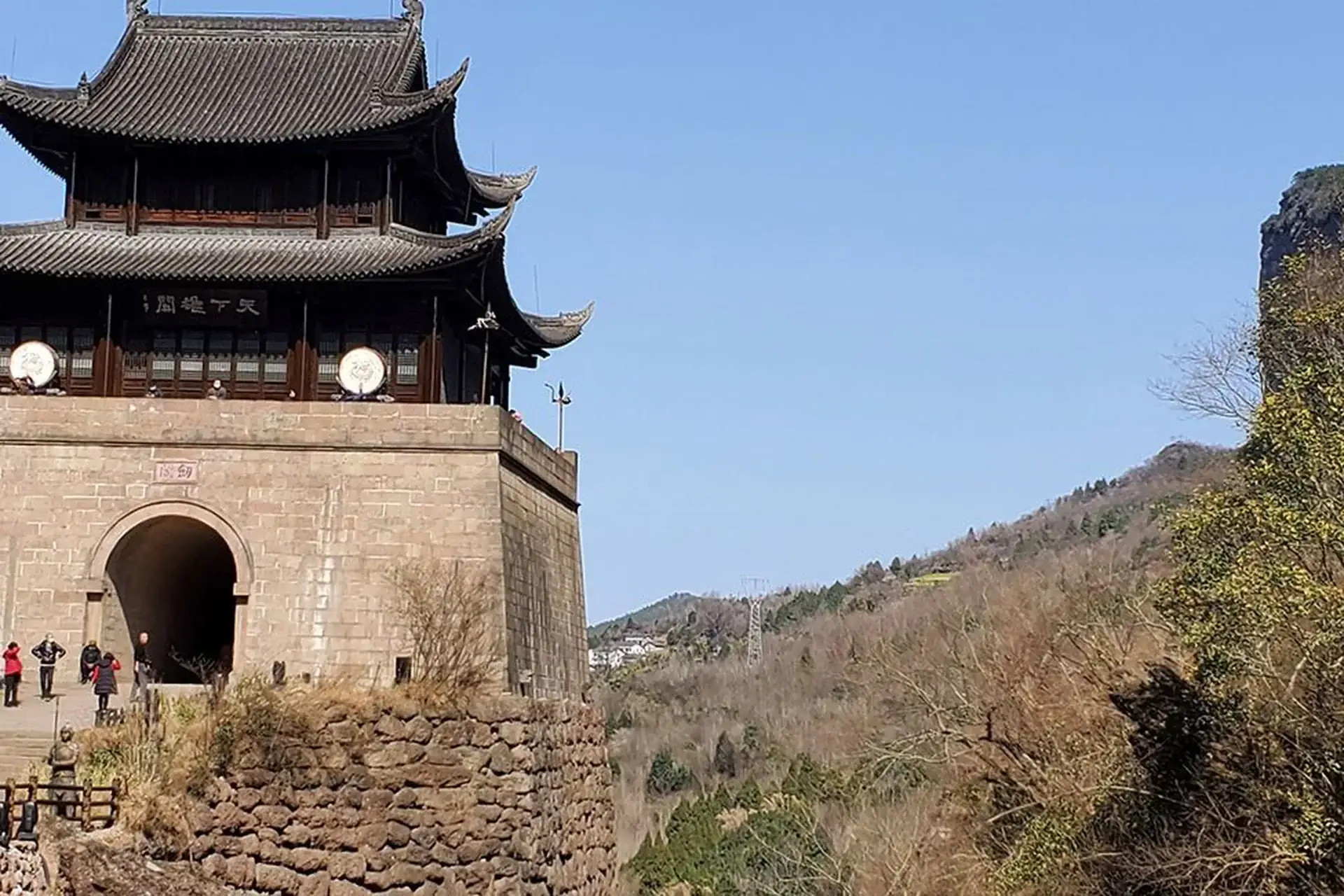
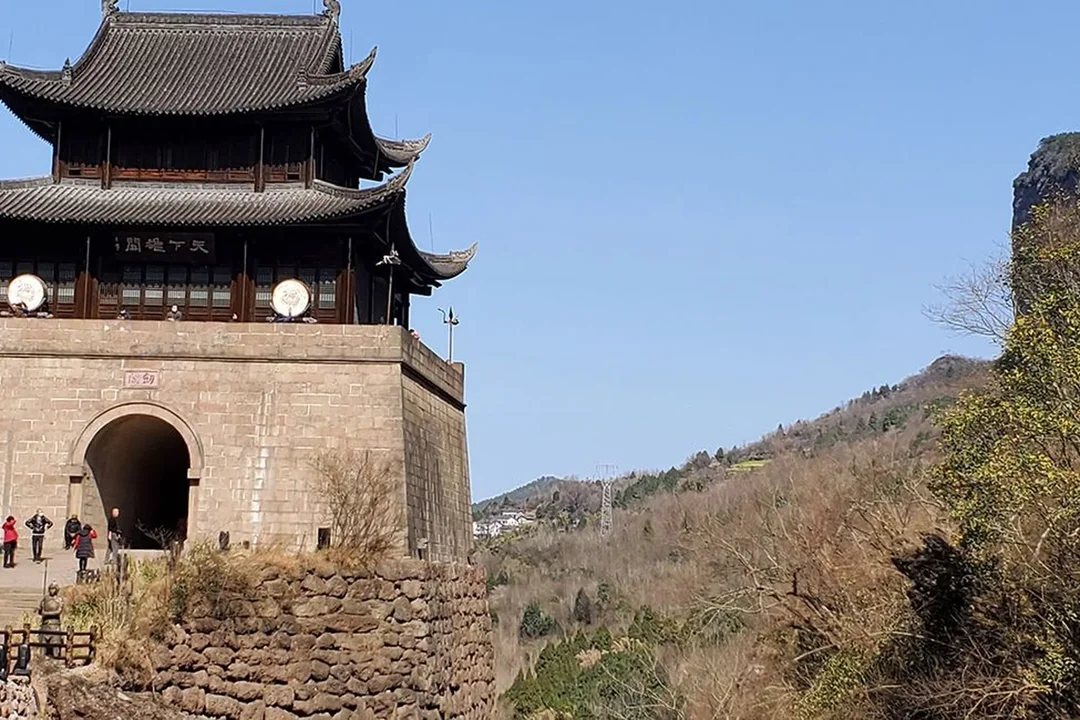
The pass sits in Jiange County, about 50 km west of downtown, roughly an hour by road — or a stop on the high-speed line at Jianmenguan station for trains from either Chengdu or Xi'an. Entry runs around 100 CNY at current listings; a cable car removes most of the climb, and side paths hug the cliff face under the ridge at about 1,200 m — the plank-road section is the part people come for, and it closes in ice or heavy rain. The gate tower itself was rebuilt after the 2008 earthquake. Give the pass a full half-day, more if you walk the ridge paths; the town at the pass gate serves the local specialty, Jianmen tofu, in dozens of preparations.
Cuiyun Corridor: eight thousand cypresses
Between the pass and Zhaohua, stretches of the old Jinniu post road survive under a roof of trees: the Cuiyun Corridor carries roughly 8,000 ancient cypresses, the oldest said by local tradition to be more than 2,000 years old, planted to mark and shade the post road across centuries. It is the rare historic road you walk inside, not just look at — cool in summer, slippery after rain. Combine it with the pass on the same day by car, or with Zhaohua from the south.
Huangze Temple and Thousand-Buddha Cliff: the town's carved riverbanks
The Huangze Temple stands on the west bank of the Jialing at the edge of downtown, its niches cut into the cliff above the water. The count matters for planning: more than 1,200 Buddhist figures across some 50 niches, carved from the Tang onward, with the halls at the top keeping the Wu Zetian tradition. Visiting is straightforward — daylight hours, stairs and cliff galleries; dress with shoulders and knees covered and skip photography where posted, the same baseline the temple etiquette guide covers for active sites. North of the center, the Thousand-Buddha Cliff carries some 7,000 carvings along the old road out of town, densest where the Tang dynasts left their work. Between the two sites you see why this corridor is called an open-air gallery of Buddhist carving.
Mingyue Gorge: six generations of road in one gorge
Just north of the city, Mingyue Gorge stacks the whole history of the corridor into a single cliff face: the Jialing waterway below, the pre-Qin plank walkways bolted to the rock, the Jinniu post road above them, a tracker towpath, the 1930s Sichuan–Shaanxi highway, and the Baocheng railway — the line that became China's first electrified railway. Walkways let you stand between the layers. It pairs naturally with the Thousand-Buddha Cliff on the same half-day.
Zhaohua Ancient Town: the walled confluence
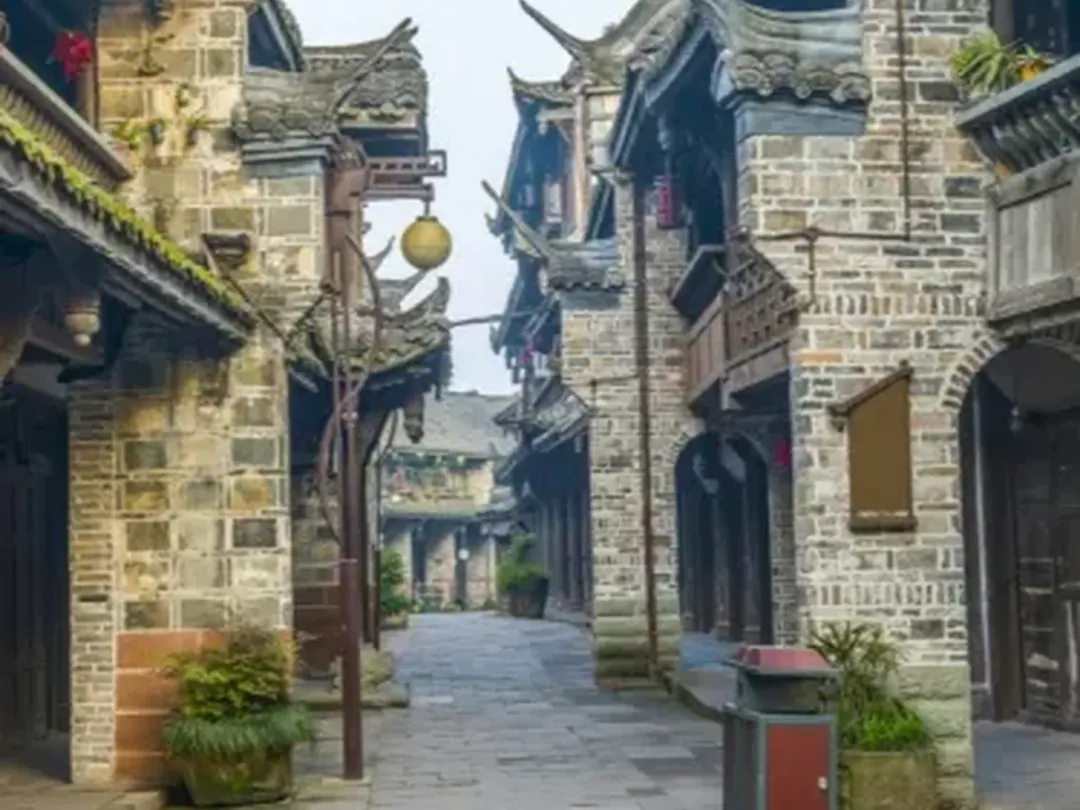
About 30 km south of downtown, where the Bailong River meets the Jialing, Zhaohua answers to a 2,000-year-old name — it was Jiameng when the Three Kingdoms quarreled over this corridor — and keeps a grid of Ming-Qing streets inside restored walls. It is compact: a half-day with lunch covers it, and Jianmen tofu shows up on the menus here too. Buses and cars cover the 30 km in roughly three-quarters of an hour.
Zengjia Mountain and Tangjiahe: the mountain escape
North of the basin edge, the Zengjia Mountain plateau sits at about 1,400 m, and the altitude shows in the thermometer: July averages about 23°C, which is why Sichuan families move up here in summer. Farther west in Qingchuan County, the Tangjiahe National Nature Reserve has protected roughly 40,000 hectares of mountain valley since 1978, with takin and golden snub-nosed monkeys among its resident species and a reputation for unusually close wildlife sightings. Both need their own day and a car.
Where to Stay
Three bases, three trips. Downtown, near Guangyuan station and the Jialing riverfront, is the practical choice: mid-range chains run roughly 150-300 CNY a night, and both the station and the old-town sights stay within a short taxi ride. The pass gate area in Jiange works for a slow Jianmen day — guesthouses are simpler, and the ridge paths empty out after 16:00. The Zengjia plateau is a summer base, cooler by several degrees, with family-run lodging. Peak pressure follows the national holiday calendar; book two or three weeks out for the first weeks of May and October, walk in otherwise.
Gastronomy
Two dishes carry the table. Jianmen tofu, the pass-town specialty, arrives in dozens of forms — braised, stuffed, in broths — and a tofu-heavy lunch at the pass gate runs 30-60 CNY a head. Guangyuan's own breakfast habit is liangmian, steamed rice noodles served cool with chili oil, a few yuan a bowl and tied by legend to the Wu Zetian story. In the counties look for Qingchuan's black fungus and walnuts; the broader table is Sichuan cooking, so read the Sichuan spice guide before ordering if heat is a concern. Mobile payment works at essentially every counter; carry 100-200 CNY in cash for village stalls.
Practical Information
Getting there
The rail geography does most of the work. Guangyuan station sits on the December-2017 Xi'an–Chengdu high-speed line, with the old Baocheng line still threading the same corridor; the line even has a Jianmenguan station serving the pass itself.
| Route | Best mode | Typical time | Notes |
|---|---|---|---|
| Chengdu East → Guangyuan | HSR | under 2 h | Frequent; simplest feeder from the Chengdu base |
| Xi'an North → Guangyuan | HSR | about 2 h | The Shu Road by rail, via Hanzhong |
| Guangyuan → Jianmenguan station | HSR | under 30 min | Station serves the pass; onward transfer by local bus or taxi |
| Guangyuan → Jianmen Pass gate | Road | about 1 h | Roughly 50 km west into Jiange County |
| Guangyuan → Zhaohua | Bus or car | about 45 min | About 30 km south |
Booking windows and document setup for foreign passports follow the standard high-speed rail guide; Guangyuan is a second-tier station, so same-day tickets are usually findable outside holidays.
Getting around
In town, taxis and the Didi app cover the riverside, station and temple sites for 10-20 CNY a ride. Buses from the city bus stations run to Jiange (for the pass) and Zhaohua several times a day, but timetables are Chinese-only and afternoon returns thin out; for the Cuiyun Corridor plus pass in one day, a hired car with driver — a few hundred yuan for the day — is the sane option. Zengjia Mountain and Tangjiahe each want a dedicated car day.
When to go
Ranked: first, March-May, before the summer crowds and with the corridor green; second, September-November, the driest light for the cliff paths. Summer belongs to the plateau — 23°C July averages on Zengjia versus low-30s in the basin — and winter is quiet but ice closes the plank-road sections at the pass. Avoid the first week of May and the first week of October entirely.
Money and connectivity
Alipay and WeChat Pay both bind international cards and work at every ticket window and noodle counter; carry about 200 CNY in cash for the villages and pass-gate stalls. A tourist eSIM or a mainland SIM both hold signal in town and on the plateau; hotel Wi-Fi is routine.
Three-Day Core Itinerary
| Day | Base | Morning | Afternoon | Evening |
|---|---|---|---|---|
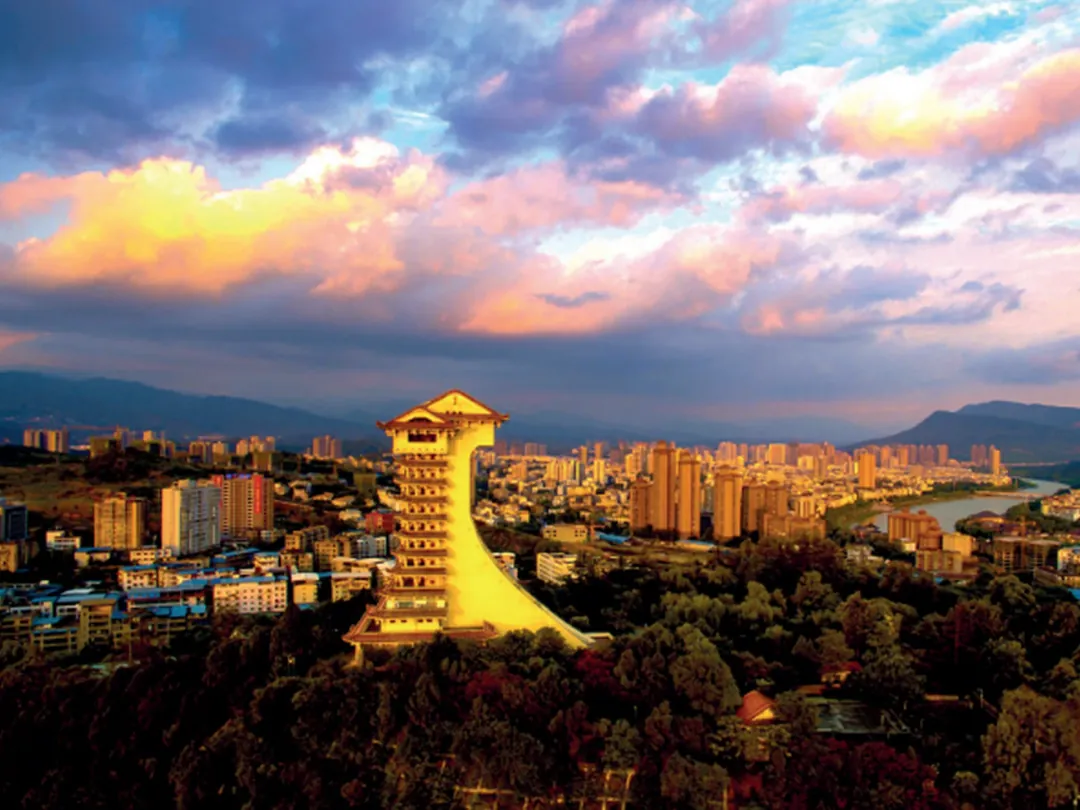
| 1 | Downtown Guangyuan | Huangze Temple at opening, cliff niches above the Jialing | Thousand-Buddha Cliff and Mingyue Gorge on the northern loop | Jialing riverfront and the Phoenix Tower |
| 2 | Jiange / the pass | Jianmen Pass gate and cable car up | Cliff-side plank paths under the ridge; Cuiyun Corridor if driving back | Jianmen tofu dinner at the pass gate or in town |
| 3 | Zhaohua | Walled town lanes, gate towers, river confluence | Lunch on tofu, then back for the HSR | Depart, or add a plateau day north |
For a first visit, the sequence that wastes the least time:
- Buy the Jianmen Pass ticket at the gate (around 100 CNY) and check the plank-road section is open — ice and rain close it before anything else.
- Do the town's carved sites (Huangze Temple, Thousand-Buddha Cliff) on arrival day; they are short taxi rides and fill a half-day.
- Give the pass its own morning; start before the tour buses land, ride the cable car up and walk the ridge paths down.
- Stack Cuiyun Corridor onto the pass day only with a car; by bus it deserves a second trip.
- End with Zhaohua's half-day and a riverside lunch before the train.
The day-by-day versions of this plan, with bus and transfer detail, are in the 3-day Guangyuan itinerary. With a fifth day, push north to Zengjia Mountain or Tangjiahe; with a week, the corridor extends naturally toward Xi'an or back into the basin — see the province-wide frame in the Sichuan guide or a worked example in the 3-day Chengdu itinerary.
Beyond the Highlights
The corridor itself is the under-sold asset: standing in Mingyue Gorge with the waterway, the plank-road sockets and the railway all in one eyeful explains the Shu Road better than any museum. On summer weekends the Zengjia plateau fills with families escaping basin heat; go midweek if cool air is the point. Tangjiahe's wildlife sightings peak in early morning and late afternoon. The lunar calendar still matters in the old quarters — temple fairs around Qingming and the seventh lunar month bring crowds and incense together, worth seeing and worth booking around.
Decision Support
Map
Orient on one axis: the Jialing corridor runs northwest-southeast, from the mountains through Guangyuan station and the town toward Zhaohua and the basin. The pass and the cypress corridor fan out 50 km west; the plateau and the reserve lie north. Amap (Gaode) has the best local routing; offline-download it, because signal fades in the reserve valleys.
Cost breakdown
Daily budget, mid-range, 2026, per person in CNY: accommodation 150-300; food 80-150; local transport 30-60; attractions 50-150 — a total of roughly 300-600 per day, gentler than Chengdu or Xi'an. The pass resets the day's math: add about 100 for entry, plus the cable car, plus 200-400 for a hired car if two sights share the day. Backpacker days on 150-250 are realistic in town.
When to go
If you want one answer: late March to early May, for green corridor and pre-holiday calm, with October's second half as the alternative. The roster's "most pleasant" answer — March-May and September-November — is right for the cliff paths; just avoid the first weeks of May and October.
Practical
Five calls carry the trip. One: base downtown for rail flexibility, or at the pass gate only if a slow Jianmen day is the point. Two: check the plank-road status before fixing the pass day. Three: town sights on arrival day — they are the rain-proof plan. Four: carry 200 CNY cash for the villages. Five: if the pass day washes out, swap in Mingyue Gorge and Zhaohua, both low and weather-tolerant.
Glossary of Useful Terms
| Chinese | Pinyin | Meaning |
|---|---|---|
| 广元 | Guǎngyuán | Guangyuan |
| 剑门关 | Jiànmén Guān | Jianmen Pass |
| 蜀道 | Shǔdào | the Shu Road, the ancient Sichuan passage |
| 翠云廊 | Cuìyún Láng | Cuiyun Corridor, the cypress-lined post road |
| 皇泽寺 | Huángzé Sì | Huangze Temple |
| 昭化古城 | Zhāohuà Gǔchéng | Zhaohua Ancient Town |
| 多少钱 | duōshǎo qián | how much |
| 谢谢 | xièxie | thank you |
Emergency Contacts
- Police: 110
- Ambulance: 120
- Fire: 119
- Tourist hotline: 12301
Sources and Verification
Entry prices, distances and rail figures were cross-checked in October 2026 against current listings and the itinerary data behind our own 3-day Guangyuan plan, including the pass's published entry price and the Xi'an–Chengdu high-speed timetable. The 8,000-tree count for the Cuiyun Corridor and the Wu Zetian birthplace tradition follow local official presentations; the oldest-cypress age is a traditional attribution, not a measured date. Prices move with the seasons — reconfirm within a fortnight of travel.
Guangyuan rewards travelers who give it two real days: carved riverbanks at dawn, the pass at midday, tofu after, and the corridor explained in one look at Mingyue Gorge. Last verified 2026-10-12.