
Jiamusi at a Glance
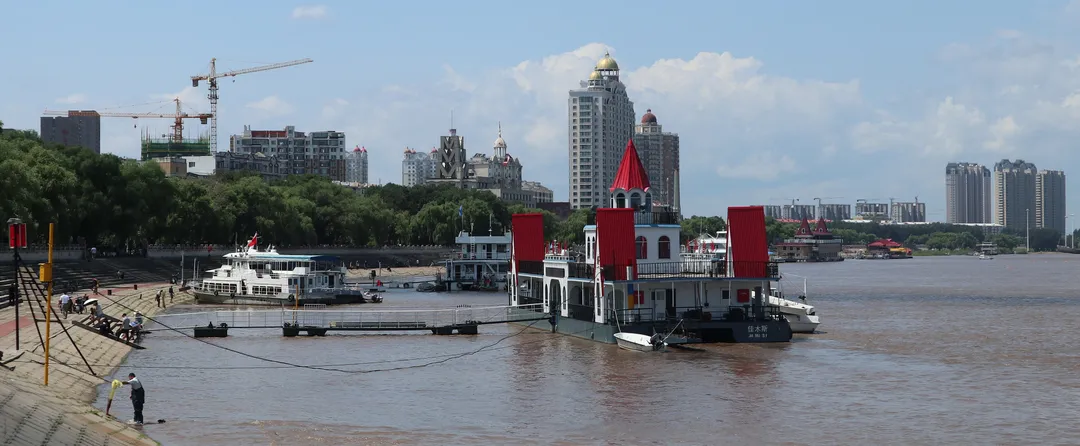
Jiamusi (佳木斯) is the river city that anchors China's far east — a prefecture in northeastern Heilongjiang where the Songhua River slows down before joining the Wusuli and the Amur along the Russian border. It is the practical base for the country's easternmost sights: Heixiazi Island, divided with Russia in 2008 and now about 171 square kilometres on the Chinese side; Fuyuan, the frontier city roughly 400 km and 5 hours east by road; and the east pole square near Wusu town, where in midsummer the sun clears the horizon around 3 a.m. Give the core run 2-3 days on our roster's count, or a full week if you add the rice farms, pine forests and wetlands of the Sanjiang plain.
The money picture is simple: a mid-range day runs 500-1000 CNY per person — accommodation 300-600 CNY, food 100-200 CNY, local transport 30-60 CNY, tickets 50-150 CNY. The season is short on both ends: June to early September for the green frontier summer, January-February if deep frost is the point of the trip.
Why Jiamusi
Jiamusi sits in what locals call the Sanjiang plain — the country where three big rivers meet. That position defines the trip. The border with Russia runs along the Wusuli and the Amur, and the modern border story has a rare happy ending: Heixiazi Island, contested for decades, was split between the two countries in 2008, and the Chinese half is now a national park of wetland boardwalks with a 9-storey pagoda at its heart. Further west, the Hezhe (Nanai) people who fished these rivers for centuries keep their traditions in villages around the prefecture; their Yimakan storytelling entered UNESCO's intangible-heritage safeguard list in 2011.
The second reason is the light. Because the whole country runs on Beijing time, China's easternmost inhabited places get the country's earliest sunrises — around 3 a.m. at the summer solstice. Standing at the east pole square when the sky turns at what your body insists is the middle of the night is the single image people carry home from this region.
The honest trade-offs: Jiamusi is a long way east of the Beijing-Xi'an-Shanghai circuit, English signage is thin, winters are genuinely severe, and the headline sights spread across hundreds of kilometres of road. You need a plan, a full tank and a tolerance for long bus windows — what you get in return is a China almost no foreign itinerary touches. Our Heilongjiang guide frames the province; Harbin and Qiqihar make the natural western stops.
The Songhua Riverfront and the City Museum
Start where the city itself lives: the Songhua riverwalk. The embankment in the photo above is the town's evening circuit — ferries working the moorings, a red-roofed floating restaurant tied to the bank, willows between you and the water, and the high-rises stacking up behind. It costs nothing, and on a June evening the light holds until 19:00 or later.
The city museum, a short ride inland, sets the region up in an hour: frontier rivers, the reclamation of the marshes, and the farm towns that turned the Sanjiang plain into one of China's rice bowls. See it before you drive east — Fuyuan and the island make more sense once the geography has been drawn.
East to Fuyuan and Heixiazi Island
Heixiazi Island (黑瞎子岛) is the trip's half-day anchor. The island sits at the confluence of the Wusuli and the Amur, and its modern history is unusually legible: divided between Russia and China for decades, it was formally split in 2008, leaving roughly 171 square kilometres on the Chinese side. Today that half is a wetland park — boardwalks over the marshes, watch platforms over the braided channels, and a 9-storey pagoda rising from the reeds as the landmark you photograph from every angle.
The run from Jiamusi is about 400 km, which means 5 hours by bus or hire car each way. Do not try it as a day trip; sleep in Fuyuan, the small frontier city at the road's end, and give the island a calm morning. Carry your passport — frontier hotels and ticket checks ask for it as a matter of course.
Dawn at the East Pole: Dongji Square and Wusu Town
This is why you stayed over. The east pole square (东极广场) marks the spot where China's territory reaches furthest into the sunrise, and in midsummer the sun comes up around 3 a.m. — set two alarms. The light show runs long at that latitude: the sky starts greying well before the disk appears, and by 4 a.m. the marshes on the far bank are fully lit.
Wusu town (乌苏镇), the easternmost inhabited post in the country, stands nearby and is usually paired with the square on the same dawn run. Back in Fuyuan, the fish halls walk through the river system's sturgeon story — worth an hour before the road bends west again, or before a flight from Fuyuan's east-pole airport, the quickest way back toward the rail network.
Hezhe Country: Aoqi, Jiejinkou and the River Confluence
The Hezhe are China's smallest ethnic groups and the only one traditionally built around river fishing — and their country is this prefecture. Two stops carry the story. Aoqi, on the bay south of the city, keeps a Hezhe village where fish-skin craft and river boats are still worked, not just displayed. Jiejinkou, further northeast, is a Hezhe township where the Yimakan oral epic — storytelling cycles sung by a single narrator — has been passed down for generations; it entered UNESCO's safeguard list in 2011.
Pair either with the Sanjiangkou overlook, where the Songhua meets the Wusuli and the two run on toward the Amur as one river; the zero-kilometre marker of the highway that reaches all the way to Sanya stands at the point. It is the best single geography lesson in the prefecture, and it is free.
Rice, Pines and Wetlands: the Sanjiang Plain Inland
A week in the prefecture buys you the inland trio. The state farms around Jiansanjiang stretch in enormous grids; the Qixing farm keeps the reclamation story, and in September the rice turns gold as far as the road runs. Northwest in Tangyuan county, the Daliangzihe forest park holds old-growth Korean pine over a shaded loop that takes about 2 hours. And the Fujin wetlands, on the southern road, add bird country to the itinerary in the warm months. These are unhurried stops — the reward is landscape, not ticketed monuments — and they are exactly what the 5-day and 7-day itineraries fold in after the eastward run.
A Three-Day Plan (and a Week)
- Day 1 — river city. Morning at the city museum to draw the map in your head; afternoon and evening on the Songhua riverwalk, dinner near the embankment. Stock up for the eastward run — snacks, water, cash.
- Day 2 — the run east. Leave by 08:00 for the 5-hour road to Fuyuan. Afternoon on Heixiazi Island's boardwalks and the 9-storey pagoda; overnight in Fuyuan with an early dinner.
- Day 3 — the east pole. Up at 2:30, east pole square for the 3 a.m. sunrise, Wusu town after. Fish halls in Fuyuan before the return road, the evening bus or train west, or a flight from Fuyuan's airport.
Our 3-day Jiamusi trip builder lays this out hour by hour. A fourth day buys Aoqi or Jiejinkou; the 5-day and 7-day versions add Jiansanjiang, Tangyuan and the wetlands.
Getting There and Around
Jiamusi has rail and air links to the rest of Heilongjiang, but the prefecture's sights are road trips — budget for buses, or better, a hire car with a driver for the eastern run.
| Route | Time | Typical cost |
|---|---|---|
| Jiamusi → Heixiazi Island / Fuyuan (bus or hire car) | about 5 h each way | long-distance bus fare; hire car by the day |
| Fuyuan east-pole airport → western cities | from about 2 h flight | varies by route; check current schedules |
| Jiamusi ↔ Harbin / Qiqihar (train) | same-day runs | see 12306 for times and fares |
| City museum ↔ riverfront (taxi) | about 10-15 min | ¥15-25 |
| Aoqi Hezhe village (half-day return) | about 1 h each way | taxi or charter |
| Songhua riverwalk | on foot, 1-2 h | free |
Write your destinations in Chinese for drivers — 佳木斯, 抚远, 黑瞎子岛 — and reconfirm eastern bus departures a day ahead; schedules thin down outside the summer season.
Where to Stay
Two bases, two nights each. In Jiamusi city, stay within a short taxi ride of the riverfront — mid-range rooms run about 300-600 CNY a night, and the business chains near the station suit early departures. In Fuyuan, book the night you need the dawn: rooms are fewer, the town fills on summer weekends, and the airport runs mean some nights sell out. Reserve two weeks ahead for July-August and the early-October holiday week.
What to Eat
This is river-and-grain country. The table fish — carp and the sturgeon the river system is known for — arrive grilled or in rich northeast stews; Fuyuan's fish halls double as a good primer on what you are eating. The Hezhe legacy shows up in fish dishes prepared the old way, and the rice on every table is likely local: the Sanjiang plain is one of China's youngest and biggest rice regions. Northeast staples — dumplings, sour-cabbage stews, meat-and-potato plates — fill the cold months.
Eat where the queues are local, use Alipay or WeChat Pay linked to an international card, and carry 50-100 CNY in small notes for the small-town stalls that do not scan.
What a Day Costs
| Item | Price | Notes |
|---|---|---|
| City museum entry | free to tens of CNY | passport may be asked |
| Heixiazi Island wetland park | within the 50-150 CNY ticket band | boardwalks and pagoda |
| Mid-range hotel | 300-600 CNY/night | riverfront band in Jiamusi |
| Meals | 100-200 CNY/day | river fish to dumplings |
| Local transport | 30-60 CNY/day | taxis; more on road-trip days |
| Long road day (Jiamusi ↔ Fuyuan) | bus fare or day-rate car | about 400 km each way |
A mid-range total of 500-1000 CNY per person per day matches our roster's estimate for the city. A backpacker day on buses and noodle shops can hold the line near 40 CNY, but the eastern run is the trip — spend there and save in town.
When to Go
June to early September is the working window: green marshes, long evenings, every bus and boat running. January-February is the opposite bet — deep frost, short days, a frontier that feels properly subarctic, and the cheapest rooms of the year. Avoid the national holiday weeks of early February, early May and early October, when the eastern road fills with domestic traffic and Fuyuan's rooms double in price.
Practical Tips
- Payment: link an international card to Alipay or WeChat Pay before arrival; keep 50-100 CNY in small notes for stalls and small-town ticket windows.
- eSIM: a tourist data eSIM (about 5-30 USD) avoids the phone-shop passport queue; install a VPN before you fly, since Google, WhatsApp and Instagram are blocked on the mainland.
- Passport: frontier hotels, the island and the eastern posts ask for it — carry the physical document, not a photo.
- Distance discipline: the eastern run is about 400 km each way; start early, fuel up, and never plan the dawn on the same day as the drive out.
- Emergencies: police 110, ambulance 120, fire 119, national tourist hotline 12301.
Frequently Asked Questions
How many days do I need in Jiamusi?
Three is the working minimum: one for the river city, one for the road east to Heixiazi Island and Fuyuan, one for the east-pole dawn. Five to seven days is the better shape if the rice farms, pine forests and wetlands appeal — they are unhurried country, not box-ticking.
How do I get to Heixiazi Island?
By road: about 400 km and 5 hours from Jiamusi by bus or hire car, so it wants an overnight in Fuyuan rather than a day trip. The Chinese half of the island — divided in 2008, about 171 square kilometres — is a wetland park with boardwalks and a 9-storey pagoda; carry your passport for the frontier checks.
When is the sunrise at the east pole?
In midsummer the sun clears the horizon around 3 a.m. at the east pole square — the earliest in China, because the whole country runs on Beijing time. Set out from your Fuyuan bed well before 2:30 and expect the sky to start greying even earlier.
Is winter worth it?
If severe cold is what you are after, yes: January-February turns the frontier properly subarctic, rooms are cheapest, and the rivers lock into ice. But the wetland parks are at their best green, and the eastern buses thin out, so most visitors should hold to the June-September window.
Do I need cash in Jiamusi?
Mostly no: Alipay or WeChat Pay linked to an international card covers hotels, restaurants and most ticket windows. Keep 50-100 CNY in small notes anyway for small-town stalls on the eastern road.
Can I combine Jiamusi with Harbin?
Yes, and you should: Harbin is the province's rail hub and its ice-and-architecture city, two to three hours west by train — see our Harbin guide. A classic northeast loop runs Harbin → Jiamusi → the east pole → back, or continues to Jingpohu and the Korean border country in the southeast; the province-wide frame is in our Heilongjiang guide.
Are the border sights open to individual foreign visitors?
The sights in this guide — the riverfront, the island park, the east pole square, Wusu town — are visited by individual travellers on ordinary tickets, with your passport as identification at hotels and checkpoints. Frontier access rules can tighten without much notice, so reconfirm Wusu and island opening status locally before committing to the 5-hour road.
Useful Phrases
| Chinese | Pinyin | Meaning |
|---|---|---|
| 你好 | nǐhǎo | hello |
| 谢谢 | xièxie | thank you |
| 多少钱 | duōshǎo qián | how much |
| 佳木斯 | Jiāmùsī | Jiamusi |
| 抚远 | Fǔyuǎn | Fuyuan |
| 黑瞎子岛 | Hēixiāzi Dǎo | Heixiazi Island |
| 东极广场 | Dōngjí Guǎngchǎng | East Pole Square |
| 乌苏镇 | Wūsū Zhèn | Wusu town |
| 松花江 | Sōnghuā Jiāng | Songhua River |
Final Notes
Every figure above — the 2008 division of Heixiazi and its 171 square kilometres, the 9-storey pagoda, the 400-km and 5-hour eastern road, the 3 a.m. summer sunrise, the 2011 UNESCO listing for Yimakan storytelling, and the 300-600 CNY hotel band — was checked in October 2026 against our trip-days data for the prefecture. Prices move; reconfirm within a fortnight of travel.
- Source: China National Tourism Administration — policy and seasonal notices.
- Source: Trip.com — live transport and hotel listings for cross-checks.
Last verified 2026-10-16.