Leshan at a Glance
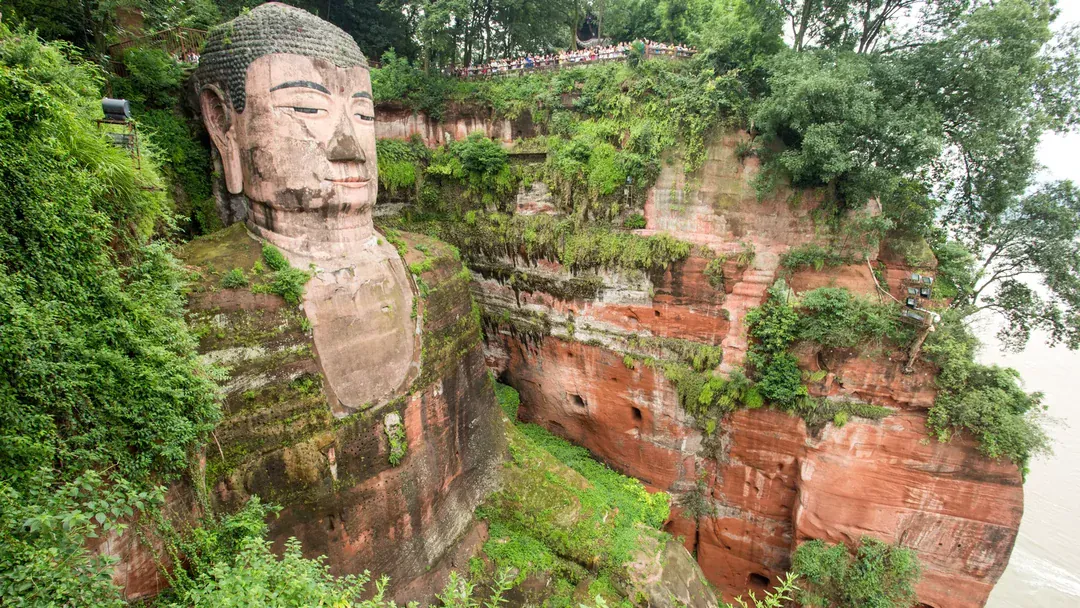
Give Leshan one day for the Buddha and a second for the mountain — the two halves of a single UNESCO listing from 1996. The city sits where three rivers meet in Sichuan, an hour south of Chengdu by high-speed train, and its reason to exist on a travel itinerary is carved straight into the cliff above the Min River: a 71-metre seated Maitreya begun by the monk Haitong in 713 and finished in 803, after roughly 90 years of work. Day one covers the Buddha — either from the nine-turn plank road at its feet or from a ¥70 boat on the river — plus the Eastern Han cliff tombs at Mahao next door and an evening among the food stalls of Zhanggongqiao. Day two rides the train 15 minutes to Emeishan and the cable car up to the 3,079-metre Golden Summit, where a 48-metre gilt Samantabhadra has stood since 2006. A third day adds the old teahouse lanes of Suji and a museum of wumu, millennia-old logs dredged from riverbeds.
This guide gives you the order to see things in, the queues to expect, and the numbers: a mid-range day runs 500-1000 CNY per person including a 300-600 CNY hotel, and the Buddha ticket is ¥90.
Why Leshan
Leshan is the rare Chinese day-trip city that justifies an overnight. Most visitors ride in from Chengdu, walk the plank road, and ride out again — which is exactly why staying changes the experience: the Buddha park is calmest at opening (08:00) and after 16:00, and both windows belong to people sleeping in town. The city itself is a low, green river town of about 3 million people, built on the confluence of the Min, Dadu and Qingyi rivers, with a food culture Sichuan proper is quietly proud of: bobo chicken, sweet-skin duck, tiaojiao beef soup, tofu pudding.
The second reason is the mountain. Emeishan city, with the trailheads and stations for Mount Emei, lies inside Leshan's own administrative area, 15 minutes away by high-speed rail. Together the Buddha and the mountain form the UNESCO mixed listing "Mount Emei Scenic Area, including Leshan Giant Buddha Scenic Area", inscribed in 1996 — one of the first mixed cultural-natural sites in China. The trade-offs: the riverfront city is workmanlike rather than pretty, English signage is thin, and the Buddha draws coach tours most weekdays, so queue timing decides the quality of your visit.
The Giant Buddha: 71 Metres and 90 Years
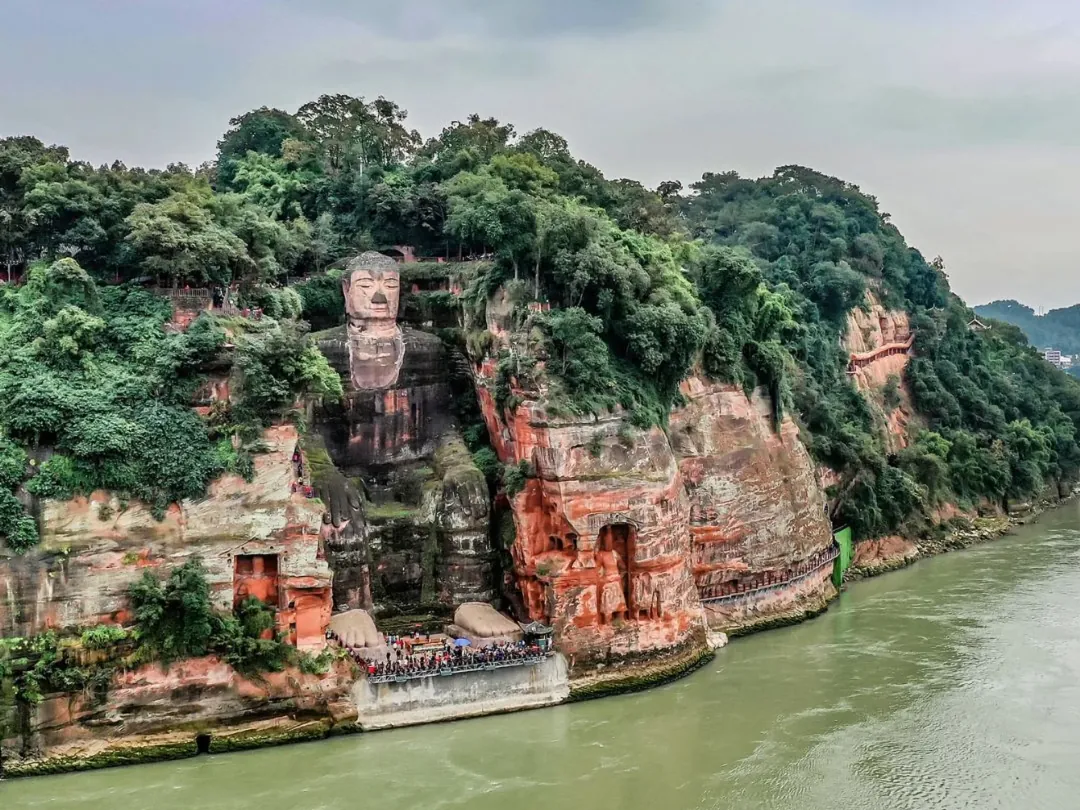
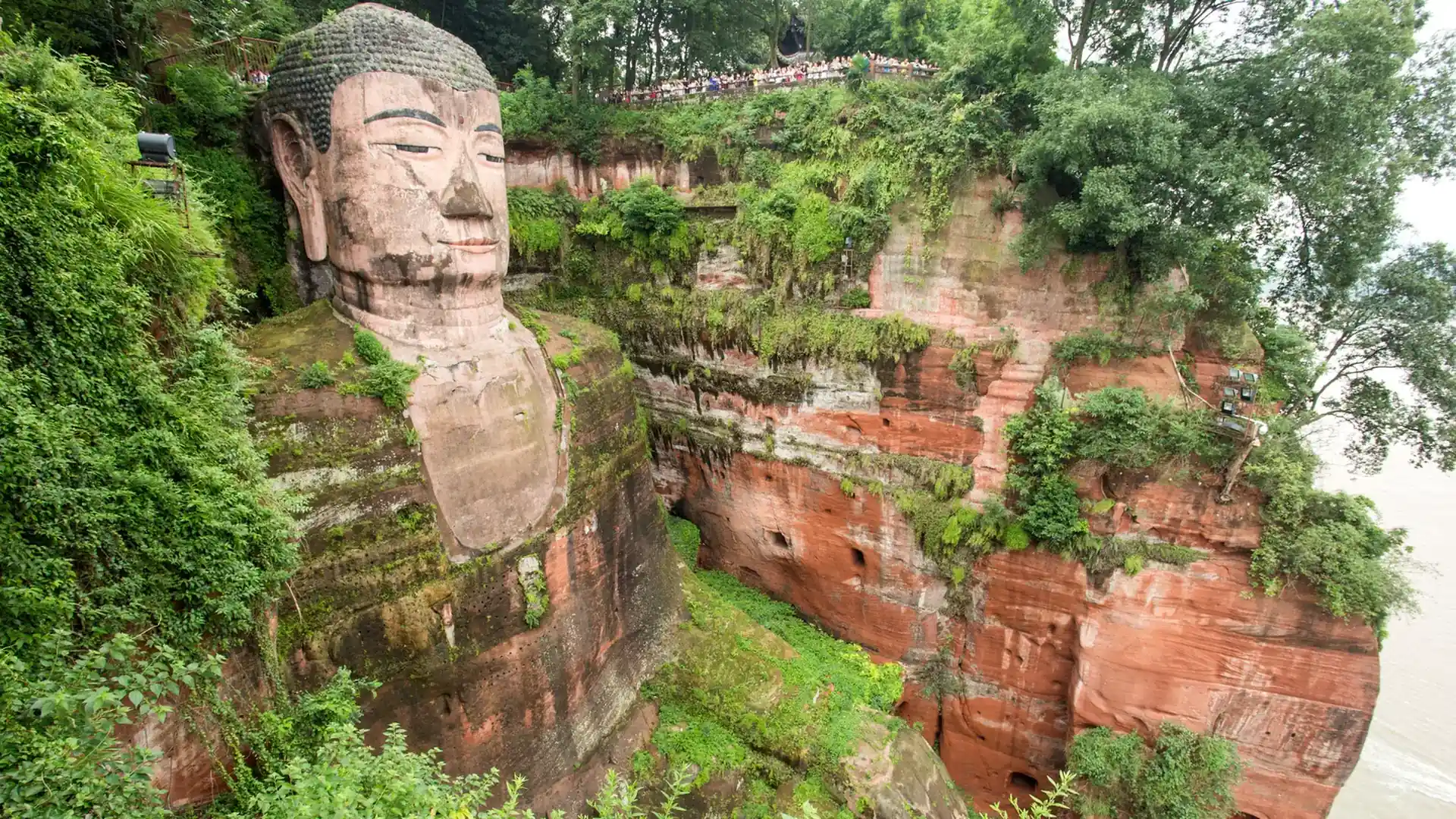
The numbers are the point. The statue stands 71 metres from ear to foot, carved into the confluence cliff so that its gaze holds the water where the three rivers collide — a stretch that was, before the Buddha, a notorious hazard for shipping. Monk Haitong raised the funds and began the work in 713; governors carried it on after his death and the last details were cut in 803, some 90 years later. Engineering did what prayer could not: the rubble dumped from the carving shifted the current and calmed the water below.
Walk the details. The head alone carries 1,021 coiled-hair buns, each a separate carved block fitted into place, and hidden drainage channels run behind the ears and through the chest — the reason a soft red-sandstone colossus has survived twelve centuries of monsoon. The plank road at its feet, cut in zigzags down the cliff, puts you under 71 metres of kneeling Maitreya; the toenails are bigger than a person.
Entry to the park costs ¥90, hours are 08:00-17:30, and the river view costs another ¥70 by ferry from the dock below the park — the only way to see the full statue face-on in one frame. Full logistics sit in our Leshan Giant Buddha guide.
The Queue: How to Do the Plank Road
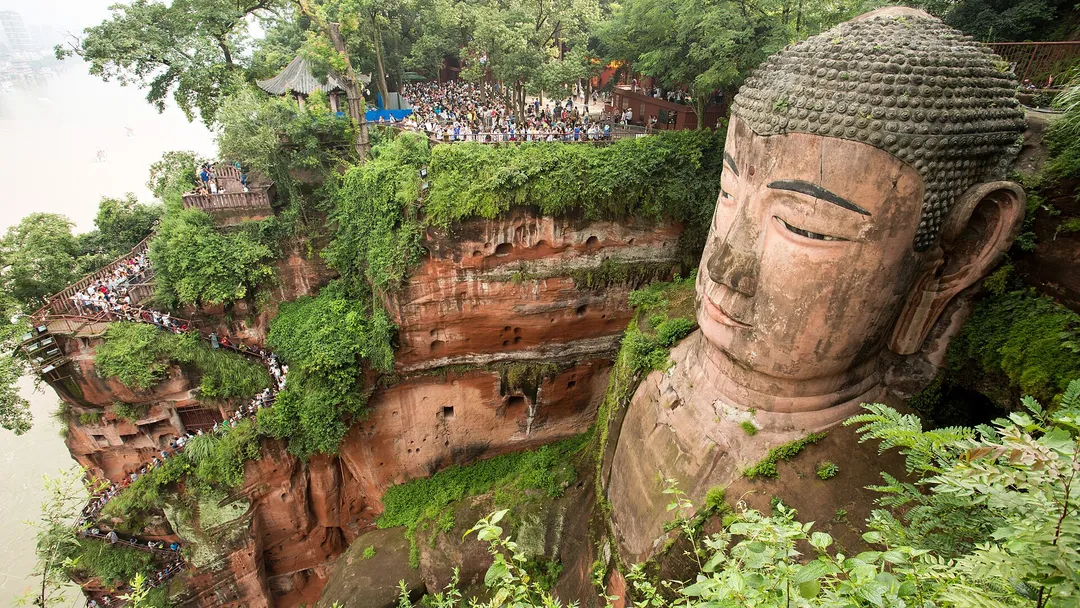
The plank road is a one-way funnel: down the stairs on the north side, along the cliff at the statue's feet, up the far side. On a normal weekday the walk takes 20-30 minutes; on a holiday week it can stretch past two hours, and the park caps entry when the queue outruns the path. Three rules fix most of it:
- Arrive at opening. Gates open at 08:00; be in the queue before 08:30 and you will often walk straight down.
- Do the river first if you are late. The ¥70 boats run continuously from morning; ride early, then take the plank road after 16:00 as the coaches leave.
- Skip the holiday weeks entirely. The first week of October and the first days of May reduce the statue to a queue with a Buddha on top.
Inside the same park, the Mahao cliff tombs — Eastern Han burial caves cut into the rock some 1,800 years ago — take 30-45 minutes and see a fraction of the crowds. The park's museum of clay sculpture and the temple courtyards above the head round out two to three hours on site.
Mount Emei: the Second Half of the Listing
Mount Emei is not a footnote — at 3,099 metres it is the highest of China's four sacred Buddhist mountains, its first temple dates to the 1st century, and its forests hold more than 3,200 plant species plus the famous bold macaques. You cannot do it justice in a day, but a first angle works: the high-speed train from Leshan reaches Emeishan in about 15 minutes, a bus runs to Leidongping, and the cable car (¥65-120 by line) lifts you to the Golden Summit at 3,079 metres, where the 48-metre gilded Samantabhadra, raised in 2006, catches sunrise above a sea of cloud. A two-day Emei pass costs ¥185 and the mountain runs 06:00-18:00.
Our Emeishan guide covers the full two-day route, the monasteries you can sleep in, and the winter snow-and-hot-spring season. If Emei becomes the priority, base yourself in Leshan for the food and cheaper beds and commute by train.
Suji, Wumu and the Old River Town
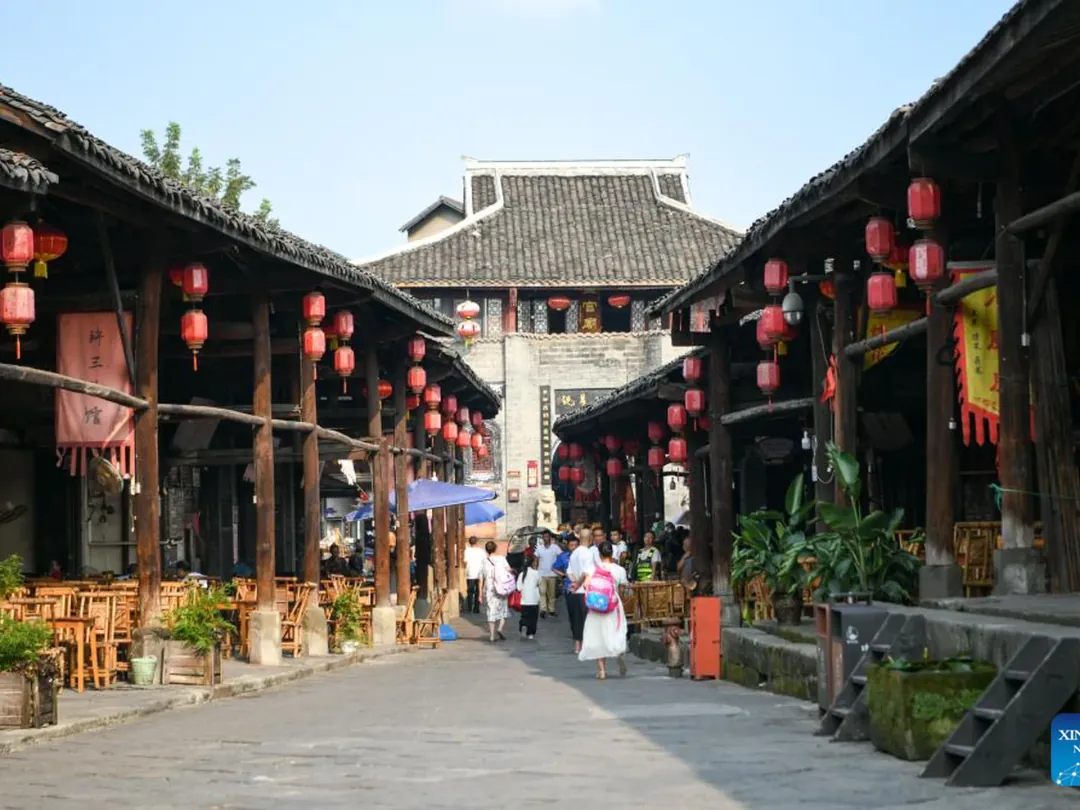
West of the centre, Suji is the home of tiaojiao beef soup — the dish is named for elbows propped on the table — and its old street still runs as a covered market of tea tables and lantern-hung stalls. It makes a half-day paired with the nearby wumu museum, a private collection of millennia-old logs dug out of local riverbeds and polished into slabs and sculpture; entries to both are priced in the tens of yuan. Back in the city, Jiading Fang reconstructs the old county town in timber lanes beside the river — commercial but pleasant after dark, when the lanterns come on and the snack counters open. The genuinely local evening, though, is Zhanggongqiao, below.
What to Eat in Leshan
Leshan eats differently from Chengdu: skewers and duck lead, hotpot follows. The quartet to work through:
- Bobo chicken — cold skewers steeped in chili oil and broth, sold from stacked clay pots; 1-3 CNY a stick.
- Sweet-skin duck (tianpi ya) — roasted duck lacquered with caramelized sugar, eaten at room temperature; half a bird is 20-40 CNY.
- Tiaojiao beef soup — peppery beef-and-offal broth from Suji, dipped from steaming bowls; 20-40 CNY a serving.
- Tofu pudding (douhua) with chili-soy dressing — the standard cheap breakfast, 5-10 CNY.
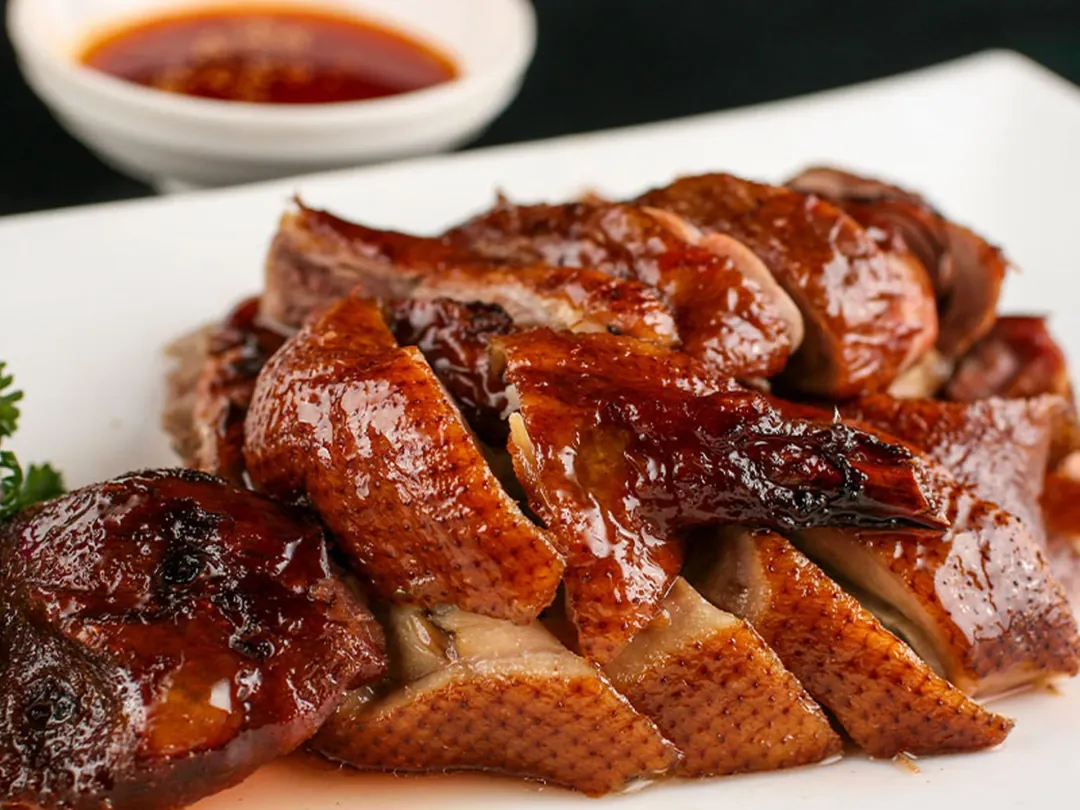
Zhanggongqiao food street is where all four live within a hundred metres; go after 19:00, follow the queues of locals, and keep 50-100 CNY in small notes for the oldest stalls. Mobile payment works nearly everywhere — Alipay with an international card covers restaurants, buses and the ferry window alike.
A Two-Day Plan (and a Third)
- Day 1 — the Buddha and the food street. Ferry at 09:00 for the river view (¥70), into the park by 11:00 for Mahao and the plank road after the morning coaches thin, up to the head terraces by 15:00, then Zhanggongqiao from 19:00.
- Day 2 — the mountain. 07:30 train to Emeishan (about 15 minutes), bus to Leidongping, cable car to the Golden Summit by late morning; descend by mid-afternoon and take the evening back in Leshan.
- Day 3 — the river town. Suji for beef soup at brunch, the wumu museum after lunch, Jiading Fang and the riverfront at dusk.
The hour-by-hour versions live in our 3-day Leshan trip builder, and the 5-day and 7-day routes fold in Emei's monasteries and Chengdu.
Getting There: Trains, Airport and Local Transport
Leshan sits on the Chengdu–Mianyang–Guangzhou corridor: high-speed trains cover Chengdu South or Chengdu East to Leshan in about 1 hour (roughly ¥50-60), and Emeishan in 15 minutes. The nearest airport is Chengdu Shuangliu or Tianfu, both on the rail line south. Inside the city, taxis and DiDi are cheap; buses 3, 9 and 13 run to the Buddha park gate from the centre for 1-2 CNY.
| Route | Time | Typical cost |
|---|---|---|
| Chengdu → Leshan (HSR) | about 1 h | ¥50-60 |
| Leshan → Emeishan (HSR) | about 15 min | ¥10-15 |
| City centre → Giant Buddha park (bus 3/9/13) | 25-40 min | 1-2 CNY |
| Giant Buddha ferry loop | 15-30 min | ¥70 |
| Giant Buddha entry | full-day ticket | ¥90 |
| Emei two-day pass | 2 days | ¥185 |
| Emei cable cars | one way | ¥65-120 |
| Taxi across the city centre | 10-15 min | ¥10-20 |
Keep the Chinese name of your destination written down — 乐山大佛 for the statue park — as drivers rarely read English.
Where to Stay
Stay between the old city and the river confluence: mid-range hotels run 300-600 CNY a night, the food streets are walkable, and the Buddha park gate is 20-30 minutes by bus. Hotels clustered near the high-speed station suit early Emei departures; the park-side hotels trade dinner options for an 08:00 head start on the queue. Book two weeks ahead for the early-May and early-October holiday windows, three for Golden Week itself.
What a Day Costs
| Item | Price | Notes |
|---|---|---|
| Giant Buddha entry | ¥90 | plank road + park, one-day ticket |
| River ferry | ¥70 | the full-statue view |
| Mahao cliff tombs | included in ¥90 | inside the same park |
| Emei two-day pass | ¥185 | plus cable cars ¥65-120 |
| Mid-range hotel | 300-600 CNY/night | old city or riverfront |
| Meals | 100-200 CNY/day | skewers to beef-soup dinners |
| Local transport | 30-60 CNY/day | bus 1-2 CNY, taxis ¥10-20 |
| Attractions | 50-150 CNY/day | one headliner a day |
Match this against our roster's estimate for the city — accommodation 300-600 CNY, food 100-200 CNY, transport 30-60 CNY and tickets 50-150 CNY — for a mid-range total of 500-1000 CNY per person per day. A backpacker day on hostel beds, buses and noodle shops lands near 40; the luxury ceiling is about 300.
When to Go
March-May and September-November are the comfort windows: mild, green and dry enough for the plank road and the summit boardwalks. Summer is hot and humid at river level, though Emei stays cool; winter is grey but the ferry runs year-round, and Emei trades queues for snow. The only true avoid-list is the national holiday weeks — early February, early May and above all early October, when the plank-road queue can eat half a day.
Practical Tips
- Payment: link an international card to Alipay or WeChat Pay before arrival; keep 50-100 CNY in small notes for the oldest skewer stalls.
- eSIM: a tourist data eSIM (about 5-30 USD) avoids the phone-shop passport queue; install a VPN before you fly, since Google, WhatsApp and Instagram are blocked on the mainland.
- Queues: the plank road is one-way; opening time and late afternoon are the two honest windows.
- Monkeys: on Emei, do not feed the macaques and keep food out of open bags; the Golden Summit cable-car plazas are the hot spots.
- Emergencies: police 110, ambulance 120, fire 119, national tourist hotline 12301.
Frequently Asked Questions
How many days do I need in Leshan?
Two: one for the Buddha park and the food streets, one for Mount Emei's Golden Summit. A rushed single day can hold the ferry and the plank road, but the 15-minute train to Emeishan makes the second day cheap to add, and a third covers Suji and the wumu museum at an easy pace.
How do I get from Chengdu to Leshan?
High-speed trains run from Chengdu to Leshan in about 1 hour for roughly ¥50-60, with departures through most of the day from Chengdu South and Chengdu East. Buy on the 12306 app with your passport. From Leshan station, buses 3, 9 or 13 reach the Buddha park for 1-2 CNY.
Is the boat or the plank road better for the Buddha?
They do different jobs. The ¥70 ferry is the only way to see the whole 71-metre statue face-on; the plank road is the close-up, from the coiled hair down to the toenails, and costs nothing beyond the ¥90 park entry. With one day, do both — boat in the morning, road after 16:00.
What does the Leshan Giant Buddha cost?
Park entry is ¥90 (08:00-17:30) and covers the plank road, Mahao cliff tombs and museums. The river ferry is a separate ¥70. On Mount Emei, a two-day pass is ¥185 with cable cars at ¥65-120 each way.
Can I visit Mount Emei in one day from Leshan?
Yes, for the Golden Summit: train 15 minutes to Emeishan, bus to Leidongping, cable car up, and you are standing under the 48-metre Samantabhadra by late morning. The full mountain — monasteries, trekking sections, the wilder macaque trails — wants two days; our Emeishan guide lays out both versions.
What should I eat in Leshan?
Bobo chicken skewers, sweet-skin duck, tiaojiao beef soup and tofu pudding with chili dressing, in that order. Zhanggongqiao food street concentrates all four; skewers run 1-3 CNY each and half a duck is 20-40 CNY.
Do I need cash in Leshan?
Mostly no: Alipay or WeChat Pay linked to an international card covers trains, buses, the ferry window and nearly all restaurants. Keep 50-100 CNY in small notes for the oldest street stalls, which is true across Sichuan.
Useful Phrases
| Chinese | Pinyin | Meaning |
|---|---|---|
| 你好 | nǐhǎo | hello |
| 谢谢 | xièxie | thank you |
| 多少钱 | duōshǎo qián | how much |
| 乐山大佛 | Lèshān Dàfó | Leshan Giant Buddha |
| 峨眉山 | Éméi Shān | Mount Emei |
| 九曲栈道 | jiǔqū zhàndào | nine-turn plank road |
| 钵钵鸡 | bōbō jī | bobo chicken skewers |
| 甜皮鸭 | tiánpí yā | sweet-skin duck |
| 跷脚牛肉 | qiāojiǎo niúròu | tiaojiao beef soup |
Final Notes
Every figure above — the 71-metre statue and its 1,021 hair buns, the 713-803 carving window, the ¥90 park ticket and ¥70 ferry, the 1996 UNESCO inscription, Emei's 3,079-metre summit and 48-metre statue of 2006, the 15-minute rail hop and the 500-1000 CNY daily band — was checked in October 2026 against our Leshan trip-days data, our UNESCO entity records and the scenic areas' published listings. Prices move; reconfirm within a fortnight of travel. Give the city two days and it pays you back in full: one statue that took ninety years to finish, and one mountain that has been standing in the clouds for rather longer.
- Source: UNESCO World Heritage Centre — Mount Emei Scenic Area, including Leshan Giant Buddha Scenic Area (mixed, 1996).
- Source: China National Tourism Administration — policy and seasonal notices.
- Source: Trip.com — live train and ticket listings for cross-checks.
Last verified 2026-10-16.