Chengdu · Visitor Guide
Leshan Giant Buddha (乐山大佛, Lèsshān Dàfó)
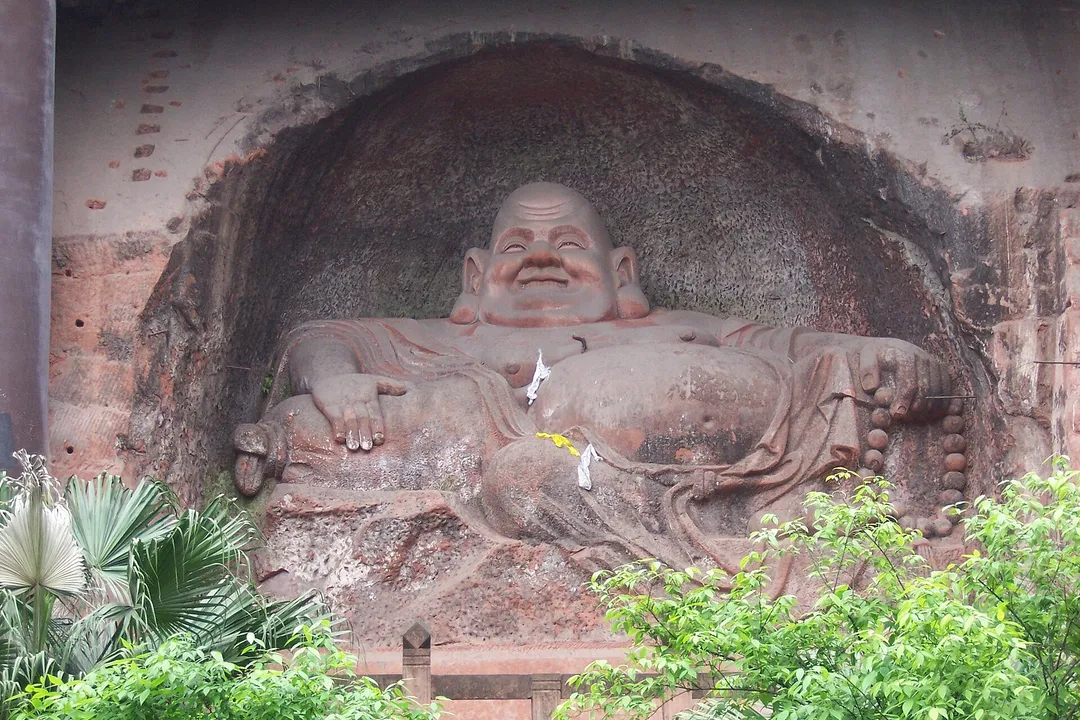
乐山大佛位于四川乐山市南岷江东岸凌云寺侧,是唐代摩崖石刻弥勒佛坐像,通高71米,是世界上最大的石刻弥勒佛坐像。大佛头与山齐,脚踏大江,历时约90年建成。
Last updated:
Quick Answer
Is Leshan Giant Buddha worth visiting?
leshan-giant-buddha in Beijing: "世界最大石刻弥勒佛,通高71米。门票80元,游船50元另付。佛是一座山,山是一尊佛。必去指数★★★★★.".
Quick facts
| Ticket | 成人票80元(游山票),游船票50元(江上观大佛全景) |
|---|---|
| Hours | 08:00-18:00(夏季提前至07:30),17:30停止入园 |
| Recommended duration | 2-3小时(不含游船) |
| Best time to visit | 四季皆宜,枯水期(冬季)大佛露出更多 |
| How to get there | 高铁至乐山站(约1小时),转公交3/13路在大石桥站下。成都新南门车站有直达大巴 |
| English signage | yes |
| Wheelchair accessible | limited |
| 建造年代 | 唐开元元年(713年)- 贞元十九年(803年) |
| 高度 | 通高71米 |
| 类型 | 摩崖石刻弥勒佛坐像 |
| 建造者 | 海通禅师发起,智崧三代接续 |
| 文保级别 | 世界文化遗产 |
| 位置 | 乐山市南岷江东岸 |
What to expect
乐山大佛位于四川乐山市南郊的凌云山崖壁上,是唐代摩崖石刻弥勒佛坐像。大佛头与山齐,脚踏大江,双手抚膝,体态匀称,神情肃穆。通高71米,其中头高14.7米,肩宽24米,耳长7米,是世界上最大的石刻弥勒佛坐像。
大佛始建于唐玄宗开元元年(713年),由凌云寺僧人海通禅师发起建造。海通圆寂后,工程两度停工。40年后,川西节度使韦皋捐赠俸银续建,历时约90年完成。大佛的建造初衷是镇住岷江、青衣江、大渡河三江交汇处的水患。
参观乐山大佛有两条路线:登山道(需爬山,购游山票80元)可近距离触摸大佛脚部;游船(50元)可在江上观看大佛全景,佛是一座山,山是一尊佛的经典角度即来自游船视角。
How to get there
高铁至乐山站(约1小时),出站乘3路或13路公交在大石桥站下,步行15分钟。成都新南门车站有直达乐山景区的大巴。
Best photo spots
- 游船视角(经典角度,需乘船)
- 大佛脚部近景(登山道终点)
- 凌云寺古建筑
- 大佛与三江交汇处
Tips
- 建议乘游船观全景,否则只能看到大佛局部
- 旺季登山道排队可达2-3小时,建议早去或乘船
- 夏季江上日晒严重,需防晒
- 可与峨眉山联游,两地相距约40公里
Scams to avoid
- 景区周边商贩较多,注意防范
- 游船票建议在官方码头购买
Frequently asked questions
乐山大佛和峨眉山哪个更值得去?
两者都是世界遗产,建议都去。峨眉山看自然风光和佛教文化,乐山大佛看人文景观。相距40公里,可安排两天或一天联游。
登山道和游船哪个好?
登山道可近距离接触大佛,游船可看全景。建议体力好者登山,携老带幼者选游船。
需要预约吗?
旺季建议提前预约购票。
Read next
Other things to do in Chengdu
Baoguo Temple
baoguo-temple in Beijing: "成都新都区著名佛教寺院,隋代建立。宝光寺罗汉堂号称500罗汉。门票30元。必去指数★★★.".
Du Fu's Thatched Cottage
"\"The memorial park of Tang dynasty poet Du Fu — reconstructed bamboo cottage, exposed stone inscriptions, and a museum of his life. ¥50. 2 hours.\".".
Chengdu Research Base of Giant Panda Breeding
chengdu-research-base in Beijing: "全球最大熊猫繁育机构,圈养熊猫最全。门票55元,观光车30元。上午去熊猫活跃。必去指数★★★★★.".
Du Fu's Thatched Cottage
dufu-thatched-cottage in Beijing: "诗圣杜甫成都故居,唐代诗人纪念地。门票50元。园林环境清幽,诗词文化浓郁。必去指数★★★★.".
Dujiangyan Irrigation System
"Li Bing built this dam-free irrigation system around 256 BCE, and it still waters ~530,000 hectares of the Chengdu Plain today. ¥80, allow 2–3 hours, 30 minutes by train from Chengdu.".
Huanhua Stream
huanu-stream in Beijing: 成都诗意公园,全长约2公里,2003年建成,唐代诗人杜甫曾在此居住。免费参观,全天开放。地铁4号线草堂北路站B口出,与杜甫草堂相邻。
Jinsha Site Museum
jinsha-site in Beijing: "古蜀文明遗址,商周时期遗存。太阳神鸟金饰出土地。门票70元。考古爱好者必去。必去指数★★★.".
Jiuzhaigou Valley
"Turquoise travertine lakes, 100+ multi-tiered waterfalls, and snow-capped Tibetan peaks in a UNESCO park at 2,000–4,500 m altitude. ¥169. 2 days recommended.".
Wide and Narrow Alleys
Three restored Qing-dynasty courtyard alleys in central Chengdu (free, open 24/7), laid out on the grid of a 1718 Manchu garrison.…
Longmen Mountain
longmenshan in Beijing: "成都北郊地质公园,地震遗址纪念地。彭州白鹿镇是核心。免费或门票30元。徒步探险推荐。必去指数★★★.".
Mount Emei
mount-eme in Beijing: "中国佛教四大名山之一,普贤菩萨道场。门票160元+摆渡车90元+索道另行。金顶日出是精髓。必去指数★★★★★.".
Chengdu Research Base of Giant Panda Breeding
"See 50+ giant pandas including cubs at 8:00 AM feeding time in a 100-hectare bamboo-forested breeding center. The best panda experience in China. 3-4 hours.".
People's Park
A free, century-old city park where Chengdu's teahouse culture plays out under plane trees — pay ¥15-30 for a pot of jasmine tea and settle in for two hours of mahjong, ear-cleaning, and people-…
Qianfo Mountain
qianfo-mountain in Beijing: "成都西郊道教名山,宗教文化与自然风光兼有。门票30元。山不太高,适合全家出行。必去指数★★★.".
Mount Qingcheng
One of China's four sacred Taoist mountains, birthplace of the Taoist "Way of the Celestial Masters" (142 AD). Forested paths, pavilions, Taoist temples. ¥90. 1 hour from Chengdu.
Sanxingdui Museum
sanxingdui-museum in Chengdu: Bronze masks with protruding eyes, a 2.62-meter figure, and a 4-meter sacred tree from a 3,000-year-old civilization that left no written records.
Shuangliu District
shuangliu in Beijing: 成都双流国际机场所在地,距市中心约20公里。彭镇老茶馆(百年历史)体验老成都生活。免费参观。距双流机场约15分钟车程。建议2-3小时,上午去老茶馆最有氛围。
Sichuan Opera Show (Face Changing)
sichuan-opera in Beijing: "四川传统文化体验,川剧变脸、吐火、滚灯。演出约70分钟。蜀风雅韵或芙蓉国粹。必去指数★★★★.".
Wolong Panda Reserve
woliong-panda-reserve in Beijing: "四川最大熊猫保护区,野生熊猫栖息地。距成都约130公里,需要一整天。自然探索推荐。必去指数★★★★.".
Wolong Giant Panda Nature Reserve
"The original wild panda reserve — 200,000 hectares of bamboo forest, 150+ wild pandas. Volunteer programs available. 1.5 hours from Chengdu. ¥90. Full day.".
Wuhou Shrine (Temple of the Marquis of Wu)
"China's most famous Three Kingdoms memorial — dedicated to Zhuge Liang, the master strategist of Shu Han. Ming Dynasty architecture, 1,800-year-old cypress trees. ¥60.".
Museums in Chengdu
Chengdu Museum
"Chengdu's city-level museum at Tianfu Square — documenting the Shu (蜀) civilization, the ancient Jinsha (金沙) site, and the Panda (熊猫) conservation. Free.".. 2026 verified.
Chengdu Research Base of Giant Panda Breeding
chengdu-research-base-panda in Chengdu: The world's largest panda breeding center — 150+ giant pandas in a natural forest habitat, plus red pandas. ¥58.
Sichuan Museum of Traditional Chinese Medicine
"A small but dense university museum with 3,000+ TCM artifacts covering Sichuan herbal medicine — plan 60–90 minutes and skip the gift-shop photo backdrop.".
Sichuan Cuisine Museum
"The world's only museum where you can eat your way through 4,000 years of Sichuan food history — and make your own Pixian chili bean paste.".
Sichuan Museum
"Sichuan's premier provincial museum at the edge of People's Park — strong in Three Kingdoms Shu culture, Tibetan Buddhist art, ancient Shu (三星堆) civilization,.".. 2026 verified.