Harbin Ice and Snow World冰雪大世界
Founded in 1999, Harbin Ice and Snow World is the world's largest ice-and-snow theme park, built each winter from 120,000+ cubic metres of natural ice.
Harbin · Visitor Guide2026-10-21
Quick Answer
Is Harbin Ice and Snow World worth visiting?
The world's largest ice-and-snow theme park in Harbin, founded in 1999 using 120,000+ cubic metres of ice each winter; tickets 298-499 yuan, open 11:00-22:00, mid-December to mid-February.
Quick facts
| Ticket | Adults 298-¥499 by time slot; discounts for children, students and seniors; book online in advance |
|---|---|
| Hours | 11:00-22:00 (times shift with the season) |
| Recommended duration | 3-5 hours |
| Best time to visit | Mid-December to mid-February |
| How to get there | Metro Line 1 to Harbin station, then bus 47; buses 29, 47, 88, 119, 125 or 126 to Ice and Snow World stop |
| English signage | Partial |
| Wheelchair accessible | Partial |
| Founded | 1999 |
| Ice used each winter | Over 120,000 cubic metres |
| Season | December to February |
| Main zones | Ice sculpture area, amusement zone, show arena |
| Super Ice Slide | One of the world's longest ice slides |
| Theme | Changes yearly; 2024 theme: Ice and Snow, One Destiny |
What to expect
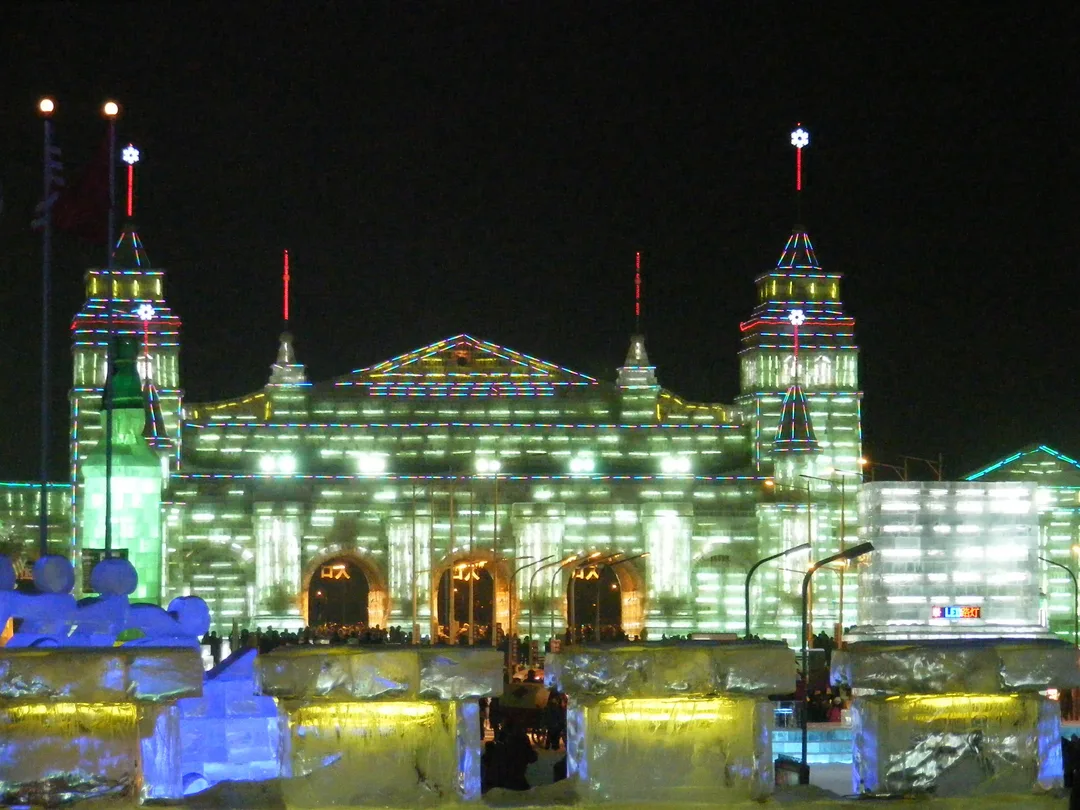
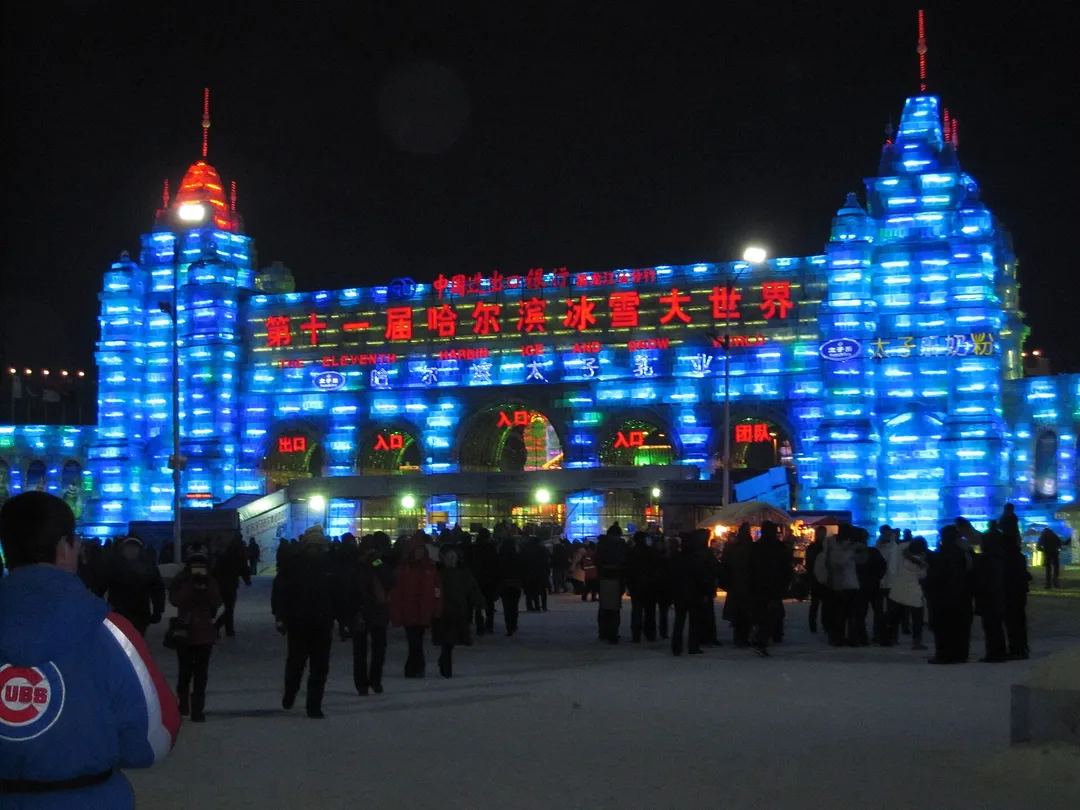
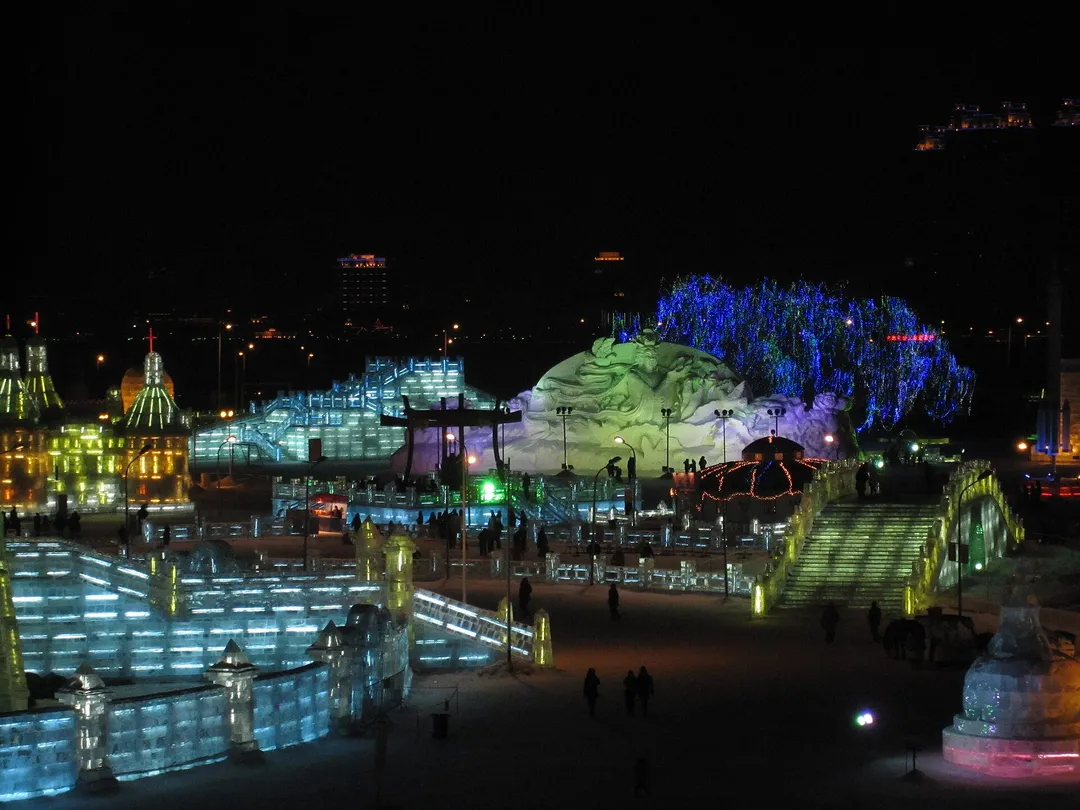
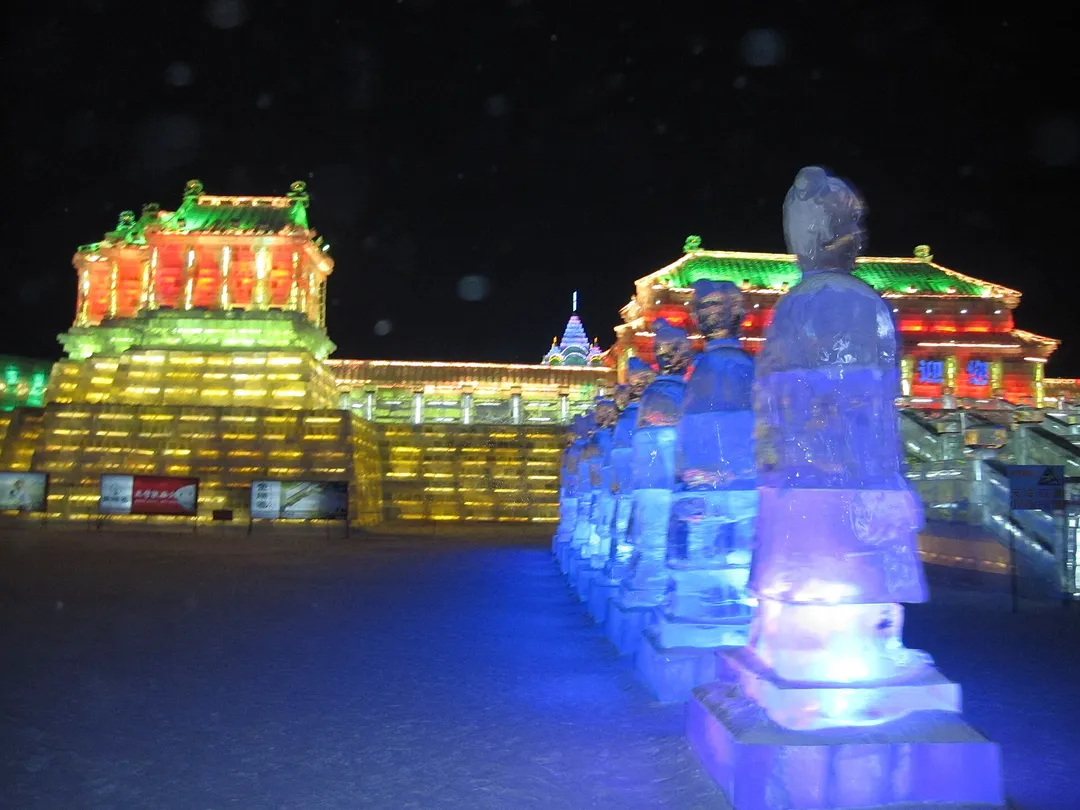
Harbin Ice and Snow World is the largest ice-and-snow theme park on earth, drawing millions of visitors each winter. Its buildings and sculptures are carved by ice artists from across China, covering foreign landmarks, mythology and historical scenes; after dark, light shows turn the ice into a fairy-tale palette of color.
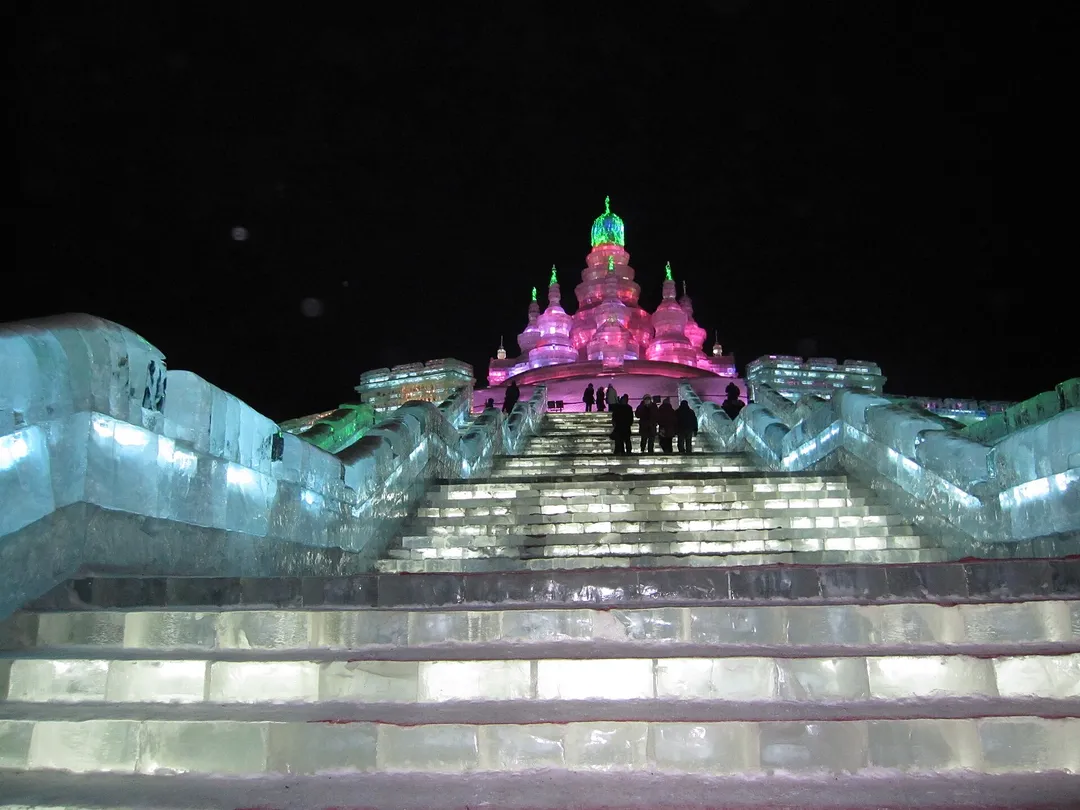
The park is divided into themed zones: the core sculpture area, the Super Ice Slide zone, a snow-play area and the show plaza. The Super Ice Slide is the park's most popular ride, about 26 m high with a run over 100 m long. Ice karting, snowmobiles and ice bicycles add to the lineup.
Each edition gets a fresh theme — the 25th edition in 2024, "Ice and Snow, One Destiny", wove in more international elements. The park also hosts winter cultural events, including the international ice sculpture competition, photo exhibitions and folk performances.
How to get there
Take Metro Line 1 to Harbin station and transfer to bus 47 for the Ice and Snow World stop. Drivers can navigate to the park lot, but spaces are limited — public transport is recommended.
Best photo spots
- The main ice sculpture at the park entrance
- The Super Ice Slide from a distance
- The night light show in panorama
- The signature central ice sculpture
Tips
- Layer up properly: down jacket, thermal underwear, hat, gloves and scarf are all essential
- Tickets are sold by time slot — buy online in advance to skip the queue
- Heated rest areas indoors let you warm up regularly
- Batteries drain fast in extreme cold; carry a power bank and stick a heat patch on your phone
- Watch children closely — ice surfaces are slippery
Scams to avoid
- Never buy tickets from scalpers — fakes and inflated prices are common
- Food inside is pricey; bring a thermos and simple snacks
Frequently asked questions
When does Ice and Snow World open?
Usually mid-December to mid-February, with exact dates depending on temperatures and ice quality each year.
How much are tickets?
Adults 298-499 yuan by time slot; children, students and seniors get discounts. Buying online is cheaper but requires advance booking.
Can I bring my own thermos and food?
Yes — security has no problem with food and thermoses.
Is there indoor heating?
The park has several heated rest areas and restaurants where you can warm up anytime.
Read next
Other things to do in Harbin
Central Street (Zhongyang Dajie)
Harbin's 1.45-km cobblestone street of Baroque and Art Nouveau buildings — Russian-era shops, Madie'er ice pops and kvass bakeries, running from the old district to the Songhua River promenade.
Harbin International Ice and Snow Festival
The world's largest ice and snow art festival — open from January 5 to late February, best over 2-4 days, drawing tens of millions of visitors.
Harbin Polar Park
China's first polar aquarium, opened in 2005; adults CNY 160. The original beluga show, Ocean Love, runs about 15-20 minutes and is genuinely moving. Allow 2-3 hours.
Saint Sophia Cathedral
Harbin's green-domed Russian Orthodox cathedral (1907/1923) on a red-brick square — the city's most photographed landmark, now an architecture museum. Magically lit at night and best with snow.
Siberian Tiger Park
A 144-hectare drive-through reserve on Harbin's north bank holding 500+ Siberian (Amur) tigers, viewed from a wire-mesh caged bus.
Songhua River
The Songhua River, Harbin's mother waterway, runs 1927 km with about 70 km through the city; free riverside, boat rides 60-120 yuan, ice over 1 m thick in winter.
Sun Island
A roughly 38 km² river-island park that hosts the Harbin Snow Sculpture Expo every winter; allow a half-day in summer, a full day during snow season (December–February).
Harbin Railway Station
A living relic of the Chinese Eastern Railway, built in 1899 in Art Nouveau style — about 70,000 sq m, 8 platforms, 14 tracks and some 100,000 daily passengers. Free and open around the clock.
Museums in Harbin
Harbin Jewish History Museum
Documents the 20,000-strong Jewish community that flourished in Harbin 1898–1960s. Inside the old Main Synagogue. Free, 1 hour.
Heilongjiang Provincial Museum
Russian influence, Manchurian history, and the cultures of China's far northeast. Free entry in a historic 1904 building. Harbin's unique cross-cultural story.
Songhua River Museum
The museum of the Songhua River (松花江) — the Amur River's main Chinese tributary and Harbin's defining waterway. Allow 1 hour.