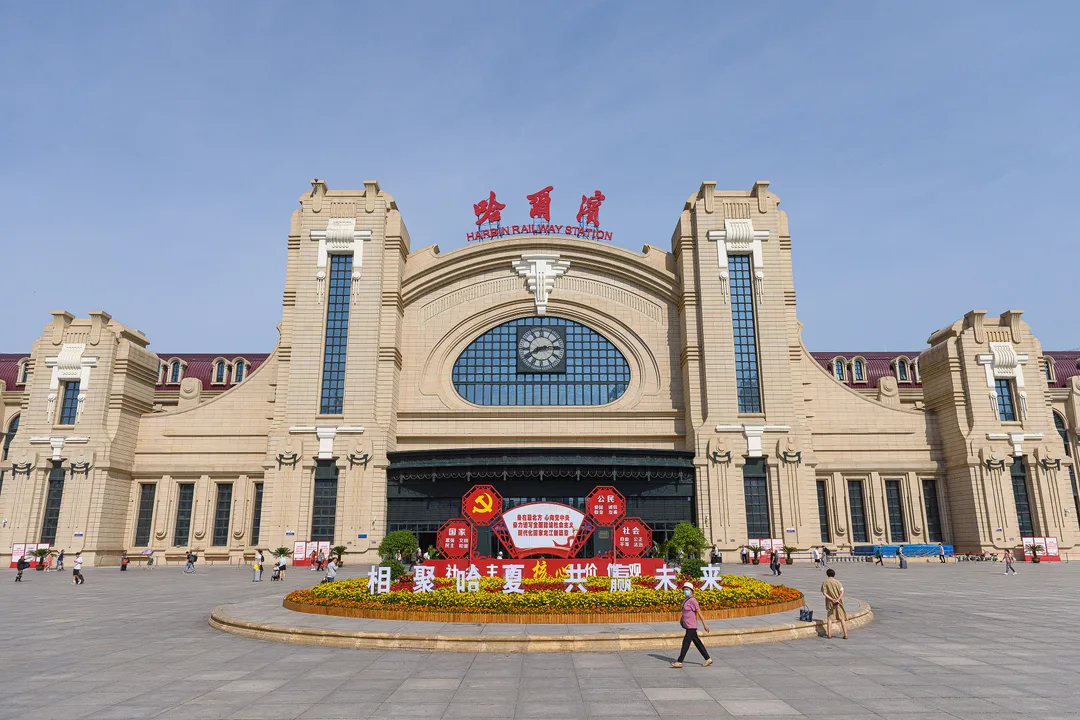
Harbin Railway Station哈尔滨站
Harbin Railway Station dates to 1899 and was one of the core stations of the Chinese Eastern Railway. Its Art Nouveau building — all clean lines and graceful curves — ranks among the city's signature early-modern structures. After the 2018 renovation it became a fully integrated hub for high-speed and conventional rail, metro and buses, balancing historic character with modern function.
Harbin · Visitor Guide2026-10-21
Quick Answer
Is Harbin Railway Station worth visiting?
A living relic of the Chinese Eastern Railway, built in 1899 in Art Nouveau style — about 70,000 sq m, 8 platforms, 14 tracks and some 100,000 daily passengers. Free and open around the clock.
Quick facts
| Ticket | Free to visit (public station areas) |
|---|---|
| Hours | Open 24 hours (ticket hall 06:00-23:00) |
| Recommended duration | 30 minutes to 1 hour (to admire the building) |
| Best time to visit | Any time of year |
| How to get there | Metro Lines 2 and 3 to Harbin Railway Station; buses 11, 21, 32, 64, 94, 96, 107 or 336 to the station stop |
| English signage | Yes |
| Wheelchair accessible | Yes |
| Built | 1899 |
| Style | Art Nouveau |
| Station floor area | About 70,000 sq m |
| Scale | 8 platforms, 14 tracks |
| Daily passengers | About 100,000 |
| Status | Key node of the Chinese Eastern Railway |
What to expect
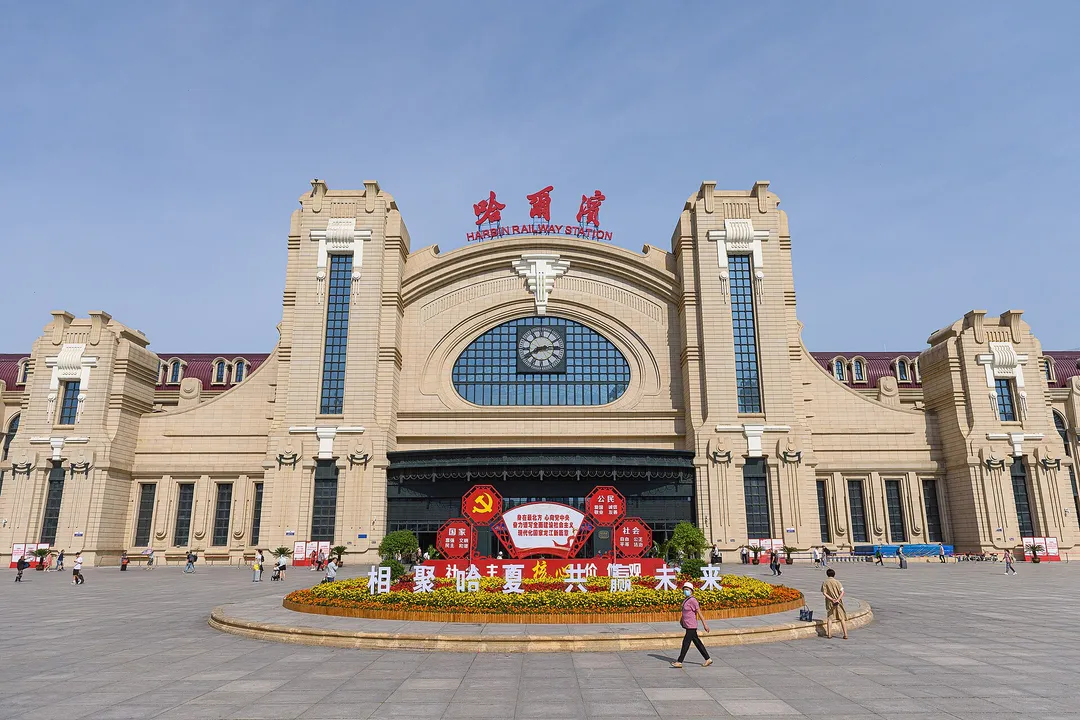
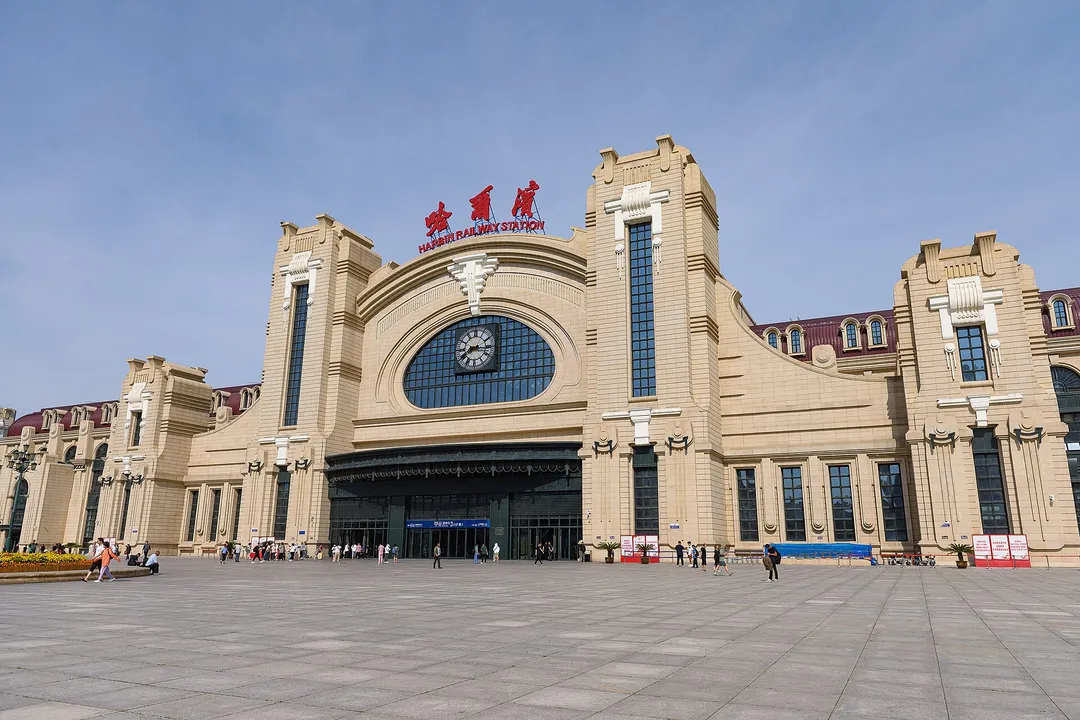
Harbin Railway Station is a representative station of the Chinese Eastern Railway era and a witness to the modernization of Harbin and China's Northeast as a whole. Designed by a Russian architect in the Art Nouveau style then in vogue across Europe, it traded ornate ornament for clean lines and flowing curves. The clock tower, arched windows and doors, and curved eaves of the historic building remain beautifully preserved.
The 2018 renovation kept the historic station building while adding an elevated waiting hall and an east square, creating a one-station, two-concourse layout. A new transfer hall lets passengers switch between rail, metro and buses without stepping outside. The glass-curtain new building holds a quiet dialogue with its historic neighbor.
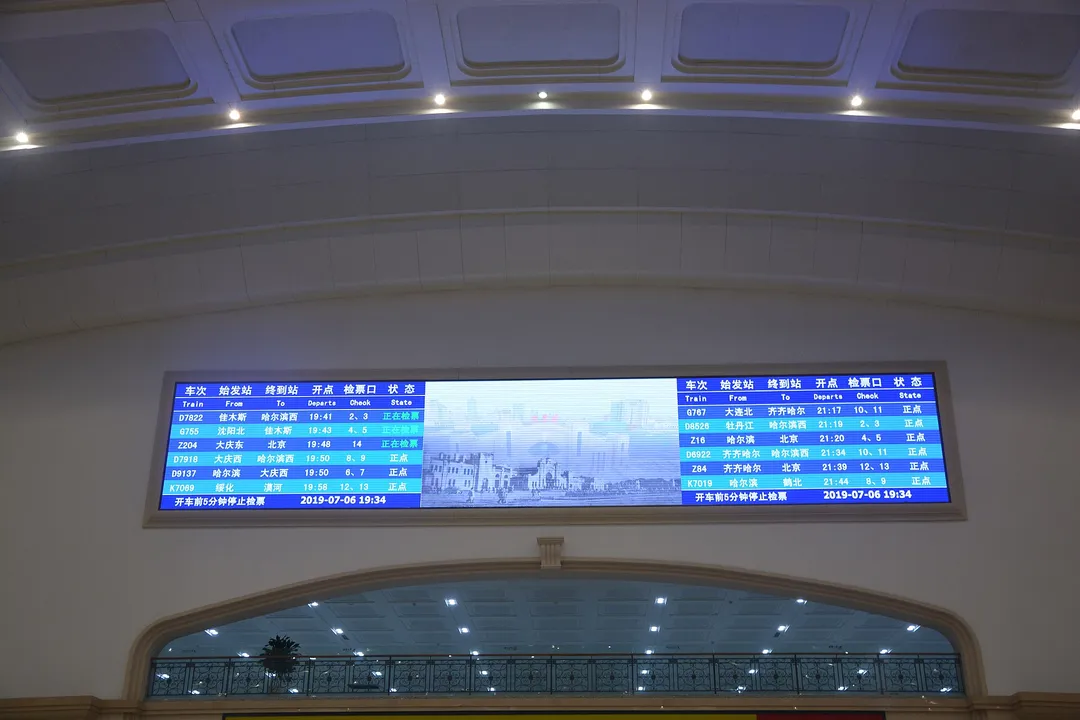
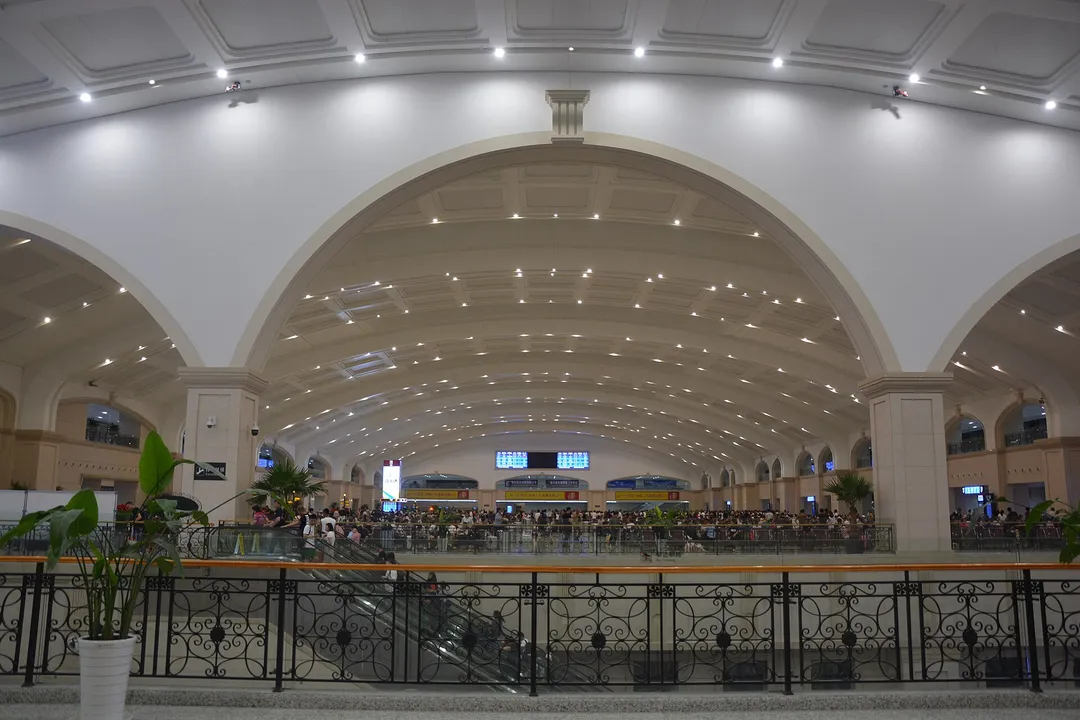
Inside, a Chinese Eastern Railway history exhibit room displays precious artifacts and photographs telling the century-long story of the station and the railway itself. Murals on the waiting-hall dome trace Harbin's urban growth — a rewarding stop for travelers new to the city.
How to get there
Metro Lines 2 and 3 serve the station directly. Buses stop at Harbin Station (south square) or Harbin Dajie (north square).
Best photo spots
- Front facade of the historic station building
- Old and new station buildings side by side
- The domed ceiling of the waiting hall
- The forecourt plaza
Tips
- The station has a south and a north square served by different metro exits and bus stops — check your navigation
- The history exhibit room inside the waiting hall is free to visit
- Dining options around the station are plentiful; no need to worry about meals
Scams to avoid
- Unlicensed cabs occasionally tout inside the station — always use proper taxis or public transport
Frequently asked questions
How does Harbin Station differ from Harbin West Station?
Harbin Station handles conventional trains and some high-speed services and stands right in the city center; Harbin West is primarily a high-speed station in Jiangbei.
Can visitors see the station building?
Yes — the station is a public space, though work areas are off-limits.
What is the historical significance of the station's architecture?
Built in 1899 as a representative Chinese Eastern Railway station in the European Art Nouveau style, its clean lines and graceful curves make it a masterpiece of Harbin's early-modern architecture and a witness to the modernization of the city and the Northeast.
Read next
Other things to do in Harbin
Central Street (Zhongyang Dajie)
Harbin's 1.45-km cobblestone street of Baroque and Art Nouveau buildings — Russian-era shops, Madie'er ice pops and kvass bakeries, running from the old district to the Songhua River promenade.
Harbin International Ice and Snow Festival
The world's largest ice and snow art festival — open from January 5 to late February, best over 2-4 days, drawing tens of millions of visitors.
Harbin Polar Park
China's first polar aquarium, opened in 2005; adults CNY 160. The original beluga show, Ocean Love, runs about 15-20 minutes and is genuinely moving. Allow 2-3 hours.
Harbin Ice and Snow World
The world's largest ice-and-snow theme park in Harbin, founded in 1999 using 120,000+ cubic metres of ice each winter; tickets 298-499 yuan, open 11:00-22:00, mid-December to mid-February.
Saint Sophia Cathedral
Harbin's green-domed Russian Orthodox cathedral (1907/1923) on a red-brick square — the city's most photographed landmark, now an architecture museum. Magically lit at night and best with snow.
Siberian Tiger Park
A 144-hectare drive-through reserve on Harbin's north bank holding 500+ Siberian (Amur) tigers, viewed from a wire-mesh caged bus.
Songhua River
The Songhua River, Harbin's mother waterway, runs 1927 km with about 70 km through the city; free riverside, boat rides 60-120 yuan, ice over 1 m thick in winter.
Sun Island
A roughly 38 km² river-island park that hosts the Harbin Snow Sculpture Expo every winter; allow a half-day in summer, a full day during snow season (December–February).
Museums in Harbin
Harbin Jewish History Museum
Documents the 20,000-strong Jewish community that flourished in Harbin 1898–1960s. Inside the old Main Synagogue. Free, 1 hour.
Heilongjiang Provincial Museum
Russian influence, Manchurian history, and the cultures of China's far northeast. Free entry in a historic 1904 building. Harbin's unique cross-cultural story.
Songhua River Museum
The museum of the Songhua River (松花江) — the Amur River's main Chinese tributary and Harbin's defining waterway. Allow 1 hour.