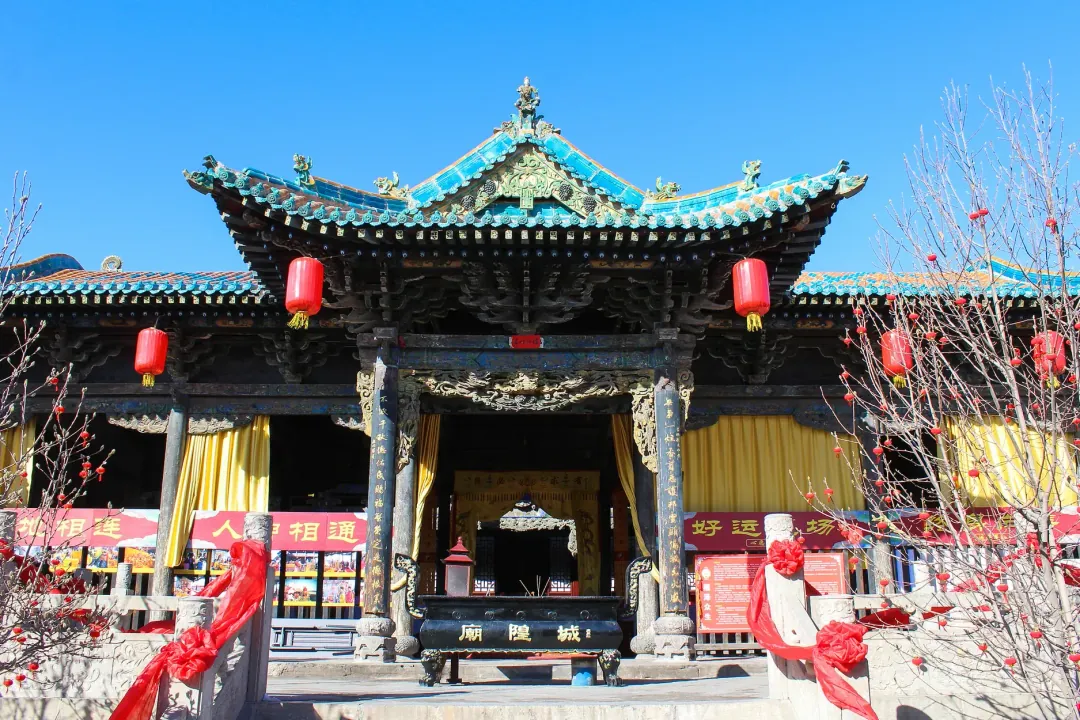
Chenghuang Temple (Fengde Temple)城隍庙
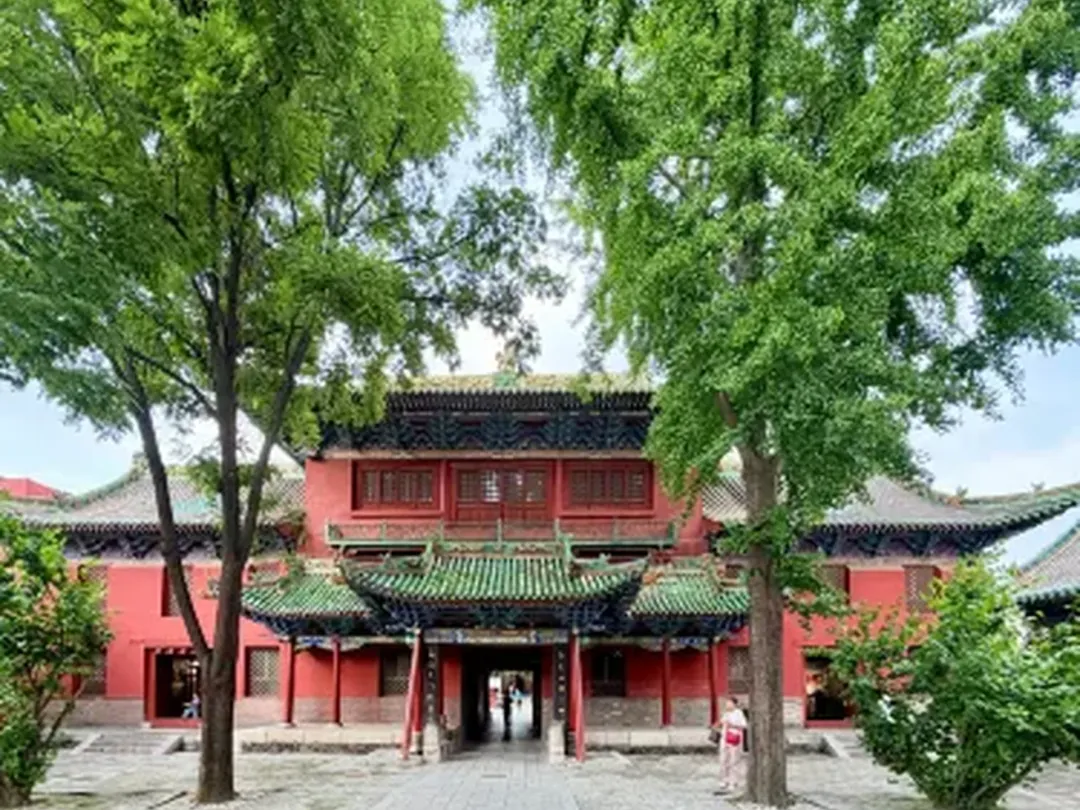
Chenghuang Temple (Fengde Temple) is one of the oldest and most culturally significant temples in Taiyuan, located near the city center. Originally built during the Tang Dynasty and rebuilt multiple times over the centuries, the temple is dedicated to the city god (城隍) — the tutelary deity who protects the city. Its Ming Dynasty wooden halls, carved stone bridges, and ancient cypress trees make it a quiet counterpoint to the more famous Jin Temple. Entry is free, and it is often combined with a visit to the Shanxi Museum nearby.
Taiyuan · Visitor Guide2026-10-18
Quick Answer
Is Chenghuang Temple (Fengde Temple) worth visiting?
Ancient temple in central Taiyuan dedicated to the city god. Free entry. Ming Dynasty wooden halls and local cultural significance. 1–2 hours, often combined with nearby Jin Temple.
Quick facts
| Ticket | Free entry (as of 2026). |
|---|---|
| Hours | 8:00–17:30 (summer), 8:30–17:00 (winter). |
| Recommended duration | 1–2 hours. |
| Best time to visit | Weekday mornings for a quiet visit. Spring and autumn for pleasant weather. The temple is rarely crowded even on weekends due to its low profile compared to Jin Temple. |
| How to get there | Take Metro Line 2 to Chenghuang Temple (城隍庙) station, which has an exit directly adjacent to the temple. Or take bus routes 1, 3, 4, 5, 6, 10, 65, 68, 602, 805, 808, 820 to the Chenghuang Temple (城隍庙) stop. |
| English signage | Partial |
| Wheelchair accessible | Partial |
| Founded | Tang Dynasty (around 230 AD, with current buildings from Ming/Qing) |
| Deity | City God (城隍) — tutelary protector of Taiyuan |
| Architecture | Ming Dynasty wooden halls with Qing dynasty additions |
| Key feature | Ancient stone bridge and cypress trees over 500 years old |
| Location | Central Taiyuan, near the old city wall site |
What to expect
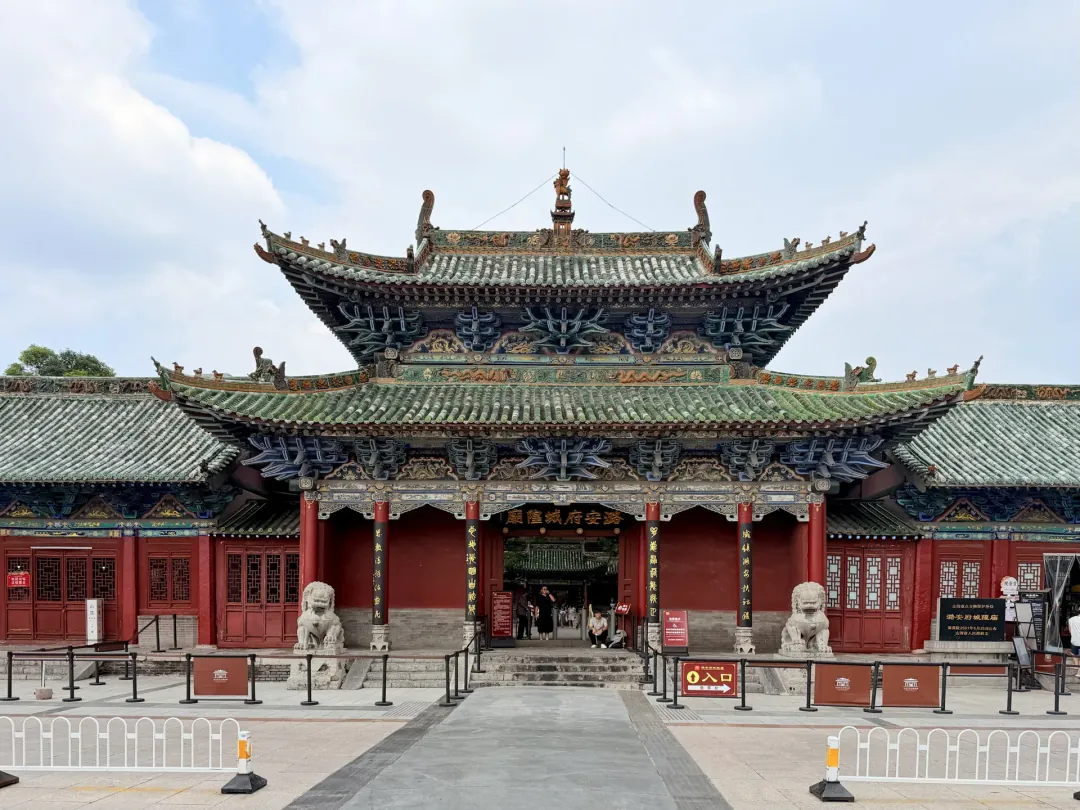
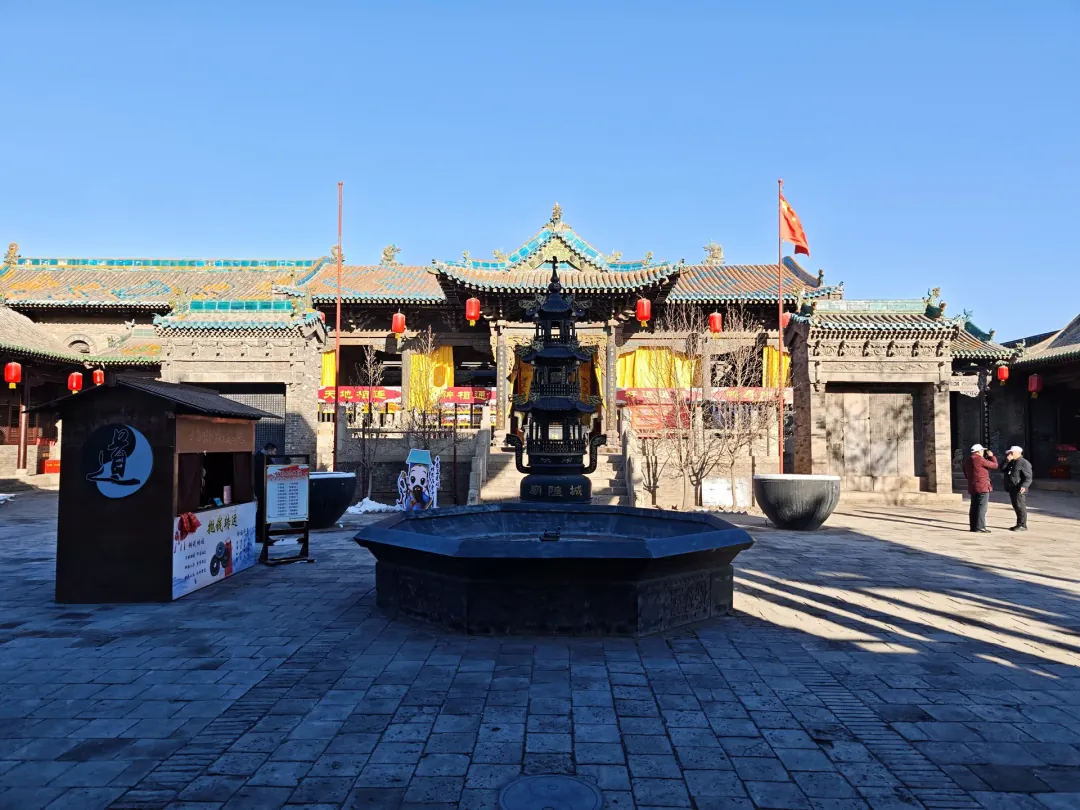
Chenghuang temples (城隍庙) are found in cities across China — they are dedicated to the city god, the protective deity responsible for a city's fortune, weather, and civic wellbeing. The Taiyuan Chenghuang Temple is one of the oldest in northern China, with origins dating back to the Eastern Han Dynasty (25–220 AD). The current buildings are mostly Ming Dynasty reconstructions, with some Qing Dynasty additions. The temple complex occupies a large area near the old city wall and includes a gate hall, a main hall, and a rear hall, connected by courtyards with ancient stone-paved paths.
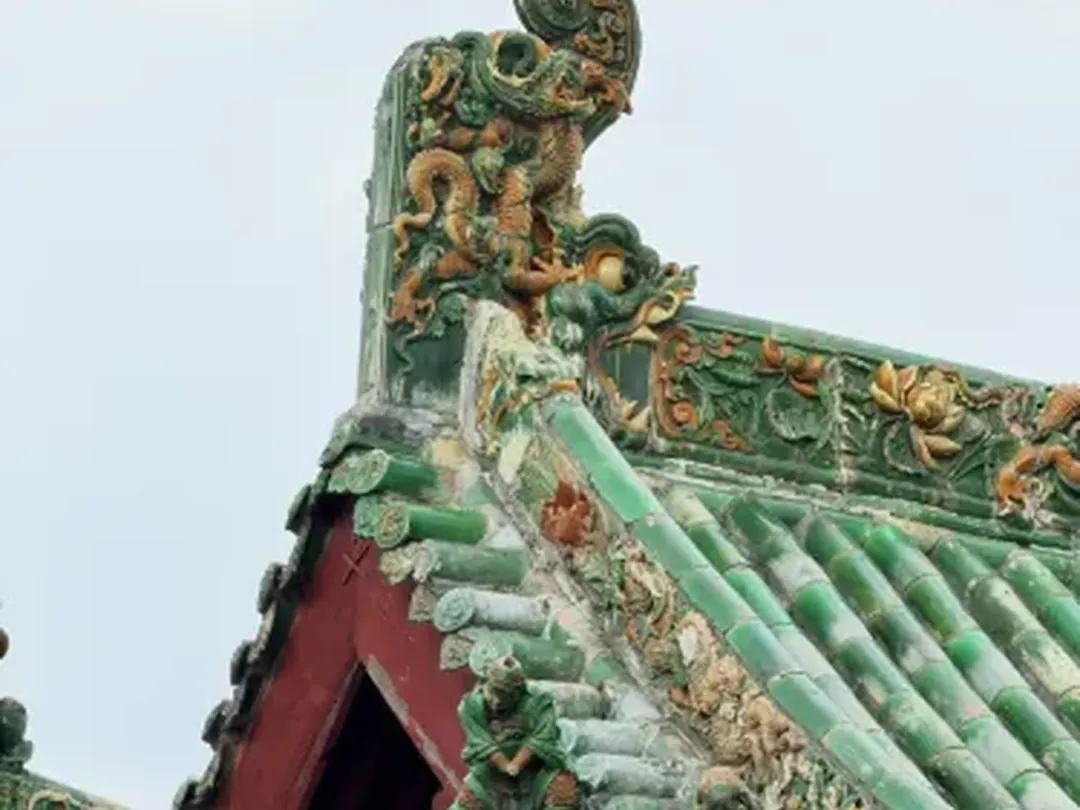
The temple's most interesting features are its wooden structures — the bracket sets (斗拱, dougong) supporting the eaves are elaborate examples of Ming Dynasty carpentry. The main hall contains statues of the city god and his retinue, including judges of the underworld who assess the moral records of the dead. This aspect of Chenghuang temples — their role as both civic protectors and judges of the afterlife — makes them unique in Chinese religious architecture.
Unlike the Jin Temple, which is a UNESCO World Heritage Site and tourist destination, the Chenghuang Temple retains a more local character. Worshippers come to burn incense and ask the city god's blessing for business success, exam results, or family safety. The temple is less polished and more atmospheric than the main tourist sites — it is a working religious site where ordinary Taiyuan residents come to make offerings.
How to get there
Metro Line 2 to Chenghuang Temple (城隍庙) station, which has an exit directly at the temple's south gate. Bus routes 1, 3, 4, 5, 6, 10, 65, 68, 602, 805, 808, and 820 also stop at the temple. The temple is within walking distance of the Shanxi Museum (10 minutes north).
Best photo spots
- The main gate with its upturned eaves and ornate bracket sets — classic Ming Dynasty temple architecture
- The ancient cypress tree in the central courtyard — estimated at over 500 years old
- The incense burning area with worshippers — authentic local religious practice
- The stone bridge over the dry moat inside the temple complex
Tips
- Combine with the nearby Shanxi Museum (10-minute walk north) for a half-day cultural itinerary
- Come early in the morning to see worshippers making offerings — the incense smoke and ritual activity is atmospheric
- The temple is free and rarely crowded — a good alternative if Jin Temple is too busy
- Look for the local food stalls near the temple's east gate — Taiyuan's famous刀削面 (daoxiao noodles) and 头脑 (toutao, a local lamb and medicinal soup)
- Respect the religious nature of the site — observe quietly and do not photograph worshippers without permission
Scams to avoid
- "Fortune-telling" operators inside the temple who approach visitors and demand payment for predictions — ignore them; genuine worshippers do not solicit money
- Street vendors immediately outside the temple claiming to sell "blessed" items — these are commercial products with no religious significance
Frequently asked questions
How is Chenghuang Temple different from Jin Temple?
Jin Temple (晋祠) is a UNESCO World Heritage Site 30 km from the city, focused on Song Dynasty architecture and ancient history. Chenghuang Temple is a local city god temple in central Taiyuan, free to enter, with Ming Dynasty wooden halls and a more active worship culture. They offer completely different experiences.
Is Chenghuang Temple free to enter?
Yes — entry to the temple is free as of 2026. Some side halls may charge a small fee (¥5) for specific exhibitions.
Is Chenghuang Temple wheelchair accessible?
Partially. The main courtyard areas are accessible, but the main hall has a high threshold and interior spaces are narrow. The temple was not designed with accessibility in mind.
What can I see inside the temple?
Ming Dynasty wooden halls with elaborate bracket sets, statues of the city god and his retinue, an ancient cypress tree, stone bridges, and a historic bell tower. The temple is a working religious site, so you may see worshippers burning incense and making offerings.
Can I combine Chenghuang Temple with other Taiyuan attractions?
Yes — the Shanxi Museum is a 10-minute walk to the north. Jin Temple is 30 km away and requires a separate half-day trip. The temple's location near the city center makes it easy to combine with a food walk in the old city area.
Read next
Other things to do in Taiyuan
Taiyuan Food Street
Taiyuan's signature 400-meter evening food lane: Shanxi knife-cut noodles, aged-vinegar tastings, lamb soup and snack stalls — the liveliest block in town after dark.
Jinci Temple
China's oldest ancestral temple, at the foot of Xuanweng Mountain outside Taiyuan: the Song-dynasty Hall of the Holy Mother with 43 painted figures, Zhou cypresses and a cross bridge.
Jin Temple (Jinci)
China's oldest ancestral temple complex, 25 km southwest of Taiyuan — the Song-dynasty Hall of the Holy Mother, the Flying Cross Bridge and Zhou-era cypresses in a single axis.
Twin Pagoda Temple (Shuangta Temple)
Ming-dynasty Twin Pagoda Temple (Yongning Temple) in Taiyuan — two 54 m pagodas of 1597, the tallest in Shanxi; free entry, tower climb 10 yuan, open 8:00-17:30.
Shanxi Museum
One of China’s finest provincial museums — 500,000+ artifacts spanning 5,000 years of Shanxi history. Free. English signage is excellent.
Tianlongshan Grottoes
Buddhist cave temples from the Northern Wei to Tang dynasties, 40 km from Taiyuan. 30-minute hike to remote hilltop grottoes. ¥50 entry.
Museums in Taiyuan
Shanxi Museum
The provincial museum of Shanxi in Taiyuan, China — free timed entry, 500,000+ artifacts, and the Western Zhou Bird-Shape Zun as its emblem. Open 9:00-17:00, closed Mondays.
Shanxi Provincial Museum
Shanxi Provincial Museum is the old name (1953-2004) of today's Shanxi Museum — the provincial museum of Taiyuan, China. Free entry, 9:00-17:00, 500,000+ artifacts. Verified 2026-10-12.