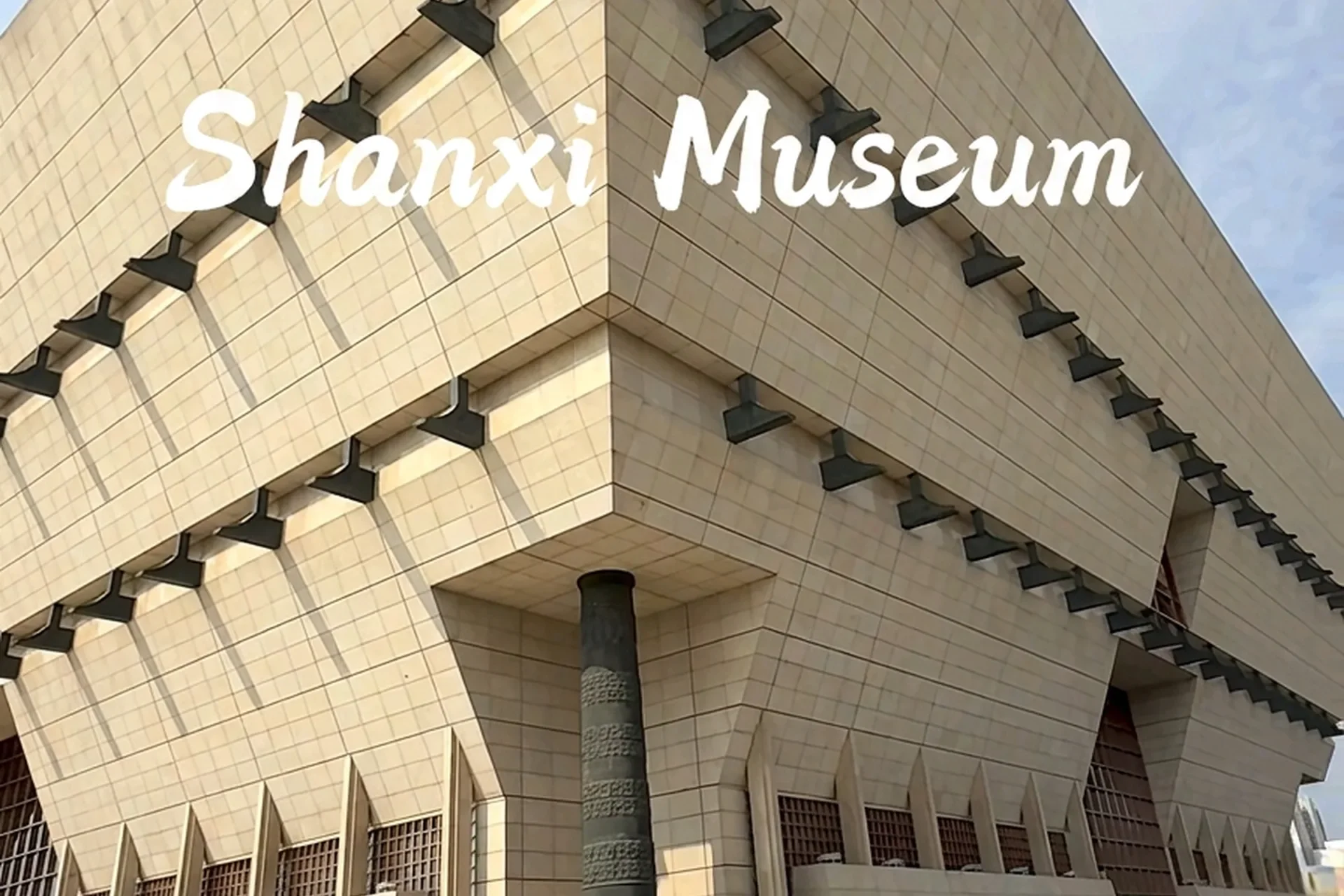
Shanxi Museum
The Shanxi Museum (山西博物院) is the provincial museum of Shanxi Province, standing on the west bank of the Fen River at 13 Binhe West Road North, Taiyuan's Wanbailin District. Its line runs back to 1919, when the Shanxi Education and Library Museum opened at Taiyuan's Confucian Temple as one of China's earliest modern museums; from 1953 it was officially the Shanxi Provincial Museum (山西省博物馆), and it took its current name in 2004 when the new ding-shaped building was completed — opening to the public in 2005 and joining the first batch of National First-Grade Museums in 2008. The building packs 52,000 square meters onto a 13,000-square-meter exhibition programme across four gallery floors, holding more than 500,000 objects: Jin-state bronzes from the Zhou era, Northern Wei art from the Datong period, Sogdian tomb furniture from Taiyuan's heyday on the steppe trade routes, and the archives of the Jin merchants who ran Qing China's draft banks.
Taiyuan · history museum2026-10-18
Quick Answer
Is Shanxi Museum worth visiting?
The provincial museum of Shanxi in Taiyuan, China — free timed entry, 500,000+ artifacts, and the Western Zhou Bird-Shape Zun as its emblem. Open 9:00-17:00, closed Mondays.
Quick facts
| Category | history |
|---|---|
| Ticket | Free. Timed reservation through the museum's official WeChat account or mini-program; enter in your slot by showing the original passport — since 1 September 2026 there is no QR-code gate. Foreign visitors who cannot book through WeChat can register at the main hall's south gate with a passport; companions still need regular reservations. |
| Hours | 9:00-17:00, last admission 16:00. Closed Mondays (open on statutory-holiday Mondays); Chinese New Year's Eve and New Year's Day also closed. |
| Recommended duration | 2-4 hours — two for the 2F-3F history floors, more for the 4F art galleries. |
| Best time to visit | Weekday mornings right at the 9:00 opening, before tour groups arrive. April-June and September-October give Taiyuan's kindest weather; avoid Golden Week (1-7 October), when the free daily quota empties fast. |
| How to get there | Metro Line 1 (opened February 2025) to Taoyuan Road (桃园路) station, then about 1 km on foot; bus 865 or 69 stops at the Shanxi Museum stop. Taxis from anywhere in central Taiyuan are short rides — give the driver the address: 13 Binhe West Road North, Wanbailin District (滨河西路北段13号). |
| English signage | Partial |
Why visit
Because this is where the Jin (晋) story is kept. The museum's emblem, the Bird-Shape Zun (晋侯鸟尊) — a Western Zhou bronze wine vessel unearthed in 2000 from Tomb 114 of the Jin Marquis cemetery in Quwo County — anchors the Jin Hegemony gallery on the 2nd floor, with the Shang-dynasty Dragon-Shape Zun (龙形觥) close by. The 3rd floor holds the eras that make Shanxi unusual: the Yuhong sarcophagus (虞弘墓石椁), the stone burial house of a Sogdian official excavated in Taiyuan in 1999 and carved with Central Asian banquets; the painted wood screen from Sima Jinlong's Northern Wei tomb at Datong; and the Houma covenant tablets (侯马盟书), more than 5,000 inscribed jade and stone slips recording the blood oaths of Jin nobles around the 5th century BCE. Admission is free, and the collection is easily the best reason to overnight in Taiyuan rather than pass through.
Collection highlights
- 2F Jin Hegemony (晋国霸业): the Bird-Shape Zun (晋侯鸟尊), museum emblem and the defining Jin-state bronze — Western Zhou, unearthed in 2000 from the Jin Marquis cemetery at Quwo — plus the Shang-dynasty Dragon-Shape Zun (龙形觥)
- 2F Cradle of Civilization (文明摇篮): Neolithic finds from the Taosi site in Xiangfen County, a walled Longshan-period settlement dated roughly 2300-1900 BCE that many archaeologists link to the legendary Emperor Yao
- 3F Melting of Peoples (民族熔炉): the Yuhong sarcophagus (虞弘墓石椁), the Sui-dynasty stone tomb house of a Sogdian official, excavated in Taiyuan in 1999
- 3F Melting of Peoples: the painted wood screen from Sima Jinlong's tomb (司马金龙墓木板漆画) — Northern Wei lacquer painting unearthed at Datong
- 3F Houma covenant tablets (侯马盟书): 5,000-plus inscribed jade and stone slips excavated in 1965 at Houma — the political fine print of the Jin state, 5th century BCE
- 3F World of Jin Merchants (天下晋商): how Shanxi merchants built the piaohao draft-bank network that moved Qing China's silver
- 4F art galleries — porcelain (瓷苑艺葩), ancient coins (方圆世界) and Shanxi architecture (土木华章); 1F rotating special exhibitions and the museum shop
Tips
- Reserve the free timed ticket on the museum's official WeChat account (山西博物院) or mini-program before you travel — weekend and holiday slots go first. Type the passport number exactly as printed.
- Since 1 September 2026 the QR-code check is gone: walk into your slot and show the original passport. No WeChat? Foreign visitors can register at the main hall's south gate with a passport.
- Tour by time, bottom-up in era and top-down in floors: 2F runs from Neolithic Taosi to the Jin state, 3F from Qin to Qing, 4F is the art galleries. Two focused hours cover the headline objects; half a day covers the lot.
- Mondays are out (closed; holiday Mondays excepted). Aim for the 9:00 opening on a weekday and do the 2nd floor first, while it is quiet.
- Pair the visit: the dedicated Shanxi Bronze Museum branch sits in the Changfeng business district across town, and Pingyao Ancient City is 30-40 minutes from Taiyuan South Station by high-speed train — second class from about ¥28.5, with roughly 35 departures a day.
Frequently asked questions
Is Shanxi Provincial Museum the same as Shanxi Museum?
Yes — one institution, two names. Founded in 1919 as the Shanxi Education and Library Museum, it was named Shanxi Provincial Museum (山西省博物馆) from 1953, adopted the current name Shanxi Museum (山西博物院) in 2004 when the new Fen-river building was finished, and opened there in 2005. Nihaovisit keeps a separate Shanxi Provincial Museum reference page under the old name; both lead to the same museum in Taiyuan.
How do I book free admission, step by step?
1) Open the museum's official WeChat account or mini-program (山西博物院). 2) Choose a date and entry slot and register with your passport number. 3) At your slot time, show the original passport at the gate — no QR code has been checked since 1 September 2026. 4) If WeChat booking is impossible, foreign visitors can register at the main hall's south gate with a passport; travel companions need normal reservations. 5) Skip Mondays — the museum closes on Mondays (statutory-holiday Mondays excepted).
Which treasures should I see first, and where are they?
Bird-Shape Zun — 2F, Jin Hegemony. Dragon-Shape Zun — 2F. Taosi Neolithic finds — 2F, Cradle of Civilization. Yuhong sarcophagus and the Sima Jinlong lacquer screen — 3F, Melting of Peoples. Houma covenant tablets — 3F. With only 90 minutes, do the 2nd and 3rd floors and nothing else.
Can I combine the museum with Pingyao in one day?
Yes. Taiyuan South Station to Pingyao Ancient City station takes 30-40 minutes by high-speed train (second class from about ¥28.5, around 35 departures daily). A 9:00-12:00 museum visit plus an afternoon in Pingyao is feasible but tight; the better plan is the museum in the morning and a night in Pingyao's old city.
How do I get to the museum by metro or bus?
Metro Line 1 to Taoyuan Road station, then about 1 km on foot, or bus 865 / 69 direct to the Shanxi Museum stop. From Taiyuan Railway Station or Wusu Airport a taxi is simplest — set the destination to 13 Binhe West Road North, Wanbailin District (太原市万柏林区滨河西路北段13号).
Is there English signage?
Partial. Headline objects and hall names carry English labels, but wall texts and case notes lean Chinese-heavy — a translation app earns its keep here.
How long should I plan for the visit?
Two hours for the 2F-3F history floors, three to four with the 4F art galleries. Last admission is 16:00 and the halls clear at 17:00, so arrive by early afternoon at the latest.
Read next
Other things to do in Taiyuan
Chenghuang Temple (Fengde Temple)
Ancient temple in central Taiyuan dedicated to the city god. Free entry. Ming Dynasty wooden halls and local cultural significance. 1–2 hours, often combined with nearby Jin Temple.
Taiyuan Food Street
Taiyuan's signature 400-meter evening food lane: Shanxi knife-cut noodles, aged-vinegar tastings, lamb soup and snack stalls — the liveliest block in town after dark.
Jinci Temple
China's oldest ancestral temple, at the foot of Xuanweng Mountain outside Taiyuan: the Song-dynasty Hall of the Holy Mother with 43 painted figures, Zhou cypresses and a cross bridge.
Jin Temple (Jinci)
China's oldest ancestral temple complex, 25 km southwest of Taiyuan — the Song-dynasty Hall of the Holy Mother, the Flying Cross Bridge and Zhou-era cypresses in a single axis.
Twin Pagoda Temple (Shuangta Temple)
Ming-dynasty Twin Pagoda Temple (Yongning Temple) in Taiyuan — two 54 m pagodas of 1597, the tallest in Shanxi; free entry, tower climb 10 yuan, open 8:00-17:30.
Shanxi Museum
One of China’s finest provincial museums — 500,000+ artifacts spanning 5,000 years of Shanxi history. Free. English signage is excellent.
Tianlongshan Grottoes
Buddhist cave temples from the Northern Wei to Tang dynasties, 40 km from Taiyuan. 30-minute hike to remote hilltop grottoes. ¥50 entry.