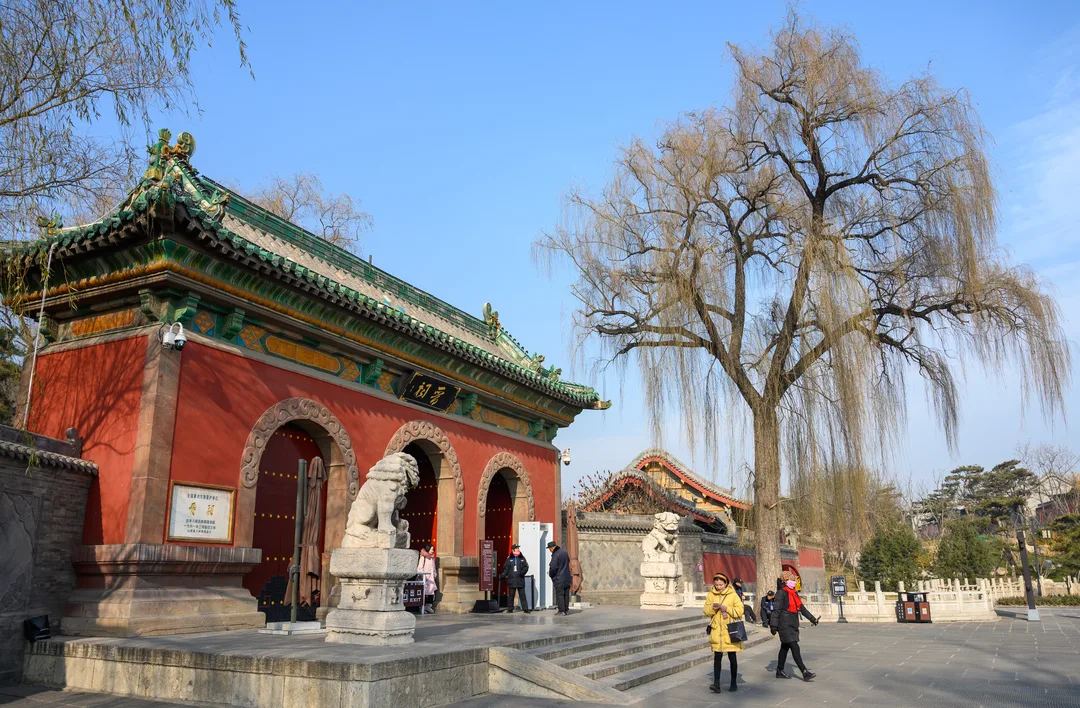
Jin Temple (Jinci)晋祠
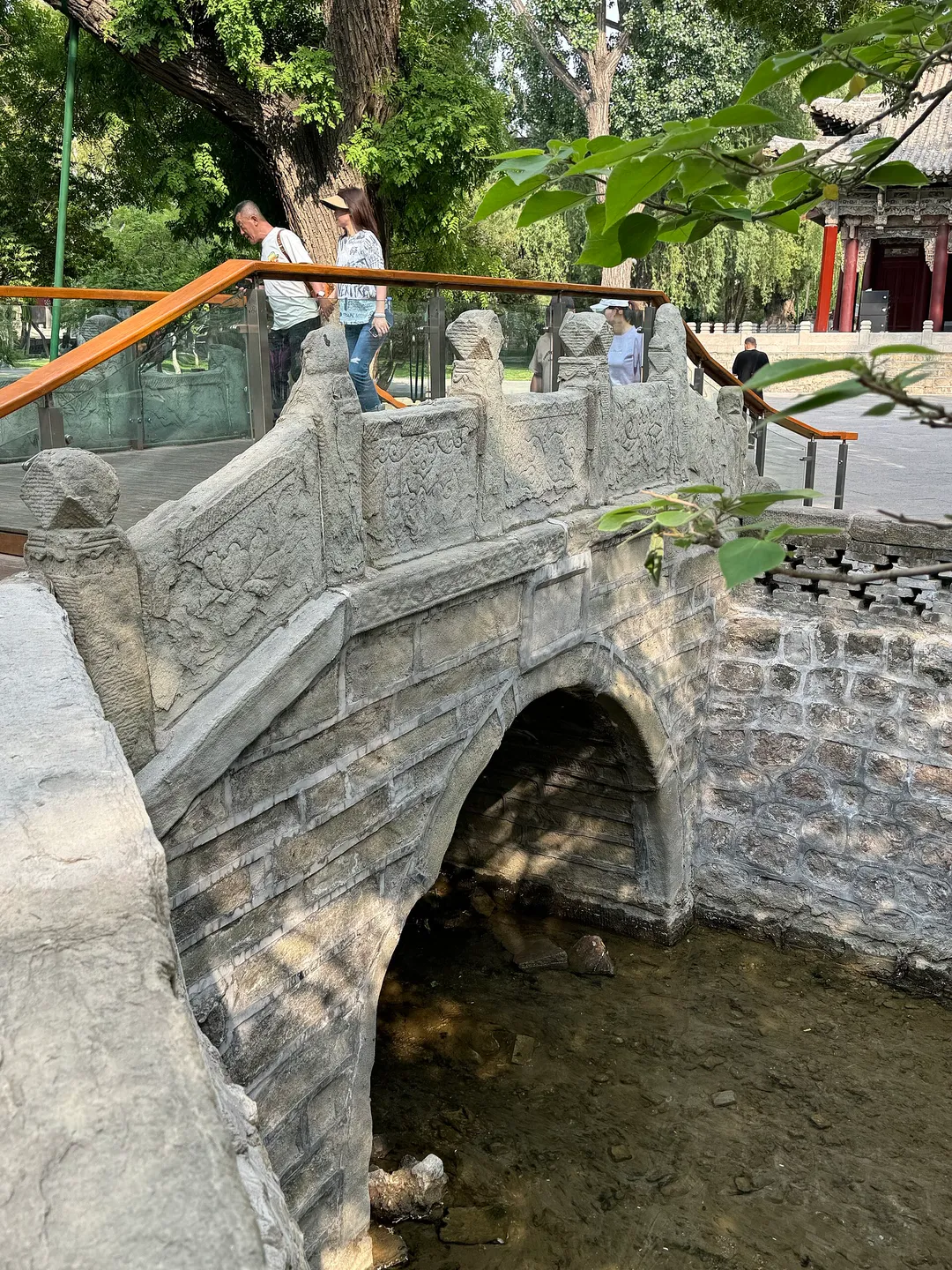
The Jin Temple (Jìn Cí), also known as Jinci, is an ancestral temple complex 25 km southwest of Taiyuan, founded to commemorate Tang Shuyu, the Western Zhou prince of Jin. Its landmark Hall of the Holy Mother (圣母殿, 984 CE, rebuilt 1102) stands behind the Flying Cross Bridge (鱼沼飞梁) — the earliest known cross-shaped bridge in China — and houses 43 painted clay maidservant figures, among the finest surviving Song sculptures. Ancient cypresses, said by tradition to date to the Zhou dynasty, shade the courtyards.
Taiyuan · Visitor Guide2026-10-18
Quick Answer
Is Jin Temple (Jinci) worth visiting?
China's oldest ancestral temple complex, 25 km southwest of Taiyuan — the Song-dynasty Hall of the Holy Mother, the Flying Cross Bridge and Zhou-era cypresses in a single axis.
Quick facts
| Ticket | ¥80 (as of 2026); children under 1.4m free. Audio guide ¥30 (English). |
|---|---|
| Hours | 08:00–18:00 (April–October), 08:30–17:30 (November–March). |
| Recommended duration | 2–3 hours. |
| Best time to visit | Spring (March–May) for ancient cypress trees in fresh green. Autumn (October–November) for golden ginkgo. Summer is hot. Weekday mornings year-round. |
| How to get there | 25 km southwest of Taiyuan. Take Bus 308 or 804 from Taiyuan city centre (¥5, 60 minutes) to Jinci stop. A DiDi from Taiyuan costs ¥60–80 / 45 minutes. Most visitors combine with a DiDi trip that includes the temple and the nearby Meng County Old Town. |
| English signage | Yes |
| Wheelchair accessible | Partial |
| Founded | Western Zhou origins (shrine of Tang Shuyu, prince of Jin); Hall of the Holy Mother dated 984 CE |
| Key structures | Hall of the Holy Mother (Song, 984/1102), Flying Cross Bridge (鱼沼飞梁), Offering Hall (Jin, 1168), Nanlao Spring |
| UNESCO status | Not inscribed; national key cultural relic |
| Ancient trees | Zhou-dynasty cypresses by tradition, over 2,000 years old |
| Sculpture | 43 Song-dynasty painted clay maidservants in the Hall of the Holy Mother |
| Location | 25 km southwest of Taiyuan |
What to expect
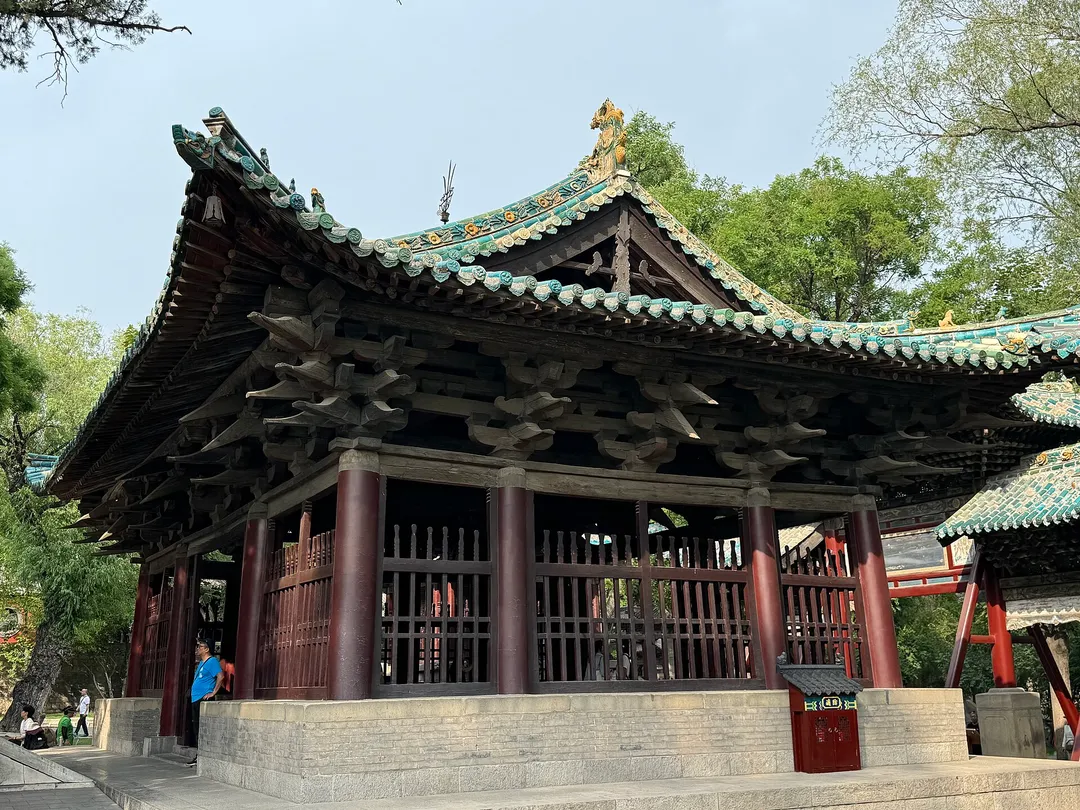
The Jin Temple (Jìn Cí) commemorates Tang Shuyu, the Western Zhou prince enfeoffed with the state of Jin around the 11th century BC — the temple's origins as his shrine make it China's oldest ancestral temple complex. The axis unfolds through water pavilions to the Hall of the Holy Mother (圣母殿, first built 984 CE, rebuilt 1102), the finest surviving Song-dynasty wooden hall in Shanxi, its bracket sets (斗拱) among the best-preserved examples of Song joinery.
How to get there
Bus 308 or 804 from Taiyuan city centre to Jinci (晋祠) stop, 60 minutes, ¥5. A DiDi from central Taiyuan costs ¥60–80 / 45 minutes. The most practical option for international visitors is a half-day private car with driver (¥300–400 for the round trip including 2 hours at the temple).
Best photo spots
- The Flying Cross Bridge with the Hall of the Holy Mother behind — the classic Jinci shot
- The ancient cypresses against the Hall of the Holy Mother backdrop — the temple's signature frame
- The Offering Hall (献殿) — Jin-dynasty pavilion-style wooden hall with green glazed roof
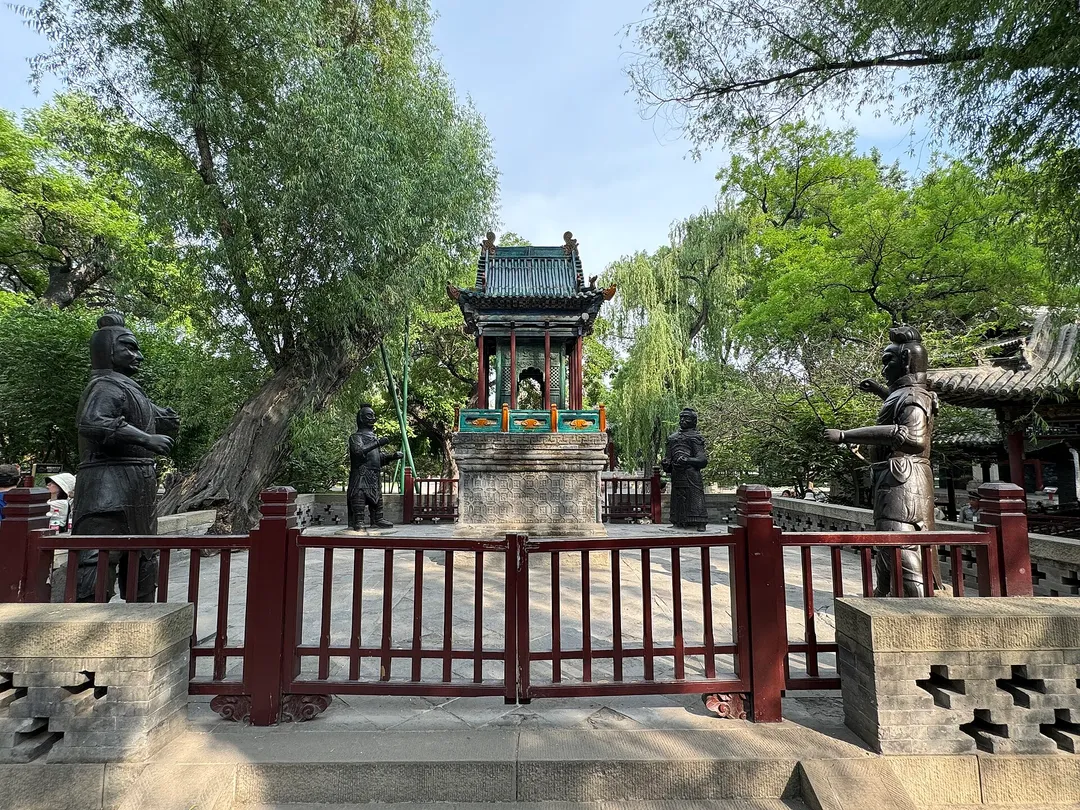
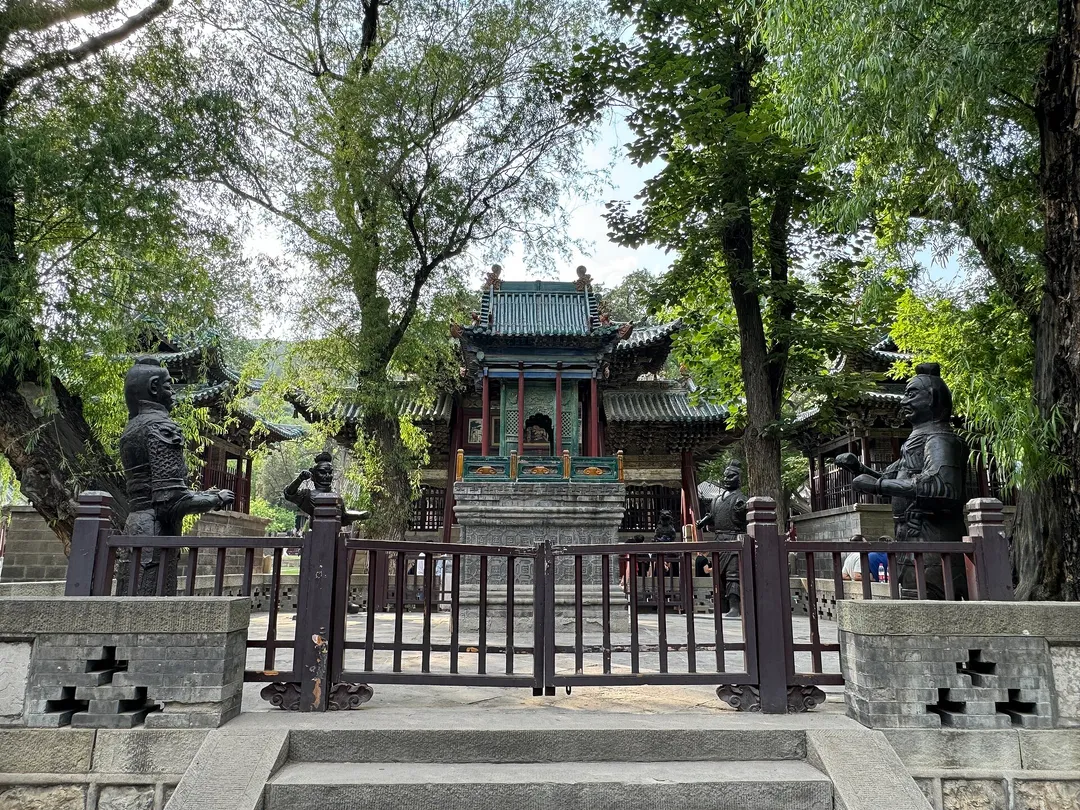
- The iron warriors on the Golden Man Terrace (金人台) by the Nanlao Spring pavilion
Tips
- Combine with the Tianlongshan Grottoes (about 40 minutes by car) — both sites sit on Taiyuan's southwest side and make a natural half-day itinerary
- The audio guide (¥30, English) is worth it for understanding the Song dynasty architectural details
- Come early in the day — the temple gets tour groups from 10:00 onwards
- The cypress trees are at their most beautiful in spring (fresh green) and autumn (golden)
- Wear comfortable shoes — the temple complex covers a large area and the paths are uneven
Scams to avoid
- None significant at the temple itself. Be aware of "private tour" offers at the bus stop — these are usually informal arrangements with unreliable drivers for the return trip.
Frequently asked questions
Is Jin Temple worth visiting?
Yes — it is the oldest ancestral temple complex in China and a national key cultural relic, anchored by the Song-dynasty Hall of the Holy Mother and the 43 painted clay maidservants. Budget 2–3 hours.
How is Jin Temple related to the Tang dynasty?
Li Yuan, founder of the Tang, prayed at Jinci before his 617 uprising — the dynasty took its name from Tang, the ancient fief of Prince Shuyu. Emperor Taizong later erected the famous 646 CE stele "Inscription of Jinci" here.
What is the Flying Cross Bridge?
A Song-dynasty cross-shaped bridge on piers across an octagonal lotus pond, in front of the Hall of the Holy Mother. It is the earliest known cross-shaped bridge in China.
Is Jin Temple wheelchair accessible?
Partially. The main paths are accessible but some stepped areas and the interior of the Hall of the Holy Mother are not.
Read next
Other things to do in Taiyuan
Chenghuang Temple (Fengde Temple)
Ancient temple in central Taiyuan dedicated to the city god. Free entry. Ming Dynasty wooden halls and local cultural significance. 1–2 hours, often combined with nearby Jin Temple.
Taiyuan Food Street
Taiyuan's signature 400-meter evening food lane: Shanxi knife-cut noodles, aged-vinegar tastings, lamb soup and snack stalls — the liveliest block in town after dark.
Jinci Temple
China's oldest ancestral temple, at the foot of Xuanweng Mountain outside Taiyuan: the Song-dynasty Hall of the Holy Mother with 43 painted figures, Zhou cypresses and a cross bridge.
Twin Pagoda Temple (Shuangta Temple)
Ming-dynasty Twin Pagoda Temple (Yongning Temple) in Taiyuan — two 54 m pagodas of 1597, the tallest in Shanxi; free entry, tower climb 10 yuan, open 8:00-17:30.
Shanxi Museum
One of China’s finest provincial museums — 500,000+ artifacts spanning 5,000 years of Shanxi history. Free. English signage is excellent.
Tianlongshan Grottoes
Buddhist cave temples from the Northern Wei to Tang dynasties, 40 km from Taiyuan. 30-minute hike to remote hilltop grottoes. ¥50 entry.
Museums in Taiyuan
Shanxi Museum
The provincial museum of Shanxi in Taiyuan, China — free timed entry, 500,000+ artifacts, and the Western Zhou Bird-Shape Zun as its emblem. Open 9:00-17:00, closed Mondays.
Shanxi Provincial Museum
Shanxi Provincial Museum is the old name (1953-2004) of today's Shanxi Museum — the provincial museum of Taiyuan, China. Free entry, 9:00-17:00, 500,000+ artifacts. Verified 2026-10-12.