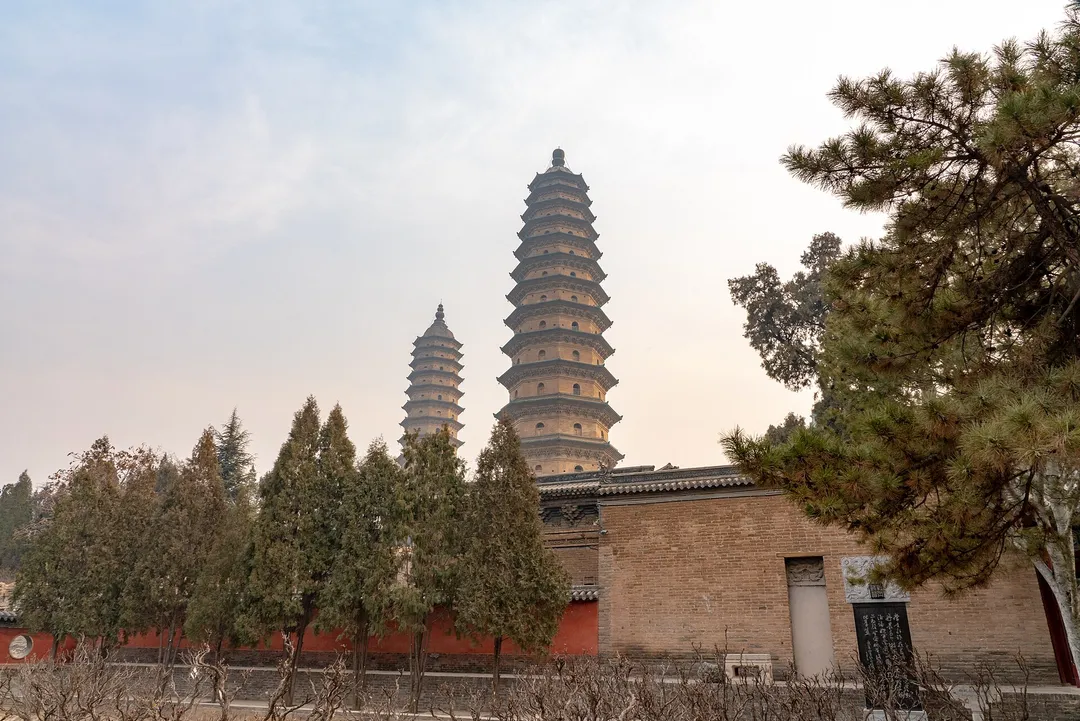
Twin Pagoda Temple (Shuangta Temple)双塔寺
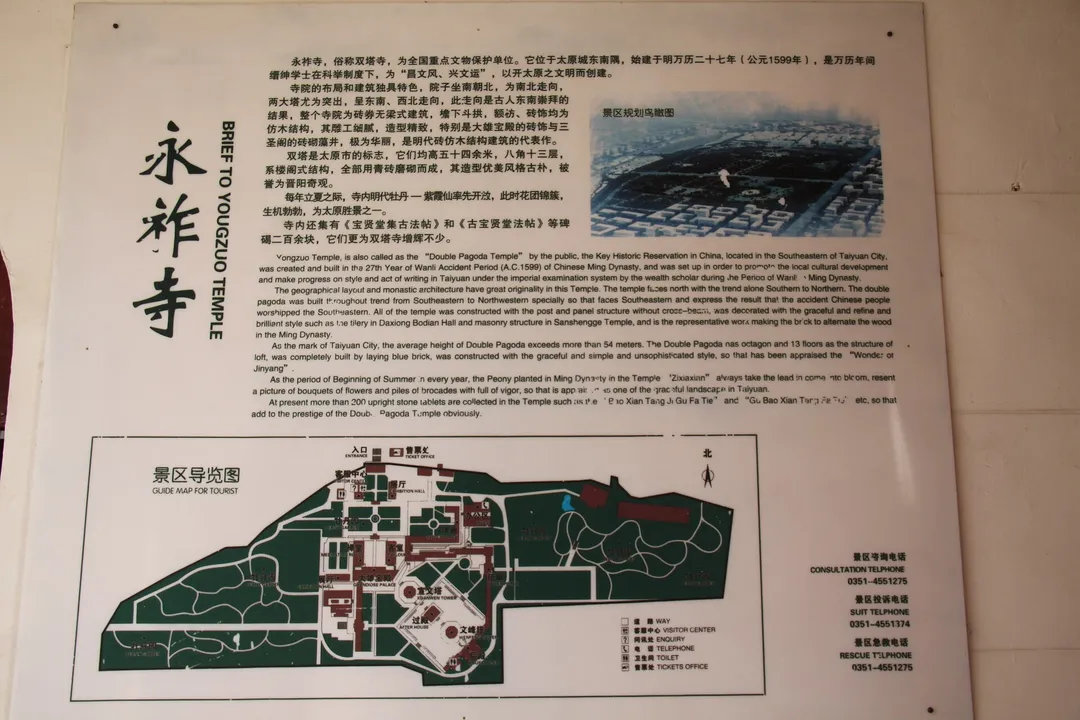
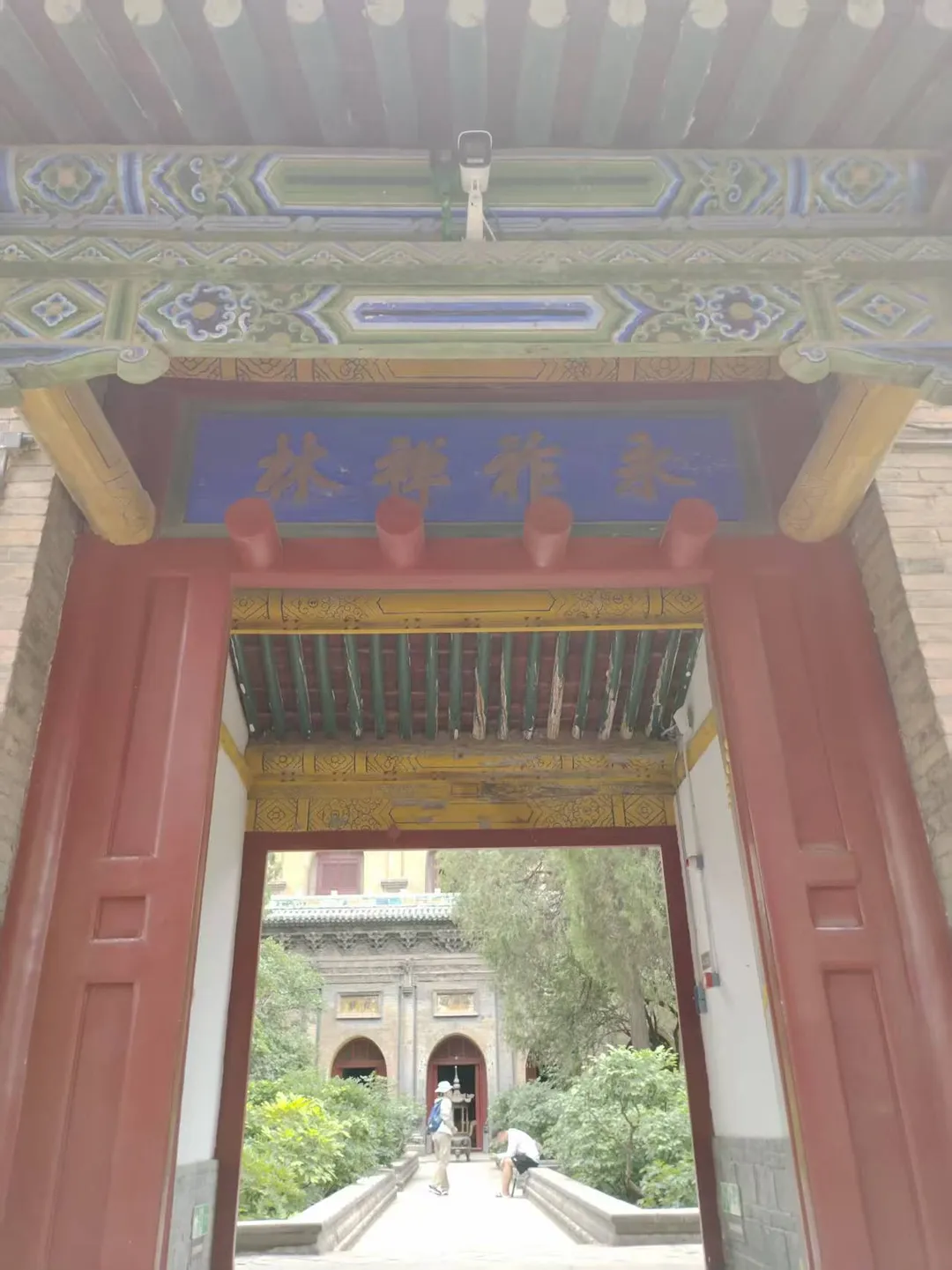
Shuangta Temple (双塔寺), officially Yongling Temple (永宁寺), is a Buddhist temple in eastern Taiyuan famous for its two Ming Dynasty pagodas — the tallest pagoda structures in Shanxi Province. The temple was built in the Ming Dynasty (late 16th century) specifically to create an architectural landmark visible from across the Taiyuan basin. The twin pagodas stand 54 meters tall and can be climbed to a viewing platform at the top. The surrounding neighborhood retains a local, non-touristy feel.
Taiyuan · Visitor Guide2026-10-18
Quick Answer
Is Twin Pagoda Temple (Shuangta Temple) worth visiting?
Ming-dynasty Twin Pagoda Temple (Yongning Temple) in Taiyuan — two 54 m pagodas of 1597, the tallest in Shanxi; free entry, tower climb 10 yuan, open 8:00-17:30.
Quick facts
| Ticket | Free entry (as of 2026). Climbing the pagodas: ¥10. |
|---|---|
| Hours | 8:00–17:30 (summer), 9:00–17:00 (winter). |
| Recommended duration | 1–2 hours. |
| Best time to visit | Spring and autumn for pleasant weather. Early morning for local worshippers and temple atmosphere. The pagoda views are best on clear days. |
| How to get there | Take Metro Line 2 to Shuangta Temple (双塔寺) station, which is adjacent to the temple's south gate. Or take bus routes 2, 3, 23, 55, 60, 61, 64, 70, 73, 80, 410, 820, 873 to the Shuangta Temple (双塔寺) stop. |
| English signage | Partial |
| Wheelchair accessible | No |
| Pagoda height | 54 meters each |
| Built | Ming Dynasty, 1597 AD |
| Style | Brick pagoda with wooden eaves (Ming Dynasty style) |
| Province record | Tallest pagodas in Shanxi Province |
| City view | Panoramic view of Taiyuan from pagoda top |
What to expect
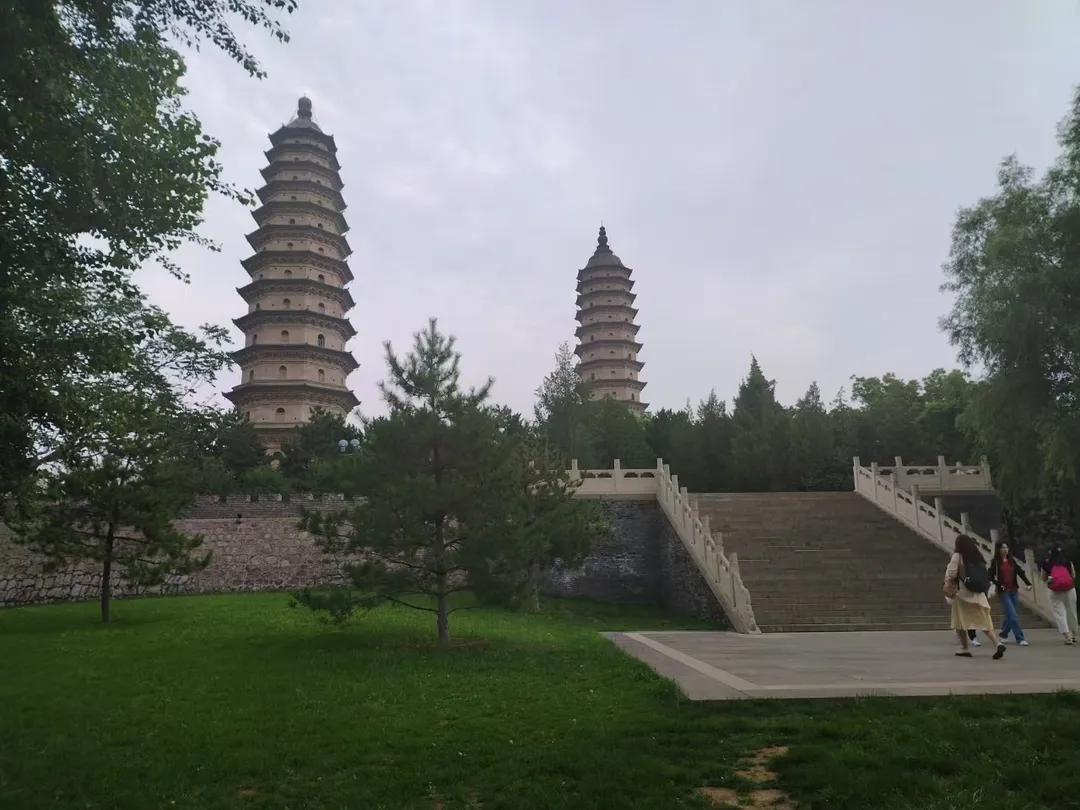
Shuangta Temple (Twin Pagoda Temple) was built in 1597 during the Ming Dynasty Wanli Emperor's reign, specifically as an architectural landmark for Taiyuan. The two pagodas were designed to be visible from across the Taiyuan basin, acting as a symbolic and physical anchor for the eastern side of the city. They are the tallest pagoda structures in Shanxi Province at 54 meters each. The temple's formal name is Yongling Temple (永宁寺), but locals call it Shuangta (Twin Pagoda) because of its distinctive twin towers.
The pagodas are constructed of brick with wooden eaves at each level, in the traditional Chinese pagoda style. Each pagoda has 13 levels (representing the 13 levels of Buddhist cosmology), with small windows at each level. The interior staircase allows visitors to climb to the top, where there is a small viewing platform and excellent views over Taiyuan. The two pagodas are not identical — one is slightly taller, a design feature that creates visual interest when viewed from a distance.
Unlike Taiyuan's more famous Jin Temple (UNESCO site) and Shanxi Museum, Shuangta Temple is a working local Buddhist temple with a small resident monastic community. Worshippers come to light incense, make offerings, and circumambulate the pagodas. The surrounding neighborhood in eastern Taiyuan has a residential, non-touristy character — food stalls near the temple sell local snacks, and the temple courtyard has a community feel absent from the major attractions.
How to get there
Metro Line 2 to Shuangta Temple (双塔寺) station, which has an exit directly at the temple's south gate. Bus routes 2, 3, 23, 55, 60, 61, 64, 70, 73, 80, 410, 820, and 873 also stop at the temple. The temple is in eastern Taiyuan, approximately 4 km from the city center (DiDi ¥15).
Best photo spots
- The twin pagodas from the temple courtyard — the classic shot showing both towers and their slight height difference
- The view from the top of the pagoda — Taiyuan city grid and the surrounding mountains
- The ornate brick details at the pagoda base — intricate Ming Dynasty brickwork
- The temple's main hall with worshippers — local religious atmosphere
Tips
- Climb the pagoda on a clear day for the best views — the 54-meter climb is via an interior staircase with 13 levels
- The pagoda climb is narrow and steep — not recommended for those afraid of heights or with mobility issues
- Combine with a walk through the local residential neighborhood east of the temple — authentic Taiyuan street life
- Visit early in the morning to see the temple's monastic community performing morning rituals
- The temple is free and uncrowded — a good complement to the paid attractions (Jin Temple, Shanxi Museum)
Scams to avoid
- No significant scams at this temple — it is a genuine local worship site with minimal tourist commercialization
Frequently asked questions
Can I climb the twin pagodas?
Yes, for ¥10 per person. The interior staircase climbs 13 levels to a viewing platform at the top. The stairs are narrow and steep — not suitable for those with heart conditions, mobility issues, or fear of heights.
How do the twin pagodas differ?
The eastern pagoda is slightly taller than the western pagoda — a deliberate Ming Dynasty design choice that creates visual dynamism when the pagodas are seen from a distance. Both have 13 levels and similar brick construction with wooden eaves.
Is Shuangta Temple wheelchair accessible?
No. The temple grounds have some accessible paths, but the pagodas can only be accessed by climbing the interior staircase. The temple's historic nature means accessibility was not a design consideration.
How does Shuangta Temple compare to other pagoda temples?
The twin pagodas are notable for being the tallest pagoda structures in Shanxi Province. Most pagoda temples have a single tower — the twin configuration is unusual and architecturally distinctive. The setting, in a local residential neighborhood, gives it a more authentic feel than purpose-built tourist temples.
What else is nearby?
The temple is in eastern Taiyuan, approximately 4 km from the Shanxi Museum (reachable by Metro Line 2) and 30 km from the Jin Temple (requires bus or DiDi).
Read next
Other things to do in Taiyuan
Chenghuang Temple (Fengde Temple)
Ancient temple in central Taiyuan dedicated to the city god. Free entry. Ming Dynasty wooden halls and local cultural significance. 1–2 hours, often combined with nearby Jin Temple.
Taiyuan Food Street
Taiyuan's signature 400-meter evening food lane: Shanxi knife-cut noodles, aged-vinegar tastings, lamb soup and snack stalls — the liveliest block in town after dark.
Jinci Temple
China's oldest ancestral temple, at the foot of Xuanweng Mountain outside Taiyuan: the Song-dynasty Hall of the Holy Mother with 43 painted figures, Zhou cypresses and a cross bridge.
Jin Temple (Jinci)
China's oldest ancestral temple complex, 25 km southwest of Taiyuan — the Song-dynasty Hall of the Holy Mother, the Flying Cross Bridge and Zhou-era cypresses in a single axis.
Shanxi Museum
One of China’s finest provincial museums — 500,000+ artifacts spanning 5,000 years of Shanxi history. Free. English signage is excellent.
Tianlongshan Grottoes
Buddhist cave temples from the Northern Wei to Tang dynasties, 40 km from Taiyuan. 30-minute hike to remote hilltop grottoes. ¥50 entry.
Museums in Taiyuan
Shanxi Museum
The provincial museum of Shanxi in Taiyuan, China — free timed entry, 500,000+ artifacts, and the Western Zhou Bird-Shape Zun as its emblem. Open 9:00-17:00, closed Mondays.
Shanxi Provincial Museum
Shanxi Provincial Museum is the old name (1953-2004) of today's Shanxi Museum — the provincial museum of Taiyuan, China. Free entry, 9:00-17:00, 500,000+ artifacts. Verified 2026-10-12.