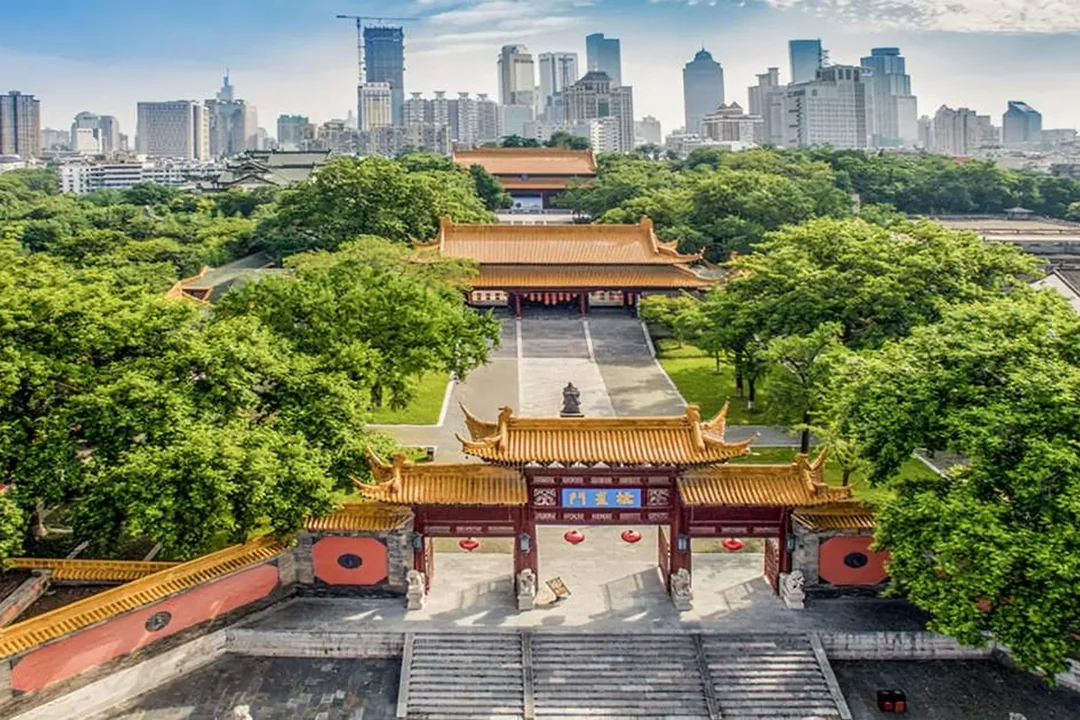
Chaotian Palace朝天宫
El Palacio Chaotian es el mejor conjunto palaciego Ming conservado del sureste de China; fue históricamente sede imperial de ceremonias de culto y del Ministerio de Ritos. Construido en 1384 y rehecho en 1393 y 1859, hoy acoge al Museo Municipal de Nankín con más de 50.000 piezas. Es célebre por sus columnas bermellón, tejados de teja azul, los pavos reales que pasean por el patio y la pagoda Baota de 47 metros, visible desde todo el distrito.
Nanjing · guía de visita2026-10-18
Respuesta rápida
¿Merece la pena visitar Chaotian Palace?
Conjunto palaciego de la dinastía Ming que hoy alberga el Museo Municipal de Nankín. La mejor arquitectura ceremonial conservada del sureste de China, con pavos reales sueltos en el patio. Más de 600 años de historia.
Datos rápidos
| Entrada | Adultos: 25 CNY (incluye museo); gratis el día 28 de cada mes (solo museo); audioguía: 20 CNY (inglés) |
|---|---|
| Horario | 09:00-18:00 (martes a domingo); cerrado los lunes; hasta las 21:00 viernes y sábado (solo museo) |
| Duración recomendada | 1,5-3 horas |
| Mejor época para visitar | Todo el año; en primavera, flores del patio; a primera hora, fotos sin multitudes |
| Cómo llegar | Metro línea 1 hasta la estación Zhangfuyuan (salida 2); autobuses 4, 41, 48 y 83 hasta Chaotian Palace; 10 minutos a pie desde la zona del Templo de Confucio |
| Señalización en inglés | Sí |
| Acceso en silla de ruedas | Parcial |
| Construcción original | 1384 (dinastía Ming; emperador Hongwu) |
| Estructura actual | Reconstruido en 1393 y 1859 (tras la Rebelión Taiping) |
| Edificios | 23 edificios en 70.000 metros cuadrados |
| Colección | Más de 50.000 piezas; 3.000 años de historia de Nankín |
| Altura de la pagoda | 47 metros (Baota, 9 plantas) |
| Protección | Reliquia cultural nacional clave; zona escénica 4A |
Qué esperar
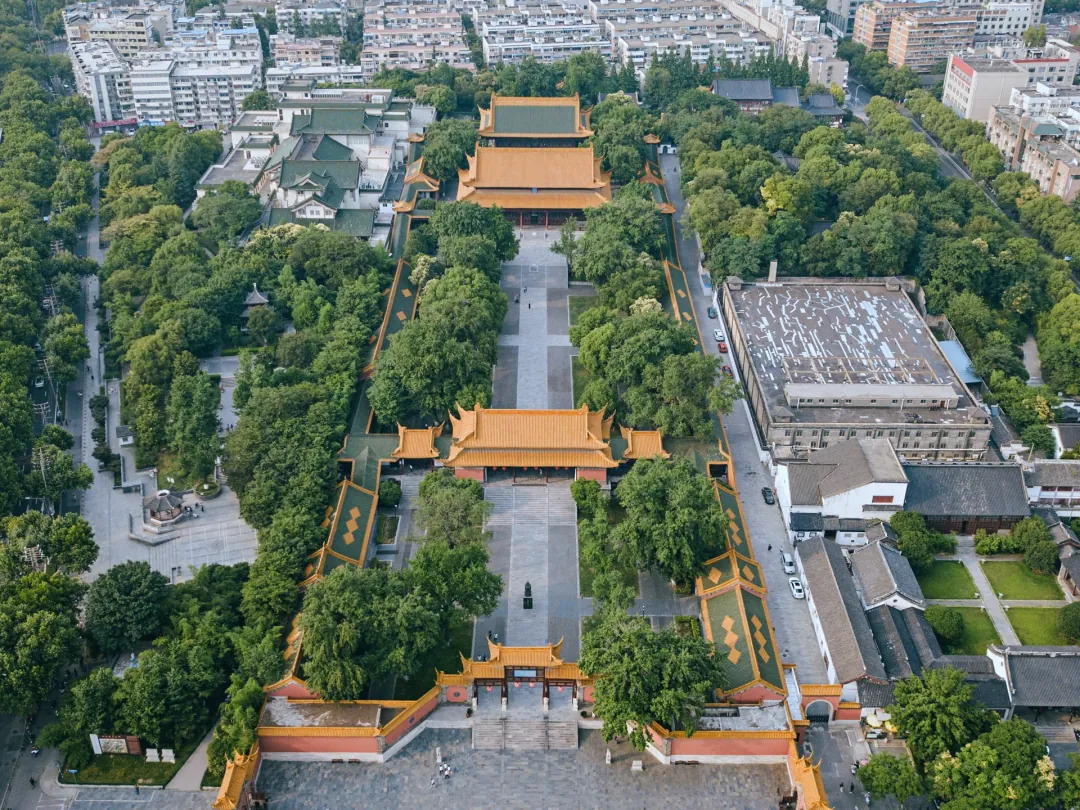
El Palacio Chaotian fue levantado en 1384 por el emperador Hongwu como gran centro ceremonial para el culto al cielo, a la tierra y a los antepasados imperiales — funciones antes reservadas a la Ciudad Prohibida de Pekín y aquí recreadas para la capital del sur. El nombre Chaotian (mirar al cielo) refleja su papel de interfaz terrena del emperador con los poderes celestiales. El conjunto cubre 70.000 m² con 23 edificios en estricta simetría axial: el salón principal (Da Cheng Dian), la pagoda Baota (9 plantas, 47 m), patios ceremoniales y las oficinas del Ministerio de Ritos. Es la cumbre del diseño ceremonial Ming del sureste.
Durante el Reino Celestial Taiping (1853-1864), el palacio sirvió de cuartel general del aparato religioso y administrativo de los rebeldes. El conjunto original quedó en gran parte destruido al sofocarse la rebelión y fue reconstruido en 1859 bajo el Ejército Xiang. La estructura actual data sustancialmente de esa reconstrucción, con reparaciones posteriores en las épocas republicana y popular. El bermellón, los tejados de teja vidriada azul y la pagoda visible en todo el distrito corresponden a la reconstrucción de 1859, que define su aspecto actual.
El Museo Municipal de Nankín se trasladó al palacio en 1952 y desde entonces ha reunido más de 50.000 piezas que abarcan 3.000 años de historia regional. Entre lo más destacado: jades del periodo de Primaveras y Otoños, una renombrada colección de porcelana (con piezas Ming y Qing de los hornos imperiales), esculturas budistas y hallazgos arqueológicos de yacimientos de Nankín. Su pieza más famosa es el Adorno Dorado de Ming Xiaoling — un conjunto funerario imperial de oro y jade. En los patios pasean pavos reales y tortugas nadan en los estanques ornamentales, fauna inesperada en un marco histórico.
Cómo llegar
Desde la estación de Nankín, tome la línea 1 del metro hasta Zhangfuyuan (salida 2) y camine 5 minutos. Desde la zona del Templo de Confucio, 10 minutos a pie hacia el norte por el barrio histórico. La pagoda se ve desde la estación y sirve de referencia.
Mejores puntos fotográficos
- El patio principal — columnas bermellón, tejado azul y pavos reales
- La pagoda Baota — 47 metros y nueve plantas reflejadas en el estanque de lotos
- El salón Da Cheng Dian — arquitectura palaciega clásica china
- La composición del patio con pavos reales — arquitectura tradicional con fauna viva
Consejos
- El día 28 de cada mes el museo es gratis — llegue pronto, se hacen colas largas
- Reserve 1,5 horas para la colección y otros 30 minutos para la arquitectura
- Los pavos reales están más activos por la mañana (09:00-11:00); lleve frutos secos si se permite
- Combínelo con el Templo de Confucio y el Museo Imperial de los Exámenes (ambos a menos de 1 km) para un día cultural completo
- La apertura nocturna (viernes y sábado hasta las 21:00) permite fotos atmosféricas del conjunto iluminado
Estafas que evitar
- En este sitio cultural no hay riesgos notables de estafa
Preguntas frecuentes
¿En qué se diferencia el Palacio Chaotian del Museo de Nankín (Nanjing Museum)?
El Palacio Chaotian alberga el Museo Municipal de Nankín, un museo de historia local con más de 50.000 piezas. El mayor Museo de Nankín (Nanjing Museum, mismo nombre chino, confusamente) es otra institución, mucho mayor, junto a la puerta Zhonghua. No deben confundirse.
¿Se ven los pavos reales todo el año?
Sí, son residentes permanentes del patio. Se ven mejor de día. El máximo despliegue de plumas llega con la primavera (marzo-mayo), en la época de cría.
¿Se puede subir a la pagoda Baota?
No, la pagoda no está abierta al público. Se fotografía mejor desde el patio o la carretera de entrada.
¿El museo es apto para niños?
Sí, tiene una zona de educación arqueológica infantil en la primera planta con actividades prácticas. Los jardines son seguros para los pequeños, y los pavos reales encantan a los más jóvenes.
Leer después
Otras cosas que hacer en Nanjing
China Imperial Examination Museum (Gongyuan)
Antiguas salas de examen imperial donde durante más de 600 años los eruditos competían por puestos en la administración. Hoy, un museo de nivel mundial con cubículos reconstruidos, artefactos y exposiciones inmersivas.
Confucius Temple (Fuzimiao)
Un complejo de templos ribereño convertido en animado distrito peatonal — santuario confuciano, barcas en el río Qinhuai y la mejor calle de tapeo de Nankín. Templo 30 ¥, la zona es gratis. 2-3 horas.
Zhonghua Gate Castle
El mayor conjunto de puertas amuralladas antiguas que sobrevive, parte de la muralla Ming de Nankín. Tres niveles de recinto (wengcheng) con 27 cuevas ocultas para tropas.
Ming Xiaoling Tomb
La tumba del emperador Hongwu (fundador de la dinastía Ming, m. 1398) y su emperatriz Ma. La mayor tumba imperial Ming de China, con una avenida pétrrea de 600 años de elefantes y leones.
Memorial Hall of the Victims of the Nanjing Massacre
Uno de los museos memoriales de guerra más importantes de China, construido sobre el emplazamiento de una fosa común de víctimas de la masacre de Nankín (1937-38). Solemne, sobrecogedor e imprescindible. Entrada gratuita.
Nanjing Museum
El tercer mayor museo de China por tamaño de colección, con más de 1,2 millones de piezas que abarcan 5.000 años. Jade, porcelana y piezas Ming excepcionales, además de una sobresaliente exposición digital de la civilización.
Stone City Park
Parque urbano construido a lo largo de un tramo de 300 metros de la muralla Ming, famoso por la formación rocosa de la 'Ciudad de Piedra', donde la muralla antigua queda expuesta.
Presidential Palace
Sitio histórico del Palacio Presidencial de Nankín: cuartel general del Reino Celestial Taiping, oficina virreinal Qing, despacho de Sun Yat-sen en 1912 e investidura de Chiang Kai-shek en 1948. Verificado en 2026.
Purple Mountain (Zijinshan)
La montaña central de Nankín, hogar del Mausoleo de Sun Yat-sen, la tumba Ming Xiaoling y el Observatorio de la Montaña Púrpura.
Qinhuai River
El famoso río cultural de Nanjing, de 110 km de longitud, que fluye por el histórico barrio del Templo de Confucio.
Sun Yat-sen Mausoleum
El mausoleo de 392 escalones y tejas azules donde reposa el fundador de la China moderna. Gratis con el abono del parque nacional. Su escalinata es una de las piezas más dramáticas de la arquitectura de la era republicana en Asia.
Xuanwu Lake Park
El parque lacustre del centro de Nankín: 4,7 km² de islas, pabellones, campos de loto y senderos. Entrada gratuita, ideal para pasear al atardecer y remar. Un oasis urbano con más de 2.000 años de historia.
Yongle Temple
Templo budista histórico en la ladera sur de la Montaña Púrpura, fundado en 1455 durante la dinastía Ming. Famoso por sus jardines rosados de flor de melocotón en primavera y su arquitectura tradicional.
Zhangfuyuan Historical District
Barrio residencial histórico de Nankín junto al Templo de Confucio, casas patio de los Ming y Qing, puente de arco de piedra Wanmin del siglo XV. Recorrer el barrio es gratis. Metro línea 1, estación Zhangfuyuan (salida 1).
Museos en Nanjing
Museo Provincial de Jiangsu
Nota — Nankín alberga el Museo de Nankín, un complejo de nivel nacional y no un museo provincial estándar. Esta entrada es solo de referencia. Verificado en 2026.
Museo Memorial de las Víctimas de la Masacre de Nanjing
Uno de los museos memoriales de guerra más importantes de China — documenta la Masacre de Nanjing de 1937, cuando las fuerzas japonesas mataron a 300.000 civiles y soldados chinos.
Museo de Nankín
El tercer museo más grande de China tras el Museo del Palacio y el Museo Nacional de China — un museo combinado de historia y arte con destacadas colecciones de las dinastías Han y Tang.