Zhangfuyuan Historical District张府园
Zhangfuyuan is a historic residential quarter in central Nanjing adjacent to the Confucius Temple district, known for its preserved Ming and Qing dynasty courtyard houses, the famous Wanmin Bridge (万民桥) over the Qinhuai River's tributary, and the Zhangfuyuan Imperial Examination Museum (科举博物馆). The area represents authentic old Nanjing neighborhood culture — narrow hutong alleys, traditional laundries, local teahouses — offering a genuine alternative to the heavily touristed Confucius Temple waterfront.
Nanjing · Visitor Guide2026-10-18
Quick Answer
Is Zhangfuyuan Historical District worth visiting?
Nanjing historic residential quarter near Confucius Temple, Ming-Qing courtyard houses, 15th-century Wanmin Bridge stone arch. Free to walk district. Metro Line 1 Zhangfuyuan Station (Exit 1).
Quick facts
| Ticket | Free to walk the district; individual attractions (Zhangfuyuan section of Imperial Examination Museum, etc.) have separate tickets |
|---|---|
| Hours | District is always accessible; local shops 08:00–20:00; restaurant hours 06:00–22:00 |
| Recommended duration | 1–2 hours for district exploration |
| Best time to visit | Year-round; early morning for local breakfast culture; evening for atmosphere |
| How to get there | Metro Line 1 to Zhangfuyuan Station (Exit 1); Bus 1, 31 to Zhangfuyuan; 5-minute walk from Confucius Temple area |
| English signage | limited |
| Wheelchair accessible | No |
| Historic Era | Ming-Qing dynasty residential quarter |
| Key Feature | Preserved courtyard house architecture |
| Wanmin Bridge | 15th-century stone arch bridge |
| Location | Adjacent to Confucius Temple district, north side |
| Local Specialty | Traditional Nanjing breakfast (ninxiang 蟹黄包, duck blood soup) |
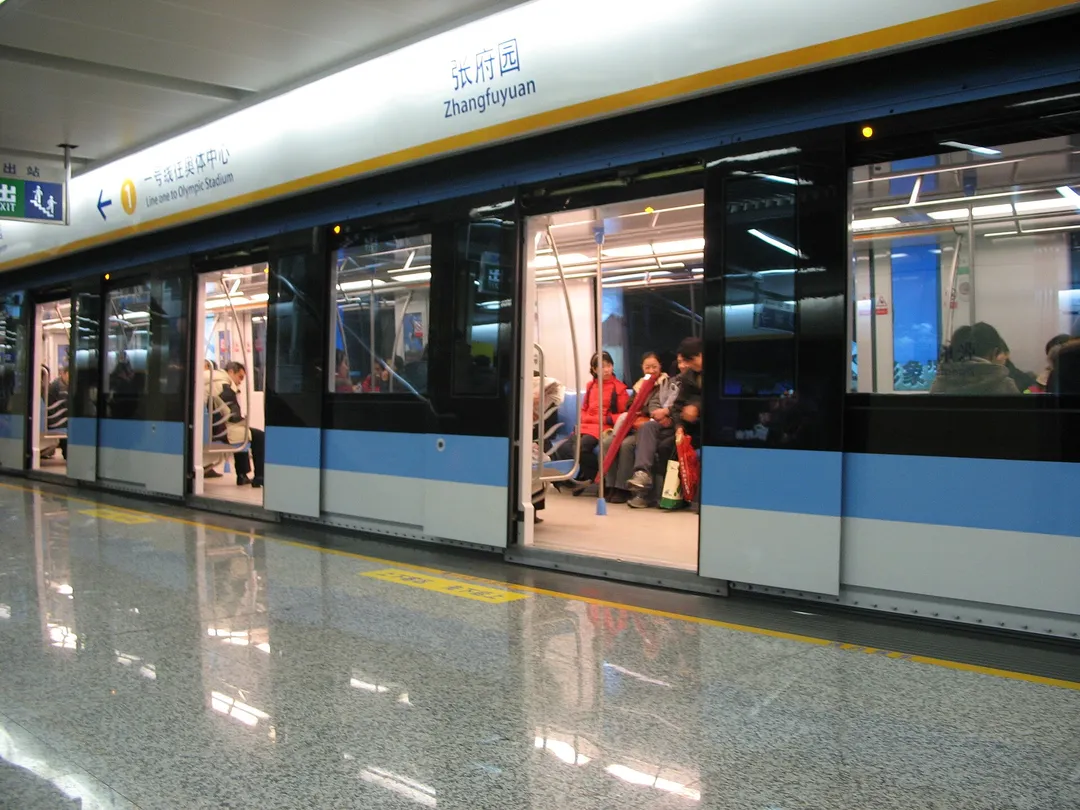
| Metro Station | Line 1 Zhangfuyuan Station (built 2005; named after the historical district) |
What to expect
Zhangfuyuan is one of Nanjing's oldest residential quarters, dating to the Ming dynasty when it developed as the servant and artisan quarter adjacent to the wealthy examination candidate housing near the Confucian Temple's examination halls (贡院). The name 'Zhangfu Yuan' (Zhang Family Garden) likely derives from a Ming dynasty official's private garden that once occupied the area. The quarter developed a distinctive character as a working-class neighborhood serving the academic community — teahouses for examinees, bookshops, traditional medicine shops, and courtyard residences for scholars and servants alike.
The area's defining landmark is Wanmin Bridge (万民桥), a 15th-century stone arch bridge that spans a tributary of the Qinhuai River. The bridge's name means 'Bridge of Ten Thousand People' reflecting its historical role as the main crossing for examination candidates entering the Gongyuan from their nearby lodgings. The bridge's arch creates a classic photographic composition — stone arch reflected in still water — that has been captured in Nanjing paintings for centuries. The surrounding hutong (alley) network preserves the original Ming dynasty street grid, narrow and winding, with courtyard houses opening onto shared public spaces.
Modern Zhangfuyuan sits in an awkward zone between rapid tourism development (the nearby Confucius Temple and Imperial Examination Museum have been heavily renovated) and persistent local residential character. Some courtyard houses have been converted into boutique guesthouses and restaurants, while others remain occupied by multi-generational local families. The best time to visit is early morning (07:00–09:00) when the area functions as a traditional breakfast neighborhood — local residents queue for ninxiang (蟹黄包/ soup dumplings), duck blood soup (鸭血粉丝汤), and congee at small eateries that have operated for decades. The contrast with the nearby touristed Confucius Temple waterfront is striking.
How to get there
Metro Line 1 to Zhangfuyuan Station (Exit 1). From Confucius Temple area, walk north 5 minutes. The Wanmin Bridge is visible from the station exit. The district is best explored on foot through the narrow hutong alleys.
Best photo spots
- Wanmin Bridge arch — classic reflection composition in early morning
- The hutong alley grid — narrow Ming dynasty street pattern
- Traditional courtyard house facade — weathered wood and grey tiles
- Morning breakfast scene — vendors and local residents (with permission)
Tips
- Come early morning (07:00–09:00) for the most authentic local breakfast experience
- The area is not well-signposted in English — exploring on foot without a set destination is the best approach
- Combine with the adjacent Imperial Examination Museum (科举博物馆, adjacent to Zhangfuyuan Station) for a cultural circuit
- Some courtyard houses have been converted into cafes and guesthouses — look for signs to enter and explore
- The area has limited accessibility — narrow alleys, steps, and uneven surfaces; not suitable for wheelchairs
Scams to avoid
- There are no significant scam risks in this authentic residential neighborhood
Frequently asked questions
What is the difference between Zhangfuyuan station and the Zhangfuyuan historical district?
Nanjing's Metro Line 1 Zhangfuyuan Station (opened 2005) is named after the historical Zhangfuyuan district but is located within it. The station exit leads directly to the Wanmin Bridge and the historic quarter. There is no separate 'Zhangjiakou city' connection (Zhangjiakou is a city in Hebei) — the Nanjing station is independent.
Are there specific courtyard houses open to visitors?
Some courtyard houses have been converted into boutique cafes and guesthouses that welcome visitors. Others are private residences — please respect residents' privacy and do not photograph without permission. The area is not a formal tourist attraction but an authentic living neighborhood.
What local food should I try in Zhangfuyuan?
The area is known for traditional Nanjing breakfast items: ninxiang (蟹黄包), duck blood soup (鸭血粉丝汤), small steamed buns (小笼包), and congee. Look for small eateries operating from 06:00–10:00 run by local families.
Is this area safe to walk through at night?
The area is generally safe at night but is a residential neighborhood, not a tourist area. Streets are dimly lit. Walking during daylight hours is recommended for first-time visitors.
Read next
Other things to do in Nanjing
Chaotian Palace
Ancient Ming dynasty palace complex now housing the Nanjing Municipal Museum. Best-preserved ceremonial architecture in southeast China; free-roaming peacocks in the courtyard. 600+ years old.
China Imperial Examination Museum (Gongyuan)
Ancient examination halls where scholars competed for imperial civil service positions over 600+ years. Now a world-class museum with reconstructed cubicles, artifacts, and immersive exhibits.
Confucius Temple (Fuzimiao)
A riverside temple complex turned lively pedestrian district — Confucian shrine, Qinhuai River boats, and Nanjing's best snack street. Temple ¥30, area free. 2–3 hours.
Zhonghua Gate Castle
The world's largest surviving ancient city gate complex, part of Nanjing's Ming dynasty wall. Three-tiered瓮城 (wengcheng/retreat defense) with 27藏兵洞 (hidden troop caves).
Ming Xiaoling Tomb
The tomb of the Hongwu Emperor (founder of the Ming dynasty, d. 1398) and his empress Ma. The largest imperial Ming tomb in China, with a 600-year-old stone avenue of elephants and lions.
Memorial Hall of the Victims of the Nanjing Massacre
One of China's most significant war memorial museums, built on the site of a mass grave of Nanjing massacre victims (1937–38). Solemn, powerful, and essential. Free admission.
Nanjing Museum
China's third-largest museum by collection size, with 1.2 million+ artifacts spanning 5,000 years. Exceptional jade, porcelain, Ming dynasty artifacts, and an outstanding digital civilization exhibit.
Stone City Park
Urban park built along a 300-meter stretch of Ming dynasty city wall, featuring the famous 'Stone City' cliff formation where the ancient wall is exposed.
Presidential Palace
Nanjing Presidential Palace historic site - served as Taiping Heavenly Kingdom headquarters, Qing provincial office, Sun Yat-sen 1912 office, and Chiang Kai-shek 1948 inauguration.
Purple Mountain (Zijinshan)
Nanjing's central mountain, home to Sun Yat-sen Mausoleum, Ming Xiaoling Tomb, and the Purple Mountain Observatory. Free area entry; allow a full day (5–8 hours) for the sites.
Qinhuai River
Nanjing's famous cultural river, 110 km long, flowing through the historic Confucius Temple district.
Sun Yat-sen Mausoleum
The 392-step blue-tile mausoleum where the founder of modern China rests. Free with national park ticket. The staircase is one of the most dramatic pieces of Republican-era architecture in Asia.
Xuanwu Lake Park
Nanjing's central lake park, 4.7 km² of islands, pavilions, lotus fields, and walking paths. Free entry, excellent for sunset walks and boat rides. Urban oasis with 2,000+ years of history.
Yongle Temple
Historic Buddhist temple on Purple Mountain's southern slope, founded 1455 during Ming dynasty. Famous for pink peach-blossom gardens in spring and traditional architecture.
Museums in Nanjing
Jiangsu Provincial Museum
Note: Jiangsu's primary museum is the national-level Nanjing Museum in Nanjing, not a standard provincial museum; treat this entry as reference only (2026).
Memorial Hall of the Victims in Nanjing Massacre by Japanese Invaders
One of China's most significant war memorial museums — documenting the 1937 Nanjing Massacre when Japanese forces killed 300,000 Chinese civilians and soldiers.
Nanjing Museum
China's third-largest museum after the Palace Museum and National Museum of China — a combined history and art museum with strong Han/Tang collections. Free with passport; 4–6 hours.