Nanjing · history museum
Memorial Hall of the Victims in Nanjing Massacre by Japanese Invaders (南京大屠杀纪念馆, Nánjīng Dàtúshā Jìniàn Guǎn)
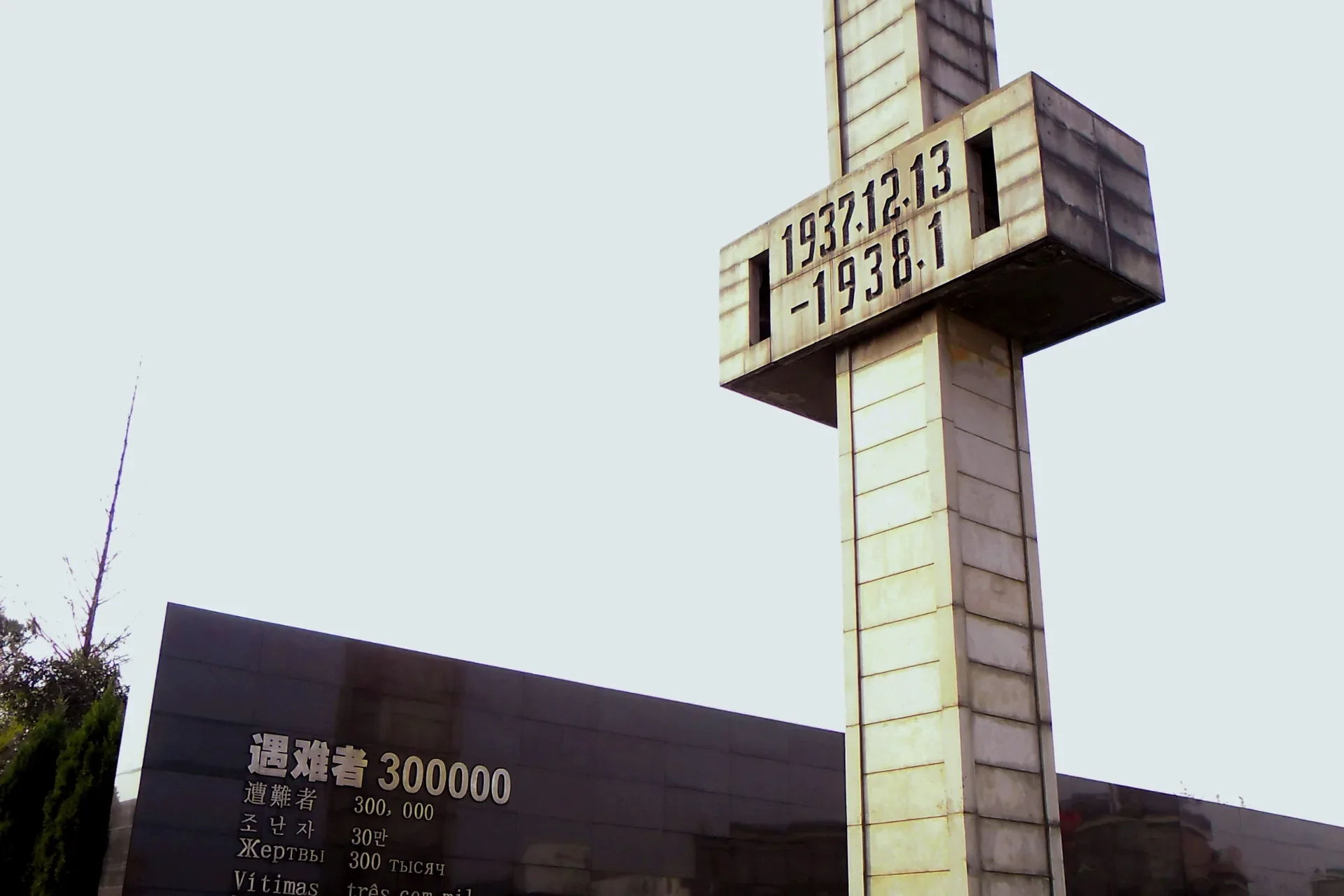
"\"The Memorial Hall of the Victims in Nanjing Massacre by Japanese Invaders (南京大屠杀纪念馆) opened in 1985 in Nanjing's Jianye District, near the city wall where mass grave sites were discovered. The museum documents one of the most horrific events of World War II — the six-week period from December 13, 1937 when Japanese forces captured Nanjing and systematically killed 300,000 Chinese civilians and disarmed soldiers, raped tens of thousands of women, and destroyed much of the city. The museum is simultaneously a memorial, a history lesson, and a statement about the importance of peace.\".".
Last updated:
Quick Answer
Is Memorial Hall of the Victims in Nanjing Massacre by Japanese Invaders worth visiting?
"One of China's most significant war memorial museums — documenting the 1937 Nanjing Massacre when Japanese forces killed 300,000 Chinese civilians and soldiers.".
Quick facts
| Category | history |
|---|---|
| Ticket | Free. No advance booking. Very long queues on weekends and around the December 13 anniversary (Nanjing Massacre Memorial Day). |
| Hours | 8:30-17:30 (last entry 16:30). Extended hours to 18:30 on some days. Closed Mondays (or the following day if Monday is a public holiday). |
| Recommended duration | 2-3 hours. |
| Best time to visit | Weekday mornings to avoid the longest queues. December 13 (Nanjing Massacre Memorial Day) is the most solemn time but also the most crowded. Spring (March-May) and autumn (September-November) are best for Nanjing weather. |
| How to get there | Metro Line 2 to Yanjiang Avenue East Station (云锦路站), Exit 2. The memorial hall is directly adjacent. Bus routes 7, 37, 61, 63, 161, 170, 186, 204 to Memorial Hall stop. From Nanjing Railway Station by DiDi: ¥25-35. From Nanjing South Station: ¥35-45. |
| English signage | partial |
Why visit
This is one of the most important and sobering museum experiences in the world. The scale of documented atrocity — backed by physical evidence, survivor testimony, photographs, and archaeological finds from mass graves — is overwhelming. It is essential for understanding modern Chinese-Japanese relations and the human cost of war.
Collection highlights
- Mass grave archaeological site — the original site of one of the mass graves discovered in 1985 during construction, now preserved within the memorial hall complex
- Survivor testimony archive — video recordings and written accounts from Nanjing Massacre survivors, documenting their firsthand experiences
- Japanese war crime photographic archive — photographs taken by Japanese soldiers themselves documenting atrocities, plus Western missionary and journalist documentation
- "300,000" memorial wall — an outdoor sculpture installation with the names of identified victims carved into black granite walls
- Historical film footage — archival footage from Western and Japanese sources documenting the fall of Nanjing
- "Peace" sculpture plaza — the large outdoor plaza with the "Peace" sculpture and the "War and Peace" thematic sculpture garden
Tips
- This is a deeply sobering experience — go in the right frame of mind
- The museum is emotionally intense and not suitable for very young children — teenagers with historical context will benefit most
- Combine with the Zhonghua Gate (中华门) — Nanjing's massive Ming Dynasty city wall gate which was the site of intense fighting during the Nanjing battle
- Allow 2-3 hours — the museum is large and walking through the entire memorial takes time
- Photography is not allowed in the memorial hall interior
- December 13 each year is the official Nanjing Massacre Memorial Day — a nationally televised memorial ceremony is held here
Frequently asked questions
What was the Nanjing Massacre?
The Nanjing Massacre (南京大屠杀) occurred from December 13, 1937 to late January 1938 after the Japanese Imperial Army captured Nanjing, then the capital of the Republic of China. Japanese forces systematically killed an estimated 300,000 Chinese civilians and disarmed soldiers, raped tens of thousands of women (including the elderly and children), and destroyed much of the city. It was documented by Western missionaries, journalists, and Japanese soldiers themselves. The event remains a deeply sensitive issue in China-Japan relations.
Is this museum biased or propaganda?
The museum presents documented historical evidence — survivor testimony, photographs, archaeological evidence from mass graves, and foreign documentation. The event is extensively documented in Western, Chinese, and Japanese historical sources. While the museum's presentation is clearly memorial in purpose, the core facts of the massacre are well-established historical scholarship accepted internationally.
Can children visit?
The museum is emotionally intense and may not be suitable for very young children. Teenagers with historical context and preparation can benefit from the visit. Parents should use their judgment based on the child's maturity and historical knowledge.
Does the memorial hall have English signage?
Partial — the exterior signage and some galleries have English labels. The survivor testimony videos are in Chinese with subtitles. English audio guides are available (¥30 deposit). Guided tours in English can be arranged in advance.
Is it related to the Nanjing Museum?
No — the Nanjing Massacre Memorial Hall (南京大屠杀纪念馆) and the Nanjing Museum (南京博物院) are completely different institutions at different locations. The memorial hall is in the Jianye District (near the city wall); the museum is near the Minggugong metro station (Ming Palace area). They can be visited on the same day.
Read next
Other things to do in Nanjing
Chaotian Palace
Ancient Ming dynasty palace complex now housing the Nanjing Municipal Museum. Best-preserved ceremonial architecture in southeast China; free-roaming peacocks in the courtyard. 600+ years old.
China Imperial Examination Museum (Gongyuan)
Ancient examination halls where scholars competed for imperial civil service positions over 600+ years. Now a world-class museum with reconstructed cubicles, artifacts, and immersive exhibits.
Confucius Temple (Fuzimiao)
"A riverside temple complex turned lively pedestrian district — Confucian shrine, Qinhuai River boats, and Nanjing's best snack street. Temple ¥30, area free. 2–3 hours.".
Zhonghua Gate Castle
The world's largest surviving ancient city gate complex, part of Nanjing's Ming dynasty wall. Three-tiered瓮城 (wengcheng/retreat defense) with 27藏兵洞 (hidden troop caves).…
Ming Xiaoling Mausoleum
"The tomb of the first Ming emperor — a 2.6 km Sacred Way lined with stone elephants and camels leading to a burial mound under Purple Mountain. UNESCO. ¥70. 2–3 hours.".
Memorial Hall of the Victims of the Nanjing Massacre
One of China's most significant war memorial museums, built on the site of a mass grave of Nanjing massacre victims (1937–38). Solemn, powerful, and essential. Free admission.
Nanjing Museum
China's third-largest museum by collection size, with 1.2 million+ artifacts spanning 5,000 years. Exceptional jade, porcelain, Ming dynasty artifacts, and an outstanding digital civilization ex…
Stone City Park
Urban park built along a 300-meter stretch of Ming dynasty city wall, featuring the famous 'Stone City' cliff formation where the ancient wall is exposed.…
Presidential Palace
Nanjing Presidential Palace historic site - served as Taiping Heavenly Kingdom headquarters, Qing provincial office, Sun Yat-sen 1912 office, and Chiang Kai-shek 1948 inauguration. 2026 verified.
Qinhuai River
Nanjing's famous cultural river, 110 km long, flowing through the historic Confucius Temple district.…
Sun Yat-sen Mausoleum
The 392-step blue-tile mausoleum where the founder of modern China rests. Free with national park ticket. The staircase is one of the most dramatic pieces of Republican-era architecture in Asia.…
Xuanwu Lake Park
Nanjing's central lake park, 4.7 km² of islands, pavilions, lotus fields, and walking paths. Free entry, excellent for sunset walks and boat rides. Urban oasis with 2,000+ years of history.
Yongle Temple
Historic Buddhist temple on Purple Mountain's southern slope, founded 1455 during Ming dynasty. Famous for pink peach-blossom gardens in spring and traditional architecture.…
Zhangjiakou Historical District
Nanjing historic residential quarter near Confucius Temple, Ming-Qing courtyard houses, 15th-century Wanmin Bridge stone arch. Free to walk district. Metro Line 1 Zhangjiakou Station (Exit 1).…
Museums in Nanjing
Jiangsu Provincial Museum
"'Note: Nanjing has the Nanjing Museum (南京博物院) which is a national-level complex museum, not a standard provincial museum. This entry is for reference only.'.".. 2026 verified.
Nanjing Museum
"China's third-largest museum after the Palace Museum and National Museum of China — a combined history and art museum with strong Han/Tang Dynasty collections,.".. 2026 verified.