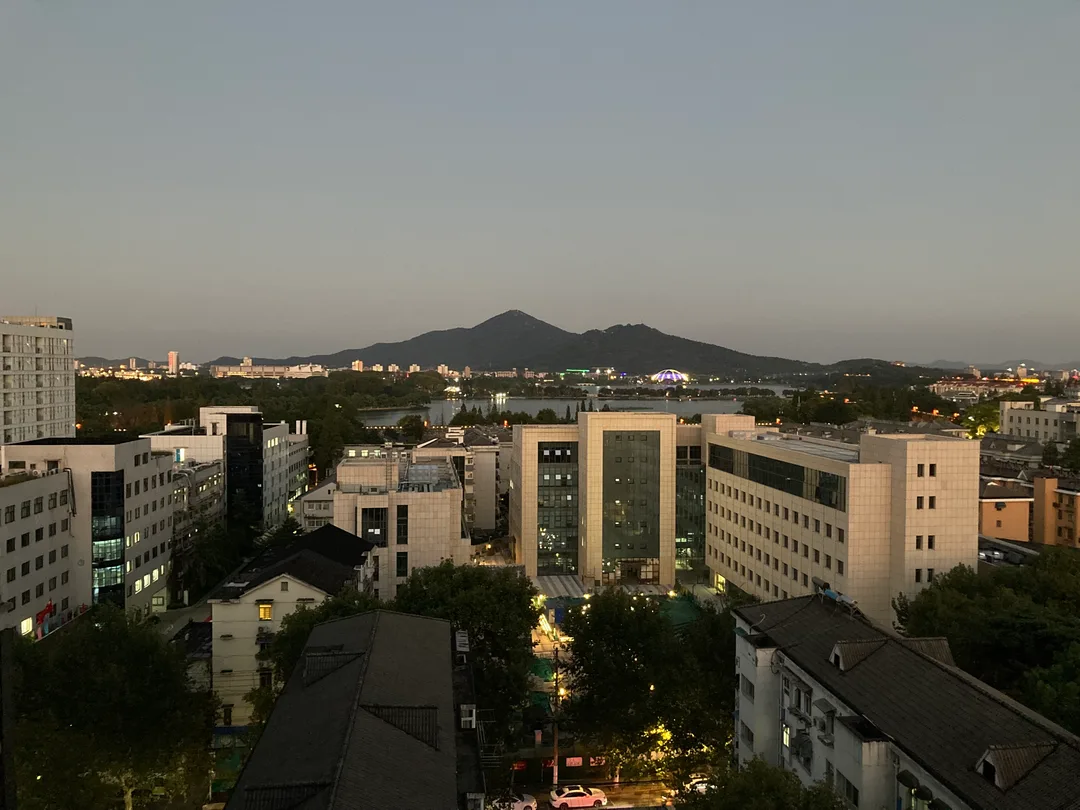
Xuanwu Lake Park玄武湖公园
Xuanwu Lake (Xuanwu Hu) is Nanjing's largest urban lake, spanning 4.7 square kilometers with five interconnected islands, classical pavilions, lotus fields, and tree-lined walking paths. The lake sits directly north of the city center, enclosed by the ancient Ming dynasty city wall on three sides. It has been a public park since 1928 and remains Nanjing's most popular free recreational destination, attracting 20 million visitors annually.
Nanjing · Visitor Guide2026-10-18
Quick Answer
Is Xuanwu Lake Park worth visiting?
Nanjing's central lake park, 4.7 km² of islands, pavilions, lotus fields, and walking paths. Free entry, excellent for sunset walks and boat rides. Urban oasis with 2,000+ years of history.
Quick facts
| Ticket | Free entry to park; certain attractions require separate tickets: Lotus Pavilion CNY 30, Nanjing Zoo CNY 40, Magnolia Garden CNY 10; Boat rental CNY 80–160/hour depending on boat type |
|---|---|
| Hours | 06:00–22:00 (May–September); 06:30–21:00 (October–April); Boat rental 08:30–17:30 |
| Recommended duration | 1.5–4 hours depending on activities |
| Best time to visit | Spring (lotus bloom June–August) and autumn (September–November); early morning for tai chi and calligraphy practice; sunset for lake views |
| How to get there | Metro Line 1 to Xuanwu Lake Station (Exit 1 or 3); Metro Line 4 to Jiqingdai Street; Bus 1, 25, 30 to Xuanwu Lake Park; Nanjing railway station is 1.5 km west |
| English signage | Partial |
| Wheelchair accessible | Yes |
| Lake Area | 4.7 square kilometers |
| Islands | 5 (Lingyan, Yingzhou, Liangzhou, etc.) |
| Depth | 1.5–2 meters (average) |
| Historic Names | Fengwu Lake (260–589 AD); Cao Wei Emperor's private lake |
| Annual Visitors | Approximately 20 million |
| Key Features | Lotus fields, classical pavilions, 9.5 km circumference path |
What to expect
Xuanwu Lake occupies a natural depression fed by the Qinhuai River and expanded over centuries through human intervention. During the Six Dynasties period (260–589 AD), it was known as Fengwu Lake and served as an imperial garden for the Eastern Wu kingdom, with the nearby Ming Xiaoling tomb site already established on Purple Mountain. The lake took its current name during the Ming dynasty when it fell within the newly constructed city walls, becoming the northern boundary of the inner city. A stone embankment built in the early Ming dynasty — visible today as the main causeway — divided the original lake into separate basins.
The lake reached its architectural peak during the Southern Tang dynasty (10th century) when numerous pavilions, temples, and garden structures were built on its islands. During the Qing dynasty, the lake was the site of an imperial examination facility and served as the personal fishing preserve of the emperor during visits. After the fall of the Qing and the establishment of the Republic, Nanjing's new government opened the lake to the public in 1928, initiating the park's modern era. During the Japanese occupation, the lake was closed to ordinary Chinese residents and reserved for Japanese officials — a fact commemorated in post-1949 patriotic education.
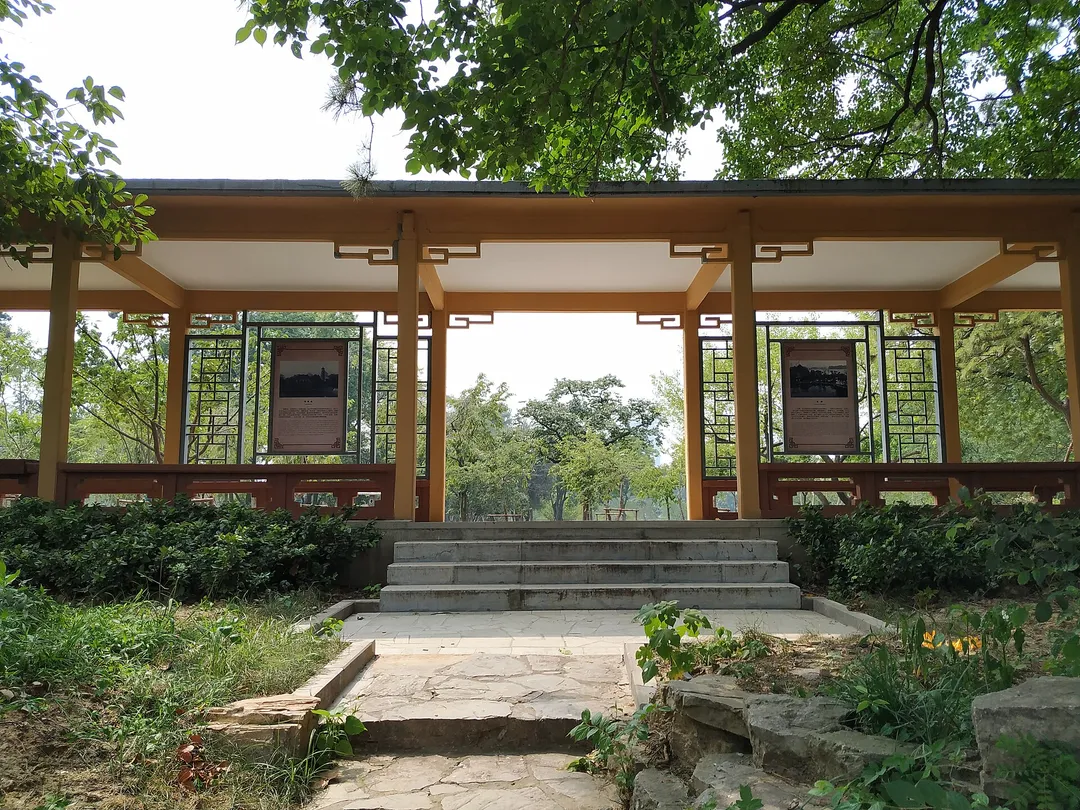
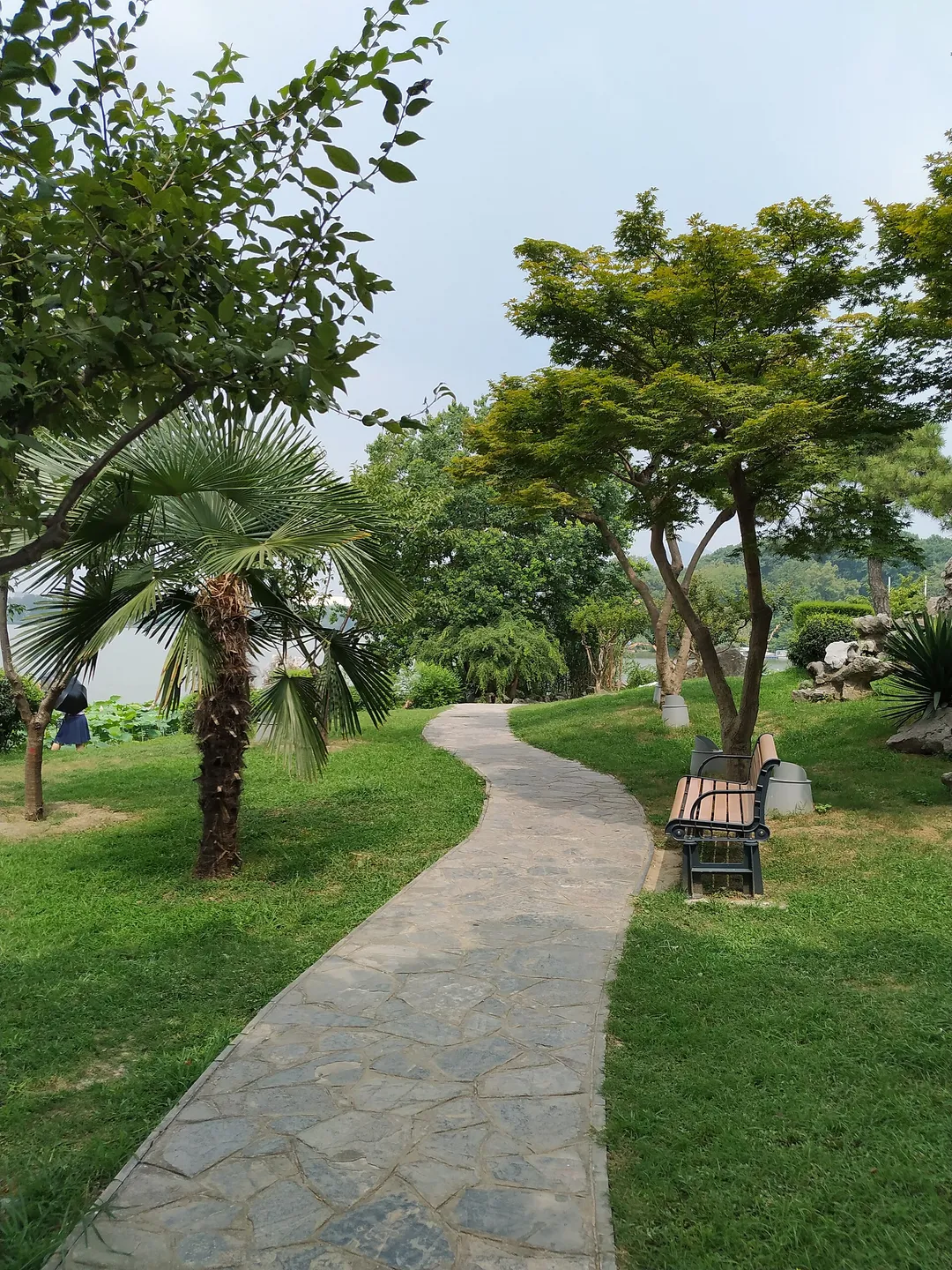
Today's Xuanwu Lake Park offers multiple experience layers: a 9.5-kilometer lakeside walking and cycling path, five islands connected by ornate bridges, traditional pavilions (including the Lotus Pavilion, Chao Tian Pavilion, and Lingyan Pavilion), a rose garden, magnolia garden, and an amusement zone with a small zoo. The lotus fields in summer turn the lake pink with bloom from June through August. Electric and rowboat rentals operate from several docks around the lake. The park is busiest on weekends and holidays, particularly in the morning (tai chi and calligraphy practice) and early evening (fitness walking).
How to get there
Xuanwu Lake is accessible from multiple metro stations: Line 1 Xuanwu Lake Station (north gate), Line 1/4 to Jiqingdai Street (east gate). From Nanjing railway station, walk north 1.5 km or take Metro Line 1 one stop. Taxis from downtown cost approximately CNY 15.
Best photo spots
- The causeway (Poyang Street section) — classic bridge and pavilion reflection
- Lotus fields in summer — pink blooms with Purple Mountain backdrop
- Sunset from the east bank near the 2014 Youth Olympic Games sculptures
- Crown of the Phoenix pagoda reflected in still water
Tips
- Rent a bicycle (CNY 20/hour) at the north gate for the most efficient way to tour the circumference
- The best lotus views are from the southern causeway near the Lotus Pavilion; arrive at 7 AM in August for sunrise photography
- Combine with the adjacent Purple Mountain (5-minute drive) for a full day nature-culture itinerary
- The park is extremely crowded on weekends — visit on weekday mornings for a serene experience
- Insect repellent is recommended in summer; mosquitoes are aggressive near the lotus fields
Scams to avoid
- unofficial boat operators may overcharge tourists — confirm prices before boarding; official dock rentals are metered
- Street vendors near the north gate selling 'ancient coins' — these are reproductions; ignore
Frequently asked questions
Can I swim in Xuanwu Lake?
No, swimming is prohibited for safety and conservation reasons. Lifeguards patrol the shores during summer. The lake's shallow depth and heavy boat traffic make swimming dangerous.
Is there a boat that goes around the entire lake?
Tourist electric boats (CNY 80–160/hour) depart from multiple docks and allow self-navigation within designated zones. There is no scheduled circuit boat, but the lake is small enough to row across in 15–20 minutes.
What is the best season to see lotus flowers?
Late June through mid-August, with peak bloom typically in mid-July. The lotus fields near the Lotus Pavilion and southern causeway are the most extensive.
Are there food options inside the park?
Yes, several teahouses and snack stands are located near major pavilions and gates. The park is adjacent to Hunan Road food street (south) and DMall shopping center (east) for more substantial meals.
Read next
Other things to do in Nanjing
Chaotian Palace
Ancient Ming dynasty palace complex now housing the Nanjing Municipal Museum. Best-preserved ceremonial architecture in southeast China; free-roaming peacocks in the courtyard. 600+ years old.
China Imperial Examination Museum (Gongyuan)
Ancient examination halls where scholars competed for imperial civil service positions over 600+ years. Now a world-class museum with reconstructed cubicles, artifacts, and immersive exhibits.
Confucius Temple (Fuzimiao)
A riverside temple complex turned lively pedestrian district — Confucian shrine, Qinhuai River boats, and Nanjing's best snack street. Temple ¥30, area free. 2–3 hours.
Zhonghua Gate Castle
The world's largest surviving ancient city gate complex, part of Nanjing's Ming dynasty wall. Three-tiered瓮城 (wengcheng/retreat defense) with 27藏兵洞 (hidden troop caves).
Ming Xiaoling Tomb
The tomb of the Hongwu Emperor (founder of the Ming dynasty, d. 1398) and his empress Ma. The largest imperial Ming tomb in China, with a 600-year-old stone avenue of elephants and lions.
Memorial Hall of the Victims of the Nanjing Massacre
One of China's most significant war memorial museums, built on the site of a mass grave of Nanjing massacre victims (1937–38). Solemn, powerful, and essential. Free admission.
Nanjing Museum
China's third-largest museum by collection size, with 1.2 million+ artifacts spanning 5,000 years. Exceptional jade, porcelain, Ming dynasty artifacts, and an outstanding digital civilization exhibit.
Stone City Park
Urban park built along a 300-meter stretch of Ming dynasty city wall, featuring the famous 'Stone City' cliff formation where the ancient wall is exposed.
Presidential Palace
Nanjing Presidential Palace historic site - served as Taiping Heavenly Kingdom headquarters, Qing provincial office, Sun Yat-sen 1912 office, and Chiang Kai-shek 1948 inauguration.
Purple Mountain (Zijinshan)
Nanjing's central mountain, home to Sun Yat-sen Mausoleum, Ming Xiaoling Tomb, and the Purple Mountain Observatory. Free area entry; allow a full day (5–8 hours) for the sites.
Qinhuai River
Nanjing's famous cultural river, 110 km long, flowing through the historic Confucius Temple district.
Sun Yat-sen Mausoleum
The 392-step blue-tile mausoleum where the founder of modern China rests. Free with national park ticket. The staircase is one of the most dramatic pieces of Republican-era architecture in Asia.
Yongle Temple
Historic Buddhist temple on Purple Mountain's southern slope, founded 1455 during Ming dynasty. Famous for pink peach-blossom gardens in spring and traditional architecture.
Zhangfuyuan Historical District
Nanjing historic residential quarter near Confucius Temple, Ming-Qing courtyard houses, 15th-century Wanmin Bridge stone arch. Free to walk district. Metro Line 1 Zhangfuyuan Station (Exit 1).
Museums in Nanjing
Jiangsu Provincial Museum
Note: Jiangsu's primary museum is the national-level Nanjing Museum in Nanjing, not a standard provincial museum; treat this entry as reference only (2026).
Memorial Hall of the Victims in Nanjing Massacre by Japanese Invaders
One of China's most significant war memorial museums — documenting the 1937 Nanjing Massacre when Japanese forces killed 300,000 Chinese civilians and soldiers.
Nanjing Museum
China's third-largest museum after the Palace Museum and National Museum of China — a combined history and art museum with strong Han/Tang collections. Free with passport; 4–6 hours.