Longji Rice Terraces (Dragon's Backbone)龙脊梯田
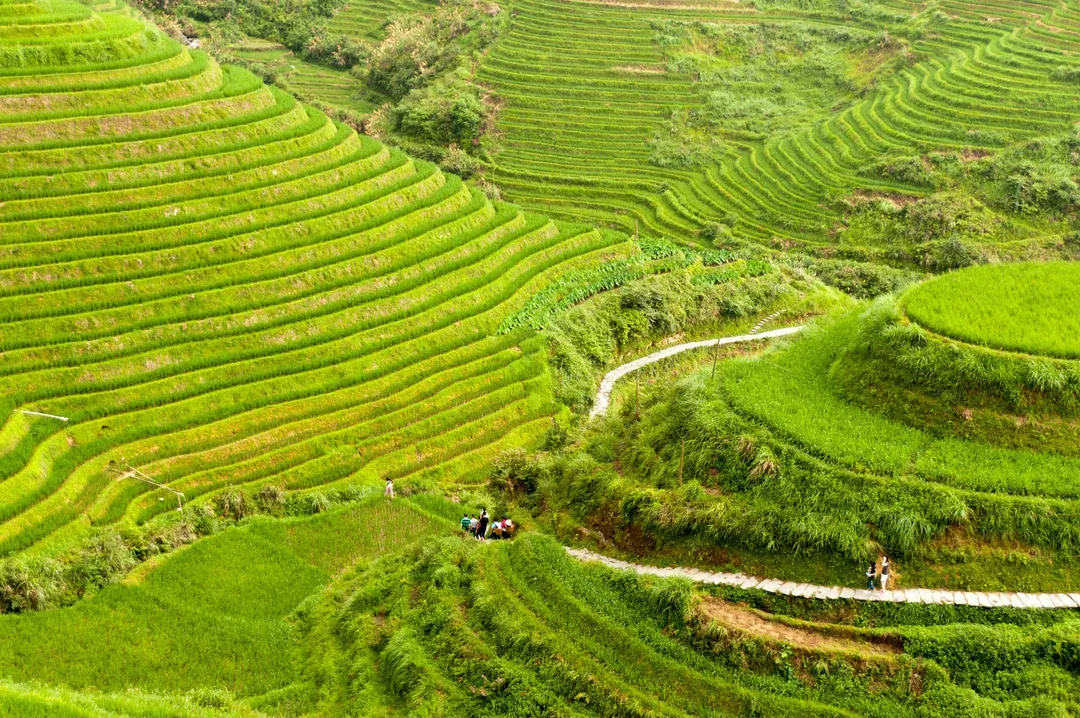
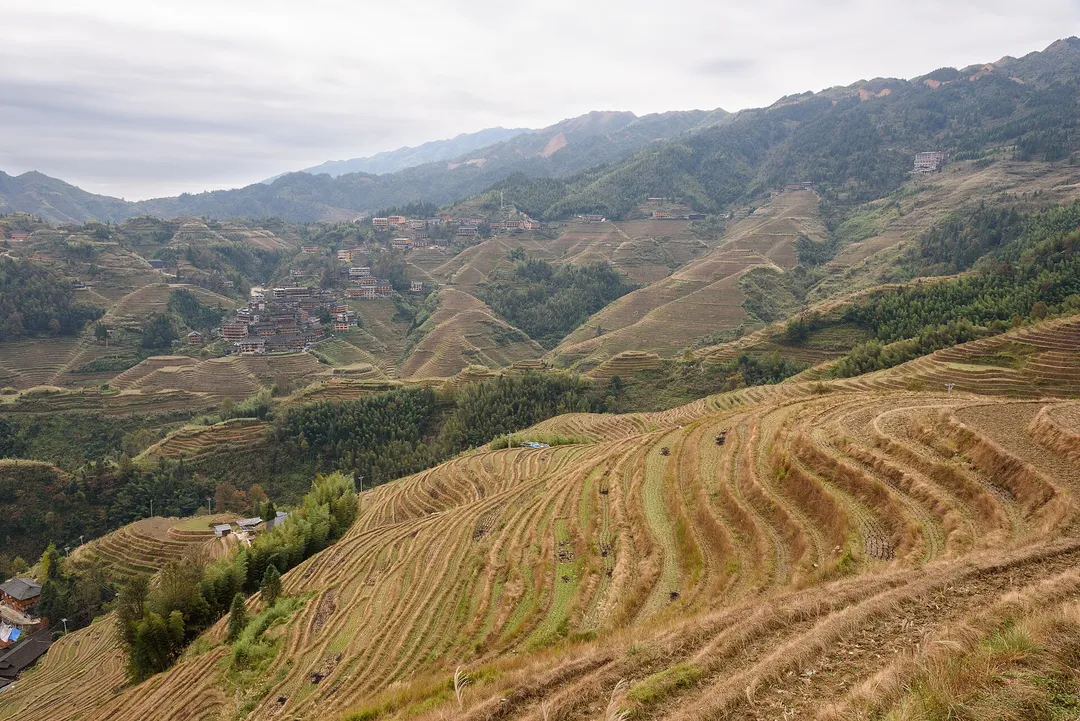
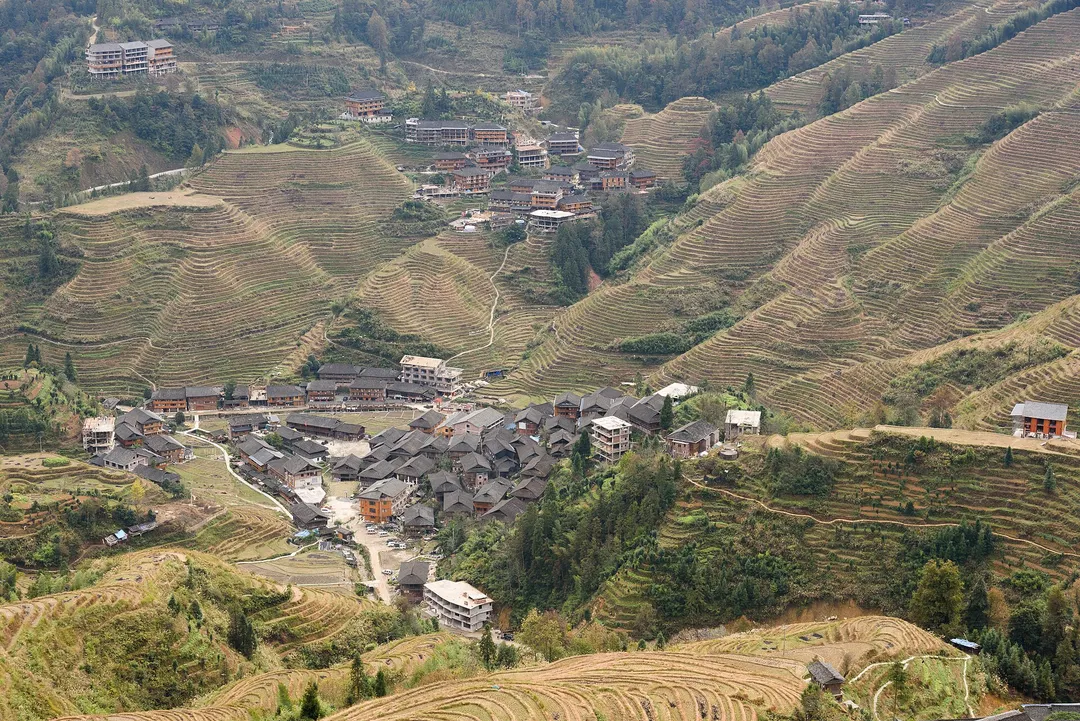
The Longji Rice Terraces (龙脊梯田), also called the Dragon's Backbone Terraces, are a 66-square-kilometer network of rice paddies carved into mountain slopes 80 km north of Guilin. Built over 650 years by Zhuang and Yao ethnic minorities, the terraces follow elevation contours from 300 meters at the valley floor to 1,100 meters at the summit, creating a landscape that looks like a giant green (or gold, or silver, depending on the season) fingerprint pressed into the mountains. The name "Dragon's Backbone" describes the terraced ridgelines when they are flooded before planting - the water-filled paddies gleam like scales. Two main villages serve as visitor hubs: Ping'an (平安, Zhuang minority, closer, more developed) and Dazhai (大寨, Yao minority, farther, more dramatic).
Guilin · Visitor Guide2026-10-18
Quick Answer
Is Longji Rice Terraces (Dragon's Backbone) worth visiting?
650-year-old rice terraces cascading down mountainsides at 300-1,100 m elevation - Zhuang and Yao minority villages, sunrise over flooded paddies. ¥80. 2 hours from Guilin. Half to full day.
Quick facts
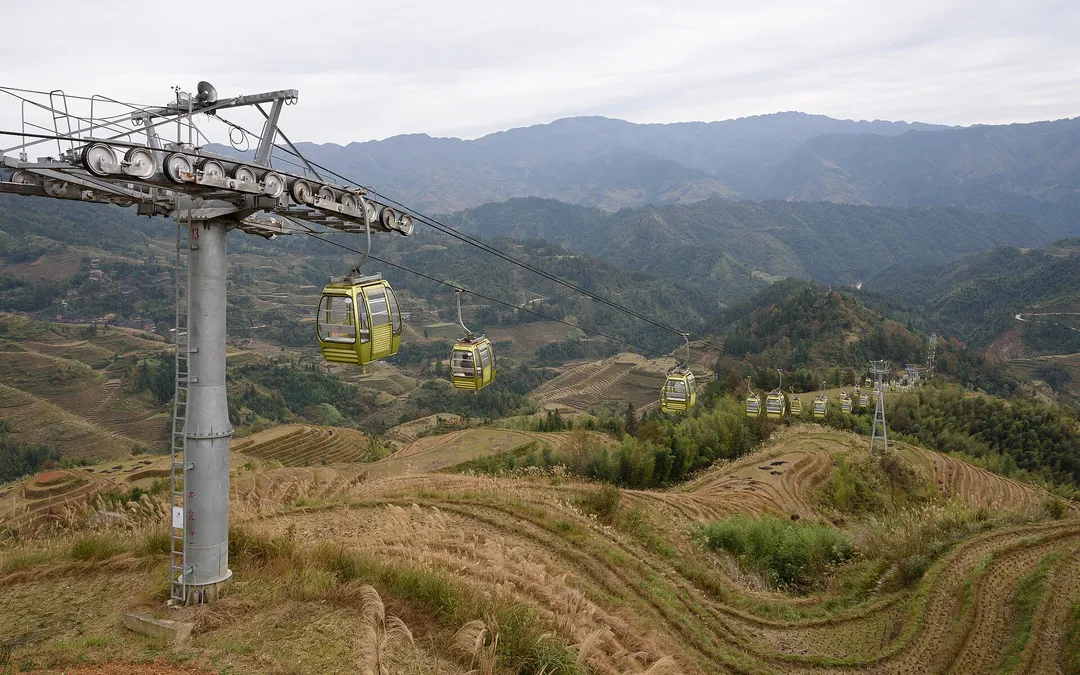
| Ticket | ¥80 (as of June 2026). Shuttle bus from the park gate to Ping'an village: ¥25. Cable car at Dazhai (Jinkeng): ¥70 one-way, ¥120 round-trip. |
|---|---|
| Hours | Open all day. Ticket office: 7:00-18:00. Best visited early morning or late afternoon. |
| Recommended duration | Half-day (Ping'an, 3-4 hours including transit). Full day (Dazhai/Jinkeng, 5-7 hours). Overnight highly recommended. |
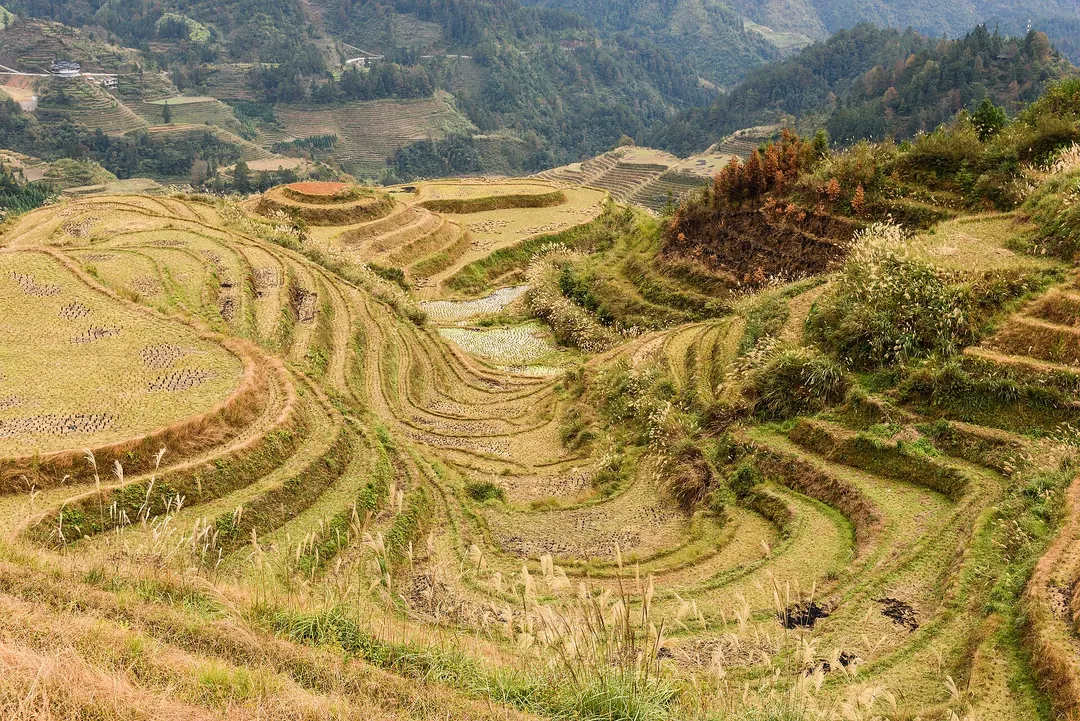
| Best time to visit | Late May-early June: paddies flooded, rice shoots bright green, mirror reflections at sunrise. Late September-early October: harvest season, terraces golden. Winter (Dec-Feb): fewer visitors, possible snow on terraces (rare but magical). Avoid March-April (dry terraces, no water) and Chinese holidays. |
| How to get there | From Guilin: bus from Guilin Bus Station (桂林汽车站) to Longsheng county (龙胜县, 2 hours, ¥40), then local bus to the park gate (30 min, ¥15). Or: direct tourist bus from Guilin Railway Station area to Ping'an or Dazhai (2.5-3 hours, ¥60-80). DiDi from Guilin: ¥400-500 round-trip with driver waiting. Hotels can arrange private transport. |
| English signage | Partial |
| Wheelchair accessible | No |
| Built | Yuan Dynasty (~1300s), 650+ years ago |
| Area | 66 km² (25.5 sq miles) |
| Elevation | 300-1,100 m (1,000-3,600 ft) |
| Ethnic groups | Zhuang (Ping'an) and Yao (Dazhai) |
| Best season | Late May-June (water) + late Sept-Oct (golden harvest) |
| Night sky | Minimal light pollution; excellent stargazing |
What to expect
The terraces are a 650-year-old agricultural engineering project built by hand - not by imperial decree for a palace or tomb, but by farmers who needed flat land to grow rice on mountains too steep to plow. Each terrace is a retaining wall of packed earth and stone, filled with water, meticulously leveled. The system is gravity-fed: mountain streams are channeled through bamboo pipes to flood the highest terraces first, then the water cascades down level by level. The result is both a functional rice-farming system that still produces crops today, and one of the most beautiful human-shaped landscapes in the world.
I spent a night in Dazhai in late May when the terraces were flooded and the dawn mist rolled up the valley at 5:30 AM. The sunrise viewpoint (一号观景台, Viewpoint No. 1) at Jinkeng is a 30-minute climb from Dazhai village. I was the third person there at 5:45 AM, and for 45 minutes the terraces transformed from dark mirror shapes to silver to pale green as the sun cleared the ridge. It was the single most beautiful sunrise I have seen in China. The Yao women in Dazhai, recognizable by their impossibly long black hair (some have never cut it, coiled in elaborate styles), sell embroidery and offer to be photographed (¥10-20 tip expected).
Practical notes: the mountain roads are narrow and winding - allow extra travel time if you are prone to motion sickness. On Chinese holidays, the queue for the Dazhai cable car can exceed 2 hours. The cable car is worth the cost in reverse (going down) if you are tired from the climb. Both villages have guesthouses and restaurants; bring cash as card machines are unreliable at altitude.
How to get there
From Guilin: Direct tourist bus from the area near Guilin Railway Station (桂林站) to Ping'an village (2.5 hours, ¥60-80) or Dazhai village (3 hours, ¥80-100). Buses depart 7:00-10:00 AM. Return buses 14:00-16:00. Confirm the return time with the driver when you arrive. Private DiDi: ¥400-500 round-trip with driver waiting (negotiate - the app will not quote a wait-included price). Hotels in Ping'an or Dazhai can arrange transport for ¥60-80 per person each way.
Best photo spots
- Sunrise Viewpoint No. 1 (一号观景台) at Jinkeng/Dazhai - the classic Longji panorama, best at 5:30-6:30 AM in flooded season
- "Seven Stars Accompanying the Moon" (七星伴月) viewpoint at Ping'an - seven small peaks around one larger peak, the Ping'an signature view
- Yao women with long hair in Dazhai village - portrait photography, ask and tip (¥10-20) before shooting
- Mid-level terrace paths between Ping'an viewpoints - close-up shots of water reflections and rice shoots
Tips
- Spend the night in Dazhai (Jinkeng area) - the sunrise over the flooded terraces is the Longji experience, and you cannot see it on a day trip from Guilin
- Late May to early June (flooded, bright green shoots) is the best window - combine mirror reflections with color
- Bring a tripod for sunrise - the pre-dawn light requires long exposures and you will want sharp terrace lines
- Wear hiking boots or trail shoes - the paths between viewpoints are dirt, stone, and occasionally mud; flip-flops will not work
- The Yao women's long-hair demonstration in Dazhai (¥50, 20 min) is touristy but genuinely interesting - some women have hair 1.5+ meters long, washed only with fermented rice water
Scams to avoid
- Guilin tour agencies selling "Longji day trip ¥200 all-inclusive" - the price is suspiciously low; you will spend 2+ hours at a "tea plantation" and "silver workshop" (commission stops) and get 45 minutes at the terraces
- At the Dazhai cable car: touts offering to "carry your bags to the top" for ¥50 - the cable car is ¥70 and takes 20 minutes
- Guesthouse "helpers" at the Dazhai parking lot offering to carry your bags - the paths are steep but the bags are small; ¥20 tip is reasonable, ¥50 is a rip-off
Frequently asked questions
Ping'an or Dazhai - which village should I visit?
Ping'an (Zhuang village): closer to Guilin (2.5 hours), smaller terraces, more developed with restaurants and hotels, better for a day trip. Dazhai (Yao village, Jinkeng area): farther (3 hours), larger and more dramatic terraces, cable car access, better for overnight stays and sunrise photos. If you have one day: Ping'an. If you have an overnight: Dazhai/Jinkeng. Both are excellent; Dazhai is marginally more impressive.
Can I visit as a day trip from Guilin?
Yes but it will be a long day: depart Guilin 7:00 AM, arrive Ping'an 9:30 AM, explore 3 hours, depart 13:00, arrive Guilin 16:00. You get the midday light (harsh, worst for photos) and miss sunrise/sunset. A day trip is better than not going at all, but an overnight stay (¥200-500 for a guesthouse) transforms the experience.
What season should I visit?
Late May-mid June: water-filled terraces mirror the sky, bright green rice shoots - peak beauty, peak photography. Late September-early October: golden rice ready for harvest - second-best window. July-August: deep green terraces, pleasant weather, but more rain. Winter (Dec-Feb): sometimes snow-dusted terraces, few visitors, but possible ice on paths. Avoid March-April (terraces dry and brown before flooding) and Golden Week (crushing crowds).
How difficult is the walking?
Moderate. The paths between Ping'an viewpoints involve 1-2 hours of up-and-down walking on dirt and stone paths with stairs. The climb from Dazhai to Viewpoint No. 1 (Jinkeng) is 30-40 minutes uphill on a well-trodden path. The entire Ping'an loop (all viewpoints) takes 3-4 hours. Not suitable for those with mobility issues or very young children who cannot walk independently (no stroller access anywhere on the mountain).
Do the terraces still grow rice?
Yes - this is not a museum piece. Zhuang and Yao farmers still plant, tend, and harvest rice on the terraces using traditional methods. The tourism economy supplements farming income but has not replaced it. You will see farmers working in the paddies, water buffalo in some sections, and seasonal agricultural activity. The rice is consumed locally.
Read next
Other things to do in Guilin
Daxu Ancient Town
An 800-year-old commercial town on the Li River — the best-preserved ancient town near Guilin, with 4.5 km of Ming and Qing Dynasty architecture. Free to walk. 2–3 hours.
Li River Drift (Dilong Tour)
Bamboo-raft drift down the Li River's most scenic stretch between Yangdi and Xingping, past the famous karst peaks; 200-400 yuan per raft (max 2 people), 2-3 hours.
Elephant Trunk Hill
Guilin's skyline icon — a karst peak with a natural arch resembling an elephant drinking from the Li River. Free to view from the riverside park; ¥100 to enter the scenic zone. 1–2 hours.
Fuliang Yin
A hidden karst valley and underground river system near Yangshuo — cave diving, kayaking, and natural swimming pools in an unspoiled canyon. ¥30. Half to full day.
Guilin Merry Land (Merry Land Theme Park)
Guangxi's largest theme park — 4 themed zones, 100+ rides, a water park, and a golf course on 6.7 km² of manicured grounds. ¥150 (weekday), ¥200 (weekend/holiday). Full day.
Li River
The most famous landscape in China — 83 km of karst peaks rising from emerald water between Guilin and Yangshuo. The 4-hour bamboo-raft or cruise-boat journey is the essential Guilin experience.
Reed Flute Cave
A 240-million-year-old limestone cave system with the world's largest collection of illuminated stalactites and stalagmites. ¥90–120. Audio guide essential. 1–1.5 hours.
Seven Star Park
Guilin's largest urban park — 137 hectares with seven karst peaks, a ancient rock art site, a zoo, and the Guilin Civilization Museum. Free/¥55. 2–3 hours.
West Street
Yangshuo's 1,400-year-old pedestrian street — 1.5 km of bars, restaurants, shops, and hostels. Free to walk. Open all day, liveliest 18:00–23:00.
Yao Mountain
Guilin's highest peak within city limits at 909 m — panoramic karst views, the largest Buddha statue in Guangxi, and a cable car to the summit. ¥60 (park), ¥80 (cable car). Half day.