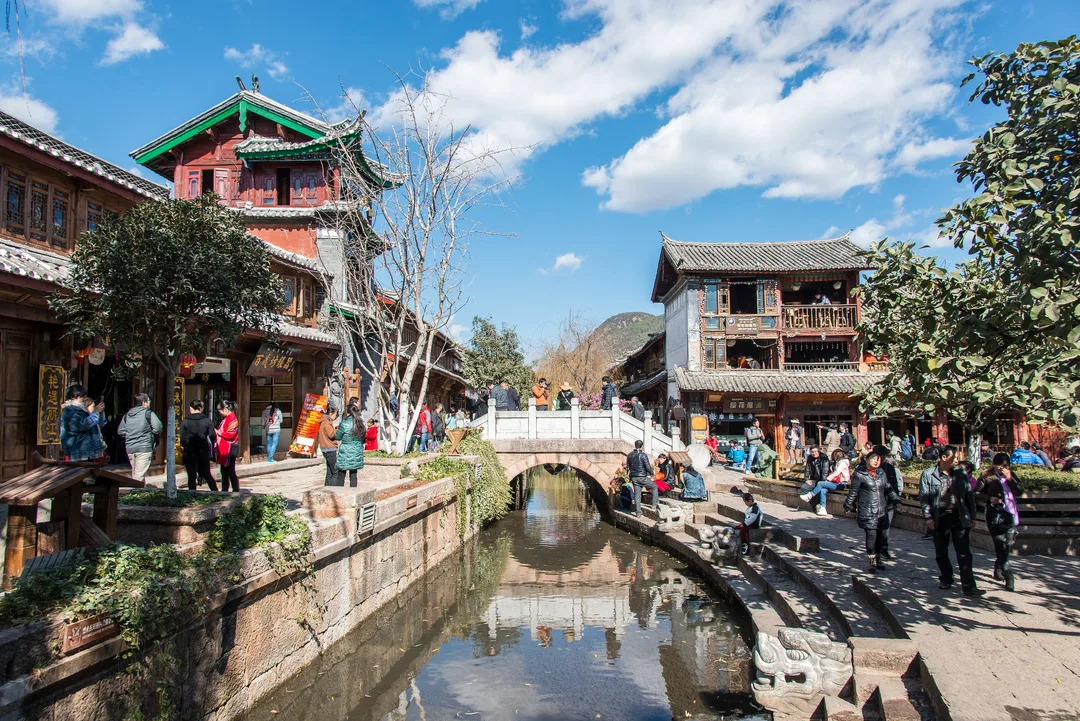
Lijiang Ancient Town (Dayan)丽江古城
Lijiang Old Town, in the Gucheng district of Lijiang, is the only Chinese historic city without a city wall. Founded in the late Song and early Yuan era (12th century), it takes its name Dayan — "great inkstone" — from the inkstone-like shape of its site. Water is the town's lifeblood, giving it the celebrated "small bridges, flowing water, households" townscape, and as a living museum of Naxi culture it was inscribed on the UNESCO World Heritage list in 1997.
Lijiang · Visitor Guide2026-10-18
Quick Answer
Is Lijiang Ancient Town (Dayan) worth visiting?
A UNESCO World Heritage site and home of the Naxi people — a living museum of canals, footbridges, courtyards and ancient Naxi music; the old-town maintenance fee is CNY 80.
Quick facts
| Ticket | Old town maintenance fee CNY 80 (checked on entry; some categories exempt) |
|---|---|
| Hours | Open 24 hours |
| Recommended duration | 1-3 days |
| Best time to visit | Spring and autumn; avoid the summer holidays and the Golden Week crush |
| How to get there | Lijiang Sanyi Airport is about 30 km from the old town (airport shuttle or taxi); Lijiang railway station is about 10 km away |
| English signage | Yes |
| Wheelchair accessible | Partial |
| Address | Dayan, Gucheng District, Lijiang, Yunnan |
| Type | UNESCO World Heritage site / old town |
| Founded | Late Song / early Yuan (around the 12th century) |
| Area | 3.8 sq km |
What to expect
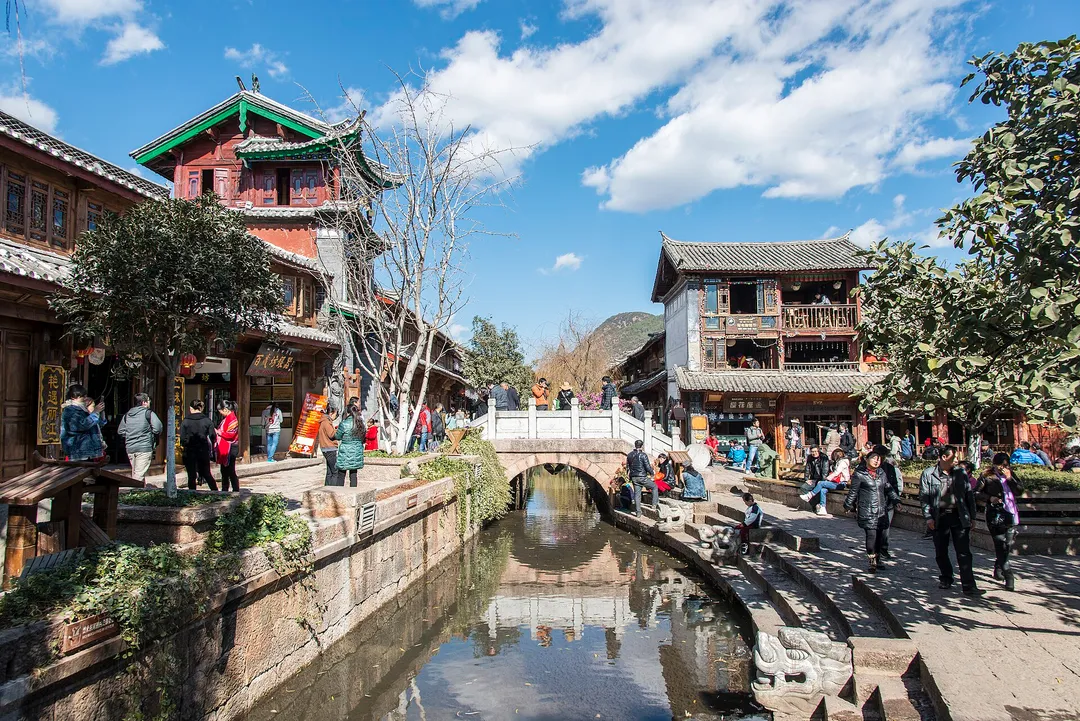
Known also as Dayan Old Town, Lijiang Old Town lies in Gucheng District and is the only city among China's Historic and Cultural Cities with no city wall. Founded in the late Song and early Yuan era (12th century) and flourishing under the Ming and Qing, it is more than 800 years old. The site was chosen with rare care: set between Black Dragon Pool and Elephant Hill on terrain shaped like a great inkstone, it was named Dayan — "great inkstone". Water threads through the town, weaving the canals, bridges and lanes of its celebrated "small bridges, flowing water, households" townscape.
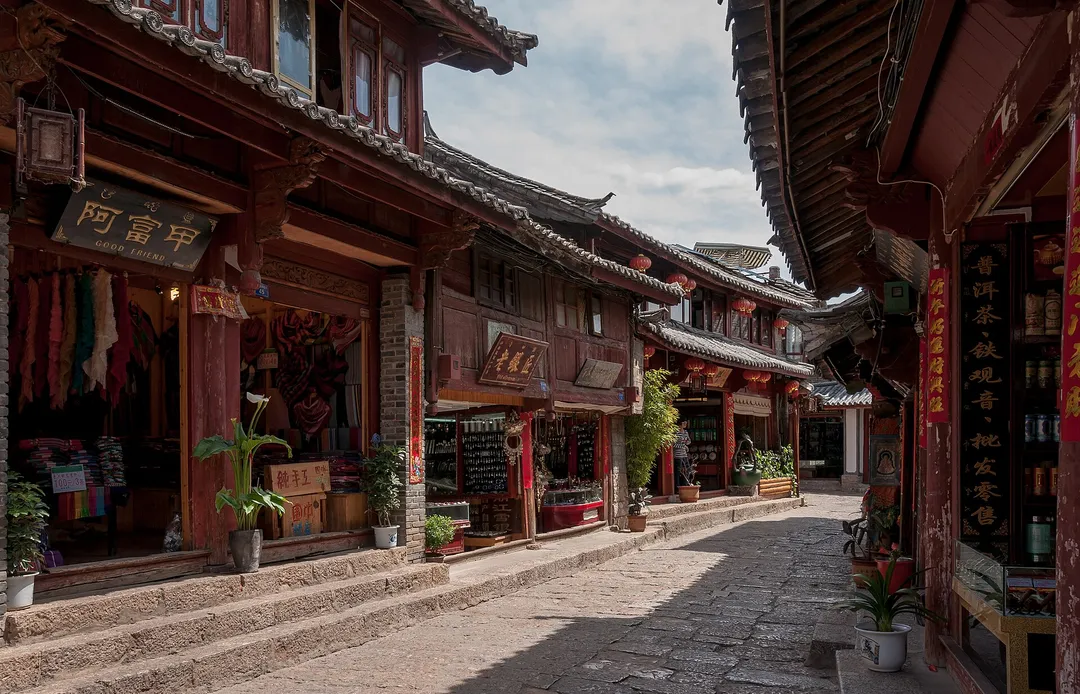
The Yuhe river system branches through the town into countless water lanes spanned by little bridges. The giant waterwheels at the entrance are the town's signature, and Sifang Street is its commercial heart, where Naxi elders still gather to dance each day. The architecture blends Naxi, Bai and Han styles — timber structures in the "three rooms and a screen wall, four courtyards and five skywells" layout appear everywhere. Do not miss the ancient Naxi music (baisha xiyue), hailed as a living musical fossil.
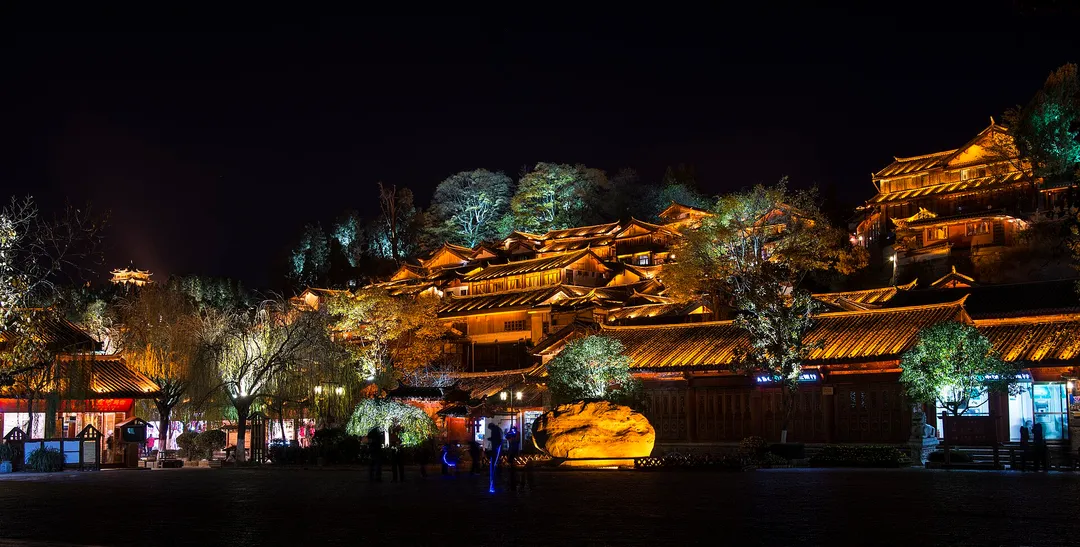
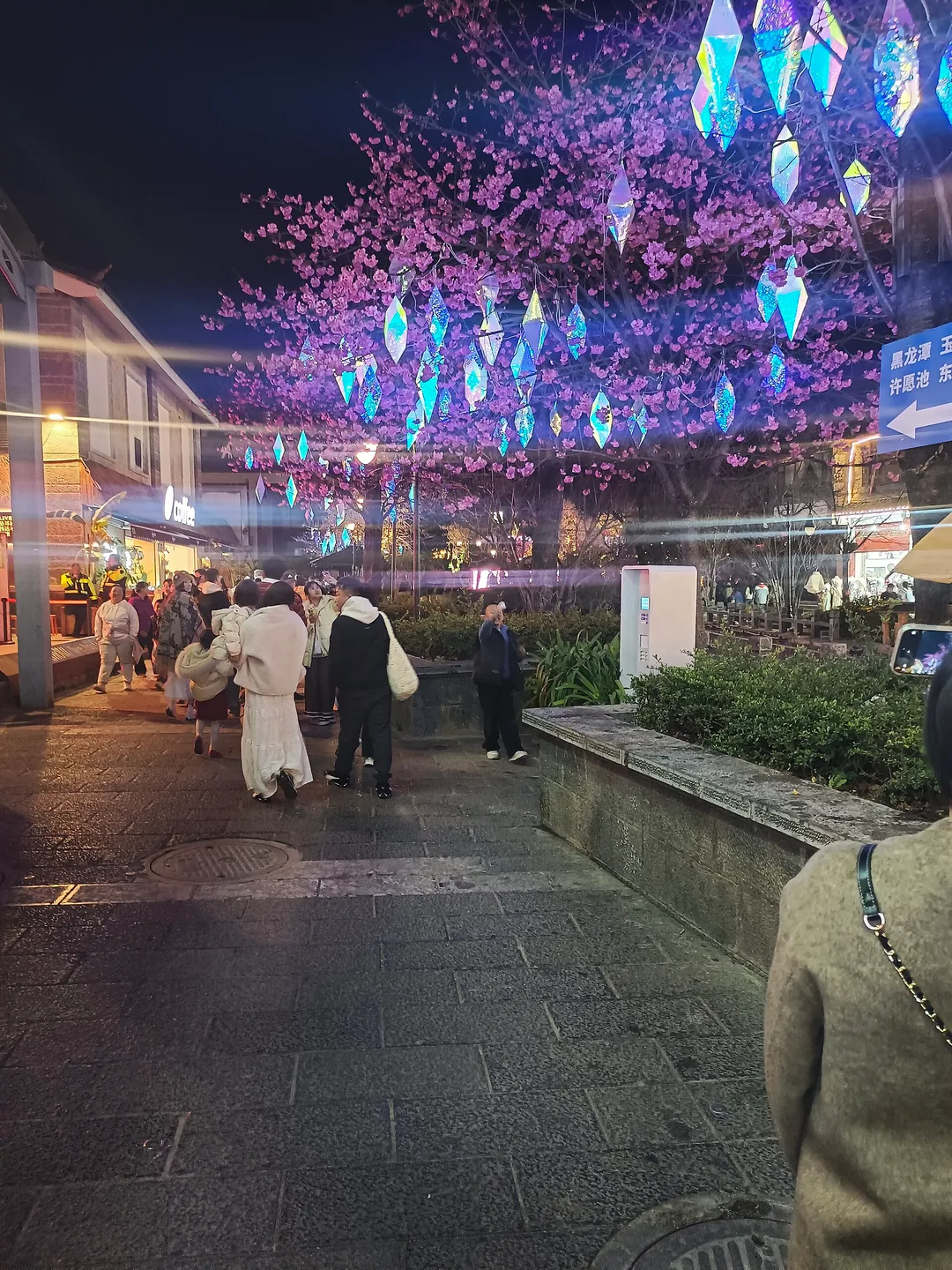
Lijiang Old Town is the fullest expression of Naxi culture, where Dongba script, ancient Naxi music and Mosuo traditions converge. The Mu Family Mansion, residence of the hereditary chieftains, is celebrated in the saying "the Imperial Palace in the north, the Mu Mansion in the south" (entry CNY 40). Wangu Tower on Lion Hill is the best spot for a panorama of the tiled rooftops. The town is at its liveliest after dark, but its true charm comes before 7 am — with the shops still closed, you see the town as it really is.
How to get there
Lijiang Sanyi Airport is about 30 km from the old town — the airport shuttle (CNY 20, around 40 minutes) stops at Lantian Hotel, a short walk away, or a taxi costs about CNY 80. Lijiang railway station (high-speed) is about 10 km out; take bus 4 or 16, or a taxi (about CNY 30). Outside vehicles cannot enter the old town, so expect a short walk to your guesthouse.
Best photo spots
- The giant waterwheels with Jade Dragon Snow Mountain behind
- Sifang Street early in the morning, before the crowds arrive
- The carved beams and painted halls of the Mu Family Mansion
- The rooftop panorama from Wangu Tower on Lion Hill
Tips
- Stay in or beside the old town — before 7 am is when it is most beautiful
- The CNY 80 maintenance fee works as the entry ticket; it is checked strictly over Golden Week, so keep it ready
- The cobbled lanes are hard on rolling suitcases — pack light or ask your guesthouse to meet you
- For performances, Lishui Jinsha and Impression Lijiang are the picks; book online for discounts
Scams to avoid
- Fake silverware abounds; avoid buying expensive silver unless you know how to authenticate it
- Touts offering to show you around may steer you to commission-paying shops — choose guesthouses carefully
- Some bars overcharge; check the bill item by item before paying
- Keep your maintenance-fee receipt — you may be asked for it again at several checkpoints
Frequently asked questions
Is the CNY 80 old town maintenance fee legitimate? Can it be dodged?
The maintenance fee is a legal levy collected by the government (CNY 80) that funds the old town's preservation. Checkpoints go up over Golden Week and you cannot enter without a receipt. Pay it properly rather than let it spoil your visit.
Lijiang Old Town or Shuhe Old Town?
Different characters. Lijiang is larger, livelier and more commercial, but rich in heritage; Shuhe is quieter and more rustic. See both if you can — with limited time, choose Lijiang.
How many days does Lijiang Old Town deserve?
Plan on 2-3 days: one to take in the main sights, two or three to slow down, join day trips and catch an evening performance.
Read next
Other things to do in Lijiang
Jade Dragon Snow Mountain (Yulong)
A 5,596 m glaciated peak above Lijiang with a cable car to 4,506 m; 100-180 yuan by season — go at opening time to beat the clouds on this half-day trip.
Jade Dragon Snow Mountain (Yulong Xue Shan)
The 5,596m sacred mountain above Lijiang — glacier viewing, alpine meadows, and the 4,680m highland glacier park accessible by cable car. ¥100+ park entry. Half-day trip.
Lugu Lake
An alpine lake on the Yunnan-Sichuan border and home of the Mosuo people, whose matrilineal 'walking marriage' traditions survive. Entry CNY 70 from the Yunnan side; allow 2-3 days.
Meili Snow Mountain (Kawagebo Peak)
Foremost of the eight sacred Tibetan mountains — main peak Kawagebo, at 6,740 m, is Yunnan's highest. Feilai Temple viewpoint CNY 40, Mingyong Glacier CNY 78; best October-May, allow 2-4 days.
Dukezong Ancient Town (Shangri-La Old Town)
A Tea Horse Road town founded in 676 — 1,300-plus years old, with China's largest Tibetan dwellings. Free entry (CNY 40 maintenance fee); Guishan Park's 21 m prayer wheel is the world's largest.
Tiger Leaping Gorge
One of the world's deepest gorges, where the Jinsha River tears between the Jade Dragon and Haba snow mountains. Entry CNY 45; allow 1-2 days to hike it properly.
Yubeng Village
Remote Tibetan village at 3,200m in the Meili Snow Mountain range. Only accessible by foot or 4WD. Sacred Kawagebo (6,740m) views. ¥60. 2-day minimum.
Museums in Lijiang
Lijiang Naxi Autonomous County Museum
Museum of Naxi minority culture at the edge of the UNESCO-listed Lijiang Old Town, documenting the Dongba script and the traditional Naxi music; details verified in 2026.
Lijiang Naxi Museum
Museum of Naxi minority culture at the UNESCO-listed Lijiang old town — the only living hieroglyphic writing (Dongba) and ancient "Tea Horse Road" trade. Free; details verified in 2026.
Lijiang Old Town Museum
The museum inside the UNESCO World Heritage Lijiang old town — documenting the Naxi civilization and the Dongba script. Free with old town entry; about 1 hour.