This page is archived and no longer updated — see the current guide: See the current guide
Tiger Leaping Gorge虎跳峡
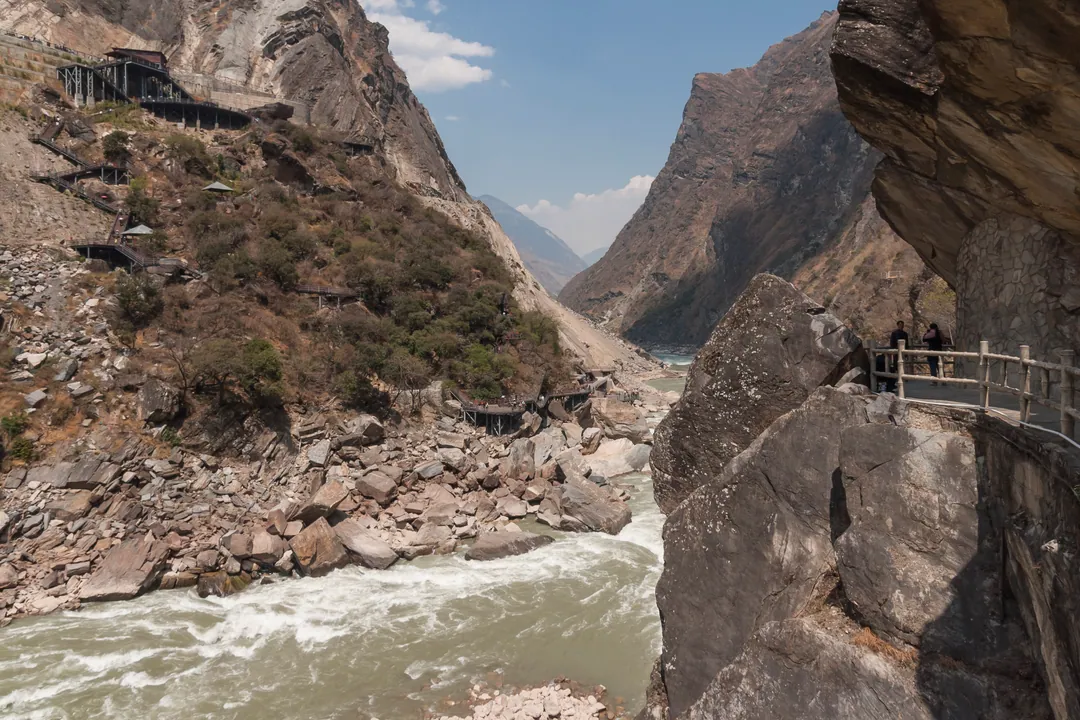
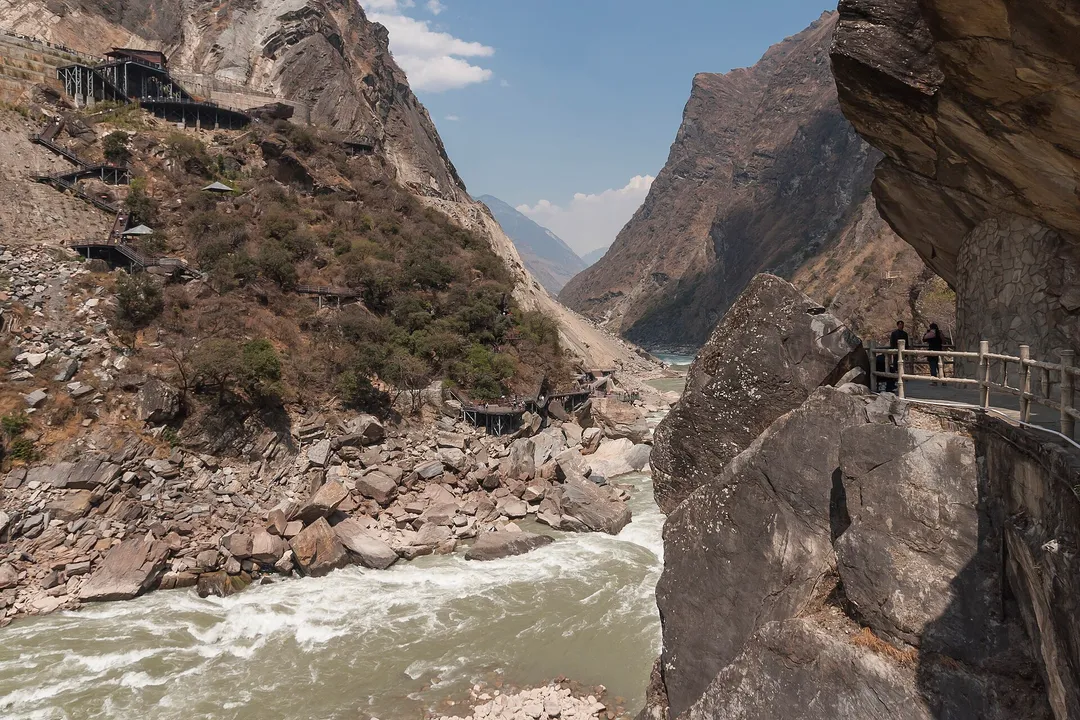
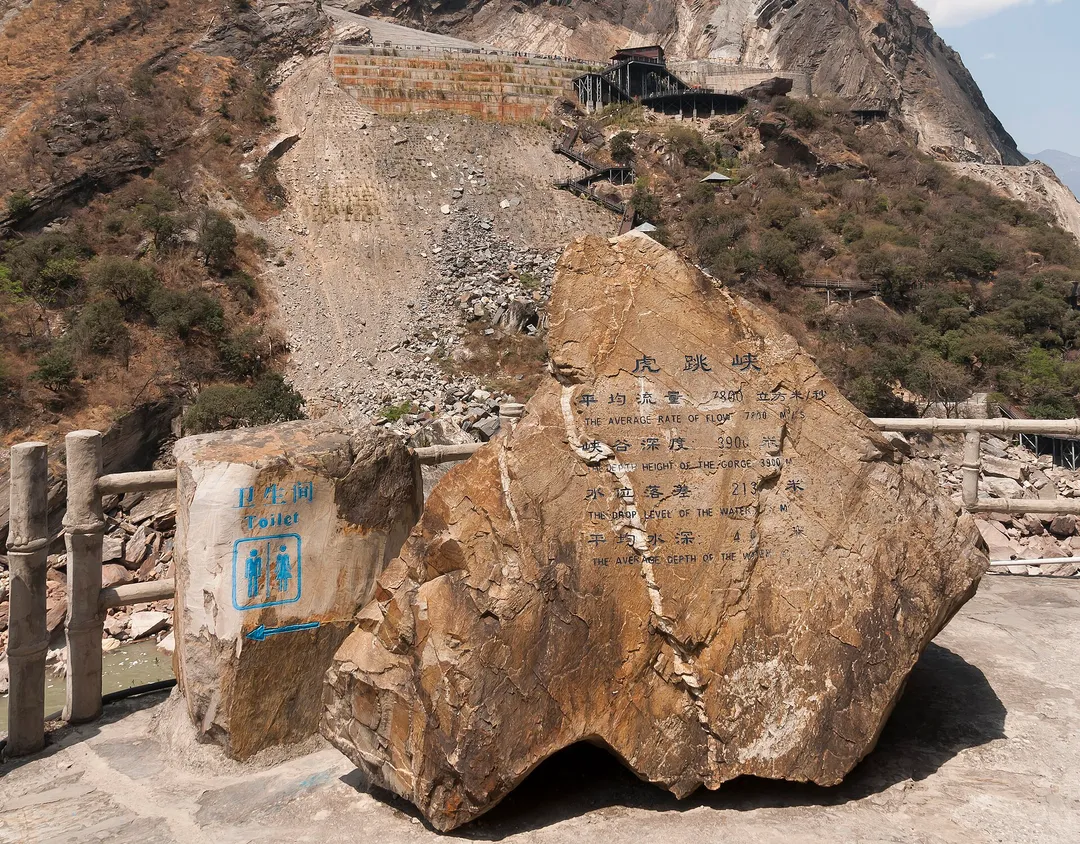
Tiger Leaping Gorge straddles the border of Yulong county in Lijiang and Shangri-La in Diqing, where the Jinsha River forces its way between Jade Dragon Snow Mountain and Haba Snow Mountain to cut one of the deepest, most dramatic gorges on earth. About 20 km long and divided into upper, middle and lower sections, it is famed for its perils and ranked with the Colorado and Yalong gorges among the deepest in the world.
Lijiang · Visitor Guide2026-10-27
Quick Answer
Is Tiger Leaping Gorge worth visiting?
One of the world's deepest gorges, where the Jinsha River tears between the Jade Dragon and Haba snow mountains. Entry CNY 45; allow 1-2 days to hike it properly.
Quick facts
| Ticket | CNY 45 per person (hiking-trail maintenance fee charged separately) |
|---|---|
| Hours | Daily 0:00-24:00 |
| Recommended duration | 1-2 days (hiking) |
| Best time to visit | April-October, avoiding the rainy season and winter |
| How to get there | Buses run from both Lijiang and Shangri-La to Qiaotou (Tiger Leaping Gorge town), about 2-3 hours; self-driving or a chartered car is the easier choice |
| English signage | Partial |
| Wheelchair accessible | No |
| Address | Yulong County, Lijiang / Shangri-La, Diqing, Yunnan |
| Type | UNESCO World Natural Heritage / gorge |
| Depth | Averaging 2,000-3,000 m |
| Length | About 20 km |
What to expect
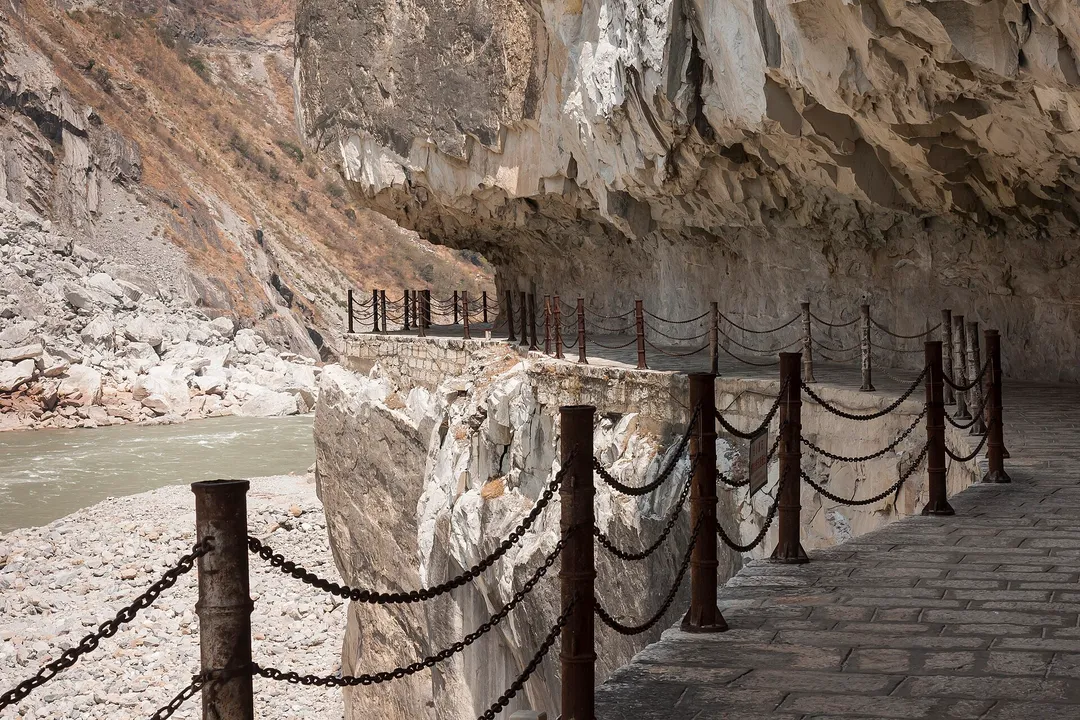
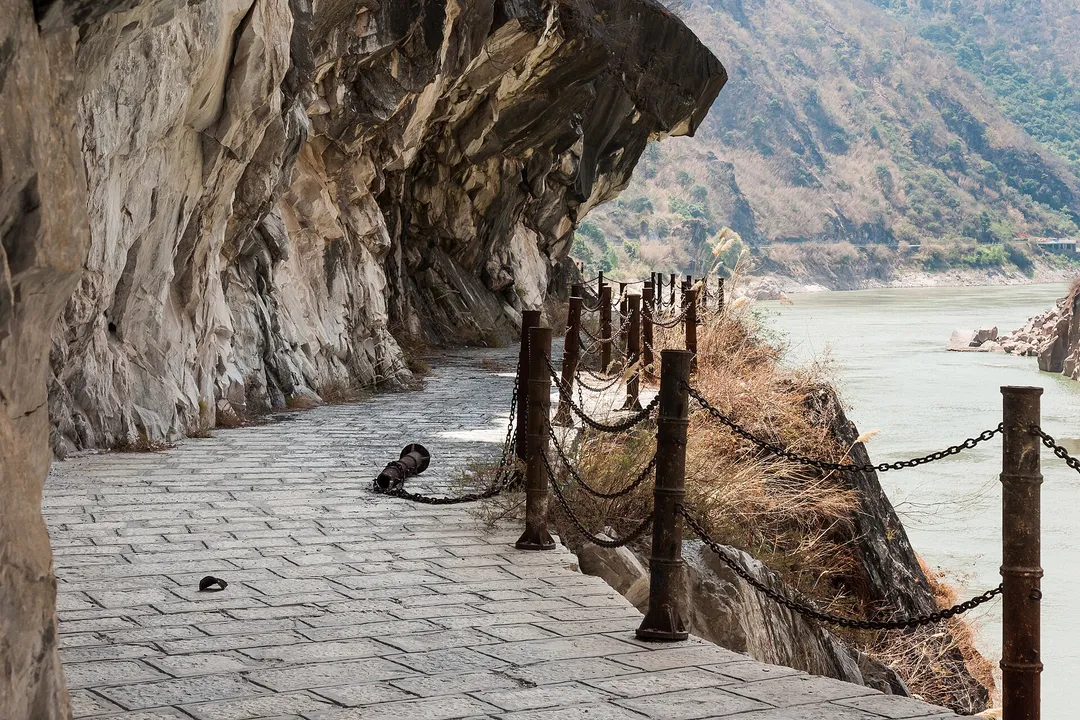
Tiger Leaping Gorge is the canyon the Jinsha River — the upper Yangtze — cut between Jade Dragon Snow Mountain and Haba Snow Mountain. It runs about 20 km with a drop of more than 200 m, in three sections. The upper gorge is the most developed and visited, with boardwalks down to the river; the middle gorge is famed for its "One-Line Sky" narrows, where the cliffs on either side nearly close over the roaring water; the lower gorge, raw and magnificent, is the hikers' favorite.
This is one of the deepest gorges on the planet, far deeper than the Grand Canyon in the United States. On one side stands 5,596 m Jade Dragon Snow Mountain, on the other 5,386 m Haba Snow Mountain; between them the river boils, giving the gorge its famous double view — snow peaks above, raging water below. In the summer and autumn rainy seasons the Jinsha swells and the roar echoes the length of the gorge.
The gorge trek is a classic among hikers worldwide. The traditional route starts at the upper gorge and follows the Haba-side trail to the middle gorge (about 5-6 hours), with options to push on into the lower gorge. Guesthouses line the route — the famous Halfway and Tina's serve as trekkers' bases. The walk demands some stamina, but it is not technically difficult.
How to get there
Buses leave from Lijiang's bus station for Qiaotou (Tiger Leaping Gorge town), about CNY 40 and roughly 2 hours; from Shangri-La the ride takes 2-3 hours. By car, take National Highway G214 to Qiaotou, then walk or ride the park shuttle to the entrance. The best arrangement is a chartered car with the driver waiting at the trek's end point.
Best photo spots
- The Tiger Leaping Stone mid-river, shot from the upper gorge viewing platform
- Looking up from the "One-Line Sky" narrows of the middle gorge
- The snow-mountain backdrop from the hiking trail
- The gorge wrapped in morning mist
Tips
- Sections of the trail are hazardous — take care in the rainy season, when rockfall is possible
- Hike light and book lodging ahead (guesthouses fill up in peak trekking season)
- UV is intense at this altitude; sunscreen and water are essential
- The One-Line Sky section is the riskiest — mind your footing when shooting
Scams to avoid
- Locals may charge a "toll" to lead you down shortcuts — risky and illegal
- Unofficial parking near the gate charges chaotic fees; use the proper lots
- Trailside guesthouse quality varies widely — check ahead or bring a sleeping bag
Frequently asked questions
Do I need a guide to hike Tiger Leaping Gorge?
Experienced hikers can go it alone — the route is well-trodden and signposted. First-timers or anyone short on time should hire a guide (about CNY 200-300 per day); the terrain is complicated for newcomers.
Which direction is better, from Lijiang or from Shangri-La?
Both work. Entry from the Lijiang side (upper gorge) has the better facilities; from Shangri-La you can pair the gorge with Pudacuo National Park.
What should I pack for the hike?
Sturdy, grippy hiking boots, sun protection, plenty of water (hard to buy en route), simple trail food and basic medication. Some sections are steep enough to need hands as well as feet.
Read next
Other things to do in Lijiang
Jade Dragon Snow Mountain (Yulong)
A 5,596 m glaciated peak above Lijiang with a cable car to 4,506 m; 100-180 yuan by season — go at opening time to beat the clouds on this half-day trip.
Jade Dragon Snow Mountain (Yulong Xue Shan)
The 5,596m sacred mountain above Lijiang — glacier viewing, alpine meadows, and the 4,680m highland glacier park accessible by cable car. ¥100+ park entry. Half-day trip.
Lijiang Ancient Town (Dayan)
A UNESCO World Heritage site and home of the Naxi people — a living museum of canals, footbridges, courtyards and ancient Naxi music; the old-town maintenance fee is CNY 80.
Lugu Lake
An alpine lake on the Yunnan-Sichuan border and home of the Mosuo people, whose matrilineal 'walking marriage' traditions survive. Entry CNY 70 from the Yunnan side; allow 2-3 days.
Meili Snow Mountain (Kawagebo Peak)
Foremost of the eight sacred Tibetan mountains — main peak Kawagebo, at 6,740 m, is Yunnan's highest. Feilai Temple viewpoint CNY 40, Mingyong Glacier CNY 78; best October-May, allow 2-4 days.
Dukezong Ancient Town (Shangri-La Old Town)
A Tea Horse Road town founded in 676 — 1,300-plus years old, with China's largest Tibetan dwellings. Free entry (CNY 40 maintenance fee); Guishan Park's 21 m prayer wheel is the world's largest.
Yubeng Village
Remote Tibetan village at 3,200m in the Meili Snow Mountain range. Only accessible by foot or 4WD. Sacred Kawagebo (6,740m) views. ¥60. 2-day minimum.
Museums in Lijiang
Lijiang Naxi Autonomous County Museum
Museum of Naxi minority culture at the edge of the UNESCO-listed Lijiang Old Town, documenting the Dongba script and the traditional Naxi music; details verified in 2026.
Lijiang Naxi Museum
Museum of Naxi minority culture at the UNESCO-listed Lijiang old town — the only living hieroglyphic writing (Dongba) and ancient "Tea Horse Road" trade. Free; details verified in 2026.
Lijiang Old Town Museum
The museum inside the UNESCO World Heritage Lijiang old town — documenting the Naxi civilization and the Dongba script. Free with old town entry; about 1 hour.