- Home
- Shangri-La
- Dukezong Ancient Town (Shangri-La Old Town)
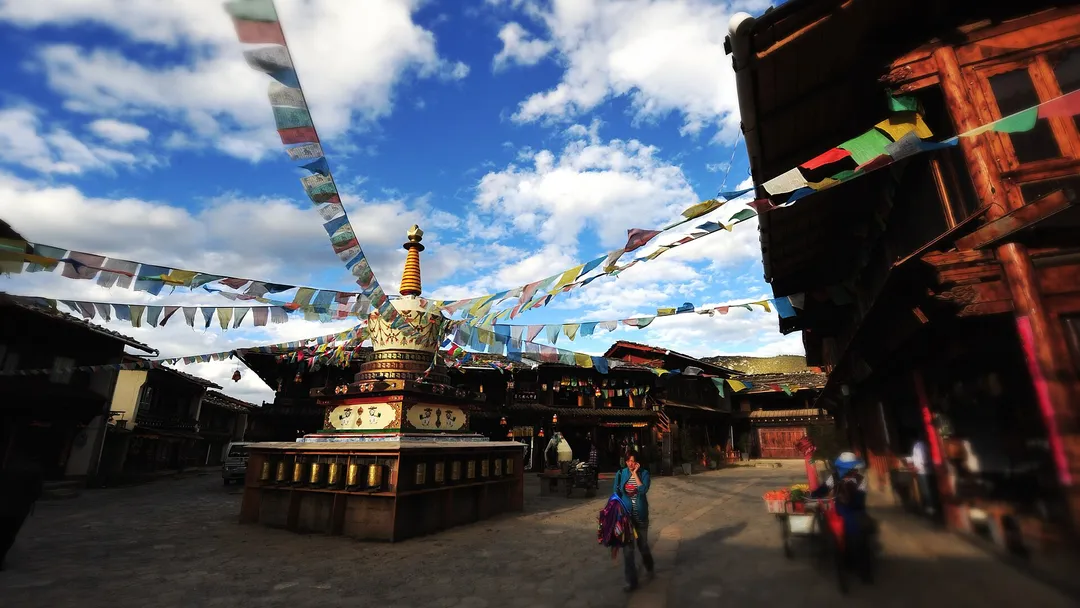
Dukezong Ancient Town (Shangri-La Old Town)独克宗古城
Dukezong Ancient Town, in Shangri-La City in Yunnan's Diqing Tibetan Autonomous Prefecture, was a major station on the Tea Horse Road and is the largest and best-preserved ensemble of Tibetan dwellings in China. Founded in 676 during the Tang dynasty, its name means "Moonlight City", answering Niwangzong — the "Sunlight City" — across the Naizi River. Rebuilt after the 2014 fire, the town has recovered its historic appearance.
Shangri-La · Visitor Guide2026-10-18
Quick Answer
Is Dukezong Ancient Town (Shangri-La Old Town) worth visiting?
A Tea Horse Road town founded in 676 — 1,300-plus years old, with China's largest Tibetan dwellings. Free entry (CNY 40 maintenance fee); Guishan Park's 21 m prayer wheel is the world's largest.
Quick facts
| Ticket | Free to enter; CNY 40 old-town maintenance fee (checked at the town entrances) |
|---|---|
| Hours | Open 24 hours |
| Recommended duration | 1-2 days |
| Best time to visit | May-Oct, avoiding the rainy season and the bitter winter cold |
| How to get there | Diqing Shangri-La Airport is about 5 km from the old town; buses from Lijiang take about 3-4 hours |
| English signage | Partial |
| Wheelchair accessible | Partial |
| Address | Dukezong Ancient Town, Shangri-La City, Diqing Tibetan Autonomous Prefecture, Yunnan |
| Type | Tibetan old town / Tea Horse Road station |
| History | More than 1300 years |
| Highlights | Tibetan dwellings, Guishan Park, the giant prayer wheel |
What to expect
Dukezong Ancient Town in Shangri-La City was the first stop where the Tea Horse Road entered the Tibetan lands, and it is China's largest and best-preserved group of Tibetan dwellings. Founded in 676, in the Yifeng era of the Tang dynasty, the town is more than 1300 years old. Laid out in the mandala form of Tibetan Buddhism, its name means "Moonlight City" in Tibetan, answering Niwangzong — the "Sunlight City" — outside town. The flagstones of its lanes are relics of the Tea Horse Road, worn by generations of caravans.
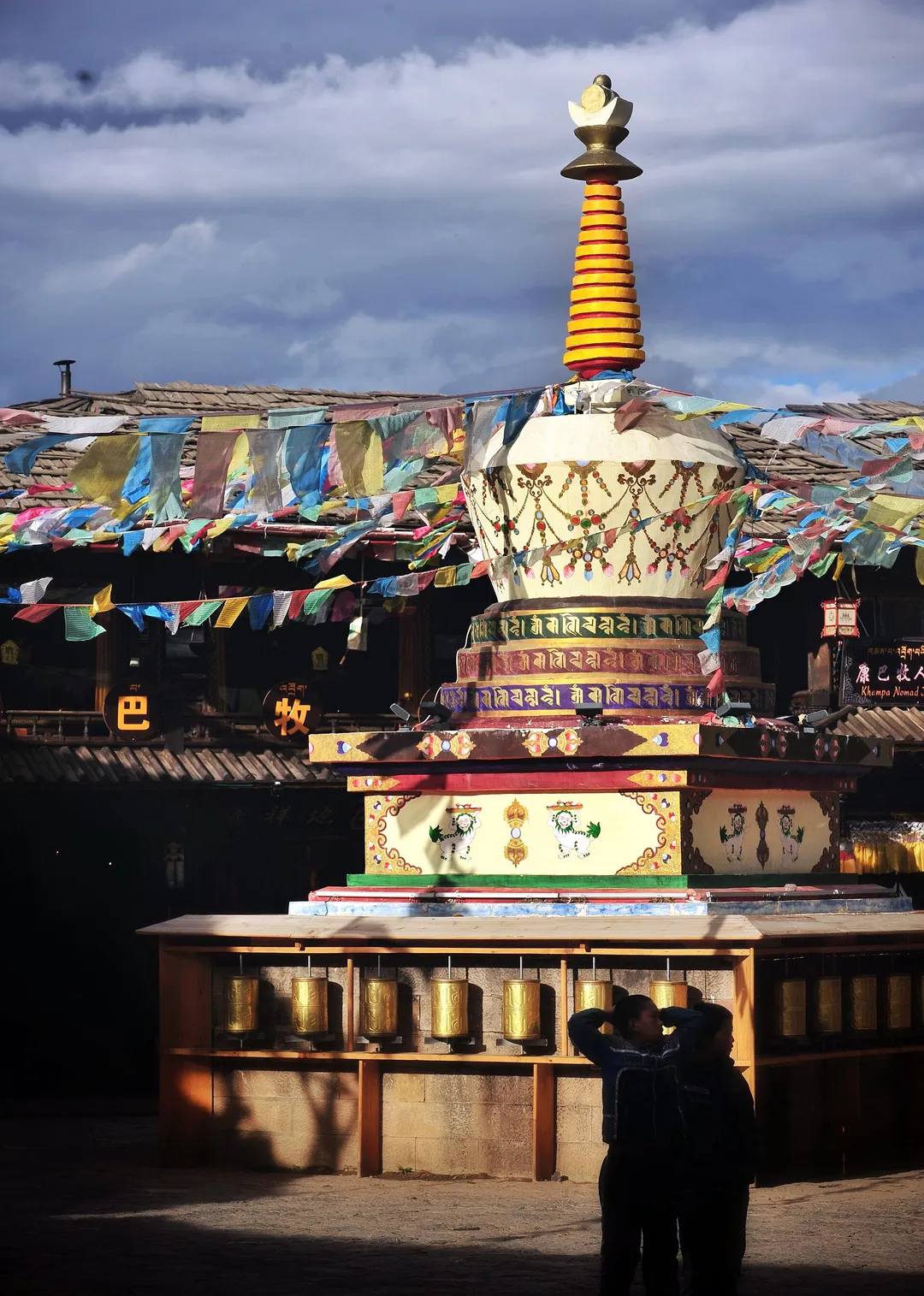
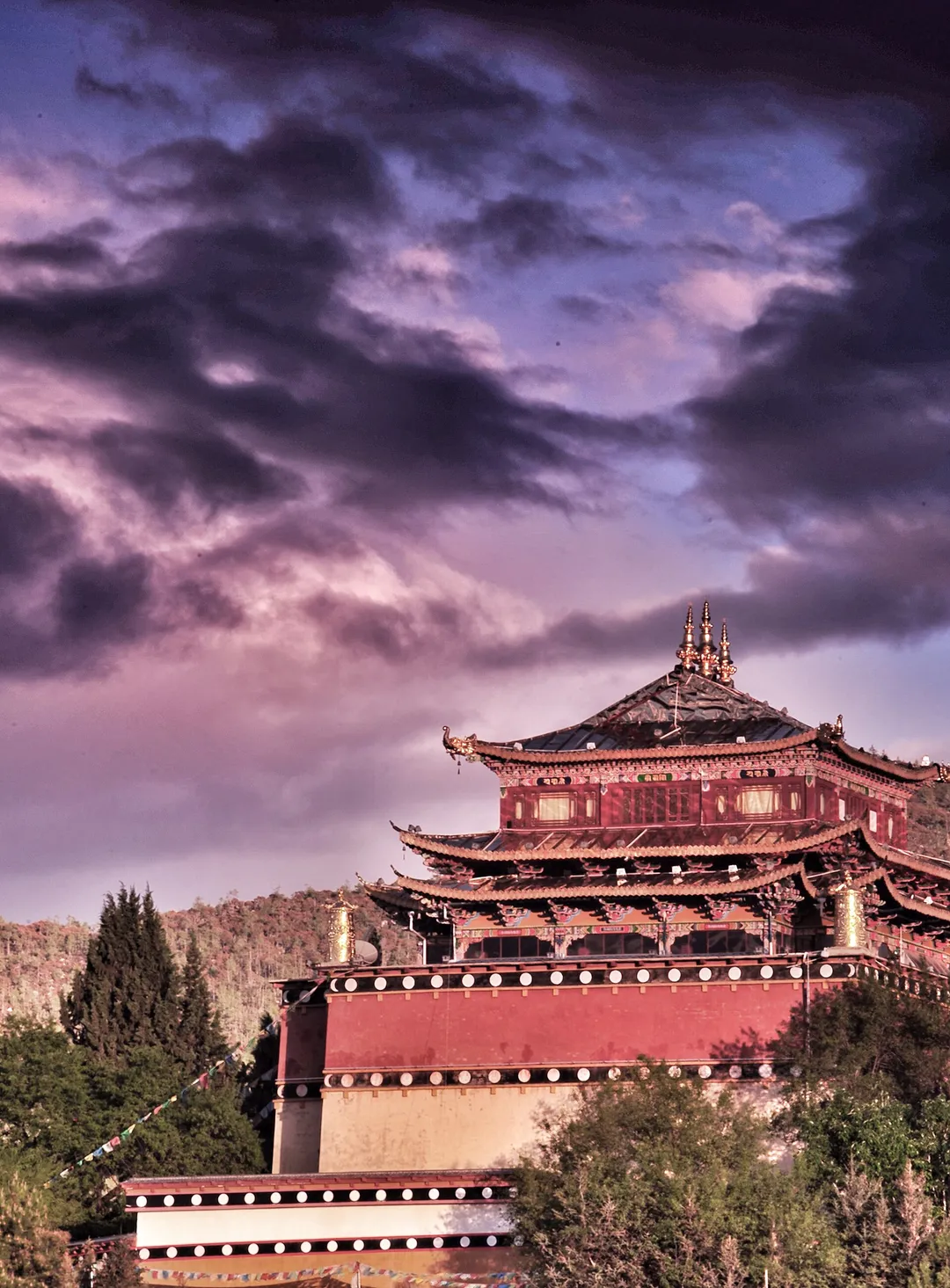
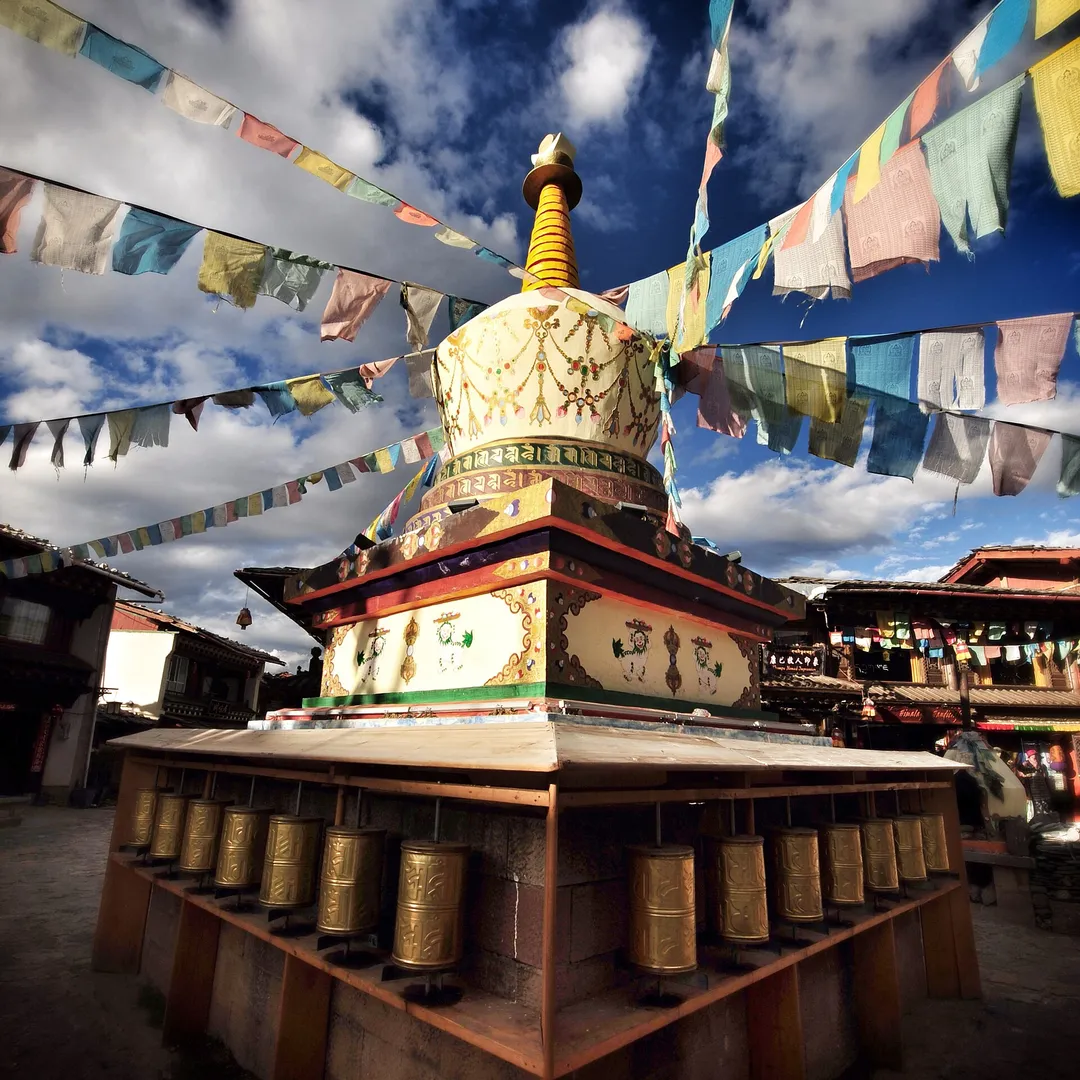
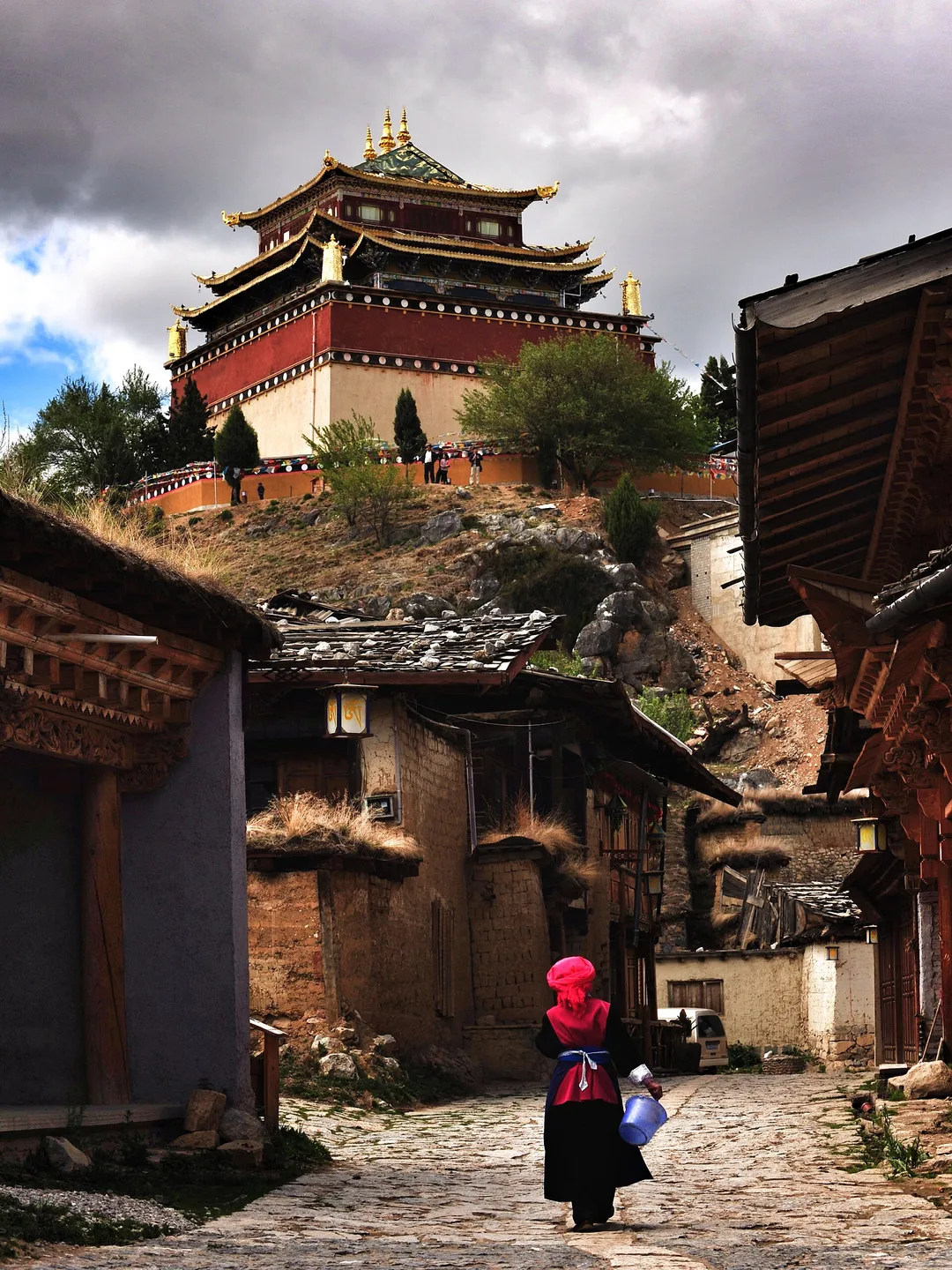
The town's highlight is Guishan Park, home to the world's largest prayer wheel — 21 m tall and weighing 60 tonnes, its drum carved with scriptures and designs; it takes several people pulling together to turn. A full turn is said to count as one recitation of the scriptures, one of the ways Tibetan pilgrims accrue merit. Sifang Street, the central square, draws local Tibetans each evening to dance the guozhuang, and visitors are welcome to join. The town's Tibetan houses survive in fine shape — white walls, red eaves, prayer flags fluttering — vividly picturesque.
A fire in 2014 destroyed many historic buildings. Under government leadership the town was rebuilt to its original appearance, with fire safety and firebreak design given special attention, and visitors can explore with confidence. Nearby, pair the town with Songzanlin Monastery (Yunnan's largest Tibetan Buddhist monastery) and Pudacuo National Park.
How to get there
Diqing Shangri-La Airport is about 5 km from the old town — a taxi costs about CNY 20. Buses from Lijiang take about 3-4 hours (around CNY 100), or take the train to Lijiang and continue by road. By car, come via G214, which is in good condition.
Best photo spots
- The giant prayer wheel in Guishan Park with a panorama of the old town
- The lively evening guozhuang dancing in Sifang Street
- The stone-paved lanes and Tibetan architecture
- The old town lit up at night
Tips
- Stay in a Tibetan guesthouse inside the town to soak up the atmosphere
- Mornings and evenings are cold even in summer — bring a layer; the plateau sun is strong, so use sun protection
- Respect local religious custom — remove your hat in monasteries and walk clockwise
- The rebuilt town is more commercial; early morning and dusk feel the most authentic
Scams to avoid
- Silver ornaments and Tibetan medicines around the town are overpriced — buy only if you know the trade
- Some Tibetan family-visit programs push forced purchases; choose well-reviewed, properly licensed tours
- Caterpillar fungus and similar goods peddled in town may be adulterated — buy with caution
Frequently asked questions
Does Dukezong Ancient Town charge admission?
Entry to the town itself is free, but a CNY 40 old-town maintenance fee is collected and checked at the town entrances. Students, seniors and other qualifying groups are exempt or half price.
How does Dukezong differ from Lijiang Old Town?
The two are worlds apart in style. Dukezong is Tibetan in architecture and culture; Lijiang Old Town is Naxi. Each has its own charm — visit both if you can.
Is Shangri-La's altitude a problem?
Shangri-La sits at about 3300 m, higher than Lijiang (2400 m); some visitors feel mild altitude effects. Rest after arriving, take it easy and stay warm.
Read next
Other things to do in Shangri-La
Jade Dragon Snow Mountain (Yulong)
A 5,596 m glaciated peak above Lijiang with a cable car to 4,506 m; 100-180 yuan by season — go at opening time to beat the clouds on this half-day trip.
Jade Dragon Snow Mountain (Yulong Xue Shan)
The 5,596m sacred mountain above Lijiang — glacier viewing, alpine meadows, and the 4,680m highland glacier park accessible by cable car. ¥100+ park entry. Half-day trip.
Lijiang Ancient Town (Dayan)
A UNESCO World Heritage site and home of the Naxi people — a living museum of canals, footbridges, courtyards and ancient Naxi music; the old-town maintenance fee is CNY 80.
Lugu Lake
An alpine lake on the Yunnan-Sichuan border and home of the Mosuo people, whose matrilineal 'walking marriage' traditions survive. Entry CNY 70 from the Yunnan side; allow 2-3 days.
Meili Snow Mountain (Kawagebo Peak)
Foremost of the eight sacred Tibetan mountains — main peak Kawagebo, at 6,740 m, is Yunnan's highest. Feilai Temple viewpoint CNY 40, Mingyong Glacier CNY 78; best October-May, allow 2-4 days.
Tiger Leaping Gorge
One of the world's deepest gorges, where the Jinsha River tears between the Jade Dragon and Haba snow mountains. Entry CNY 45; allow 1-2 days to hike it properly.
Yubeng Village
Remote Tibetan village at 3,200m in the Meili Snow Mountain range. Only accessible by foot or 4WD. Sacred Kawagebo (6,740m) views. ¥60. 2-day minimum.
Museums in Shangri-La
Lijiang Naxi Autonomous County Museum
Museum of Naxi minority culture at the edge of the UNESCO-listed Lijiang Old Town, documenting the Dongba script and the traditional Naxi music; details verified in 2026.
Lijiang Naxi Museum
Museum of Naxi minority culture at the UNESCO-listed Lijiang old town — the only living hieroglyphic writing (Dongba) and ancient "Tea Horse Road" trade. Free; details verified in 2026.
Lijiang Old Town Museum
The museum inside the UNESCO World Heritage Lijiang old town — documenting the Naxi civilization and the Dongba script. Free with old town entry; about 1 hour.