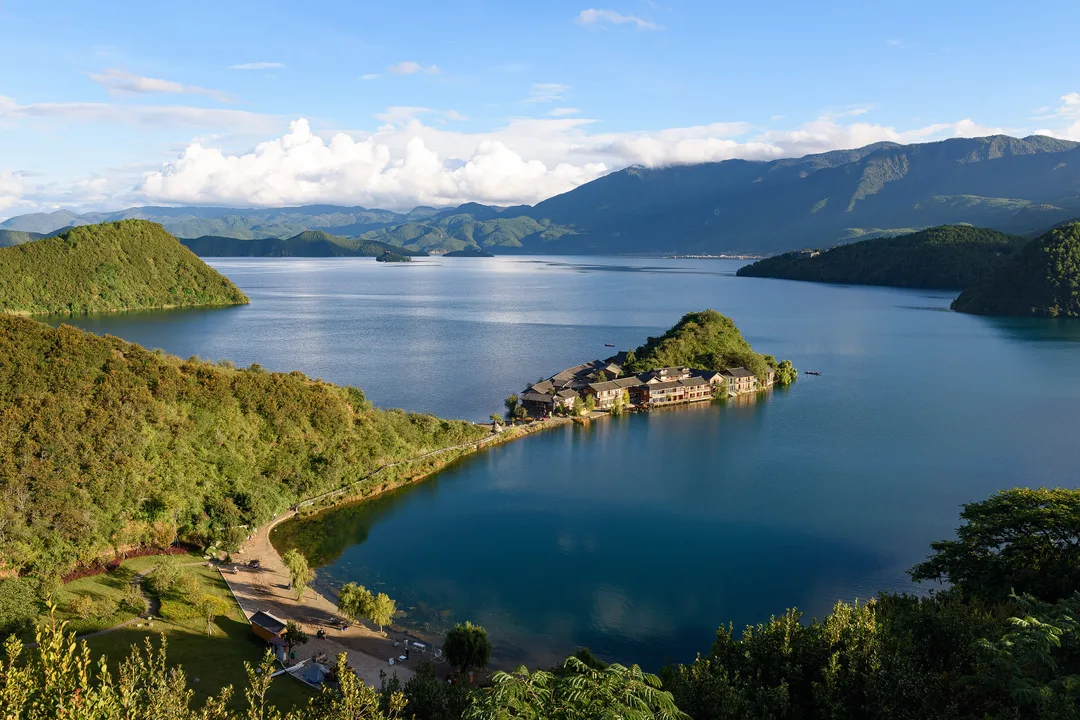
Lugu Lake泸沽湖
Lugu Lake lies on the border between Ninglang County in Lijiang, Yunnan, and Yanyuan County in Liangshan, Sichuan — China's third-deepest freshwater lake, at 2,690 m above sea level. Ringed by mountains and home to Mosuo, Yi and Pumi villages, it is best known as the last living matrilineal society on earth, where the Mosuo keep their distinctive "walking marriage" customs.
Lijiang · Visitor Guide2026-10-18
Quick Answer
Is Lugu Lake worth visiting?
An alpine lake on the Yunnan-Sichuan border and home of the Mosuo people, whose matrilineal 'walking marriage' traditions survive. Entry CNY 70 from the Yunnan side; allow 2-3 days.
Quick facts
| Ticket | CNY 70 per person entering from the Yunnan side; CNY 35 from the Sichuan side (concessions available) |
|---|---|
| Hours | Open 24 hours |
| Recommended duration | 2-3 days (an overnight stay is recommended) |
| Best time to visit | May-October; the flowers are at their best in July-August, but that is also the rainy season |
| How to get there | Coach from Lijiang bus station (about 4-5 hours, CNY 80-100); or self-drive / chartered car |
| English signage | Partial |
| Wheelchair accessible | Partial |
| Address | Ninglang County, Lijiang, Yunnan / Yanyuan County, Sichuan |
| Type | Alpine lake / ethnic culture |
| Elevation | 2,690 m above sea level |
| Area | 48.5 sq km |
What to expect
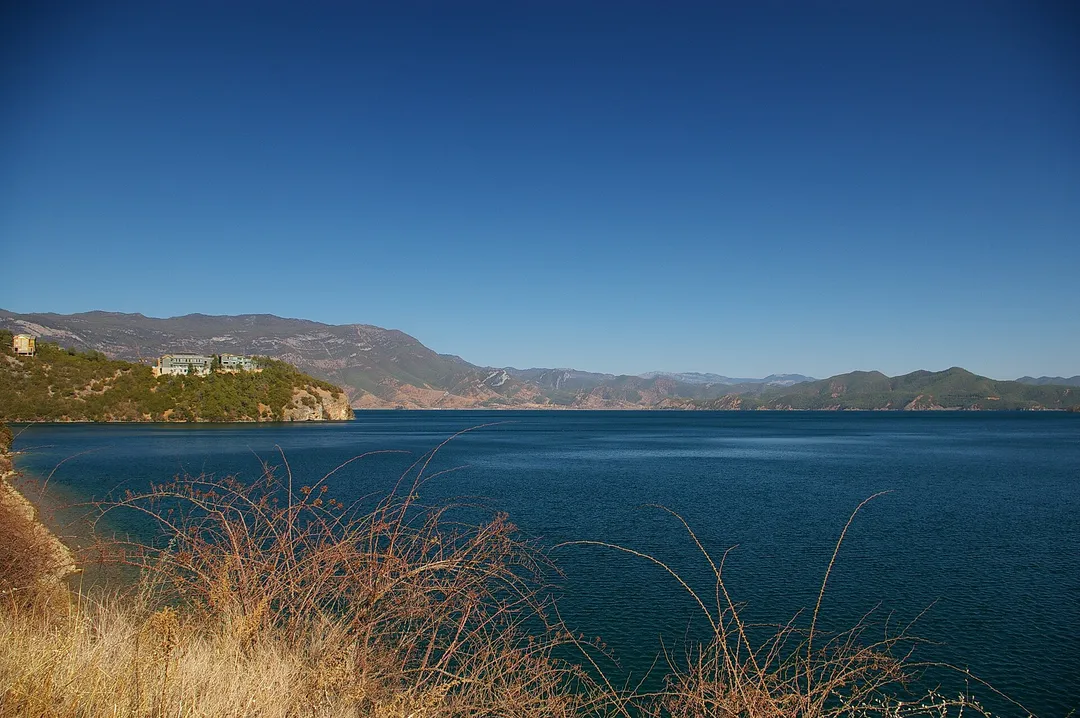
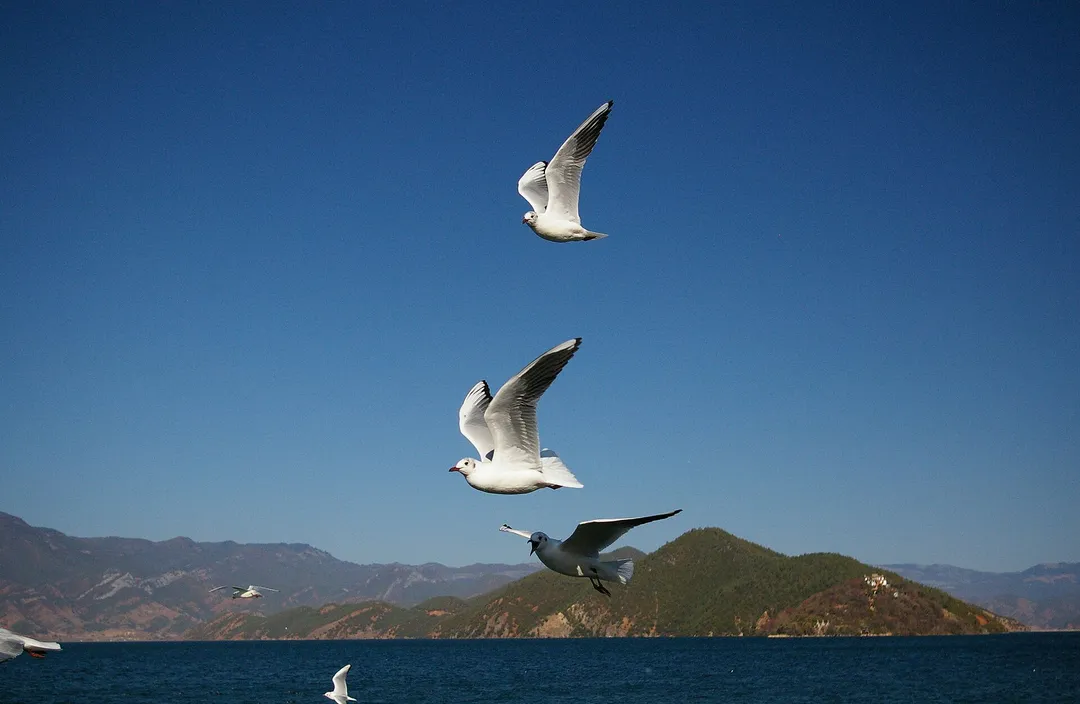
Lugu Lake straddles the Yunnan-Sichuan border and is China's third-deepest freshwater lake, averaging 40 m deep and plunging to 93.5 m at its deepest. The surface sits at 2,690 m amid green mountains; the water is remarkably clear and the air fresh. Five islets, four peninsulas and 14 bays stud the lake, with Mosuo and Yi villages such as Dazu and Luoshui strung along the shore like a painted scroll.
What makes Lugu unique is its people. The Mosuo, a branch of the Naxi, preserve the world's last matrilineal society: households centre on the women, children stay with their mothers and property passes down the maternal line. Their famed "walking marriage" — the axia custom, in which couples never formally wed but build their bond through nighttime visits — has earned the lake its nickname, the Kingdom of Women of the East.
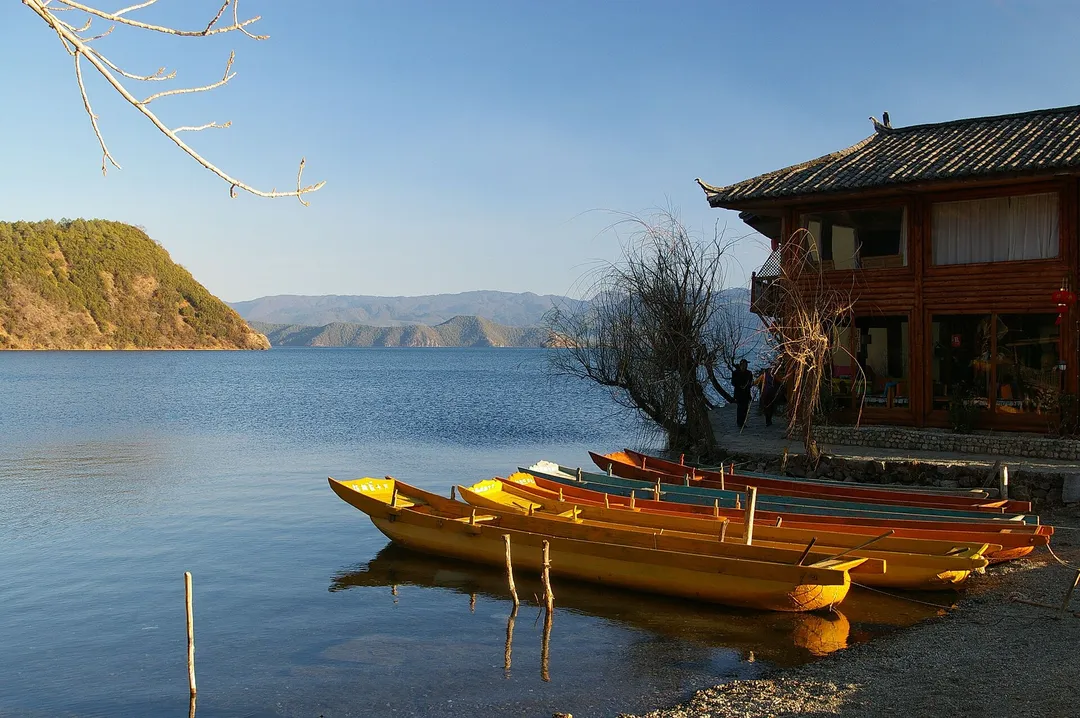
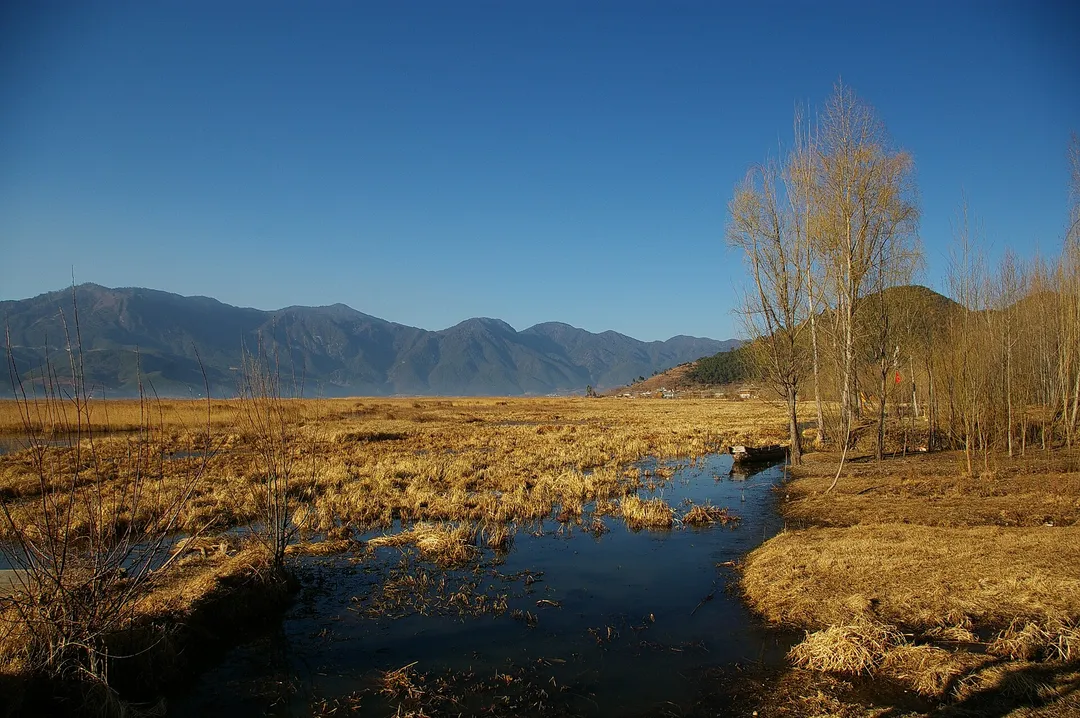
The shoreline runs about 60 km, and cycling the circuit is the best way to see it. En route, visit a Mosuo household to learn about the walking marriage, paddle a pig-trough canoe, and climb to the Lige viewpoint over the lake's central islets. On the 25th day of the seventh lunar month the Zhuanshan (Mountain Circling) festival, the Mosuo's most important, brings villagers out in full dress to honour the Goddess Gemu. The Caohai wetland and the Walking Marriage Bridge are other essential stops.
How to get there
Coaches leave Lijiang bus station for Lugu Lake (Daluo shui village), about 4-5 hours and CNY 80-100; departures are sparse, so buy tickets ahead. Self-driving via the Lijiang-Ninglang road takes about 3.5-4 hours on winding mountain roads. You can also enter from Xichang, Sichuan (about 5 hours).
Best photo spots
- The heart-shaped bay and islet from Lige viewpoint
- Morning mist and sunrise from a pig-trough canoe
- The Walking Marriage Bridge and Caohai wetland in autumn
- The Milky Way over the lake at night
Tips
- Stay one or two nights — the lake is calmest and loveliest at dawn and dusk
- The circuit is about 60 km; if renting an e-bike, watch the battery and pick a pedal-assist model
- Mosuo home visits open a window on the culture — tell the genuine ones from shopping trips
- The mountain roads are bumpy; pack motion-sickness tablets if you are prone
Scams to avoid
- Some Mosuo home visits are shopping tours in disguise, with inflated prices for silver and herbal medicine
- Chartered lake loops may involve driver kickbacks — book a well-reviewed, properly licensed driver ahead
- Lakeside "seafood" is overpriced; local specialties give better value
- Walking-marriage shows vary wildly, some with hard-sell extras — best skipped
Frequently asked questions
Lugu Lake or Erhai Lake?
Completely different characters. Lugu is wilder, quieter and culturally unique; Erhai is better developed with more sights but bigger crowds. Do both if time allows. Choosing one: Lugu for deep cultural immersion, Erhai for an easy lakeside holiday.
Is the altitude a problem?
At 2,690 m it is not high for most people, though the sensitive may feel mildly affected. Avoid strenuous activity, drink plenty of water and let yourself acclimatise.
How long is the lake circuit?
By e-bike, allow 6-8 hours with stops; by car 3-4 hours. Better to split it over two days — arrive in the afternoon, cover half the loop by dusk, and do the other half next morning.
Read next
Other things to do in Lijiang
Jade Dragon Snow Mountain (Yulong)
A 5,596 m glaciated peak above Lijiang with a cable car to 4,506 m; 100-180 yuan by season — go at opening time to beat the clouds on this half-day trip.
Jade Dragon Snow Mountain (Yulong Xue Shan)
The 5,596m sacred mountain above Lijiang — glacier viewing, alpine meadows, and the 4,680m highland glacier park accessible by cable car. ¥100+ park entry. Half-day trip.
Lijiang Ancient Town (Dayan)
A UNESCO World Heritage site and home of the Naxi people — a living museum of canals, footbridges, courtyards and ancient Naxi music; the old-town maintenance fee is CNY 80.
Meili Snow Mountain (Kawagebo Peak)
Foremost of the eight sacred Tibetan mountains — main peak Kawagebo, at 6,740 m, is Yunnan's highest. Feilai Temple viewpoint CNY 40, Mingyong Glacier CNY 78; best October-May, allow 2-4 days.
Dukezong Ancient Town (Shangri-La Old Town)
A Tea Horse Road town founded in 676 — 1,300-plus years old, with China's largest Tibetan dwellings. Free entry (CNY 40 maintenance fee); Guishan Park's 21 m prayer wheel is the world's largest.
Tiger Leaping Gorge
One of the world's deepest gorges, where the Jinsha River tears between the Jade Dragon and Haba snow mountains. Entry CNY 45; allow 1-2 days to hike it properly.
Yubeng Village
Remote Tibetan village at 3,200m in the Meili Snow Mountain range. Only accessible by foot or 4WD. Sacred Kawagebo (6,740m) views. ¥60. 2-day minimum.
Museums in Lijiang
Lijiang Naxi Autonomous County Museum
Museum of Naxi minority culture at the edge of the UNESCO-listed Lijiang Old Town, documenting the Dongba script and the traditional Naxi music; details verified in 2026.
Lijiang Naxi Museum
Museum of Naxi minority culture at the UNESCO-listed Lijiang old town — the only living hieroglyphic writing (Dongba) and ancient "Tea Horse Road" trade. Free; details verified in 2026.
Lijiang Old Town Museum
The museum inside the UNESCO World Heritage Lijiang old town — documenting the Naxi civilization and the Dongba script. Free with old town entry; about 1 hour.