This page is archived and no longer updated — see the current guide: See the current guide
Guanqian Street观前街
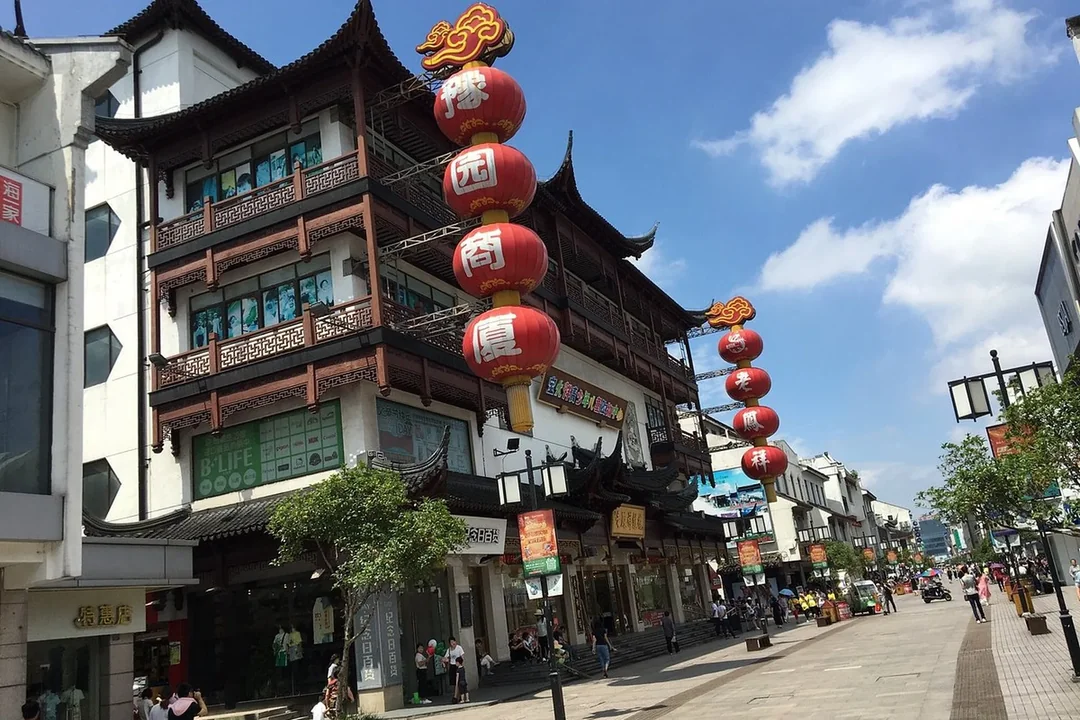
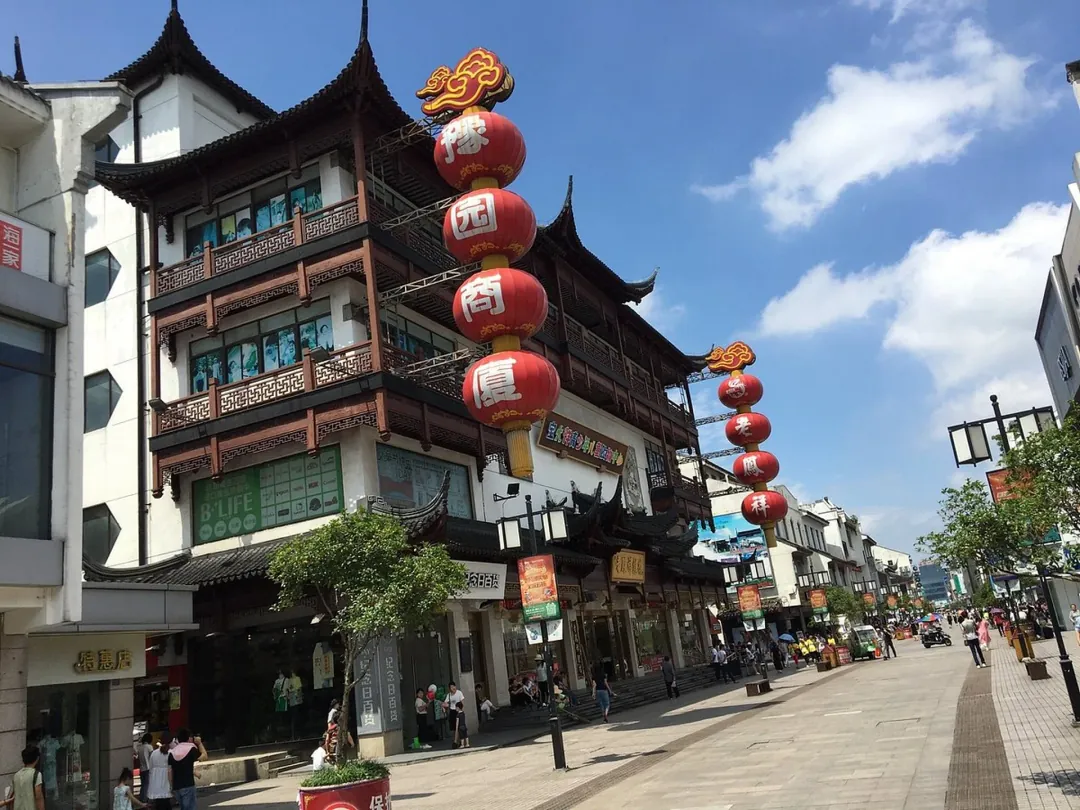
Guanqian Street (观前街) is Suzhou's premier pedestrian shopping district, stretching 800 meters from the Lingering Garden to the ancient Yuhe Market (御湖渔市). The street takes its name from the Xuanmiao Temple (玄妙观) that sits at its northern end — 'Guanqian' means 'in front of the temple.' It has been Suzhou's main commercial artery for over 300 years, though today's version is a fully pedestrianized, modernized retail strip. The eastern section near Lingering Garden is more upscale; the western section near Yuhe Market retains more local character and traditional teahouses.
Suzhou · Visitor Guide2026-10-19
Quick Answer
Is Guanqian Street worth visiting?
Suzhou's most famous pedestrian shopping street — 800m of fashion retail, traditional teahouses, and local snacks from Lingering Garden to Yuhe Market. Free. 1–2 hours.
Quick facts
| Ticket | Free — no admission charge. Individual shop purchases not included. |
|---|---|
| Hours | Most shops open 10:00–22:00. Traditional teahouses open 08:00–21:00. Restaurants vary. Peak hours are weekend afternoons (14:00–18:00). |
| Recommended duration | 1–2 hours for a shopping walk; half-day if you stop for dim sum, tea, and shopping. |
| Best time to visit | Weekday evenings for atmosphere without crowds. Weekend afternoons for energy but expect crowds. Avoid Chinese national holidays when the street is mobbed. Early morning (shops not yet open, 08:00–10:00) for photography of the empty street with traditional architecture backdrop. |
| How to get there | Metro Line 1 to Linlong Road (临顿路) or Guanqian Street station (观前街站, Line 6). Bus routes 1, 5, 8, 101, 202, 529, 811 to Guanqian Street stop. End to end, the street is walkable from Linlong Road metro to Yuhe Market. |
| English signage | partial — street signs in Chinese only; major shops have English signage. |
| Wheelchair accessible | yes — pedestrianized with smooth paving, but can be crowded. |
| Length | 800 meters (pedestrianized section) |
| Origin | Over 300 years of commercial history |
| Shopping type | Fashion retail, traditional brands, local snacks, teahouses |
| Nearby UNESCO site | Lingering Garden (entrance at eastern end) |
| Local specialty | Suzhou-style dim sum (苏式点心), silk products, Suzhou embroidery |
What to expect
Guanqian Street has been Suzhou's primary commercial district since the Qing Dynasty, named for the Xuanmiao Temple at its northern end. The street was fully pedestrianized and renovated in 2000, replacing the original mix of trams, bicycles, and pedestrians with a smooth stone-paved walkway. The renovation preserved the traditional one-story-and-mezzanine shop front typology (底层+阁楼) that gives the street its human scale, even as the retail mix shifted from local crafts to national fashion chains. Today it competes with Suzhou Center (苏州中心) and the圆方 entertainment complex as the city's top shopping destination.
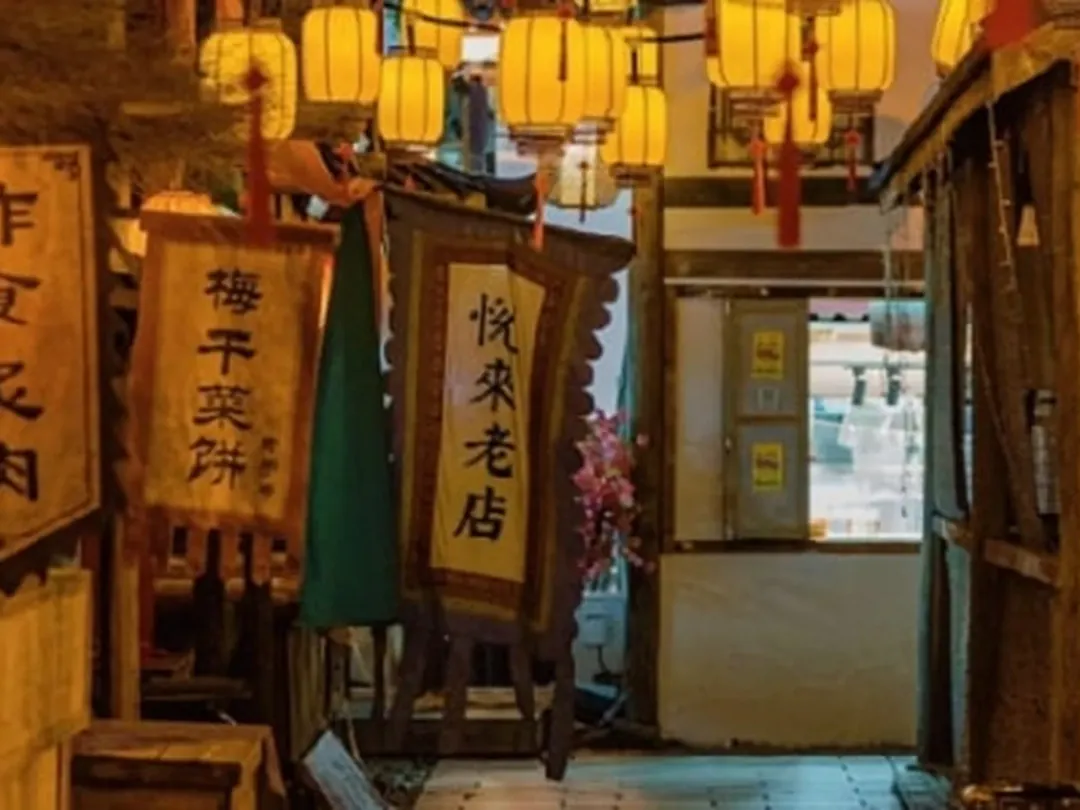
The eastern section near Lingering Garden is the most polished — flagship stores for Chinese fashion brands, Starbucks, and international quick-service restaurants sit alongside traditional establishments. Moving west, the character shifts — older teahouses (茶馆), traditional medicine shops (中药铺), and the surviving tailors and silk merchants become more prominent. The Yuhe Market at the western end is a covered wet market with fresh produce, dried goods, and a small food court — the most authentic remaining element of the old commercial street.
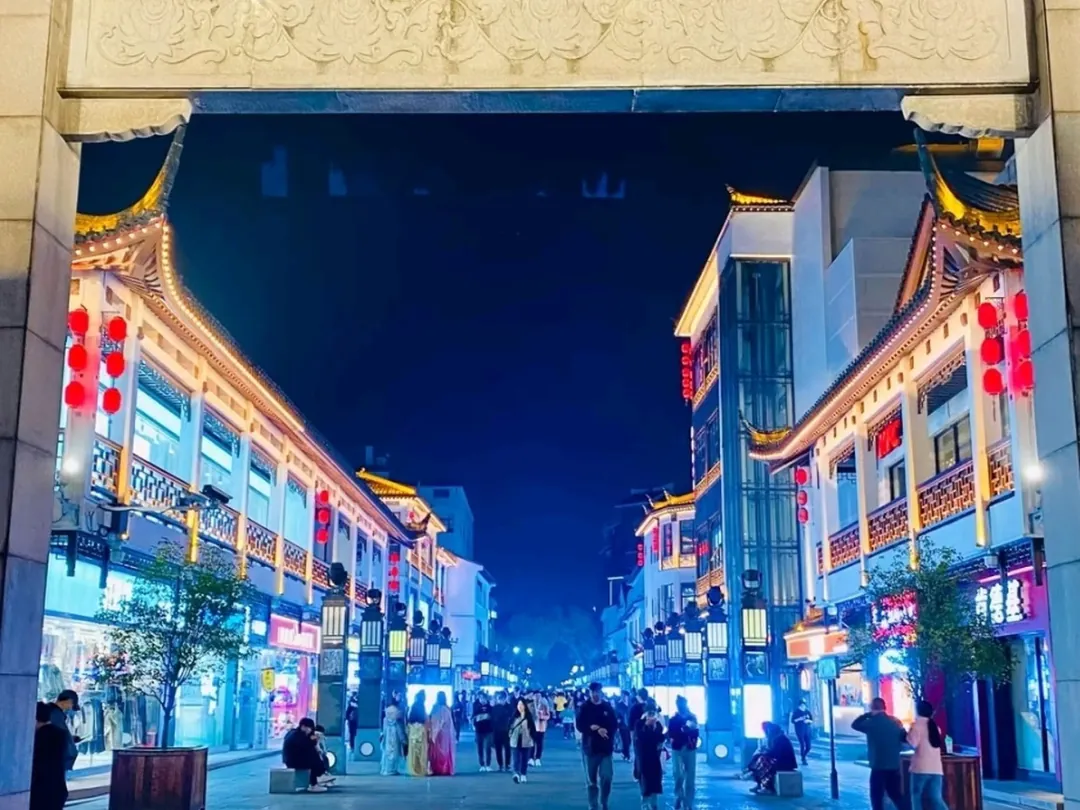
The street's traditional food culture is its most distinctive feature. Suzhou-style dim sum (苏式早点) at establishments like Deyue Restaurant (得月楼) is different from Cantonese dim sum — sweeter glutinous rice cakes (青团), steamed dumplings with crab roe (蟹粉小笼), and silk-skin rice rolls (丝卷). The teahouses serve locally grown Biluochun (碧螺春) green tea from nearby Dongting Mountain. In the evening, the street's lighting (installed in the 2020 renovation) creates a pleasant atmosphere for a stroll.
How to get there
Metro Line 1 to Linlong Road (临顿路), Exit 4 — the eastern end of the street is a 5-minute walk west. Metro Line 6 to Guanqian Street station (if open — check current metro map). Bus 1, 5, 8, 101, 202, 529, 811 all stop along the street. The street is linear and walkable end-to-end in 15 minutes at a brisk pace, or 30 minutes with stops.
Best photo spots
- The street looking west from the Lingering Garden entrance — traditional shop fronts with the modern pedestrian environment
- The Xuanmiao Temple gate at the northern end — the namesake of the street, illuminated in the evening
- The covered arcade section near the central intersection — best for capturing the human scale and local activity
- Early morning empty street (08:00–09:00) — traditional architecture without people
Tips
- Come early morning (08:00–10:00) for the best photos and the traditional dim sum teahouses in their authentic state
- Visit Lingering Garden first (opens 07:30), then walk the street for breakfast afterward
- The eastern section near Lingering Garden has the cleanest, most comfortable shopping environment
- For authentic Suzhou food, go to the western section near Yuhe Market or ask locally for "本地人推荐" (locals' recommendation)
- Weekend evenings get very crowded — weekday evenings are better for atmosphere
Scams to avoid
- Cheap "silk" shops selling synthetic fabric at premium prices — if buying silk, go to established brands like Luoxing (罗星) or Suzhou Silk Museum shop
- "Authentic Suzhou embroidery" stalls with mass-produced machine embroidery — real hand embroidery is expensive (¥500+ for a small piece)
- Tea shops that pack and seal tea in front of you but fill the box with inferior product — buy from established teahouses, not street stalls
Frequently asked questions
Is Guanqian Street free to visit?
Yes — Guanqian Street is a public pedestrian street. There is no admission charge. You pay for whatever you buy at shops and restaurants. The street is free to walk anytime during shop hours.
What should I buy on Guanqian Street?
The most authentic purchases are silk products (from established brands, not street stalls), Biluochun tea (碧螺春, from established teahouses), and Suzhou-style snacks to take away. Avoid "antique" shops and " jade" dealers unless you are an expert — reproductions are common. The fashion retail is the same brands found in any Chinese city.
How does Guanqian Street compare to Nanjing Road in Shanghai?
Guanqian Street is smaller (800m vs. Nanjing Road's several km), more traditional in architecture (low-rise vs. Shanghai's Art Deco and modern towers), and more focused on local food and crafts. Nanjing Road is a major international shopping destination; Guanqian Street is a local shopping street that has been upgraded for tourism. If you want authentic Suzhou local experience, Guanqian Street wins.
Is Guanqian Street wheelchair accessible?
Yes — the pedestrianized street has smooth paving throughout and ramps at intersections. It is more accessible than most Chinese commercial streets. The main limitation is crowds, which can make navigation difficult on weekend evenings.
What is Xuanmiao Temple?
Xuanmiao Temple (玄妙观) is a Taoist temple at the northern end of Guanqian Street, founded in the 3rd century CE and rebuilt multiple times. The current main hall dates to the 12th-century Song Dynasty, making it one of the oldest surviving Taoist buildings in Suzhou. It is still an active temple — entry is free and visitors are welcome, though photography inside the hall is not permitted.
Read next
Other things to do in Suzhou
Hanshan Temple
Suzhou temple made famous by Zhang Ji's 8th-century poem about the midnight bell; free entry with a 20-yuan bell-ringing fee, open 08:00-17:00, near Maple Bridge on the Grand Canal.
Humble Administrator's Garden
The largest and most famous of Suzhou's classical gardens, a UNESCO World Heritage Site. Built in 1513, restored over centuries. Peak lotus in summer, quietest in winter.
Jinji Lake
A free, 24/7 urban lake ringed by a ~10 km promenade in Suzhou Industrial Park — plan 2-4 hours, and come at dusk for the fountain show.
Lingering Garden
Suzhou's most exquisitely detailed classical garden, smaller than Humble Administrator's but considered the finest. Peak-season entry ¥55; allow 1–2 hours for a thorough visit.
Luzhi Water Town
A working water town 25 km from Suzhou — less touristy than Zhouzhuang or Tongli, with authentic canal life, 41 bridges, and a famous morning market. Free to walk. ¥78 for attractions. 2–3 hours.
Master of Nets Garden
The smallest and most elegant of Suzhou's three premier UNESCO gardens — 0.5 hectares packed with spatial ingenuity. ¥40. Evening opera ¥100 (March–November). 1–2 hours.
Pan Gate Scenic Area
pan-gate in Beijing: Suzhou's only surviving ancient city gate complex — a 14th-century water-gate and land-gate double system with a 40m pagoda. ¥45. 1.5–2 hours.
Pingjiang Road Historic District
Suzhou's most authentic preserved canal neighborhood — 1.6 km of Ming Dynasty canals, ancient bridges, and boutique shops in a living residential area. Free. 1–2 hours.
Qinghua Temple
A serene 6th-century Buddhist temple in Suzhou's western hills — less visited than Hanshan Temple, with ancient pagodas, camellia gardens, and mountain trails. Free. 2–3 hours.
Shantang Street
Suzhou's most famous canal street — 360m of Ming-Qing architecture lining a living waterway, from Pan Gate to Tiger Hill. Free to walk. 1–2 hours.
Suzhou Museum
I.M. Pei came out of retirement to design this museum (opened October 2006), where modernist geometry meets Suzhou garden aesthetics — the sliced-stone courtyard wall is the single most photogra.
Tiger Hill (Huqiu)
Suzhou's storied hill with the 1000-year-old Yunyan Pagoda leaning 3.59 degrees; tomb of King Helu from 496 BC, entry 70 yuan, allow half a day, 5 minutes from Tiger Hill metro station.
Tongli Water Town
A preserved 1,000-year-old water town 30 km from Suzhou — 15 rivers, 49 bridges, 7 islands. ¥100 for all attractions. 3–4 hours minimum.
Zhouzhuang Water Town
The most famous Jiangnan water town — 1 sq km of canals, 100 bridges, and 800-year-old architecture. ¥100 for entry. 3–4 hours minimum. Can be done as a day trip from Shanghai.
Museums in Suzhou
Suzhou Museum
Suzhou's world-class art museum in a landmark I.M. Pei building — Suzhou cultural relics, classical scholar objects, and rotating exhibitions. Free with passport; 2–3 hours.
Suzhou Silk Museum
suzhou-silk-museum in Suzhou: "Watch live silkworms spin cocoons, then trace 4,000 years of silk from mulberry leaf to imperial dragon robe — all free.