This page is archived and no longer updated — see the current guide: See the current guide
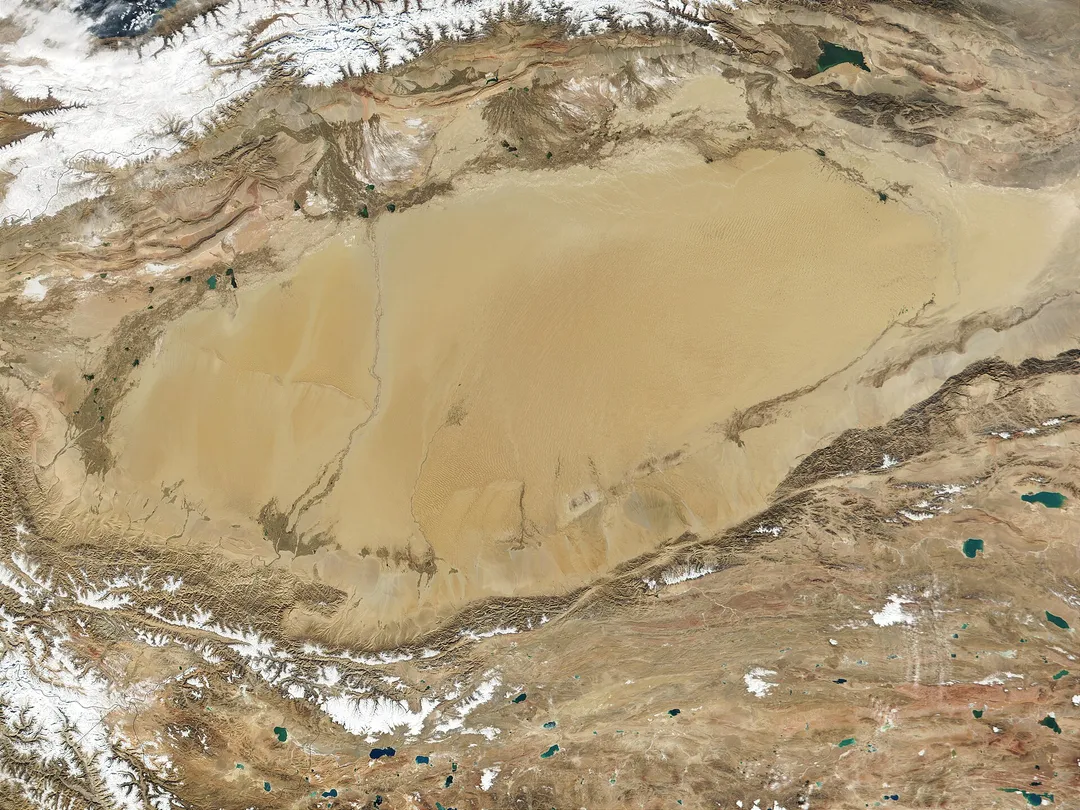
Taklamakan Desert Edge塔克拉玛干沙漠边缘
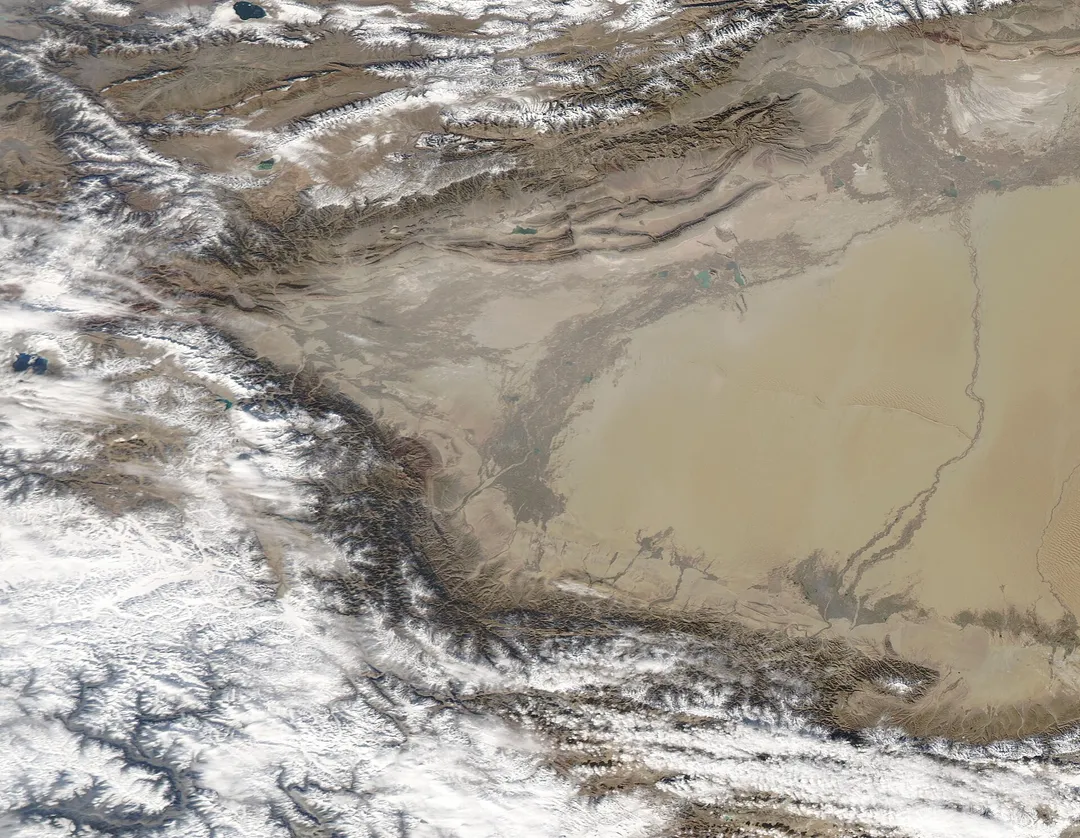
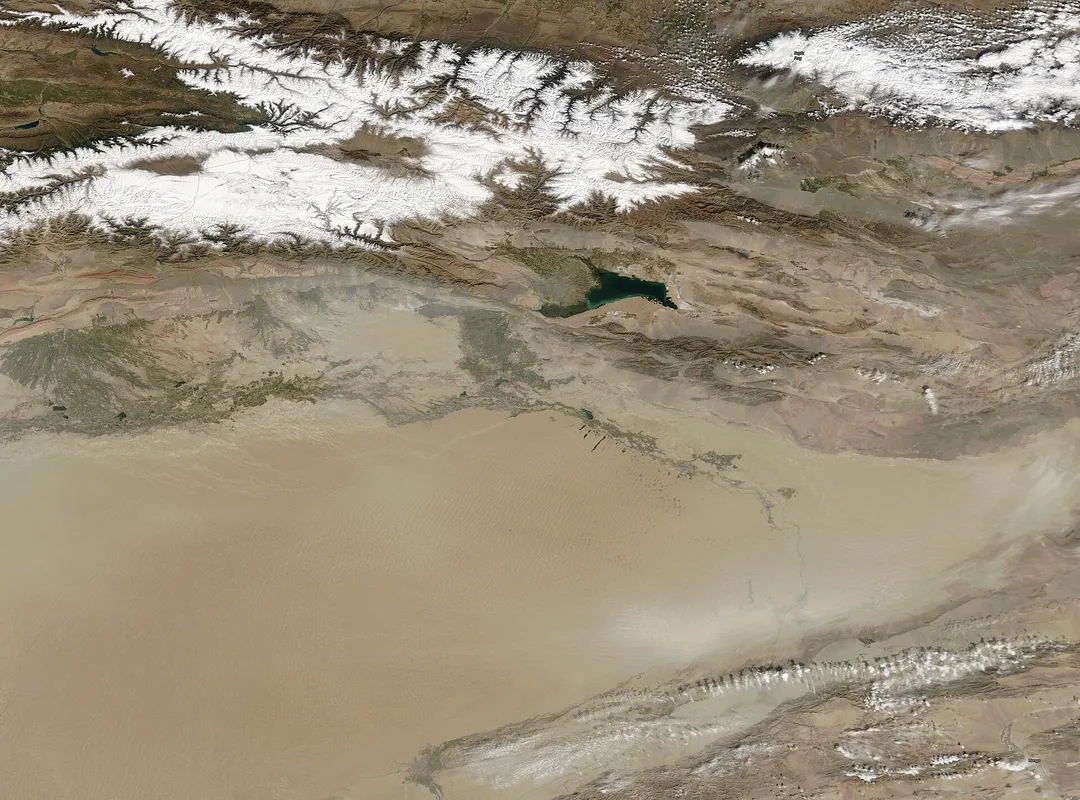
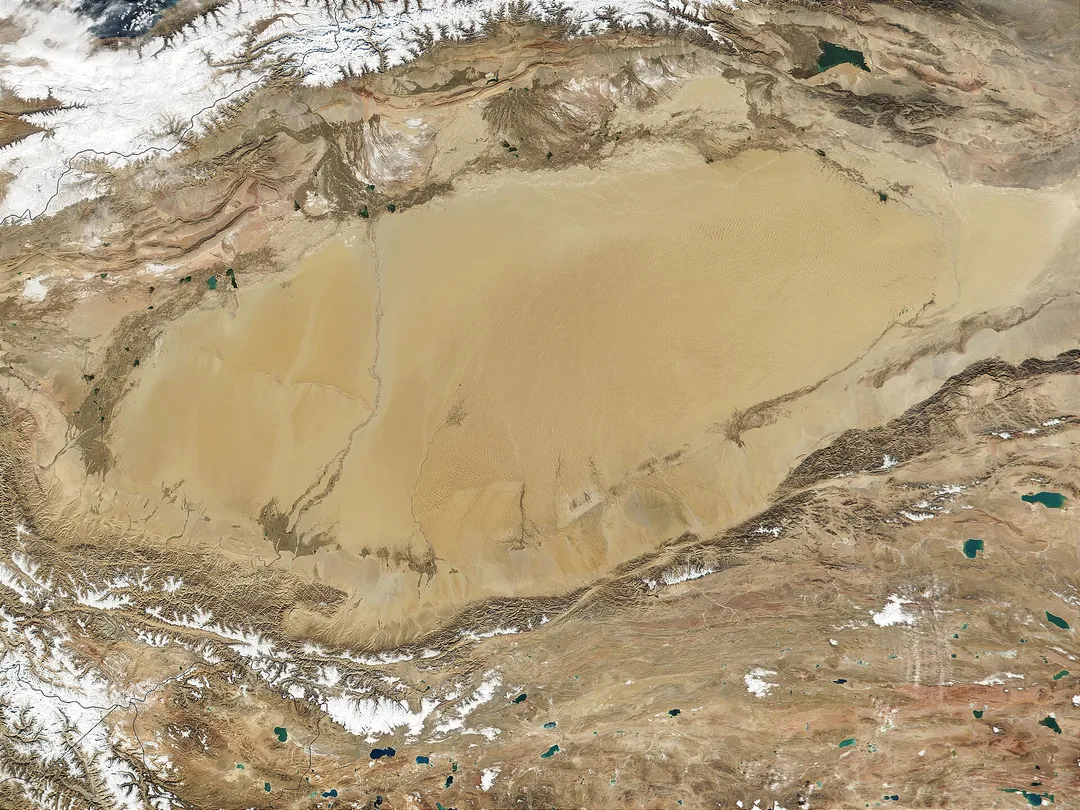
The Taklamakan, in southern Xinjiang, is China's largest desert and the world's second-largest shifting-sand desert; the name is said to mean "a place you enter but never leave." It spans 330,000 sq km. Oasis towns on its rim — Hotan, Yutian, Qiemo — were key nodes on the ancient Silk Road, and the Desert Highway drives straight through the heart of the sands, flanked by straw checkerboards that pin the dunes in place.
Urumqi · Visitor Guide2026-10-19
Quick Answer
Is Taklamakan Desert Edge worth visiting?
China's largest desert and the world's second-largest shifting-sand sea — 330,000 sq km crossed by the 522 km Desert Highway. Highs hit 67°C in summer; September-November is best. Allow 2-3 days.
Quick facts
| Ticket | Free along the Desert Highway; scenic areas ticketed separately |
|---|---|
| Hours | Daily 0:00-24:00 |
| Recommended duration | 2-3 days recommended |
| Best time to visit | September-November (avoids the summer heat and the sandstorm season) |
| How to get there | Fly from Urumqi to Hotan or Korla, then self-drive or hire a car; the Desert Highway entrance is at Lunnan town |
| English signage | Partial |
| Wheelchair accessible | No |
| Desert area | 330,000 sq km |
| Ranking | China's largest and the world's second-largest shifting-sand desert |
| Desert Highway | About 522 km, crossing the desert end to end |
| Average annual rainfall | Under 100 mm |
| Maximum temperature | Up to 67 degrees in summer |
| Main oases | Hotan, Yutian, Qiemo, Lunnan |
What to expect
The Taklamakan is one of the world's most spectacular deserts, an ocean of golden dunes rolling to the horizon. A handful of fixed and semi-fixed oases dot the sands, creating a distinctive ecology. Along the Desert Highway, straw checkerboard barriers planted with saxaul and red tamarisk hold the dunes at bay, forming a green corridor through the desert.
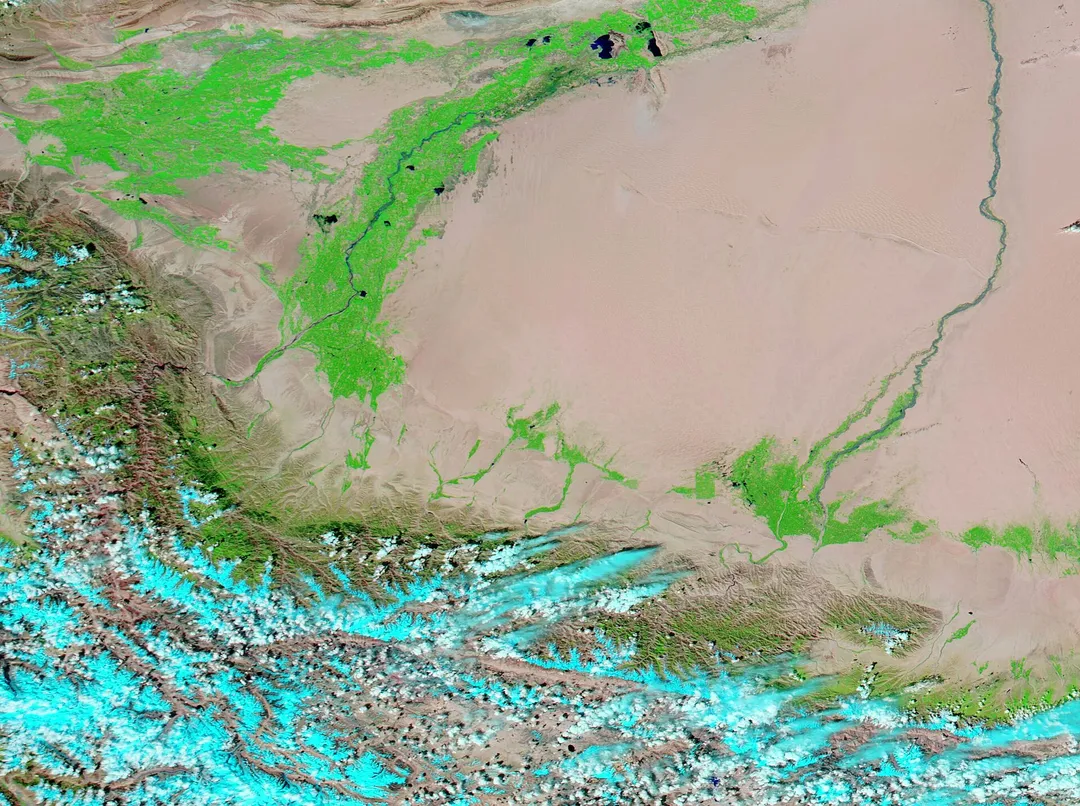
The oasis towns on the desert's rim are steeped in history. Hotan, a major city on the southern Silk Road, has long been famous for jade, silk and carpets. The Niya site — the ancient Jingjue kingdom — lies deep in the sands and has yielded priceless artifacts, and though the lost city of Loulan has vanished beneath the dunes, its legends and archaeological finds give this desert an air of mystery.
At the desert's edge you can ride camels, sled down the dunes or take a desert buggy across the sands. Early morning and evening bring the softest light and the best photos. After dark the desert sky blazes with stars, the Milky Way clearly visible — a pilgrimage site for stargazers.
How to get there
Fly from Urumqi to Korla or Hotan, then drive or hire a car to the desert's edge. The Desert Highway entrance is at Lunnan town, reached via National Highway G217.
Best photo spots
- The Desert Highway and its straw checkerboards
- Desert sunsets
- Desert oases
- The star-filled desert sky
Tips
- The climate is extreme — scorching summers, brutal winters; September-November is the best window
- Use a four-wheel-drive vehicle for self-driving and carry ample water and food
- It is easy to get lost; never leave the highway or your guide
- Sun protection is essential — sunscreen, sunglasses and a headscarf
Scams to avoid
- Book desert charters through a licensed agency and sign a contract
- Be careful buying local "specialties" such as jade — fakes are everywhere
Frequently asked questions
Can you drive into the Taklamakan?
Ordinary cars are not advised off-road; the Desert Highway is open to traffic. Off the pavement you need a four-wheel drive and ideally a guide.
Is there anywhere to stay in the desert?
Service areas along the Desert Highway offer lodging, and the oasis towns on the rim have hotels.
Which season is best?
September-November, steering clear of the summer heat and the spring sandstorms.
Read next
Other things to do in Urumqi
Heavenly Lake Tianchi
Alpine lake at 1,980 m in the Tianshan Mountains, 110 km from Urumqi. Kazakh yurt stays. ¥125 entry. Half-day boat or full-day hike. Best June–September.
Heavenly Lake of Tianshan
Alpine moraine lake at 1,980 m on the north slope of Bogda Peak (5,445 m), 110 km east of Urumqi. Plan a full day — 2 hours each way by road plus 4–6 hours at the lake; entry is ¥125 plus a mand.
Tian Shan Tian Chi (Heavenly Mountain Heavenly Lake)
An alpine lake in the Tian Shan at 1,980 m, covering 4.9 sq km with depths to 105 m. Admission CNY 155 with shuttle; about 120 km from Urumqi. Best May-October; allow 4-6 hours.
Shanshan Ancient City
An ancient Silk Road town of the Jushi Kingdom near Turpan, founded around the 1st century BC; 60 yuan entry (120 yuan combo with Kumtag Desert), open 8:30-18:30.
Southern Mountain Scenic Area
Natural pasture area about 40 km from Urumqi at 2000-3000 m elevation; entry 45 yuan with sights ticketed separately, 10 degrees cooler than the city in summer, open 9:00-19:00.
Xinjiang Grand Bazaar
One of the world's largest bazaars, opened in 2003 in Urumqi with 3000+ shops and about 100,000 visitors a day; free entry, shops 10:30-23:00, 100-metre Silk Road tower.
Xinjiang Museum
Xinjiang's largest comprehensive museum, with more than 50,000 artifacts telling the story of the region's history and Silk Road civilizations.
Xinjiang Regional Museum
The Xinjiang Regional Museum in Urumqi holds the 3,800-year-old Tarim mummies — the Beauty of Loulan and the Beauty of Xiaohe — alongside Silk Road textiles, Tang silk, Persian glass, and Uyghur.
Museums in Urumqi
Xinjiang Regional Museum
China's westernmost major museum — the definitive collection of Silk Road Buddhist art, Uyghur culture, and the ancient Kucha and Khotan kingdom archaeology. Free; 2–3 hours.
Xinjiang Silk Road Museum
Silk Road crossroads: Tarim mummies (3,800-year-old Caucasoid bodies preserved in desert sand), Sogdian letters, Buddhist cave art, and Uyghur textiles — all in central Urumqi. Free.