This page is archived and no longer updated — see the current guide: See the current guide
Xinjiang Grand Bazaar新疆国际大巴扎
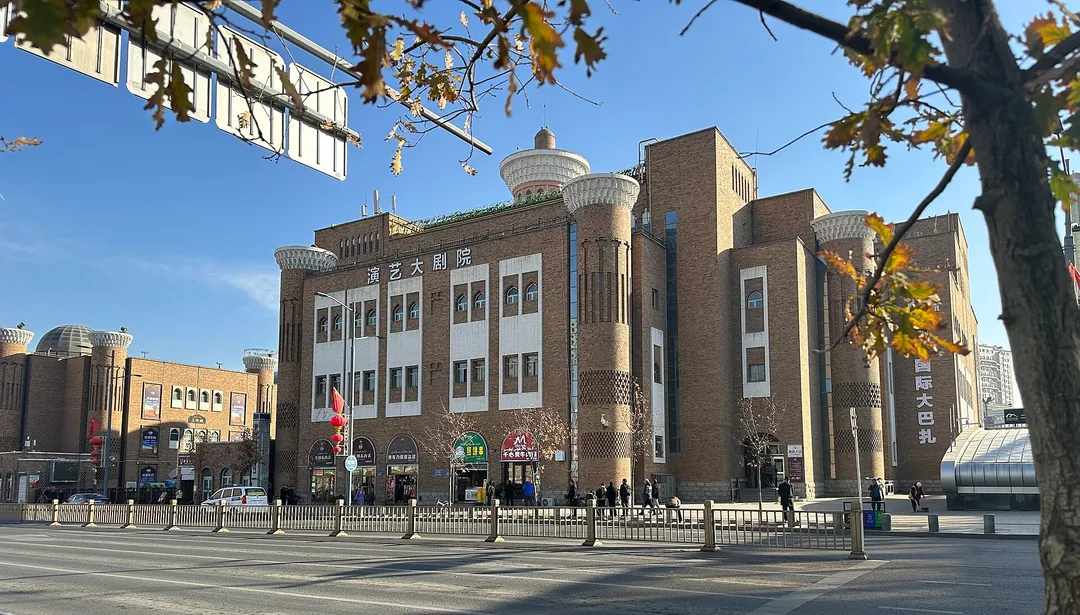
The Xinjiang International Grand Bazaar in Urumqi's Tianshan district is one of the largest marketplaces in the world. 'Bazaar' means market in Uyghur: the complex gathers specialty goods, handicrafts and food from across Xinjiang, staged in ornate Islamic-influenced architecture — a showcase window on the region's many cultures.
Urumqi · Visitor Guide2026-10-19
Quick Answer
Is Xinjiang Grand Bazaar worth visiting?
One of the world's largest bazaars, opened in 2003 in Urumqi with 3000+ shops and about 100,000 visitors a day; free entry, shops 10:30-23:00, 100-metre Silk Road tower.
Quick facts
| Ticket | Free entry; shows and attractions inside ticketed separately |
|---|---|
| Hours | Open all day; shops 10:30-23:00 |
| Recommended duration | 2-3 hours |
| Best time to visit | Year-round; summer evenings are best |
| How to get there | Metro Line 1 to Erdaoqiao station; buses 1, 10, 16, 61, 101 and 104 to Erdaoqiao |
| English signage | Yes |
| Wheelchair accessible | Partial |
| Standing | One of the world's largest bazaars |
| Opened | 2003 |
| Architecture | Islamic-influenced style |
| Number of shops | 3,000+ |
| Daily visitors | About 100,000 |
| Signature goods | Carpets, jade, dried fruit, herbs, ethnic clothing |
What to expect
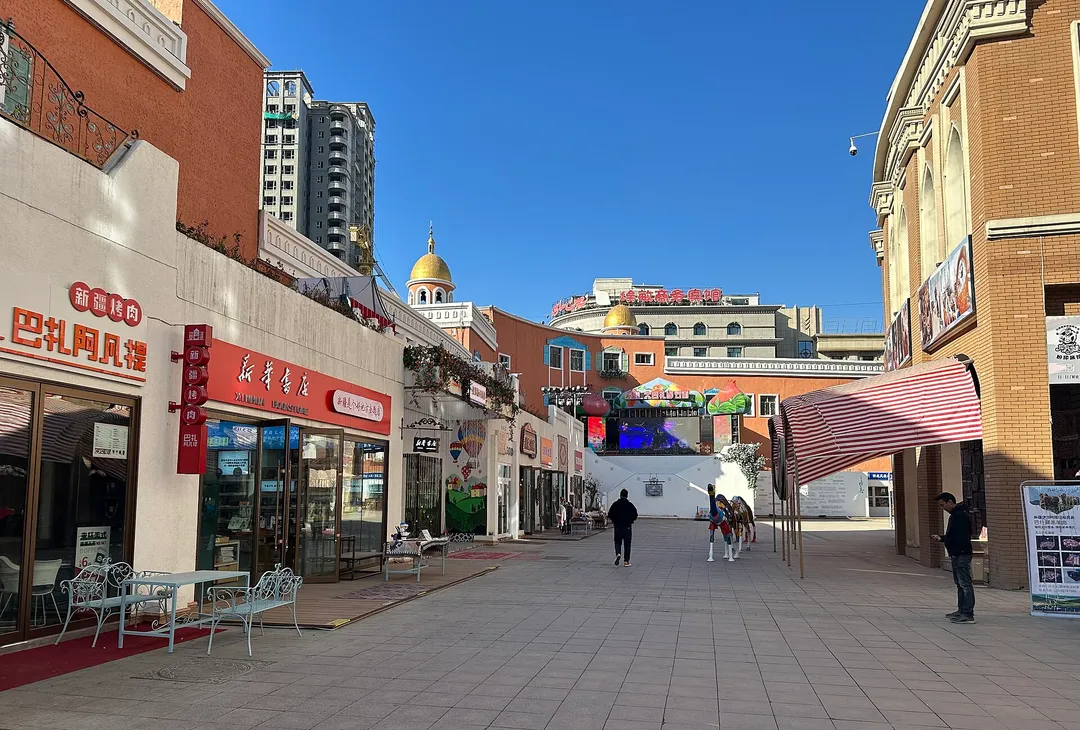
The Grand Bazaar is one of Urumqi's best-known sights, combining ethnic commerce, sightseeing and cultural display in one place. It is divided into four zones (A-D) with more than 3,000 shops selling specialties from all over Xinjiang and Central Asia — step inside and the atmosphere is pure Silk Road, with the region's peoples trading side by side.
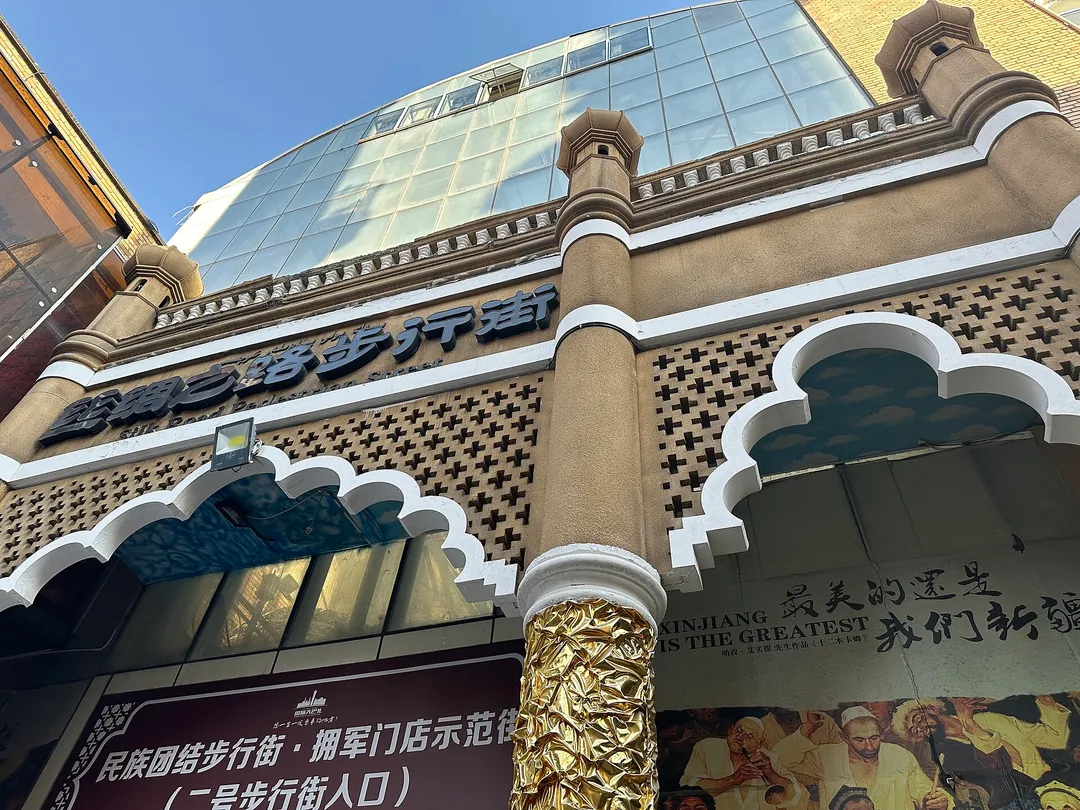
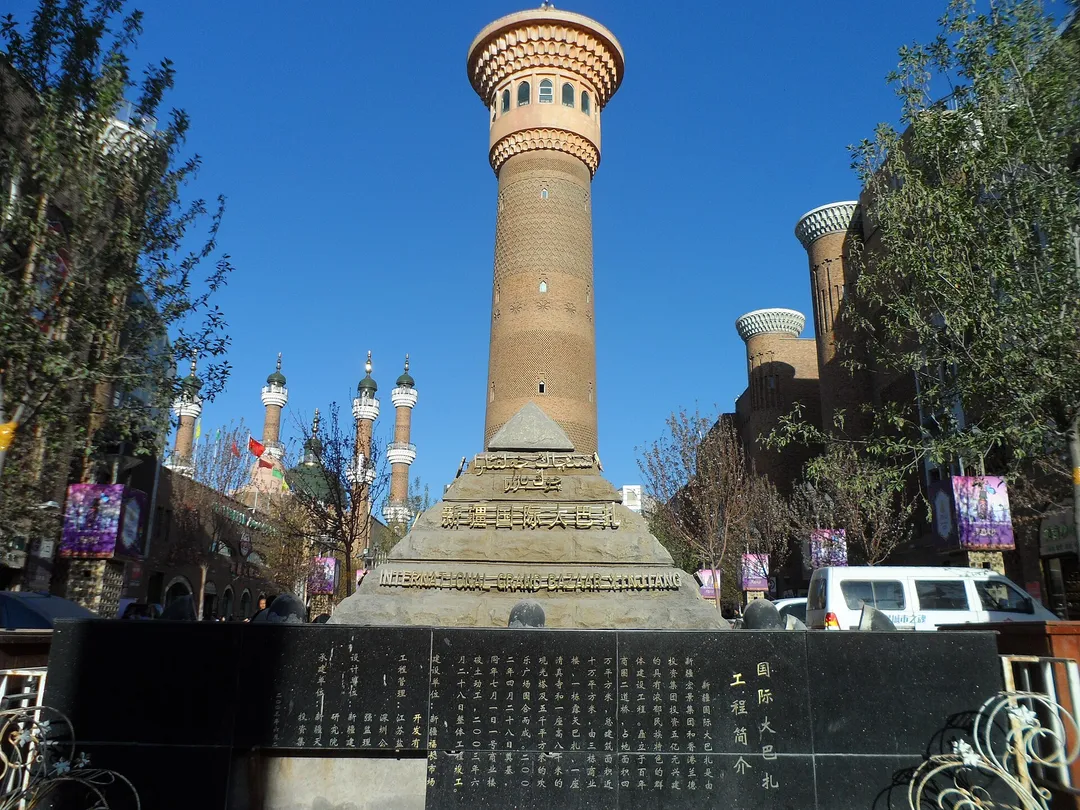
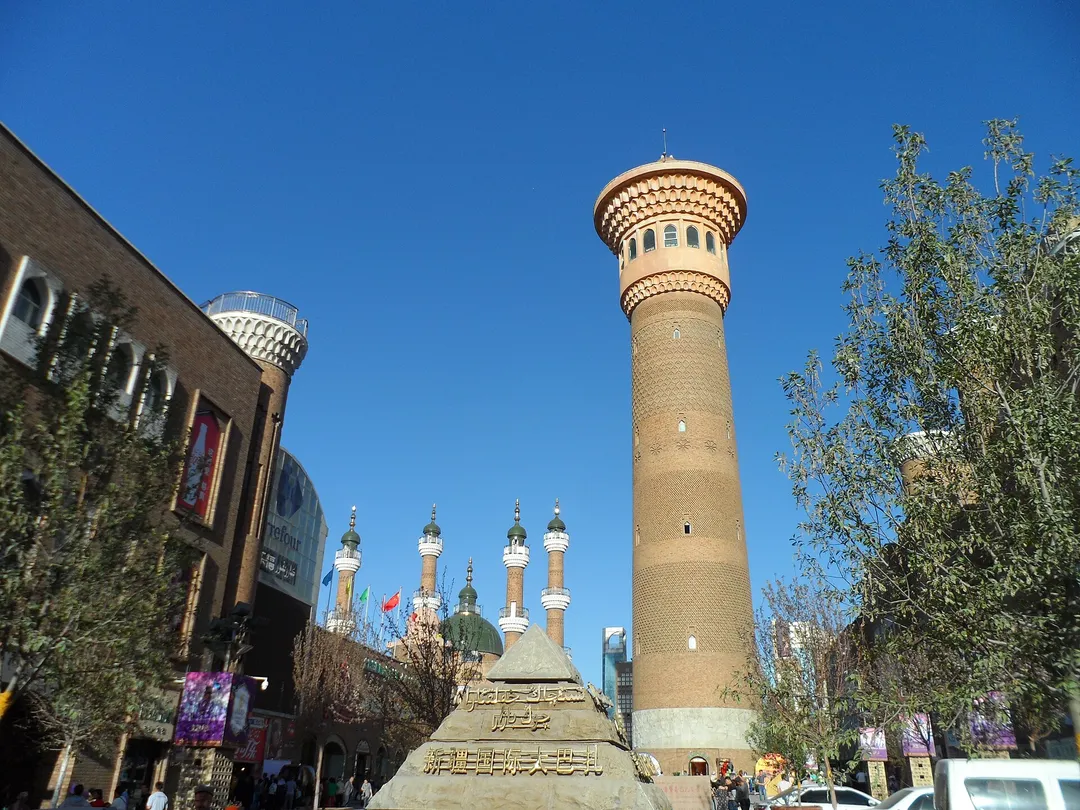
The architecture is a highlight in itself: Islamic-influenced design in earthen yellow, with domes, pointed arches and colored windows throughout. The 100-metre Silk Road Observation Tower on the central square is the best spot to take in the whole bazaar, and the revolving restaurant at its top serves dinner with Urumqi's skyline.
The bazaar is a prime place to eat Xinjiang: pilaf, baked samsa buns, da pan ji chicken, lamb kebabs, naan-pit roast meat, yoghurt and more are all here. After dark the bazaar blazes with light as song-and-dance shows and live folk music push the atmosphere to a climax.
How to get there
Metro Line 1 to Erdaoqiao station Exit C — the bazaar is right outside. Buses also stop at Erdaoqiao or Shanxi Lane.
Best photo spots
- The bazaar's main entrance
- The Silk Road Observation Tower
- The central dome hall
- The lit-up streets after dark
Tips
- Bargaining is part of the fun — starting at half the asking price is the norm
- For valuables (jade, herbs) buy from proper stores and ask for receipts
- It gets crowded — keep an eye on your belongings
- Come in the evening for the night market and performances
Scams to avoid
- Some vendors sell fake herbs or fake jade — buy from proper shops
- Ask before photographing vendors
Frequently asked questions
Does the Grand Bazaar charge admission?
No — entry is free. The Silk Road Observation Tower and indoor shows are ticketed separately.
Do shops take Alipay and WeChat Pay?
Most shops take mobile payment; some small stalls may be cash only.
Is it worth buying things here?
Carpets, dried fruit and ethnic clothing are worth a look, and dried fruit and qiegao nut cake are good value; be careful with jade and herbs.
Read next
Other things to do in Urumqi
Heavenly Lake Tianchi
Alpine lake at 1,980 m in the Tianshan Mountains, 110 km from Urumqi. Kazakh yurt stays. ¥125 entry. Half-day boat or full-day hike. Best June–September.
Heavenly Lake of Tianshan
Alpine moraine lake at 1,980 m on the north slope of Bogda Peak (5,445 m), 110 km east of Urumqi. Plan a full day — 2 hours each way by road plus 4–6 hours at the lake; entry is ¥125 plus a mand.
Tian Shan Tian Chi (Heavenly Mountain Heavenly Lake)
An alpine lake in the Tian Shan at 1,980 m, covering 4.9 sq km with depths to 105 m. Admission CNY 155 with shuttle; about 120 km from Urumqi. Best May-October; allow 4-6 hours.
Shanshan Ancient City
An ancient Silk Road town of the Jushi Kingdom near Turpan, founded around the 1st century BC; 60 yuan entry (120 yuan combo with Kumtag Desert), open 8:30-18:30.
Southern Mountain Scenic Area
Natural pasture area about 40 km from Urumqi at 2000-3000 m elevation; entry 45 yuan with sights ticketed separately, 10 degrees cooler than the city in summer, open 9:00-19:00.
Taklamakan Desert Edge
China's largest desert and the world's second-largest shifting-sand sea — 330,000 sq km crossed by the 522 km Desert Highway. Highs hit 67°C in summer; September-November is best. Allow 2-3 days.
Xinjiang Museum
Xinjiang's largest comprehensive museum, with more than 50,000 artifacts telling the story of the region's history and Silk Road civilizations.
Xinjiang Regional Museum
The Xinjiang Regional Museum in Urumqi holds the 3,800-year-old Tarim mummies — the Beauty of Loulan and the Beauty of Xiaohe — alongside Silk Road textiles, Tang silk, Persian glass, and Uyghur.
Museums in Urumqi
Xinjiang Regional Museum
China's westernmost major museum — the definitive collection of Silk Road Buddhist art, Uyghur culture, and the ancient Kucha and Khotan kingdom archaeology. Free; 2–3 hours.
Xinjiang Silk Road Museum
Silk Road crossroads: Tarim mummies (3,800-year-old Caucasoid bodies preserved in desert sand), Sogdian letters, Buddhist cave art, and Uyghur textiles — all in central Urumqi. Free.