Urumqi Travel Guide
Summary
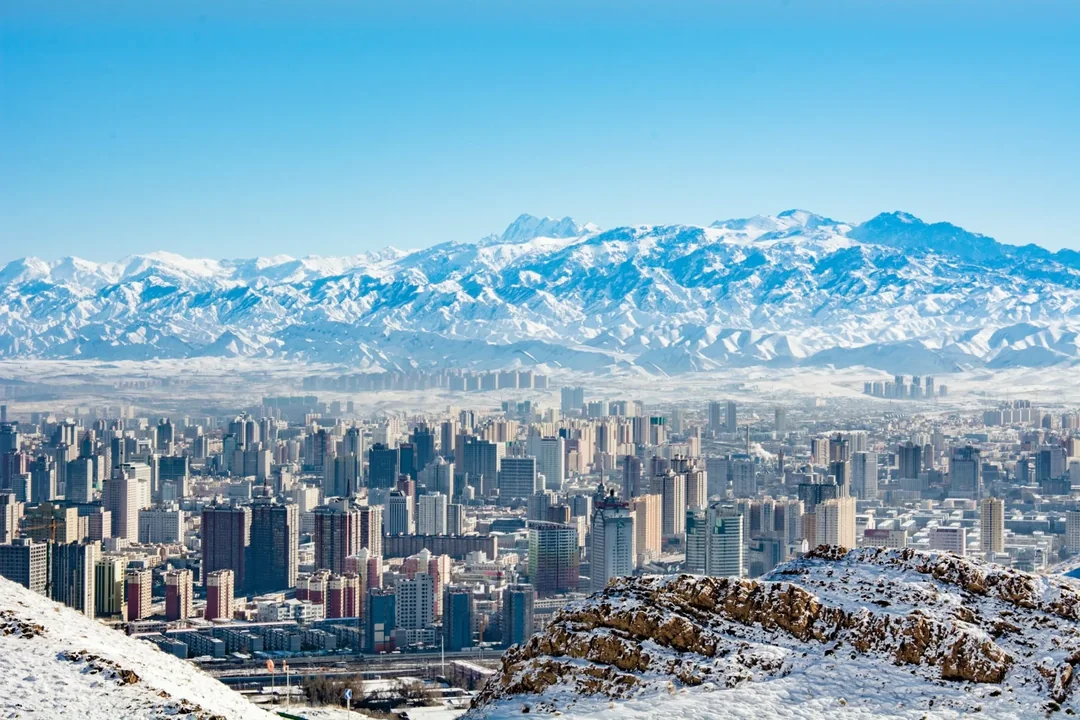
Urumqi (乌鲁木齐) is the capital of the Xinjiang Uyghur Autonomous Region and the practical gateway to nearly everything in China's far northwest: the alpine lake country of the Tianshan, the oasis ruins of Turpan, and the long desert roads toward Kashgar. It is also, by common geographic measures, the most inland major city on Earth, sitting roughly 2,500 km from the nearest ocean at about 800 m elevation on the northern foot of the Tianshan range. That distance from the sea shapes the whole visit: the air is dry, the summer light lasts until nearly 22:00, the winters are genuinely cold, and the food culture runs on wheat, lamb and dairy rather than rice and seafood.
We have written this guide for two kinds of traveler: the one passing through for two days between flights or trains, and the one using the city as a base for a longer Xinjiang loop. Our recommendation is two full days in the city itself, with a third if you add Turpan. That is enough for the museum, the bazaar, the central parks, one mountain day trip, and several serious meals without rushing.
The sections below cover what actually drives decisions here: how the free museum reservation works, what a Tianchi day trip costs in total, which district to sleep in, how the two-hour gap between official Beijing time and local rhythm affects planning, and what the routine ID checks mean in practice. Expect a mid-range budget of roughly 500-1,000 CNY per person per day, day trips priced separately.
One honest framing: Urumqi is a modern, functional, largely rebuilt city, not an open-air museum. Its value is the region's best collection of Silk Road artifacts, its best eating, and its unmatched transport links. Come for those, and it delivers.
Why Urumqi
Geography first, because it explains everything else. Urumqi sits in a corridor between the Bogda massif to the east — its highest summit, Bogda Feng, stands at 5,445 m and is visible from downtown on clear days — and lower hills to the west, where the Junggar Basin begins its slide toward the Gobi. For most of its history this was grazing land, not a city site; the name itself comes from Mongolian words for "beautiful pasture."
The city exists because of empire and infrastructure, not trade romance. The Silk Road's northern route ran through the region two thousand years ago, but the town itself began in 1763 as a Qing garrison named Dihua, was renamed Urumqi in 1954, and expanded with industry, railways and state-farm settlement after the 1950s. The metro area now holds around four million people — by far the largest city between Lanzhou and Almaty.
For an international visitor, the case for stopping here is concrete:
- The Xinjiang Regional Museum holds the strongest Silk Road collection in China, including the Tarim mummies and Han-dynasty textiles that anchor the whole regional story.
- It is the transport hub of the northwest: high-speed trains to Lanzhou (11-12 hours), D-trains to Turpan (about one hour), conventional trains to Kashgar and Yining, and the region's main airport.
- The food is a genuine reason to travel: Uyghur, Kazakh and Hui cooking at prices far below coastal cities.
- Serious mountain scenery starts 40-110 km from downtown, reachable as day trips.
- It has the region's most workable hotels and onward flights when something goes wrong on a longer itinerary.
Our honest opinion: arrive expecting intact caravan-era alleys and you will be disappointed — that material survives better in Kashgar's old city and Turpan's ruins. Urumqi is the machine room: stock up, eat supremely well, see the artifacts under one roof, launch the side trips. Judged on those terms, it earns its two days.
Top Attractions
Order matters in Urumqi. We suggest the museum first, because its artifacts give context to everything else you will see in Xinjiang; the bazaar in the late afternoon and evening, when it is at full volume; the central parks slotted into gaps; and the mountain day trips on whichever day has the best weather. None of the in-city sights takes more than three hours, so a loose plan survives contact with reality.
Xinjiang Regional Museum (新疆维吾尔自治区博物馆)
This is the best sight in the city and one of the finest regional museums in China. Admission is free but reservation-only — through the museum's official WeChat account (新疆博物馆) or, far more easily, through your hotel front desk; your passport is both ticket and ID at the entry check. Closed Mondays; hours run late morning to early evening with last entry well before close, and shift between seasons, so confirm when reserving. Budget two to three hours.
Two galleries justify the trip on their own. The ancient-corpses hall displays naturally mummified men, women and children recovered from cemeteries across the Tarim Basin — the "Loulan Beauty," a woman buried near the dried-out Loulan river some 3,800 years ago, is the famous one, with eyelashes and woven clothing intact. The textile and documents galleries hold the other headline piece: a Han-dynasty brocade arm guard from Niya woven with the characters 五星出东方利中国 ("five stars rise in the east, benefit China"), plus silk fragments, wool tapestries and administrative writings in multiple ancient scripts recovered from desert sites. The ethnographic floors cover the housing, dress and tools of the region's native peoples — informative, though state-framed; read it as one perspective on a complicated history.
Free timed guided tours run a couple of times a day in Mandarin, and signage is mostly bilingual. Photography without flash is allowed in the permanent halls. The museum sits on Xibei Road west of the centre: take Metro Line 1 toward town then a 10-15 CNY taxi, or buses 7, 51, 68 or 153 to the Bowuguan stop. Avoid the first week of October, when queues can stretch for hours.
International Grand Bazaar (新疆国际大巴扎)
Built in 2003 as a purpose-made bazaar quarter in the Erdaoqiao district, this is the tourist heart of Urumqi — a dense cluster of domed buildings holding more than 3,000 stalls. Entry is free, shops generally open around 10:30 and run until about 23:00, and the whole thing is two minutes from Metro Line 1's Erdaoqiao station (Exit C), which keeps logistics trivial.
The architecture borrows deliberately from Central Asian Islamic design: ochre walls, pointed arches and a 100-metre sightseeing tower at the centre that you can climb on a separate ticket of a few tens of yuan for a view over the rooftops toward the mountains. What you actually do here is shop and eat: dried fruit, carpets, instruments, hats and jade fill the walkways (bargaining notes in the Shopping section), and a food street off the main square covers skewers, pilaf, baked buns and yogurt. Prices run above street level — you pay for convenience and atmosphere — but quality is reliable and the markup not punishing.
Go after 17:00. In warm months the square fills with families, ice-cream vendors and informal dancing that builds through the evening, and the towers look their best lit up after dark. Watch your bag in the crowds, carry small notes, and do not accept the first price on anything not clearly marked.
Hongshan Park (红山公园)
A fang of red rock sticking out of the street grid in the middle of the city, Hongshan is Urumqi's local hill. Entry is free, the climb takes ten to fifteen minutes on stone steps, and the payoff is a 360-degree read on the city: the gridded centre, the construction cranes on the horizon, and on clear days the snow line of the Bogda massif to the east. A small temple pavilion sits on the summit, and the terraces below fill with dancers and card players most evenings.
This is not a destination sight; it is a twenty-minute orientation tool and a reliable sunset viewpoint, combinable with People's Park or the museum in the same half-day. Bring a wind layer — the exposed summit catches the gap wind that funnels between the ranges.
Tianshan Grand Canyon (天山大峡谷)
About 50 km south of downtown in Urumqi County, this is the closest real Tianshan topography without committing to a full Tianchi day: a gorge of spruce forest, snowmelt river and rock walls, with boardwalks and shuttle stops stringing together viewpoints and Kazakh yurt tea and noodle stops in summer. Expect entry plus shuttle to land roughly in the 50-90 CNY range depending on season and open zones — verify when booking, because pricing shifts year to year.
Allow a half day door to door. The canyon runs 8-10°C cooler than the city at the same hour, which is the whole point in July. Many drivers combine it with the Nanshan meadow sites such as Baiyanggou (entry around 45 CNY per site), which adds grassland, yaks and horse-riding to the same drive. June through September is the window; outside it the area is cold, brown and half-shuttered.
Arrange through your hotel (car with driver roughly 600-800 CNY for the day, split among passengers) or a group tour from any agency on Jiefang South Road; agree the itinerary and a no-shopping-stops clause before setting out.
Shuimigou Park (水磨沟公园)
The quiet one. Shuimigou is a stream valley in the northeast of the city — free entry, willows, small bridges, pavilions and a cluster of temples built around springs that once powered watermills (the name means "watermill ditch"). Locals come for morning walks and winter steam off the warm springs when the air sits at -15°C. Foreign visitors rarely come here, which is why it is worth an hour: the city as its residents use it, without a single stall selling raisins.
Come early for the morning-exercise crowd. One to two hours is plenty; it is a short taxi ride northeast of the centre.
People's Park (人民公园)
The central park, five minutes west of the bazaar by metro or a fifteen-minute walk, and free. Mornings belong to tai chi groups, badminton players and dancers; in late October the poplar rows turn gold and the light through them is the best free photograph in the centre. The park's practical claim to fame for travelers: its north gate is the departure point for the tourist buses to Heavenly Lake, so you will likely pass through at 08:00 one morning anyway (see Day Trips). Nothing to book, no circuit to follow: walk the outer loop, watch the games, and move on — twenty to forty minutes.
Where to Stay
Urumqi's hotel stock is newer and cheaper than coastal equivalents at every level. The real decision is which side of the centre to sleep on, and it comes down to what your days look like.
Erdaoqiao and the bazaar (Tianshan District) is our default for first visits on the standard two-day plan. You are walking distance from the Grand Bazaar, the food streets and the evening square scene, and Metro Line 1's Erdaoqiao station puts the museum side and the rail stations within twenty minutes. The fabric around the bazaar is older and livelier; some streets are noisy until midnight in summer, so ask for a room facing away from the main road. Mid-range hotels here run roughly 200-450 CNY per night.
Urumqi Station and the northwest (Shayibake District) is the pragmatic choice if you are arriving or departing by high-speed rail or early flight, or simply prefer business-district anonymity. The station area has the newest towers and the international chains, at roughly 250-500 CNY, with direct metro access down to the centre and the bazaar. The museum on Xibei Road is closer from this side than from the bazaar. What you lose is atmosphere: this is any-China corporate architecture, and every evening out starts with a metro ride.
Budget beds cluster around Erdaoqiao and the two rail stations: dorm bunks at 60-120 CNY, private doubles in small guesthouses from around 150 CNY. One caveat outweighs price: not every small property is registered to accept foreign guests. Confirm in writing when booking, or stick to chains and mid-range properties where the answer is yes.
From May to October and in holiday weeks, book two weeks ahead; outside them, the same rooms cost 20-30 percent less and same-day booking works fine.
Gastronomy
Eating is the main indoor attraction, and the kitchen here is Central Asian at its base with strong Hui and Han layers on top. Expect wheat in every form, lamb as the default meat, dairy in soups and drinks, cumin and onion doing heavy lifting, and portions sized for sharing. Dinner runs late — 20:00 or 21:00 is a normal local sitting, not a late one — because the whole city's clock drifts about two hours past official Beijing time.
Big plate chicken (大盘鸡). The famous one-plate feast: chicken braised with potato, capsicum and dried chillies in a dark, faintly sweet sauce, finished by sliding a belt of hand-made noodles into the gravy. Born west of here in Shawan, done as well in Urumqi as anywhere. One order is 60-120 CNY and genuinely feeds two to three people; add the noodle belt and nothing else. We consider it non-negotiable on a first visit.
Baked buns and naan (烤包子 and 馕). Samsa are lamb-and-onion parcels stuck to the clay wall of a tonur oven and sold by the piece at 5-10 CNY — buy them at lunchtime when the ovens run hottest and the skins shatter properly. Naan, the flatbread staple, comes in thin crisp and thick soft versions at 3-10 CNY each; a sesame naan fresh at 09:00 with a bowl of yogurt is the honest local breakfast.
Hand pilaf (手抓饭). Rice cooked in lamb fat with carrot ribbons and a lamb joint on top, scattered with raisins or chickpeas in some versions. It is traditionally a daytime dish — the best polo counters sell out by mid-afternoon — and costs 20-45 CNY. Judge a restaurant by how fast its pilaf disappears.
Laghman (拉条子). Hand-pulled thick noodles torn and folded by hand, topped with stir-fried lamb, tomato, capsicum and garlic. At 20-40 CNY it is the everyday workhorse of the region, and the noodle texture at a busy shop is something coastal cities rarely match.
Whole roast lamb (烤全羊). The ceremony dish: a whole glazed roast lamb, carved tableside with flatbread and onion, pre-ordered a day ahead at minimum and running from roughly 600 CNY well past 1,200 with service — worth it for a group, wasteful for two. The everyday substitute is naan-pit lamb (馕坑肉), joints slow-roasted in the bread oven at 30-60 CNY, plus skewers at 3-10 CNY ordered in fives and tens.
Also worth your calories: Urumqi's own contribution to Chinese snack culture, violently spicy fried rice noodles (炒米粉); pepper-numbing cold chicken (椒麻鸡); fresh yogurt (酸奶) with sugar or honey; kvass (卡瓦斯), the lightly fermented honey bread drink poured from street tanks in summer; and Wusu beer, the local lager famous enough nationally to carry its nickname. From August to September add the melons — Hami and Galia types at 3-8 CNY per kilo — the closest thing this desert city has to a fruit religion.
Practical rules: eat where the local queue is longest and turnover fastest; carry some cash alongside mobile pay for small stalls; never ask for pork or bring your own alcohol into a halal restaurant (order the drinks they sell or eat elsewhere); if heavy lamb fat sits uneasily with you, lean on noodle and rice dishes. Tap water is not for drinking here — bottled water is cheap and everywhere.
Practical Information
Visa
China's entry rules loosened substantially through 2024-2026: passport holders of a long and growing list of countries enter visa-free for up to 30 days, and 240-hour (ten-day) visa-free transit works for onward travel to a third country. The lists change — verify your nationality's status with your carrier or the nearest embassy before flying, because airlines check at boarding. Xinjiang requires no special permits for the standard corridor (Urumqi, Heavenly Lake, Turpan, Kashgar city); some border counties further south and west do, arranged through licensed agencies. One quirk: remote land-border crossings into Xinjiang have historically been less predictable than air or rail, which is why most visitors route in through Urumqi airport or the Lanzhou line.
Your hotel must be registered to receive foreign guests (see Where to Stay), and staff will scan your passport and file the registration that satisfies the police requirement. If you stay in private accommodation, the host must register you at the local police station within 24 hours of arrival.
Currency and Payments
The currency is the yuan (CNY). Alipay and WeChat Pay both accept bound international cards and work almost everywhere, including most bazaar stalls; carry a 200-500 CNY cash buffer for taxis, small vendors and anywhere the network stalls. ATMs that reliably take foreign cards sit inside Bank of China and ICBC branches and at the airport; currency exchange is simplest at Bank of China counters in the centre. Direct card payment at terminals is rare — assume your phone is your wallet. Keep receipts for anything expensive, particularly jade.
Getting There and Around
Diwopu International Airport (URC) is 16 km northwest of the centre: 30-40 minutes and 40-60 CNY by taxi, or Metro Line 1, which runs from the airport terminals through the centre down to Erdaoqiao and the south of the city for a fare of a few yuan. Line 1 is the only metro line so far, but it happens to connect the three places a visitor needs most — airport, centre and bazaar. DiDi works with an international number and usually undercuts flagged taxis; every station entrance runs X-ray bag screening.
Rail matters here more than in most Chinese cities. Urumqi Station in the northwest handles the high-speed services: Lanzhou West in roughly 11-12 hours (about five departures daily) and Turpan North in about one hour. Urumqi South, the older station closer to the centre, handles many conventional overnight trains, including the long rides to Kashgar (11-15 hours depending on the service) and points west. Flying is the sane option for Kashgar if time is short (about two hours), but the overnight train is a better story.
The time-zone situation deserves its own paragraph. All clocks, opening hours and train times run on official Beijing time (UTC+8). Social and business life in Xinjiang, however, runs about two hours later than the clock says: offices open around 09:30-10:00, lunch happens at 13:30-14:00, dinner at 20:00-21:00, and in midsummer it is light from about 06:30 to nearly 22:00. Museums, trains and banks follow Beijing time exactly — a 10:00 museum slot means 10:00 — but a local friend suggesting dinner "at 8" may mean 9:30 in practice. Confirm which clock a time refers to, and plan your evenings late; arriving at a food street at 18:00 means eating alone.
Best Time to Visit
May through October is the working season. June to September gives green meadows, snowmelt-fed lakes and the full street-food evening culture; late September to early October adds golden larch at altitude and the grape and melon harvests, though it collides with National Day crowds in the first week of October, which you should avoid. April and May can bring wind and dust; November through March is for skiers specifically — day passes and empty pistes at the Southern Mountains resorts, with city temperatures between -10 and -20°C and indoor heating from mid-October to mid-April. If your dates are flexible, we would pick the last week of September: fruit at its peak, mountains still accessible, queues thin before the holiday.
Cultural Considerations
Urumqi is a genuinely multiethnic city — Han, Uyghur, Kazakh, Hui, Mongol and other communities, with Mandarin as the universal service language and Uyghur dominant in many neighborhoods south of the centre. English is thin outside hotels and the museum; a translation app plus a little Mandarin covers everything practical. One Uyghur greeting — "yaxshimusiz" (hello) — earns genuine smiles in the bazaar.
Around food, the norms are halal and worth following without being asked. Do not request pork anywhere, do not bring outside alcohol into Uyghur- or Hui-run restaurants, and order the drinks they sell or eat elsewhere (beer is normal in Han and hotel restaurants). Use your right hand for handing money and food; it is noticed and appreciated rather than strictly enforced.
Mosques are working religious buildings, not attractions: main halls are for worshippers, while respectful visitors view courtyards and exteriors, shoulders and knees covered, and accept a polite no. Friday midday is busiest around all mosques; the square around Hantengri Mosque fills after prayers and delivers the atmosphere without anyone needing to go inside.
Photography: always ask before photographing people, particularly elders and women, and expect the answer to sometimes be no. Never photograph police, checkpoints, military or government buildings — this is the one rule with real consequences in the region, and it is enforced. Drones are effectively not worth bringing; permits are essentially unavailable for casual use.
Security presence is part of daily life, and the practical response is routine compliance: carry your passport at all times (a phone photo is not a substitute), expect bag scans at metro stations, malls and station entrances, and allow extra minutes at transport hubs. Inter-city roads involve periodic ID checkpoints — another reason trains or booked vehicles beat self-driving here. Political conversation with strangers is a dead end, as in the rest of China; food, football and mountains are the safe shared languages.
None of this should read as alarm. Day to day, Urumqi feels like an orderly, food-obsessed city going about its business, and visitors who follow the etiquette of any Muslim-majority region plus standard China common sense will have no friction at all.
Two-Day Itinerary
Day 1 — the city story (all Beijing time). Reserve the museum for the 10:30 opening slot when you book your trip; closed Mondays. Arrive 10:15 with your passport, spend about 2.5 hours with the mummies, the Niya brocade and the ethnographic halls, and exit around 13:00 — lunch is hand pilaf and skewers at a busy counter near the bazaar, 30-50 CNY. Walk the bazaar from 14:30: food street first, then slow shopping for dried fruit and hats (bargaining notes in Shopping), the tower if the air is clear. At 17:00 stroll People's Park or climb Hongshan for evening light on the Bogda snowline, then return for a 20:00 dinner of laghman and naan-pit lamb; from 21:30 the square dancing and lit towers close the day. Total spend beyond the hotel: under 200 CNY.
Day 2 — the mountains. Book the tourist bus to Heavenly Lake through your hotel the evening before (about 50 CNY round trip, departing the north gate of People's Park between 08:00 and 09:00; full breakdown under Day Trips), or arrange a car with driver if you prefer the two-hour-each-way ride on your own schedule. You reach the lake by about 10:30 — deliberately early, because the mirror reflection of Bogda Feng survives only until the midday wind rises. Walk the shore path, take the Maya Mountain cable car for the full-basin view, and eat a yurt lunch of noodles and milk tea (50-100 CNY) before the 16:00-17:00 shuttle down. The bus is back by 18:30-19:00, in time for a farewell da pan ji dinner and an early night, or the 21:00 food street if your train leaves late.
If the forecast for Day 2 is poor, invert the plan: keep the city day for the cloudy one and take the mountains on the clear day — the lake in fog is a long way to travel for grey water.
Day 3 (recommended add-on) — Turpan. Take the first D-train from Urumqi Station around 08:00 (about one hour to Turpan North, 50-80 CNY), spend the day with the Jiaohe ruins and the karez wells, and return on an evening train — or continue onward to Lanzhou or Dunhuang and skip the return leg entirely, which is how most overland routes through the northwest actually work.
Beyond the Highlights
Once the museum, bazaar and mountain day are locked in, the quieter layers of the city fill the gaps between meals.
Shaanxi Grand Mosque (陕西大寺)
One of the oldest Muslim sites in Urumqi, with roots in the Qing period and a rebuilding in the early twentieth century, and the seat of the city's historic Hui community. Architecturally it is the surprise of the list: a Chinese palace-style courtyard of grey brick, timber and upturned eaves, with a moon-viewing tower rather than a dome — the idiom of the merchants who funded it. It sits in the older streets a short walk from the bazaar and works as a ten-minute pause. The main hall is for prayer; visitors may see the courtyard when gates are open, dressed modestly and quiet — ask politely and accept a no.
Hantengri Mosque (汗腾格里寺)
The counterpoint: a large, green-domed mosque in Central Asian style near the bazaar on the Jiefang South Road axis, and one of the most active in the city. Treat it strictly as an exterior sight — the square around it, particularly around dusk prayer time and on Fridays at midday, gives an honest picture of the neighborhood's rhythm without intruding on worship. Between the two mosques you have the city's architectural story in miniature: two traditions, two aesthetics, ten minutes' walk apart.
Beyond the mosques, our favorite filler hours: the backstreets south and east of the bazaar before 09:00, when the naan ovens fire and the neighborhood belongs to itself; Shuimigou's morning scene (see Top Attractions); and the fruit wholesalers' block, where late-summer melon crates stack taller than their sellers.
Nightlife
Nightlife in Urumqi is not nightlife in Shanghai's sense; it is the evening street, and in summer that street runs late — the sky is still light at 21:30, dinner starts at 20:00, and the city's real social peak is between 21:00 and midnight.
Night markets are the main event. The best-known, the Starlight Night Market (五一星光夜市) and its seasonal cousins, open with warm weather and shut with it; which market is running in a given year shifts, so ask your hotel for tonight's answer rather than trusting a guide older than last summer. You find lamb skewers by the fistful, naan from mobile ovens, cold noodles, yogurt, kvass tanks and offal dishes for the adventurous — a full eating evening for 50-80 CNY.
The Grand Bazaar square is the second act: free, nightly in warm months, and increasingly full of dancing as the evening builds — some of it staged for tourists, much of it just the neighborhood out after dinner. The bazaar theater sells ticketed song-and-dance shows (roughly 100-300 CNY depending on seat); they are professional and polished, closer to a regional gala than a folk evening, and best booked through your hotel or the standard ticketing apps.
Actual bars exist — a thin scattering of live-music rooms and hotel lounges, mostly around the business districts, with ID checks at the door and prices that will annoy you. Our verdict: skip them. A plastic table, a plate of skewers and a bottle of Wusu at a street stall is the local night out, and it is better. In winter the streets empty by 22:00 as -15°C reasserts itself and the evening culture moves indoors.
Day Trips
Three day trips justify Urumqi as a base, and they cover wildly different ground: a glacial lake under a 5,445 m peak, a desert oasis city of ruined kingdoms, and Alpine meadows or skiing depending on season.
Heavenly Lake of Tianshan (天山天池)
The classic. A moraine-dammed lake at 1,980 m on the north slope of the Bogda massif, part of the UNESCO-listed "Xinjiang Tianshan" World Heritage Site since 2013, 110 km east of the city in Fukang County — about two hours each way by road, with periodic ID checkpoints en route, so carry your passport. Peak-season entry (April-October) is 125 CNY plus a mandatory 90 CNY round-trip shuttle for the final mountain climb, so the real gate price is 215 CNY; off-season packages land closer to 155 CNY all-in. The lake boat is 80 CNY and skippable; the 120 CNY Maya Mountain cable car is the better optional spend — the shore is where the crowds stand, while the cable car and ridge boardwalk deliver the full crescent of turquoise with Bogda Feng behind it.
Getting there without a tour: the tourist bus from the north gate of People's Park (about 50 CNY round trip, departing 08:00-09:00, returning 16:00-17:00, bookable through any hotel), or a car with driver at 400-500 CNY for the day with waiting time included — agree the no-shopping-stops clause, because driver commissions at jade and herb "factories" remain a thing. Aim to stand at the lake before 11:00 for the windless reflection everyone photographs; take a jacket regardless of the city forecast — the lake runs about 10°C colder and the wind off the snow is unimpressed by July. Kazakh families run yurt lunches on the upper meadow at 50-100 CNY: noodle soup, milk tea, and the best view on the mountain.
Turpan (吐鲁番)
One hour from Urumqi Station by D-train to Turpan North (second class 50-80 CNY), then a 20-30 minute taxi into the oasis — which makes Turpan the easiest world-class day trip in the region and, honestly, a reason to add a day to any Urumqi stop. This is the second-lowest depression on Earth, an old kingdom's territory where summer temperatures pass 45°C; the ruins are the draw. Jiaohe, a whole rammed-earth city preserved on a river-cut plateau, is the essential one — go at opening (around 08:30) for the light and before the heat — followed by the karez irrigation wells and a drive-by of the Flaming Mountains; the Sugong minaret rounds out the set. Site tickets run roughly 40-80 CNY each; a day taxi costs 200-400 CNY negotiated, or book a through-tour in Urumqi at similar total.
May, late September and October are the comfortable windows. From June to August, go early, drink water constantly, and treat the midday hours as indoor museum time; Turpan in July is a place you experience in short dashes between shade.
Southern Mountains and winter skiing (南山)
Forty kilometers south of downtown, the Nanshan belt is the locals' weekend: Kazakh meadow valleys, spruce lines and yurt camps (entry around 45 CNY per site), at temperatures a good 10°C below the city. In winter the same mountains host the region's main resort, Silk Road Ski Resort (December to late February, day passes roughly 200-400 CNY with rental, night skiing on groomed runs). It is not Niseko, and that is the point: short lift queues, dry continental snow, and a hot-pot dinner on the way down. Hotels and ticketing apps arrange transport and passes.
Events and Festivals
The calendar that matters in Urumqi is only partly the national Chinese one. The two big Islamic festivals are regional public holidays across Xinjiang, and they change the texture of the streets: Eid al-Fitr (肉孜节, the feast after Ramadan's fast) and Corban (古尔邦节, the festival of the sacrifice), when families dress up, mutton disappears from markets at speed, and the bazaar runs at double intensity. Both follow the lunar calendar and drift about eleven days earlier each solar year, so check the current date when you plan; during Ramadan itself, street-food hours shift later in the day and some stalls close, though the effect on visitors is mild.
Spring brings Nowruz (纳吾肉孜节) around March 20-22, the Kazakh new year, marked with porridge-and-family gatherings in the meadow communities south of town — largely invisible from the centre, but it explains busy southern roads.
The city's own staged event is the Silk Road Ice and Snow Festival each January, tying the ski season to ice sculpture and winter marketing; pleasant, family-oriented, and a good excuse to be here at -15°C. The agricultural calendar supplies the rest: apricot blossom in Turpan from mid-April, and the grape and melon harvest from August through September — less an event than a season-long eating opportunity peaking at the fruit markets.
One entry to schedule around rather than toward: National Day week, October 1-7, when the entire country travels and every queue in this guide doubles or worse. The same applies in softened form to the May holiday and Chinese New Year. If your dates are movable, move them.
Shopping
The Grand Bazaar is the main floor, and bargaining is the operating system. Marked prices are opening positions at many stalls: counter at roughly half the ask and settle somewhere below the sticker, with a smile and a willingness to walk — walking is how you learn the real price. Compare three stalls before buying anything: identical raisins sit at three price points ten meters apart. Payment is mobile scan almost everywhere.
Dried fruit and nuts are the sensible haul: green and black raisins at roughly 20-80 CNY per kilo depending on grade, dried apricots, walnuts, and the famous fat red Hetian jujube dates. Vendors vacuum-pack and courier the lot home for a modest fee, which beats hauling five kilos of apricots through three more airports. The dense nut cake (切糕) is sold by the slice — agree price and weight on the scale before the knife descends, because the "how much for a piece" ambiguity is the oldest rip-off in the book; done honestly it is a delicious honey-and-nut slab.
Textiles and crafts worth the bag space: Atlas silk (艾德莱斯绸), the tie-dyed Uyghur satin in saturated colors, sold by the meter and as scarves and dresses; embroidered doppa skullcaps for a few tens of yuan; Kazakh felt and wool rugs, which start in the hundreds of CNY and climb steeply; and instruments — dutar and rawap lutes — from playable student versions at 150-300 CNY to display pieces; check for cracked necks and demand bubble wrap.
Jade deserves its own warning. Hetian jade is the regional treasure and the bazaar is full of it, much of it not jade, much of it dyed, some of it priced for the story rather than the stone. If you are serious, buy from established shops with certificates matched to your receipt, expect nephrite prices from hundreds of CNY upward without ceiling, and treat any tour "factory visit" as a shopping trap with snacks; the same skepticism applies to herbal-medicine outlets. Our rule of thumb: fruit, nuts and textiles at the bazaar; jade, medicine and carpets from shops with a fixed address and paperwork.
Decision Support
Map
The geography is simple: the centre is compact and gridded, with Hongshan Park and People's Park in the middle, the Grand Bazaar two metro stops south at Erdaoqiao, the Regional Museum a 10-15 CNY taxi hop west on Xibei Road, and the two rail stations plus the airport stacked to the northwest along Metro Line 1. Almost every visit plans around Line 1 as the spine, feet for the centre, taxi or booked bus beyond. OpenStreetMap coverage is solid; Amap and Baidu Maps are better for Chinese-language POI search and work with a translation app layered on top.
Cost breakdown
Mid-range daily spend (2026 prices): accommodation 300-600 CNY, food 100-200 CNY, local transport 30-60 CNY, attractions 50-150 CNY — a working total of 500-1,000 CNY per person per day. Backpackers managing dorms (60-120 CNY) and street food (60-100 CNY per day) can hold the line around 250-400 CNY. Comfortable travel — international-chain rooms, private car days, the theater and a jade budget — starts around 1,200 CNY and has no ceiling. The two marquee day trips land at roughly 300-450 CNY all-in for Heavenly Lake (tickets, shuttle, bus and lunch) and 400-600 CNY for Turpan with train, taxis and site tickets.
When to go
May to October, full stop. June to September for green mountains and full evenings; the last week of September for fruit, golden larch and thin crowds before the October holiday; April-May acceptable with wind risk; November-March for skiers only. Avoid October 1-7, the first days of May, and Chinese New Year week unless you enjoy queueing with the entire nation.
Practical
Carry your passport everywhere — it is both ID and ticket at checkpoints, museums and hotels. Set up Alipay or WeChat Pay before arriving, keep a few hundred CNY cash, and buy a tourist eSIM or airport SIM. Respect the clock: posted times are Beijing time, but life runs two hours later, so eat late and sleep later. Book only foreigner-registered accommodation; book the museum (closed Mondays) and any Tianchi bus the day before. Emergencies: police 110, ambulance 120, fire 119, tourism hotline 12301; area code 0991. Hotel front desks are the region's best problem-solving resource — use them liberally.
Sources
https://www.trip.com/travel-guide/urumqi/ — Trip.com's Urumqi travel guide; useful for current opening hours, ticket bookings and recent traveler reviews of the attractions covered above.
https://wlt.xinjiang.gov.cn/wlt/bwg/202208/0a91e188224c42948de571c2d1b078e4.shtml — the Culture and Tourism Department of Xinjiang's official page for the Regional Museum, with address, hours and reservation policy.
https://whc.unesco.org/en/list/1414/ — the UNESCO World Heritage listing for Xinjiang Tianshan, which includes the Bogda-Heavenly Lake component of the day-trip itinerary.