Urumqi · history museum
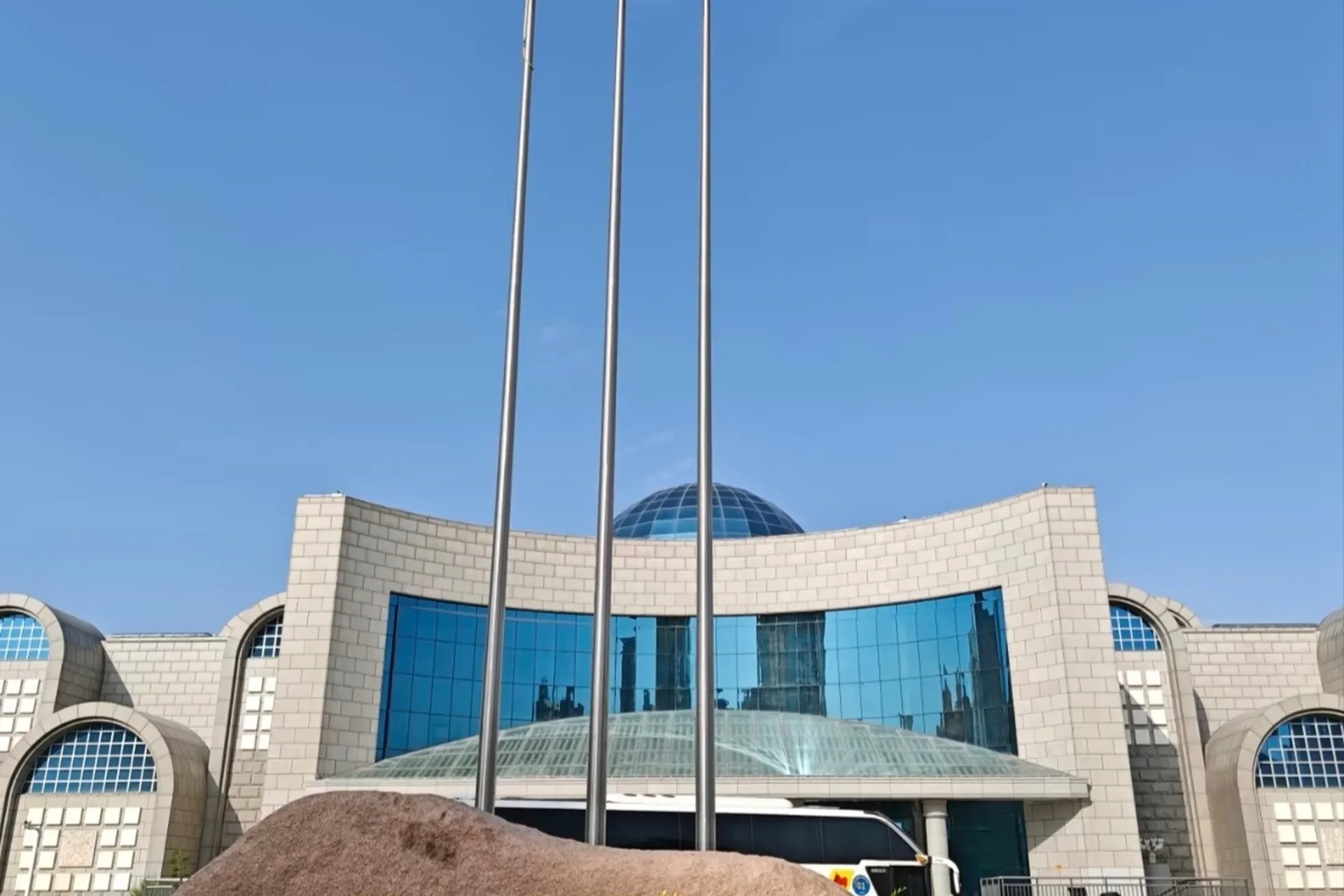
Xinjiang Silk Road Museum (新疆丝绸之路博物馆, Xīnjiāng Sīchóu Zhī Lù Bówùguǎn)
"\"The Xinjiang Silk Road Museum in Urumqi is one of the most important Silk Road archaeology museums in the world. Its collection is built around discoveries from the Taklamakan Desert — an environment so dry that organic materials preserved for millennia without deliberate embalming. The signature exhibit is the Tarim mummies: naturally desiccated bodies from 1800-1000 BC, with preserved hair, skin, clothing, and grave goods, their Caucasoid features (tall stature, light hair, long noses) confirming the presence of Indo-European-speaking populations in the Tarim Basin 3,500 years before the Han Chinese arrived. The museum also holds Sogdian letters (4th century AD) written in an Iranian language on paper — predating the earliest paper documents from central China — and Buddhist murals and sculptures from the Kucha and Khotan kingdoms. The collection traces the full Silk Road arc: Han Dynasty expansion, Buddhist transmission from India, Sogdian merchant networks, Tang Dynasty garrison culture, Uyghur Khaganate rise, and the Islamic transition.\".".
Last updated:
Quick Answer
Is Xinjiang Silk Road Museum worth visiting?
"\"Silk Road crossroads: Tarim mummies (3,800-year-old Caucasoid bodies preserved in desert sand), Sogdian letters, Buddhist cave art, and Uyghur textiles — all in central Urumqi. Free.\".".
Quick facts
| Category | history |
|---|---|
| Ticket | Free. Passport required. Register at the ticket office with your passport — no advance reservation needed on weekdays. Weekend reservations recommended via the museum WeChat account. |
| Hours | 10:00-18:00 (last entry 17:30). Open daily. Hours may shift ±30 minutes during Ramadan. |
| Recommended duration | 2.5-3 hours. Add 1 hour if you read the detailed Silk Road trade route maps. |
| Best time to visit | Weekday mornings. Urumqi is pleasant June-September (25-30°C). Avoid the Chinese New Year period when the city empties. The museum is well-heated in winter (Urumqi averages -15°C in January). |
| How to get there | Metro Line 1 to Xinjiang Library (新疆图书馆), Exit B. Walk south 8 minutes on Beijing Road. Or bus routes 1, 2, 7, 14, 17, 25, 26, 34, 42, 44, 51, 52, 68, 101, 103, 109, 111, 157, 301, 302, 306, 309, 311, 506, 508, 509, 525, 526, 701, 902, 905, 906, 909, BRT1, BRT2 to Museum stop. DiDi from central Urumqi costs ¥15-25. |
| English signage | partial |
Why visit
Seeing the Tarim mummies — especially the "Beauty of Xiaohe" (小河公主) with her 3,800-year-old felt hat, wool cloak, and visible eyelashes — is one of the most haunting archaeological experiences in any museum. They challenge the standard narrative of Chinese history and prove that Xinjiang was a multi-ethnic crossroads millennia before the Silk Road formally existed.
Collection highlights
- The "Beauty of Xiaohe" (小河公主) — a 3,800-year-old naturally mummified woman from the Xiaohe cemetery in the Lop Nur desert. Preserved felt hat with a feather, wool cloak, leather boots, and visible facial features including eyelashes
- Sogdian Ancient Letters — 4th century AD letters written in Sogdian (an Eastern Iranian language) on paper, found in a watchtower near Dunhuang. They are the earliest known paper documents from China, predating the famous Dunhuang manuscripts by 500 years
- Kucha Buddhist murals — fragments of 5th-7th century wall paintings from the Kizil Caves near Kucha, showing Central Asian Buddhist art with strong Gandharan and Persian influence
- Tang Dynasty garrison documents — paper and wood-slip records from Tang military colonies along the Silk Road, including grain requisitions, soldier rosters, and medical prescriptions
- Uyghur Khaganate textiles — silk and wool textiles with Sogdian-influenced patterns, 8th-9th century, from the Uyghur capital at Ordu-Baliq
- Bronze Age gold from the Tianshan — gold earrings, pendants, and horse ornaments from the Saka (Scythian) culture, 8th-3rd century BC, Altaic animal style
Tips
- Photography is restricted in the mummy gallery — look for the "no photography" signs. Phone cameras are sometimes tolerated but DSLRs will be stopped by guards
- I visited in June 2026 and was struck by the Sogdian letters — the handwriting of a merchant complaining about business conditions in Luoyang in 313 AD is so immediately human that it bridges 1,700 years
- The museum is near the Xinjiang Regional Museum (新疆维吾尔自治区博物馆, 2 km south) — they are different institutions. The Silk Road Museum focuses on pre-Islamic archaeology; the Regional Museum covers the full timeline including Islamic and modern periods
- Combine with the Grand Bazaar (新疆国际大巴扎, 3 km southeast) for Silk Road living culture — the dried fruit, carpet, and spice sections are the modern echo of the trade the museum documents
- The museum shop sells replica Tarim mummy postcards (¥10) and Silk Road map scarves (¥65-120) — the scarves are genuinely beautiful
- Urumqi security is visible — expect bag scanners and passport checks at the museum entrance. These are routine
Frequently asked questions
What are the Tarim mummies?
The Tarim mummies are naturally preserved human bodies from the Taklamakan Desert in Xinjiang, dating from 1800 BC to 100 BC. They were preserved not by embalming but by the extreme aridity of the desert — the dry sand and salt drew moisture from the bodies before decomposition could occur. The most famous individuals, from the Xiaohe and Qawrighul cemeteries, have Caucasoid features (tall stature, light-colored hair, long noses, deep-set eyes) and wore felt clothing, leather boots, and wool textiles. DNA studies published in Nature (2021) confirm they were a genetically isolated population descended from Ancient North Eurasians, with no genetic connection to modern Uyghurs or Han Chinese. They represent the pre-Silk Road Indo-European presence in the Tarim Basin.
Are the Tarim mummies really from Europe?
Not from Europe directly. Genetic studies show the Xiaohe population descended from the Ancient North Eurasians (ANE) — a population that lived in Siberia during the last Ice Age and contributed ancestry to both Native Americans and ancient Europeans. They were an isolated population that migrated into the Tarim Basin around 2000 BC and lived there for at least 800 years with very little genetic mixing with neighboring populations. They are not "Europeans in China" — they are an ancient population with no direct modern descendants.
What are the Sogdian letters?
The Sogdian Ancient Letters are five nearly complete letters and several fragments written in Sogdian (an extinct Eastern Iranian language) on paper, discovered by Aurel Stein in 1907 in a Han Dynasty watchtower west of Dunhuang. They date to around 313-314 AD and were written by Sogdian merchants living in China, describing the fall of Luoyang to Xiongnu forces, business conditions, and personal matters. They are among the earliest paper documents ever found and prove that a Sogdian merchant diaspora was operating across the Silk Road centuries earlier than previously believed.
Is the Xinjiang Silk Road Museum safe to visit?
Yes, Urumqi and the museum are safe for visitors. There is visible security (bag scanners, ID checks) at the museum entrance — this is standard throughout Xinjiang and routine. The museum is a major government-operated cultural institution. Foreign visitors should carry their passport at all times in Xinjiang and be prepared for occasional security checkpoints in the city.
How is this museum different from the Xinjiang Regional Museum?
The Silk Road Museum focuses specifically on the pre-Islamic period and Silk Road archaeology (Tarim mummies, Sogdian letters, Buddhist art, Tang garrison life). The Xinjiang Regional Museum covers the full chronological and cultural range of Xinjiang, including the Islamic period, Uyghur culture, and modern history. The Silk Road Museum has the better Tarim mummy display. They are 2 km apart and complement each other well.
What hours is the Xinjiang Silk Road Museum open?
10:00-18:00 daily (last entry 17:30). Note that Xinjiang officially follows Beijing time (UTC+8) but geographically is UTC+6 — the museum's 10:00 opening feels like 8:00 AM local solar time. The museum is open every day including Mondays. Hours may shift slightly during Ramadan.
Read next
Other things to do in Urumqi
Heavenly Lake Tianchi
"Alpine lake at 1,980 m in the Tianshan Mountains, 110 km from Urumqi. Kazakh yurt stays. ¥125 entry. Half-day boat or full-day hike. Best June–September.".
Heavenly Lake of Tianshan
Alpine moraine lake at 1,980 m on the north slope of Bogda Peak (5,445 m), 110 km east of Urumqi. Plan a full day — 2 hours each way by road plus 4–6 hours at the lake; entry is ¥125 plus a mand…
Tian Shan Tian Chi (Heavenly Mountain Heavenly Lake)
heavenly-mountains in Beijing: 天山山脉高山湖泊,海拔1980米,湖面4.9平方公里,最大水深105米。门票155元(含区间车),距乌鲁木齐约120公里。5-10月最佳,建议4-6小时。
Taklamakan Desert Edge
taklamakan-desert in Beijing: 中国最大沙漠,世界第二大流动性沙漠,面积33万平方公里。沙漠公路约522公里纵穿沙漠。免费(景区另行购票)。夏季最高温可达67°C,9-11月最佳。建议2-3天。
Xinjiang Museum
urumqi-museum in Beijing: 新疆最大综合性博物馆,馆藏文物5万余件,全面展示新疆历史文化与丝路文明。
Xinjiang Regional Museum
The Xinjiang Regional Museum in Urumqi holds the 3,800-year-old Tarim mummies — the Beauty of Loulan and the Beauty of Xiaohe — alongside Silk Road textiles, Tang silk, Persian glass, and Uyghur…