Urumqi · history museum
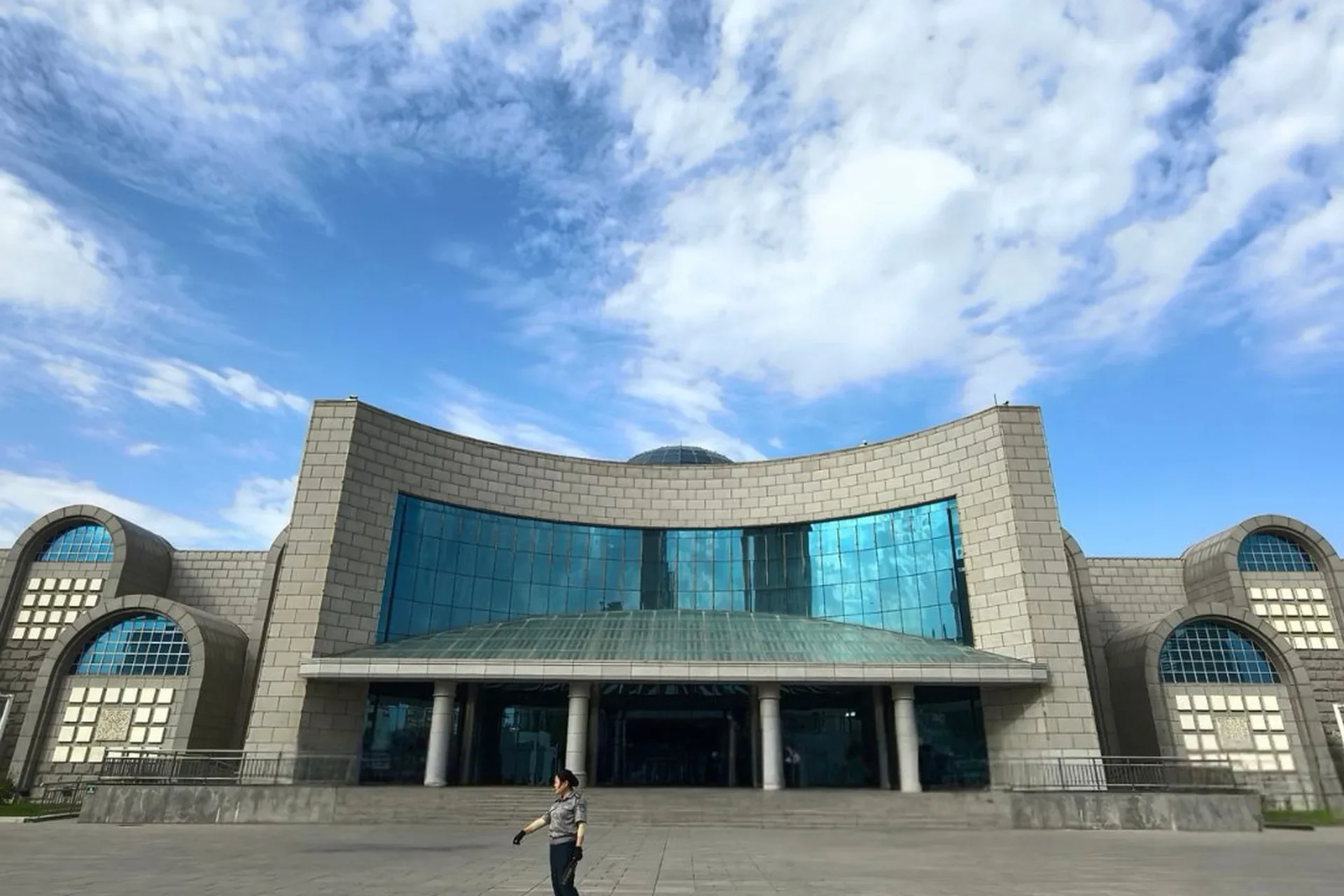
Xinjiang Regional Museum (新疆维吾尔自治区博物馆, Xīnjiāng Wéiwú'ěr Zìzhìqū Bówùguǎn)
"\"The Xinjiang Regional Museum (新疆维吾尔自治区博物馆) in Urumqi is China's most important museum for the western Silk Road, Central Asian archaeology, and the ancient Buddhist kingdoms of the Taklamakan Desert. Xinjiang's museum is unique because the desert's extreme aridity has preserved organic materials - including human bodies - that simply do not survive in the moister east. The museum's four main collection areas are: (1) the \\\"Xinjiang Mummies\\\" (新疆木乃伊) - extraordinary naturally preserved bodies from the Tarim Basin, including the famous 3,800-year-old \\\"Loulan Beauty\\\" (楼兰美女) and the 4,000-year-old \\\"Taklamakan Man\\\"; (2) ancient Buddhist art from the Kucha, Khotan, and Turpan kingdoms - murals, manuscripts, and Buddhist objects from the oasis cities along the Silk Road; (3) Uyghur cultural heritage - traditional costumes, musical instruments, and daily objects from the Uyghur people; (4) Silk Road trade archaeology - silk, tea, glass, and coins documenting the trade that passed through Xinjiang.\".".
Last updated:
Quick Answer
Is Xinjiang Regional Museum worth visiting?
"China's westernmost major museum - the definitive collection of Silk Road Buddhist art, Uyghur culture, the ancient Kucha and Khotan kingdom archaeology,.".. 2026 verified.
Quick facts
| Category | history |
|---|---|
| Ticket | Free. Passport required. Walk-in tickets available. |
| Hours | 10:00-18:00 (last entry 17:30). Closed Mondays. |
| Recommended duration | 2-3 hours. |
| Best time to visit | May through October. Urumqi has extreme continental climate - hot summers (25-40°C in the Turpan depression nearby) and very cold winters (-20°C to -5°C). Summer is the best time to combine the museum with the Tarim Basin Silk Road cities (Kashgar, Turpan, Hotan). |
| How to get there | Bus routes 7, 51, 68, 73, 152, 203, 303, 502, 512, 906, BRT to Xinjiang Museum stop (博物馆站). From Urumqi Railway Station by DiDi: ¥20-30. From Urumqi Diwopu International Airport: ¥40-60. |
| English signage | partial |
Why visit
The Xinjiang mummies are among the most scientifically significant archaeological discoveries in Asia - perfectly preserved by the Taklamakan's extreme dryness, they show physical evidence of the Indo-European (Tocharian) peoples who inhabited the Tarim Basin before Turkic settlement. The "Loulan Beauty" (楼兰美女) and "Taklamakan Man" are as visually compelling as any Egyptian mummy. The Buddhist art from the ancient kingdom of Kucha is also the finest in existence outside of dedicated cave temple sites.
Collection highlights
- Loulan Beauty (楼兰美女) - a 3,800-year-old naturally preserved female body from the ancient Loulan Kingdom on the Silk Road, with preserved skin, hair, and facial features
- Taklamakan Man - a 4,000-year-old naturally preserved male body from the Tarim Basin, providing DNA evidence of the ancient Tocharian peoples
- Kucha Kingdom Buddhist murals - fragments of painted murals from the 4th-8th century Kucha Kingdom Buddhist cave temples, showing the distinctive Central Asian Buddhist art style
- Silk Road textile fragments - remarkably preserved silk and wool textiles from Han Dynasty through Tang Dynasty trade caravans, showing patterns and trade goods
- Uyghur cultural heritage collection - traditional Uyghur musical instruments, costumes, and domestic objects from the 19th-20th centuries
- Ancient Kucha Buddhist manuscript fragments - Buddhist texts in Kharosthi and Sanskrit scripts from the ancient Buddhist libraries of the Tarim Basin oasis cities
Tips
- The mummies are on the 2nd floor - they are consistently the most popular exhibit and draw crowds; go early
- Urumqi is a transit hub for Xinjiang - use it as a base to visit Kashgar (Kashi), Turpan (Turpan / 吐鲁番), and the Silk Road cities
- Xinjiang is best visited May through October - the southern route (Kashgar, Hotan) is best April-June and September-October to avoid extreme heat
- The museum is in the city center - combine with a walk around People's Square (人民广场) and the nearby Erdaoqiao (二道桥) Uyghur cultural district
- Combine with the Southern Xinjiang Railway - Urumqi to Kashgar is 16 hours by train or 2 hours by air
- Allow 2-3 days in Xinjiang to properly see Urumqi, Turpan, and Kashgar
Frequently asked questions
How were the Xinjiang mummies preserved?
The Taklamakan Desert is extremely arid (average rainfall of less than 50mm per year), which creates conditions similar to natural mummification. Bodies buried in the desert's sandy soil lose moisture rapidly, preventing bacterial decay. This has preserved human bodies and organic materials (silk, wood, paper) for thousands of years. The famous "Loulan Beauty" is 3,800 years old; "Taklamakan Man" is 4,000 years old. DNA analysis shows they were of European (Indo-European/Tocharian) ancestry, distinct from modern East Asians.
What is the difference between the Xinjiang Museum and the Kashgar Museum?
The Xinjiang Regional Museum (乌鲁木齐新疆博物馆) is the provincial-level institution in Urumqi with the largest overall collection. The Kashgar Museum (喀什博物馆) focuses specifically on the archaeology and culture of the southern Silk Road (Kashgar, Hotan, Yarkand) with a strong emphasis on Islamic period culture. For general Xinjiang history, start here.
What were the ancient kingdoms of the Taklamakan?
The ancient kingdom cities of the Tarim Basin included: Loulan (near Lop Nur, 3rd century BCE-4th century CE), Kucha (Kucha, 2nd century BCE-14th century CE, major Buddhist center), Khotan (Hotan, major jade source and Buddhist center), and Kashgar (Kashi, strategic junction of the northern and southern Silk Road routes). All were Buddhist kingdoms until the 14th-15th century conversion to Islam.
Does Xinjiang Regional Museum have English signage?
Partial - the mummy and Silk Road sections have English labels. The Uyghur cultural section has limited English. The Kucha Buddhist mural sections have some English. No English audio guide as of 2026.
Is Urumqi a good base for Xinjiang tourism?
Urumqi is the transport hub but not the most interesting tourist destination. Most visitors fly or take the train to Kashgar (Kashi) for the old city, or to Turpan for the ruins and Flaming Mountains. Allow a half-day at this museum, then move on.
Read next
Other things to do in Urumqi
Heavenly Lake Tianchi
"Alpine lake at 1,980 m in the Tianshan Mountains, 110 km from Urumqi. Kazakh yurt stays. ¥125 entry. Half-day boat or full-day hike. Best June–September.".
Heavenly Lake of Tianshan
Alpine moraine lake at 1,980 m on the north slope of Bogda Peak (5,445 m), 110 km east of Urumqi. Plan a full day — 2 hours each way by road plus 4–6 hours at the lake; entry is ¥125 plus a mand…
Tian Shan Tian Chi (Heavenly Mountain Heavenly Lake)
heavenly-mountains in Beijing: 天山山脉高山湖泊,海拔1980米,湖面4.9平方公里,最大水深105米。门票155元(含区间车),距乌鲁木齐约120公里。5-10月最佳,建议4-6小时。
Taklamakan Desert Edge
taklamakan-desert in Beijing: 中国最大沙漠,世界第二大流动性沙漠,面积33万平方公里。沙漠公路约522公里纵穿沙漠。免费(景区另行购票)。夏季最高温可达67°C,9-11月最佳。建议2-3天。
Xinjiang Museum
urumqi-museum in Beijing: 新疆最大综合性博物馆,馆藏文物5万余件,全面展示新疆历史文化与丝路文明。
Xinjiang Regional Museum
The Xinjiang Regional Museum in Urumqi holds the 3,800-year-old Tarim mummies — the Beauty of Loulan and the Beauty of Xiaohe — alongside Silk Road textiles, Tang silk, Persian glass, and Uyghur…