Hangzhou · history museum
Zhejiang Provincial Museum (浙江省博物馆, Zhèjiāng Shěng Bówùguǎn)
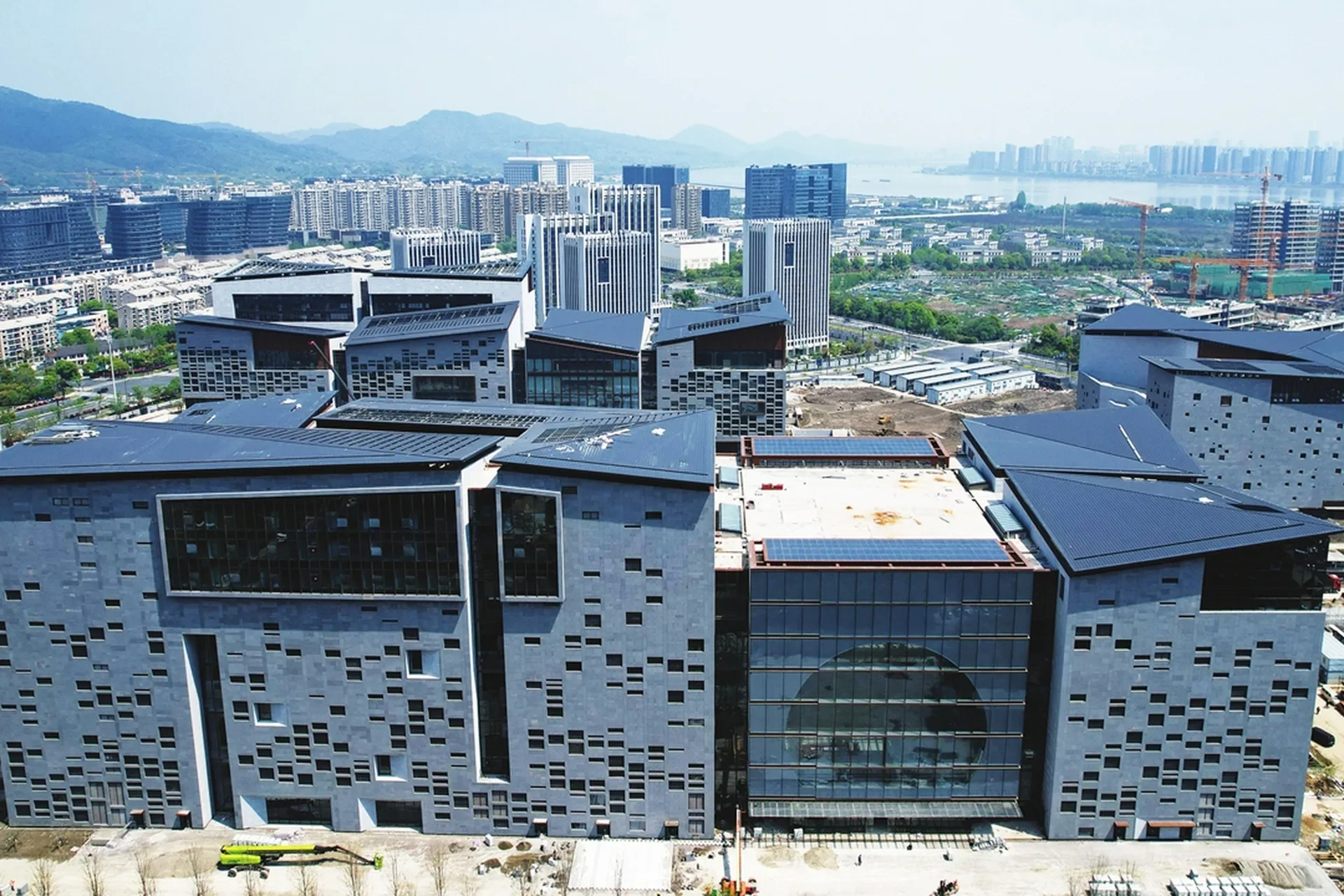
"\"The Zhejiang Provincial Museum consists of two campuses: the main Zhijiang Campus (之江馆区, opened 2023) and the original Gushan Campus (孤山馆区) on an island in West Lake, connected to the shore by the Bai Causeway. The collection traces Zhejiang's history from the Hemudu Neolithic culture (7,000 years ago, first evidence of rice cultivation in the Yangtze Delta) through the Liangzhu jade culture (3,300-2,300 BC), the Yue Kingdom, the Southern Song Dynasty (1127-1279, when Hangzhou was the imperial capital), and the Ming-Qing golden age of Zhejiang celadon production. The Liangzhu jade collection is the finest in the world — ceremonial cong tubes and bi discs carved from nephrite with the enigmatic human-animal face motif that defines Liangzhu iconography. The celadon (青瓷) collection traces Zhejiang's Longquan, Yue, and Guan kilns from the 3rd through the 17th centuries.\".".
Last updated:
Quick Answer
Is Zhejiang Provincial Museum worth visiting?
"Liangzhu Neolithic jade (5,000-year-old ritual cong and bi), the world's finest celadon ceramics, and Southern Song imperial artifacts — on the shore of West Lake. Free.".
Quick facts
| Category | history |
|---|---|
| Ticket | Free. Both campuses free. Passport required. Reserve via the Zhejiang Provincial Museum WeChat mini-program. The Gushan Campus can be very busy on weekends — reserve at least 3 days ahead. |
| Hours | 9:00-17:00 (last entry 16:30). Closed Mondays. Zhijiang Campus is open Tuesdays-Sundays. |
| Recommended duration | 2.5-3 hours for the Zhijiang Campus (main collection). 1.5 hours for the Gushan Campus. |
| Best time to visit | Tuesday-Thursday mornings. Hangzhou spring (March-May) and autumn (September-November) are the most pleasant seasons. Avoid National Day (October 1-7) and Qingming Festival — West Lake area is gridlocked. Winter weekday mornings are the quietest. |
| How to get there | Zhijiang Campus: Metro Line 6 to Zhijiang Cultural Center (之江文化中心), Exit C. Walk south 3 minutes. Gushan Campus: Take bus 7, 27, 51, 52, 118, or West Lake Outer Ring Line to Xiling Bridge (西泠桥) or Zhongshan Park (中山公园). The Gushan Campus is on an island — walk via Bai Causeway from the north shore or take a West Lake ferry to Zhongshan Park Pier. DiDi from central Hangzhou to Zhijiang Campus costs ¥35-55. |
| English signage | yes |
Why visit
Liangzhu jade is one of the great artistic achievements of the Neolithic world — the cong tubes, with their precise geometric corners and incised mask motifs, were produced without metal tools using bamboo drills and quartz sand abrasives. The Zhejiang Museum holds the world's largest and finest Liangzhu collection. The celadon gallery, tracing 1,400 years of green-glazed stoneware from Eastern Han through Ming, is the authoritative collection in the birthplace of celadon.
Collection highlights
- Liangzhu "King of Cong" (玉琮王) — a 8.9 cm tall, 6.6 kg nephrite jade cong tube, the largest and most elaborately carved Liangzhu jade ever found. Each of the four corners carries the complete human-animal mask motif (神人兽面纹) incised in lines as fine as 0.1 mm
- Liangzhu jade bi disc (玉璧) collection — 5,000-year-old ritual discs in nephrite, ranging from palm-sized to 26 cm diameter, some plain, some with incised bird or cloud symbols
- Southern Song Guan ware (官窑) celadon — the rarest of all Chinese ceramics, produced exclusively for the imperial court in Hangzhou for only about 20 years (c. 1190-1210). Crackle-glazed vases, bowls, and brush washers in characteristic bluish-grey-green
- Longquan celadon (龙泉青瓷) — Song through Ming Dynasty celadon from the Longquan kilns in southern Zhejiang. The plum-green (梅子青) and powder-green (粉青) glazes are the technical peak of Chinese celadon
- Yue Kingdom bronze swords — Warring States (475-221 BC) swords from the state of Yue, the rivals of Wu. Yue swords are famous for their patterned bronze blades with high-tin edges for hardness and low-tin spines for flexibility
- Hemudu Culture black pottery — 7,000-year-old pottery with impressed cord and mat patterns, the earliest evidence of rice cultivation culture in the lower Yangtze
Tips
- The Zhijiang Campus (opened 2023) has the Liangzhu jade and celadon collections — it is the main campus and the one to prioritize. The Gushan Campus is smaller and focuses on West Lake cultural history
- The Zhijiang Campus is about 12 km southwest of West Lake — a 35-40 minute Metro ride from the lake area. Plan accordingly
- I visited the Zhijiang Campus in April 2026 and the Liangzhu gallery was superb — the lighting on the jade is designed to catch the incised lines so the human-animal masks emerge from the stone as you move around the display cases
- Combine the Gushan Campus with a walk along the Bai Causeway (白堤) and a visit to the Zhejiang West Lake Gallery (浙江西湖美术馆) next door
- The museum shop sells Liangzhu jade replica pendants (¥80-300) and Longquan celadon tea cups (¥120-500) — both are tasteful and authentic
- Hangzhou in spring (March-April) pairs the museum with West Lake cherry and peach blossoms — one of China's best museum-plus-nature combinations
Frequently asked questions
What is Liangzhu culture?
Liangzhu (良渚, 3,300-2,300 BC) was a highly advanced Neolithic jade-working culture centered on the lower Yangtze River near modern Hangzhou. The Liangzhu people built a walled city with an elaborate water management system (dams, canals, reservoirs), produced the finest jade objects in Neolithic China, and developed a hierarchical society with distinct social classes. Their jade cong tubes and bi discs with the human-animal face motif are their most famous artifacts. In 2019, the Liangzhu Archaeological Site was inscribed as a UNESCO World Heritage Site, confirming it as one of the world's earliest urban civilizations. The Zhejiang Provincial Museum holds the definitive Liangzhu collection.
What is celadon?
Celadon (青瓷, qīngcí) is a type of stoneware or porcelain with a translucent green glaze produced by firing iron oxide in a reducing (oxygen-deprived) kiln atmosphere. The green color ranges from olive to blue-grey to pale jade-green depending on the iron content, kiln temperature, and reduction conditions. Celadon was invented in Zhejiang during the Eastern Han Dynasty (25-220 AD) and reached its artistic peak during the Song Dynasty (960-1279) at the Longquan kilns. It was widely exported across Asia, the Middle East, and East Africa — celadon shards have been found at medieval ports from Zanzibar to Kyoto. Zhejiang is the birthplace and historical center of celadon production.
Which Zhejiang Museum campus should I visit?
If you can only visit one: the Zhijiang Campus (之江馆区, opened 2023). It has the main collection — Liangzhu jade, celadon, Southern Song artifacts, and comprehensive Zhejiang history galleries. The Gushan Campus (孤山馆区) is smaller, older, and worth visiting for its location on a West Lake island (beautiful setting) and its focus on West Lake cultural history. The two campuses are about 12 km apart (35 minutes by Metro or DiDi).
What is the "King of Cong"?
The "King of Cong" (玉琮王, Yù Cóng Wáng) is the largest and most elaborate Liangzhu jade cong tube ever discovered, found in 1986 at the Fanshan cemetery near Hangzhou. It measures 8.9 cm tall, weighs 6.6 kg, and is carved from a single piece of dark green nephrite jade. Each of its four corners bears the complete Liangzhu human-animal mask motif (神人兽面纹) — a figure with a feathered headdress, round eyes, and a wide nose, riding or merging with a beast with large round eyes and bared fangs. The motif is incised in lines as fine as 0.1 mm, an almost unbelievable precision for a Neolithic culture working without metal tools. It is the defining artifact of Liangzhu civilization and a Chinese national treasure.
Is the Zhejiang Provincial Museum free?
Yes, both campuses are free. Reserve via the museum WeChat mini-program. Passport is required. The Gushan Campus (on West Lake) can be busy on weekends — book 3 days ahead.
Can I see the Liangzhu archaeological site and the museum in the same day?
Yes, but it is a full day. The Liangzhu Archaeological Site (良渚古城遗址, a UNESCO World Heritage site) is about 25 km northwest of Hangzhou, while the Zhijiang Campus museum is 12 km southwest. Rent a car with driver or use DiDi (site to museum is about 45 minutes, ¥80-100). Start at the archaeological site in the morning (8:30-12:00), then the museum in the afternoon (13:00-16:30). The combination is ideal — the site shows you the scale and engineering, the museum shows you the artifacts.
Read next
Other things to do in Hangzhou
Grand Canal (Hangzhou Section)
The 1,776 km Grand Canal's southern terminus — a UNESCO World Heritage site since 2014 — runs through Hangzhou as a working waterway past the 1631-built Gongchen Bridge and free museums.…
Leifeng Pagoda
leifeng-pagoda in Beijing: 西湖十景雷峰夕照,新塔40元登塔俯瞰西湖,白蛇传传说源地,新塔内保存古塔遗址地宫,景色壮观。
Lingyin Temple
lingyin-temple in Beijing: 杭州最古老寺庙,东晋始建,香火极盛,寺内有珍贵石刻造像,飞来峰永福寺联票75元。
Longjing Tea Plantation
longjing-tea-plantation in Beijing: 西湖龙井茶核心产区,乾隆皇帝御封的十八棵御茶树所在地,免费茶田漫步,茶文化体验,品茶买茶。. 2026 verified.
Meiling Tunnel Trail
meiling-dragon in Beijing: 杭州经典徒步路线,连接灵隐与梅家坞,穿过梅灵隧道,全程约8公里,山林幽静,茶园风光佳。
Putuoshan Island
Buddhist island sacred to Guanyin — 3 major temples, 33 m golden statue. Ferry ¥160 round-trip from Zhoushan. Half-day minimum. Pilgrimage site with a serene coastal atmosphere.
Gongchen Bridge & Grand Canal
qi-bridge in Beijing: 京杭大运河杭州段标志性三孔石拱桥,建于1631年,桥西为小河直街历史文化街区,免费,漫步最佳。
Six Harmonies Pagoda
"A 60-meter Song-era pagoda on Yuelun Hill above the Qiantang River — 7 interior floors hiding behind 13 exterior eaves, climbable in about 90 minutes for a river-and-bridge view.".
Southern Song Imperial Street
song-dynasty-ruins in Beijing: 南宋都城临安的中轴大道,1000年历史,保存完好地下文物层,连接河坊街,免费漫步,夜晚灯光美。
West Lake
west-lake in Beijing: 杭州标志性湖泊,面积约6.38平方公里,周长约15公里。免费开放(部分景点另付费)。游船55元起。2011年世界文化遗产。苏堤全长2.8公里,地铁1号线龙翔桥站/凤起路站。深度游建议4-8小时。
Xiang Lake Park
xiang-lake-park in Beijing: 杭州第二大名湖,水域面积约5平方公里,西湖姐妹湖。免费进入(展馆另付费)。跨湖桥遗址博物馆免费(8000年文明)。环湖骑行约15公里。地铁1号线湘湖站步行15分钟。建议3-5小时。
Xixi National Wetland Park
China's first national wetland park — 11.5 sq km of reed beds, lotus ponds, and persimmon groves threaded by water lanes, about 20 minutes west of West Lake.…
Museums in Hangzhou
China National Silk Museum
"The world's largest silk museum. Live silkworms, weaving demonstrations on 19th-century looms, and 2,000-year-old Silk Road textiles. Free. Hangzhou's most underrated museum.".
China National Tea Museum
"China's only national-level tea museum, set among actual Longjing tea plantations in Hangzhou. Tea ceremony demonstrations, 1,000+ tea artifacts, and fresh Longjing at the source. Free.".
Hangzhou Museum
West Lake cultural history from Neolithic Liangzhu through Southern Song imperial glory. Free entry near Hefang Street. Celadon ceramics and Song Dynasty urban life. Allow 1.5–2 hours.
National Archives of Publications and Culture — Hangzhou Branch (Wenrun Ge)
"China's newest national \"version\" repository, opened July 2022 in a 100,000 sqm hilltop complex near Hangzhou's Xianghu Lake,.".
Zhejiang Museum of Natural History
Hangzhou's natural history museum near West Lake — dinosaurs, fossils, minerals, and the biology of Zhejiang's unique ecosystems. Free. Allow 1.5–2 hours.
Zhejiang Museum
"Zhejiang's premier museum at the foot of West Lake - strong in Neolithic archaeology (Hemudu/Yangshao), Longquan celadon, Hangzhou's Southern Song history,.".. 2026 verified.