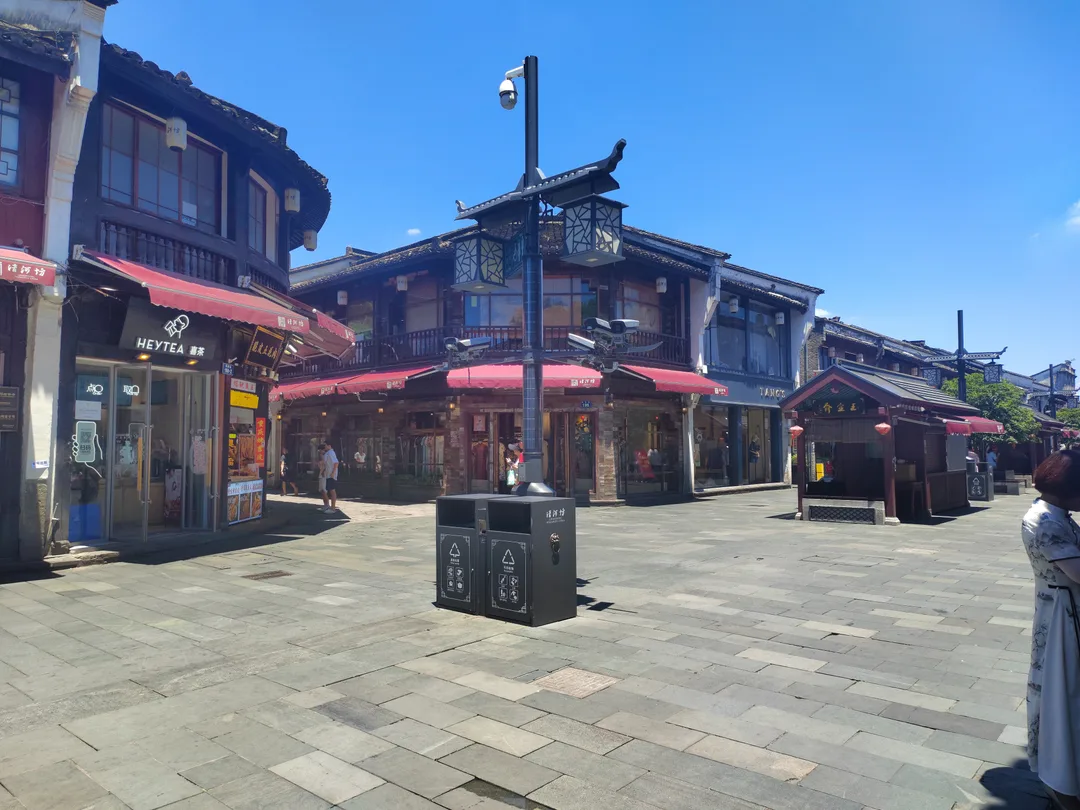
Hefang Street河坊街
Also known as Qinghefang, Hefang Street is the signature historic quarter of Hangzhou's old town: about 1,800 m of preserved Ming and Qing architecture, now a hub of local snacks, handicrafts, and teahouses — the go-to place to feel Southern Song street culture.
Hangzhou · Visitor Guide2026-10-18
Quick Answer
Is Hefang Street worth visiting?
Hangzhou's most historic antique-style shopping street, about 1800 m of Ming, Qing and Republican buildings; free entry, shops 09:00-22:00, 10 minutes from Ding'an Road metro.
Quick facts
| Ticket | Free entry (a few inner exhibitions sell separate tickets) |
|---|---|
| Hours | Open around the clock (shops roughly 09:00-22:00, with slight holiday variations) |
| Recommended duration | Allow 1.5-3 hours |
| Best time to visit | Good in any season; the atmosphere peaks once the lanterns light up at night, and early morning suits photographers |
| How to get there | Metro Line 1 to Ding'an Road station Exit B, then about 10 minutes on foot; buses 8 and 127 to Wushan Square |
| English signage | Yes |
| Wheelchair accessible | Partial |
| Length | About 1,800 m (main street) |
| Type | Historic and cultural shopping quarter |
| Architecture | Ming, Qing to Republican eras |
| Location | Shangcheng District, starting at Wushan Square in the south |
| Admission | Free |
What to expect
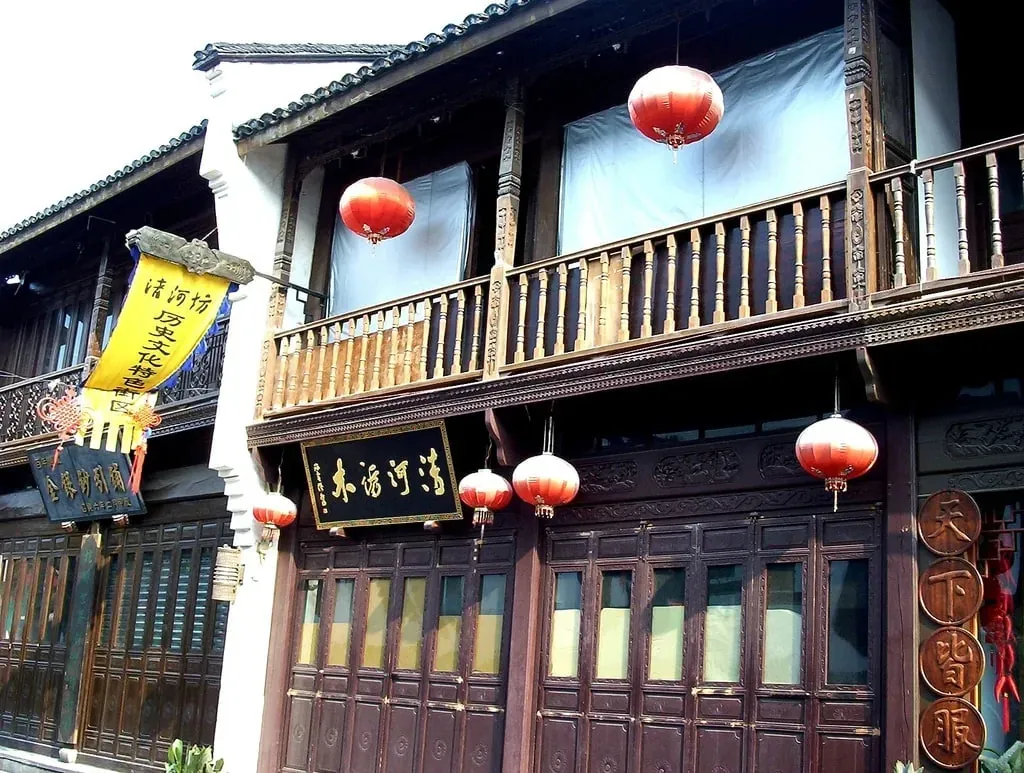
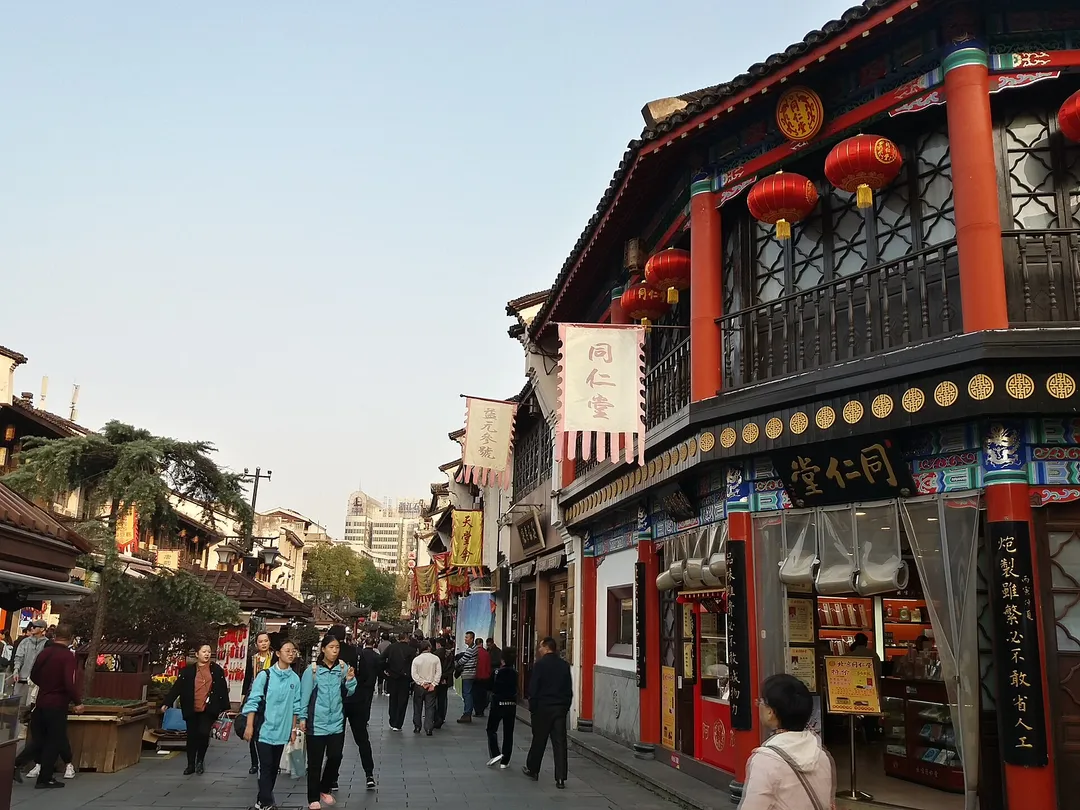
Hefang Street, also called Qinghefang, is one of the best-preserved historic quarters in Hangzhou's old town. Ming and Qing buildings line the street — whitewashed walls and dark tiles, horse-head gables, brick-carved gatehouses. Along the main street cluster century-old brands such as Zhang Xiaoquan scissors, Wang Xingji fans, and Kong Fengchun cosmetics, plus countless snack stalls and craft shops. The Hu Qingyu Hall Chinese-medicine museum and the Jiangnan Copper House inside the quarter are free to enter.
Qinghefang's history reaches back to the Southern Song, when it was one of the busiest commercial centres of Lin'an — the name comes from the mansion of Zhang Jun, Prince of Qinghe, that stood here. Trade thrived through the Yuan, Ming, and Qing eras. Reopened in 2002 after renovation, the quarter kept its historic look while adding modern retail, and it is now the most popular place to experience traditional Hangzhou culture.
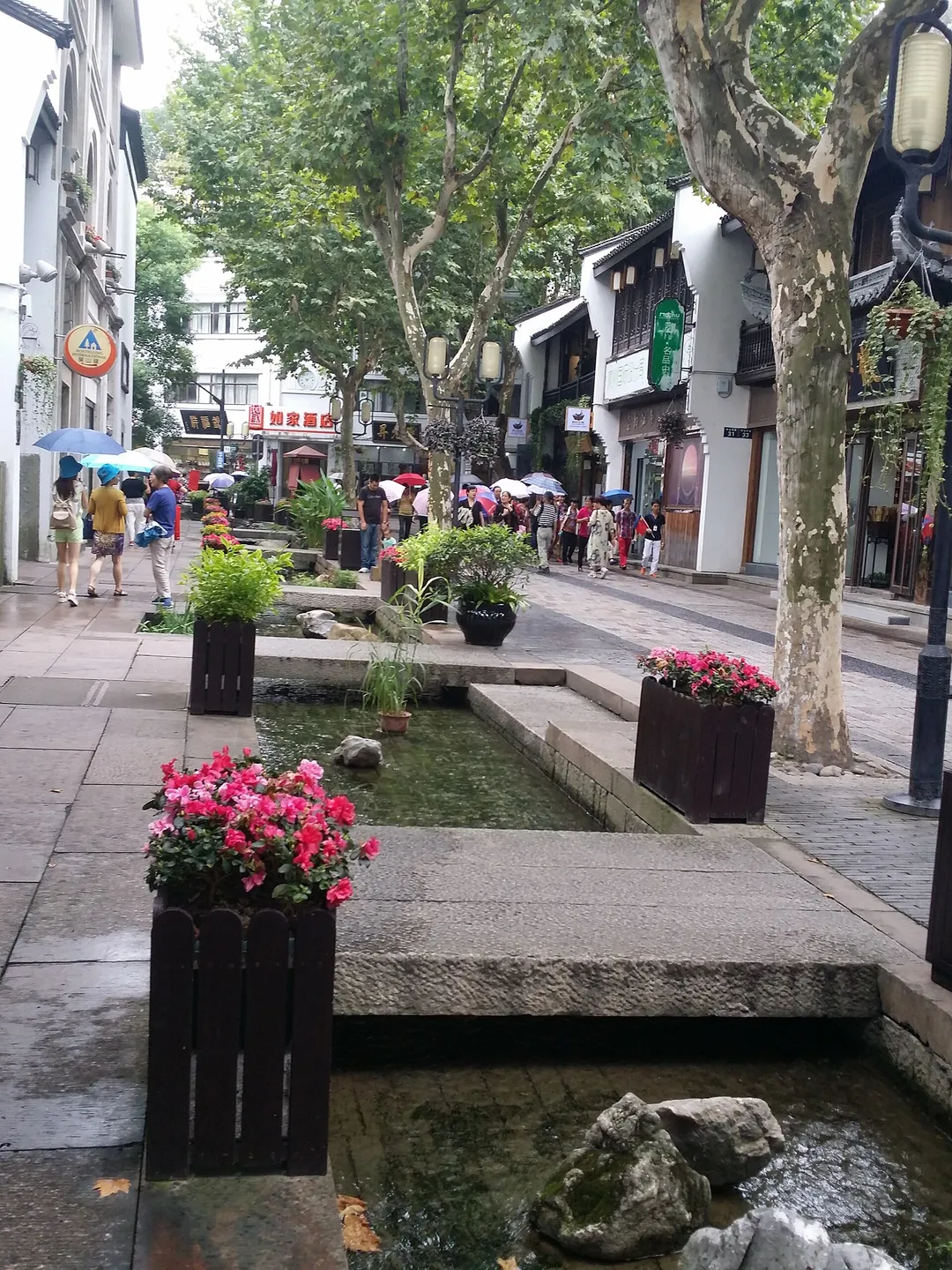
The street is pedestrian-only (non-motorised vehicles may be pushed through). Photos are best between 7 and 9 am, before the shops open. Side lanes such as Datong Lane and Dajing Lane reward a detour with fewer crowds and old-Hangzhou life. Snacks to try: dingsheng cake, congbaohui, stinky tofu, crispy oil cakes, and glutinous-rice cakes with meat pies. Prices run a bit above ordinary city levels — standard tourist-quarter pricing.
How to get there
Take Metro Line 1 to Ding'an Road station, Exit B, then walk north along Yan'an Road to Hefang Street, about 10 minutes. Buses 8, 25, and 68 stop at Wushan Square or Hefang Street. From Hangzhou East station it is about 30 minutes on Metro Line 1.
Best photo spots
- The Hefang Street memorial archway (best under the evening lights)
- The Hu Qingyu Hall gatehouse (a century-old brand)
- The old buildings of Datong Lane
- Chenghuang Pavilion viewed from Wushan Square
- The night market rows of red lanterns
Tips
- Come at dusk to catch the daylight look and stay for the lights — the display peaks around 19:00-20:00
- Street snacks run pricey; graze as you walk — dingsheng cake and congbaohui are the classics
- Weekends and holidays are packed; come on a weekday or early in the morning
- Compare prices online before buying — many of the old brands run flagship stores online too
- The Southern Song Imperial Street is only 500 m away on foot — see both in one outing
Scams to avoid
- 'Authentic Longjing tea' is often other provinces' leaf at inflated prices — buy at proper tea houses in Longjing village instead
- Fresh-made pastries may be short-weighted; supermarket prices for the same goods are more transparent
- Some silver and pearl stalls pass off low grades with no appraisal certificate
Frequently asked questions
Does Hefang Street charge admission?
The street itself is free, and the small sights inside — Hu Qingyu Hall (the Chinese-medicine museum) and the Jiangnan Copper House — are also free. Shopping is separate.
Are Hefang Street and the Southern Song Imperial Street the same street?
No, but they are adjacent: Hefang Street is south (near Wushan Square) and the Southern Song Imperial Street (Zhongshan Middle Road) north, about 500 m apart — walkable.
When is Hefang Street least crowded?
Weekday mornings 7:00-9:00, as the shops open — best for photos. Weekends are busy all day and liveliest at night.
Is there parking near Hefang Street?
There is a paid underground car park at nearby Wushan Square, but it fills up on holidays — coming by car is not recommended.
Read next
Other things to do in Hangzhou
Grand Canal (Hangzhou Section)
The 1,776 km Grand Canal's southern terminus — a UNESCO World Heritage site since 2014 — runs through Hangzhou as a working waterway past the 1631-built Gongchen Bridge and free museums.
Hangzhou Museum
Hangzhou's local-history museum, holding nearly 30,000 relics and the Warring States crystal cup (15.4 cm) as its treasure; free, 09:00-16:30, closed Mondays.
Hefang Street (Near West Lake)
Qinghefang is Hangzhou's most famous old street — 1,000-plus years since the Southern Song, free to enter, a 10-minute walk from Metro Line 1, lined with century-old shops like Hu Qingyu Tang.
Leifeng Pagoda
Leifeng Pagoda in Evening Glow, one of the Ten Scenes of West Lake and home of the White Snake legend. CNY 40 buys the climb for sweeping lake views and the excavated underground palace.
Lingyin Temple
Hangzhou's oldest temple, founded in the Eastern Jin dynasty, still thronged with worshippers and rich in precious stone carvings. Combo ticket for Feilai Peak and Yongfu Temple CNY 75.
Longjing Tea Plantation
The heartland of West Lake Longjing tea, home to the 18 Imperial Tea Trees honored by Emperor Qianlong. Wander the tea fields free of charge and taste tea at the source.
Meiling Tunnel Trail
A classic Hangzhou hiking route linking Lingyin with Meijiawu by way of the Meiling Tunnel — about 8 km of quiet woodland and fine tea-terrace scenery.
Putuoshan Island
Buddhist island sacred to Guanyin — 3 major temples, 33 m golden statue. Ferry ¥160 round-trip from Zhoushan. Half-day minimum. Pilgrimage site with a serene coastal atmosphere.
Gongchen Bridge & Grand Canal
The Grand Canal's signature three-arch stone bridge in Hangzhou, built in 1631, with the Xiaohe Straight Street heritage quarter just west — free, and best explored on foot.
Six Harmonies Pagoda
A 60-meter Song-era pagoda on Yuelun Hill above the Qiantang River — 7 interior floors hiding behind 13 exterior eaves, climbable in about 90 minutes for a river-and-bridge view.
Southern Song Imperial Street
The central artery of the Southern Song capital Lin'an, carrying 1,000 years of history and a preserved underground road layer. Free to stroll, linked to Hefang Street, loveliest lit up at night.
Su Dongpo Memorial Hall
Memorial hall to poet Su Dongpo in Hangzhou, built in 2003 with about 2500 sqm of exhibits; free entry 09:00-16:30, closed Mondays, at the south end of the 2.8-km Su Causeway.
West Lake
Hangzhou's defining lake — 6.38 sq km ringed by 15 km of shore, free to all, a UNESCO World Heritage site since 2011. Boats from CNY 55; Metro Line 1 to Longxiang Bridge. Allow 4-8 hours.
Xiang Lake Park
Hangzhou's second great lake and West Lake's 'sister' — about 5 sq km of water and a 15 km cycling loop. Free entry; the Kuahuqiao museum covers an 8,000-year-old culture. Allow 3-5 hours.
West Lake Musical Fountain
Free nightly shows at 19:30 and 20:30 at the Hubin gardens on West Lake in Hangzhou; the 126-m fountain has 333 jets, so arrive early for a spot.
Xixi National Wetland Park
China's first national wetland park — 11.5 sq km of reed beds, lotus ponds, and persimmon groves threaded by water lanes, about 20 minutes west of West Lake.
Museums in Hangzhou
China National Silk Museum
The world's largest silk museum. Live silkworms, weaving demonstrations on 19th-century looms, and 2,000-year-old Silk Road textiles. Free. Hangzhou's most underrated museum.
China National Tea Museum
China's only national-level tea museum, set among actual Longjing tea plantations in Hangzhou. Tea ceremony demonstrations, 1,000+ tea artifacts, and fresh Longjing at the source. Free.
Hangzhou Museum
West Lake cultural history from Neolithic Liangzhu through Southern Song imperial glory. Free entry near Hefang Street. Celadon ceramics and Song Dynasty urban life. Allow 1.5–2 hours.
National Archives of Publications and Culture — Hangzhou Branch (Wenrun Ge)
China's newest national "version" repository, opened July 2022 in a 100,000 sqm hillside complex beside the Liangzhu Ancient City ruins in Hangzhou's Yuhang district.
Zhejiang Museum of Natural History
Hangzhou's natural history museum at West Lake Culture Square — dinosaurs, fossils, minerals, and the biology of Zhejiang's unique ecosystems. Free. Allow 1.5–2 hours.
West Lake Museum
China's first museum devoted to a single lake — West Lake's geology, 2,000 years of dredging and poetry, the Ten Scenes, and the 2011 UNESCO inscription. Free. On the lake's south shore.
Zhejiang Museum
Zhejiang's premier museum at the foot of West Lake — Neolithic archaeology (Hemudu, Liangzhu), Longquan celadon, and Hangzhou's Southern Song history. Free; 3–4 hours.
Zhejiang Provincial Museum
Liangzhu Neolithic jade (5,000-year-old ritual cong and bi), the world's finest celadon ceramics, and Southern Song imperial artifacts — on the shore of West Lake. Free.