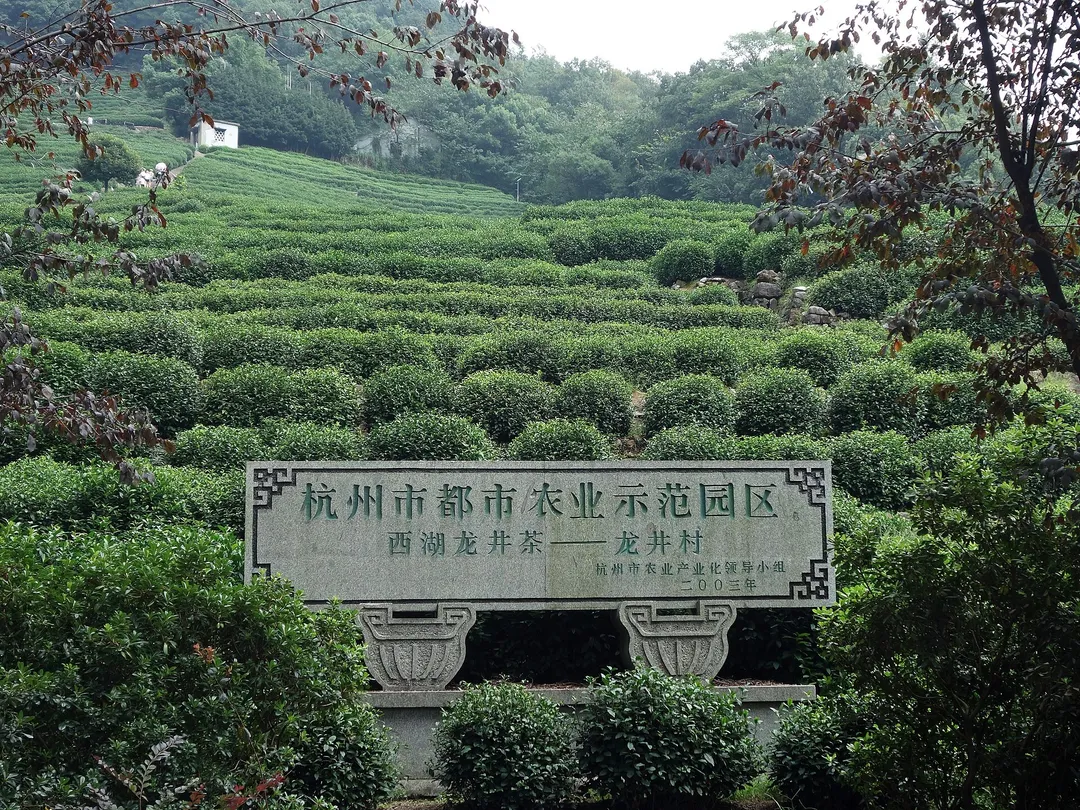
Longjing Tea Plantation龙井茶园
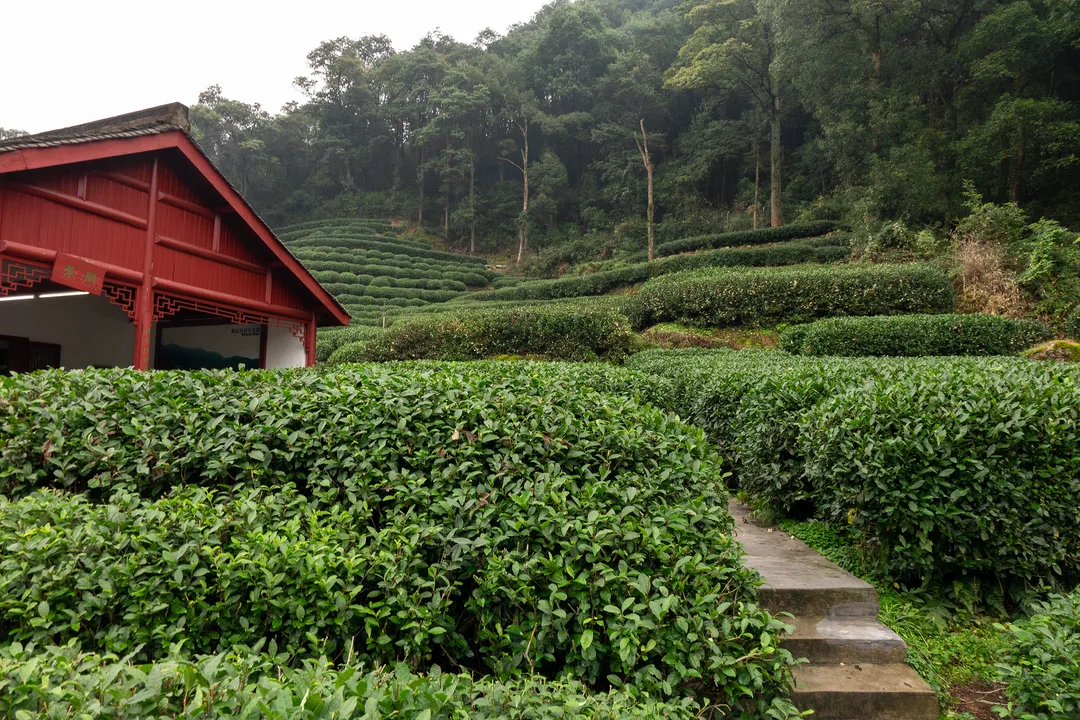
Longjing Village, in Hangzhou's West Lake District, is the core growing area of West Lake Longjing — the tea ranked first among China's ten famous teas. The village still tends the Eighteen Imperial Tea Trees sealed by Emperor Qianlong, which bear leaf to this day. Longjing is famed for four perfections — green colour, rich aroma, sweet taste and beautiful shape — and its tea culture is one of Hangzhou's signature travel experiences.
Hangzhou · Visitor Guide2026-10-18
Quick Answer
Is Longjing Tea Plantation worth visiting?
The heartland of West Lake Longjing tea, home to the 18 Imperial Tea Trees honored by Emperor Qianlong. Wander the tea fields free of charge and taste tea at the source.
Quick facts
| Ticket | Free entry to the tea fields (tastings and meals charged separately) |
|---|---|
| Hours | Open all day (tea houses roughly 08:00-20:00) |
| Recommended duration | Allow 2-4 hours |
| Best time to visit | Best during the spring harvest (late March to mid-April); autumn and winter are also pleasant |
| How to get there | Bus 27 or 87 to Longjing Village stop; about 25 minutes from Longxiangqiao metro station (Line 1) by connecting bus; taxi or cycling also recommended |
| English signage | Partial |
| Wheelchair accessible | Partial |
| Tea variety | West Lake Longjing (national geographical-indication product) |
| Standing | Ranked first among China's ten famous teas |
| History | Recorded in Lu Yu's Classic of Tea in the Tang dynasty |
| Imperial tea | Eighteen Imperial Tea Trees sealed by Emperor Qianlong |
| Core producing villages | Longjing Village, Meijiawu, Fancun |
What to expect
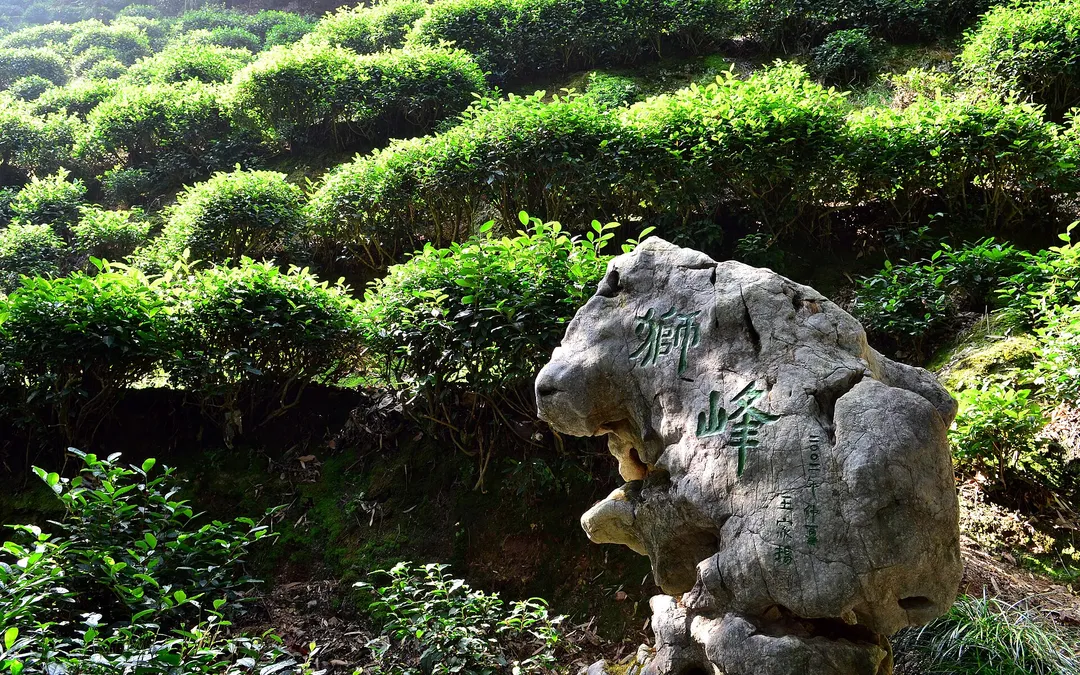
Longjing Village sits in the hills west of Hangzhou's West Lake District, at the core of the West Lake Longjing growing area. A green tea named for this village, Longjing has been produced for more than 1,200 years and is graded by origin into five estates — Shi, Long, Yun, Hu and Mei — with Shifeng the finest. The tea is celebrated for its four perfections of colour, aroma, taste and shape; Emperor Qianlong visited four times to drink and compose poems here, and sealed the Eighteen Imperial Tea Trees.
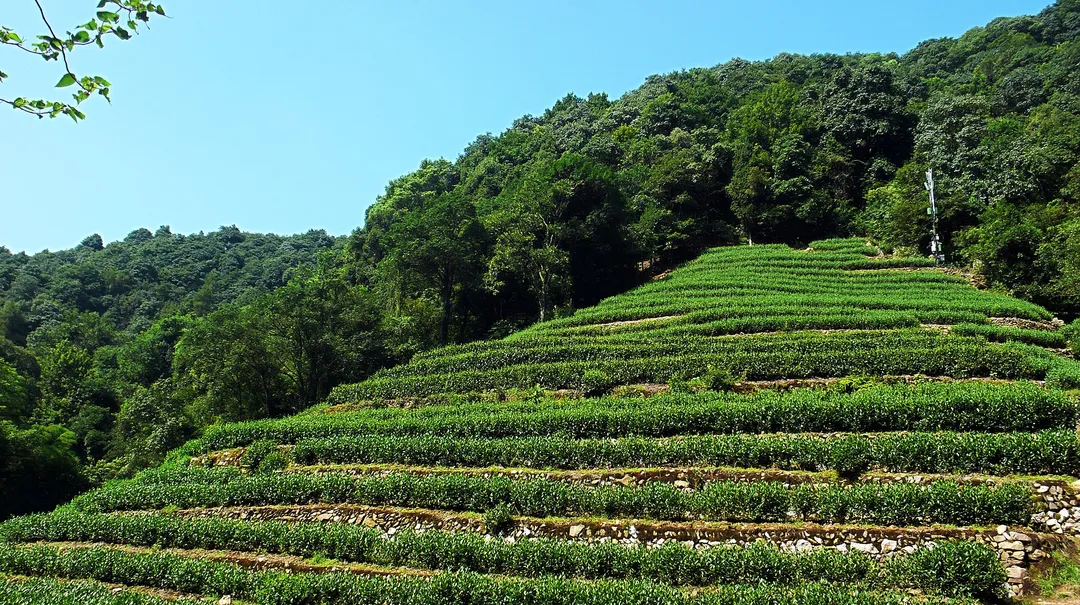
Built against the hillside and ringed by tea terraces, the village keeps the ruins of Longjing Temple, a thousand-year-old monastery, alongside its tea-culture experience area. The spring harvest (late March to mid-April) is the busiest season, when the prized pre-Qingming Longjing — the most expensive tea of the year — is picked; autumn's autumn-picked Longjing has a rich aroma all its own. Under a tea farmer's guidance you can try picking and pan-firing, then taste the genuine article.
The harvest season draws crowds, so aim for a weekday or book a tea room ahead. Tasting prices vary hugely — from tens to hundreds of yuan a cup — depending on grade. Buy from reputable growers or established tea houses, where prices are transparent. Neighbouring Meijiawu combines easily with a visit here, and a roughly two-hour hiking trail links Longjing Village to Lingyin — a classic walk.
How to get there
Bus 27, 87 or 318 to Longjing Village stop — the bus stops right at the village. From Longxiangqiao station (metro Line 1), exit A, take bus 87, about 25 minutes. A taxi from Hangzhou East station is about CNY 30 and 35 minutes. Drivers can use the village car park (paid, often full on holidays).
Best photo spots
- The Eighteen Imperial Tea Trees (signature sight)
- The layered terraces of the Longjing Village tea hills
- The Qianlong imperial stele
- Tea farmers picking in spring
- The ruins of Longjing Temple (a thousand-year-old monastery)
Tips
- Come in the spring harvest (late March to mid-April) to see the picking — but expect the biggest crowds and highest prices
- How to spot real Longjing: the leaf is an uneven rice-brown colour, not vivid green, with a bean-like aroma rather than a grassy one
- No need to buy the priciest — mid-grade Longjing (CNY 400-600 per jin) is already very good
- Farm restaurants around the village do a good lunch — try Longjing shrimp and tea-scented pork
- Take a local friend or choose a well-reviewed tea house to avoid out-of-town fakes
Scams to avoid
- Counterfeit origins — out-of-town leaf (Sichuan, Guizhou) pressed flat and sold as Longjing; too green, with a harsh aroma
- Old leaf refreshed — last year's tea re-dyed or scented and passed off as new
- Inflated grades — ordinary Longjing sold as pre-Qingming premium at double the price
- Free-tasting traps — pressure to buy after the tasting, or the tea swapped when you pay
Frequently asked questions
When is Longjing tea at its best?
Pre-Qingming Longjing, picked before the Qingming festival, is the most prized — scarce and expensive, a gift tea. Pre-Grain-Rain Longjing is better value for drinking at home, and autumn-picked Longjing has its own rich aroma.
Longjing Village or Meijiawu?
Both are core West Lake Longjing districts, about 3 km apart. Longjing Village is famous for its history and the imperial tea trees; Meijiawu for its terrace scenery and farm restaurants. They combine easily in one day.
Is buying tea in the village safe?
Choose growers or firms with a shopfront and a solid reputation. Be wary of pre-Qingming tea priced under CNY 300 per jin. If you are pressured into a sale, call the police.
Can I try picking tea?
Some farms and tea-culture points offer paid picking and pan-firing experiences, roughly CNY 100-200 per person — book ahead.
Read next
Other things to do in Hangzhou
Grand Canal (Hangzhou Section)
The 1,776 km Grand Canal's southern terminus — a UNESCO World Heritage site since 2014 — runs through Hangzhou as a working waterway past the 1631-built Gongchen Bridge and free museums.
Hangzhou Museum
Hangzhou's local-history museum, holding nearly 30,000 relics and the Warring States crystal cup (15.4 cm) as its treasure; free, 09:00-16:30, closed Mondays.
Hefang Street (Near West Lake)
Qinghefang is Hangzhou's most famous old street — 1,000-plus years since the Southern Song, free to enter, a 10-minute walk from Metro Line 1, lined with century-old shops like Hu Qingyu Tang.
Hefang Street
Hangzhou's most historic antique-style shopping street, about 1800 m of Ming, Qing and Republican buildings; free entry, shops 09:00-22:00, 10 minutes from Ding'an Road metro.
Leifeng Pagoda
Leifeng Pagoda in Evening Glow, one of the Ten Scenes of West Lake and home of the White Snake legend. CNY 40 buys the climb for sweeping lake views and the excavated underground palace.
Lingyin Temple
Hangzhou's oldest temple, founded in the Eastern Jin dynasty, still thronged with worshippers and rich in precious stone carvings. Combo ticket for Feilai Peak and Yongfu Temple CNY 75.
Meiling Tunnel Trail
A classic Hangzhou hiking route linking Lingyin with Meijiawu by way of the Meiling Tunnel — about 8 km of quiet woodland and fine tea-terrace scenery.
Putuoshan Island
Buddhist island sacred to Guanyin — 3 major temples, 33 m golden statue. Ferry ¥160 round-trip from Zhoushan. Half-day minimum. Pilgrimage site with a serene coastal atmosphere.
Gongchen Bridge & Grand Canal
The Grand Canal's signature three-arch stone bridge in Hangzhou, built in 1631, with the Xiaohe Straight Street heritage quarter just west — free, and best explored on foot.
Six Harmonies Pagoda
A 60-meter Song-era pagoda on Yuelun Hill above the Qiantang River — 7 interior floors hiding behind 13 exterior eaves, climbable in about 90 minutes for a river-and-bridge view.
Southern Song Imperial Street
The central artery of the Southern Song capital Lin'an, carrying 1,000 years of history and a preserved underground road layer. Free to stroll, linked to Hefang Street, loveliest lit up at night.
Su Dongpo Memorial Hall
Memorial hall to poet Su Dongpo in Hangzhou, built in 2003 with about 2500 sqm of exhibits; free entry 09:00-16:30, closed Mondays, at the south end of the 2.8-km Su Causeway.
West Lake
Hangzhou's defining lake — 6.38 sq km ringed by 15 km of shore, free to all, a UNESCO World Heritage site since 2011. Boats from CNY 55; Metro Line 1 to Longxiang Bridge. Allow 4-8 hours.
Xiang Lake Park
Hangzhou's second great lake and West Lake's 'sister' — about 5 sq km of water and a 15 km cycling loop. Free entry; the Kuahuqiao museum covers an 8,000-year-old culture. Allow 3-5 hours.
West Lake Musical Fountain
Free nightly shows at 19:30 and 20:30 at the Hubin gardens on West Lake in Hangzhou; the 126-m fountain has 333 jets, so arrive early for a spot.
Xixi National Wetland Park
China's first national wetland park — 11.5 sq km of reed beds, lotus ponds, and persimmon groves threaded by water lanes, about 20 minutes west of West Lake.
Museums in Hangzhou
China National Silk Museum
The world's largest silk museum. Live silkworms, weaving demonstrations on 19th-century looms, and 2,000-year-old Silk Road textiles. Free. Hangzhou's most underrated museum.
China National Tea Museum
China's only national-level tea museum, set among actual Longjing tea plantations in Hangzhou. Tea ceremony demonstrations, 1,000+ tea artifacts, and fresh Longjing at the source. Free.
Hangzhou Museum
West Lake cultural history from Neolithic Liangzhu through Southern Song imperial glory. Free entry near Hefang Street. Celadon ceramics and Song Dynasty urban life. Allow 1.5–2 hours.
National Archives of Publications and Culture — Hangzhou Branch (Wenrun Ge)
China's newest national "version" repository, opened July 2022 in a 100,000 sqm hillside complex beside the Liangzhu Ancient City ruins in Hangzhou's Yuhang district.
Zhejiang Museum of Natural History
Hangzhou's natural history museum at West Lake Culture Square — dinosaurs, fossils, minerals, and the biology of Zhejiang's unique ecosystems. Free. Allow 1.5–2 hours.
West Lake Museum
China's first museum devoted to a single lake — West Lake's geology, 2,000 years of dredging and poetry, the Ten Scenes, and the 2011 UNESCO inscription. Free. On the lake's south shore.
Zhejiang Museum
Zhejiang's premier museum at the foot of West Lake — Neolithic archaeology (Hemudu, Liangzhu), Longquan celadon, and Hangzhou's Southern Song history. Free; 3–4 hours.
Zhejiang Provincial Museum
Liangzhu Neolithic jade (5,000-year-old ritual cong and bi), the world's finest celadon ceramics, and Southern Song imperial artifacts — on the shore of West Lake. Free.