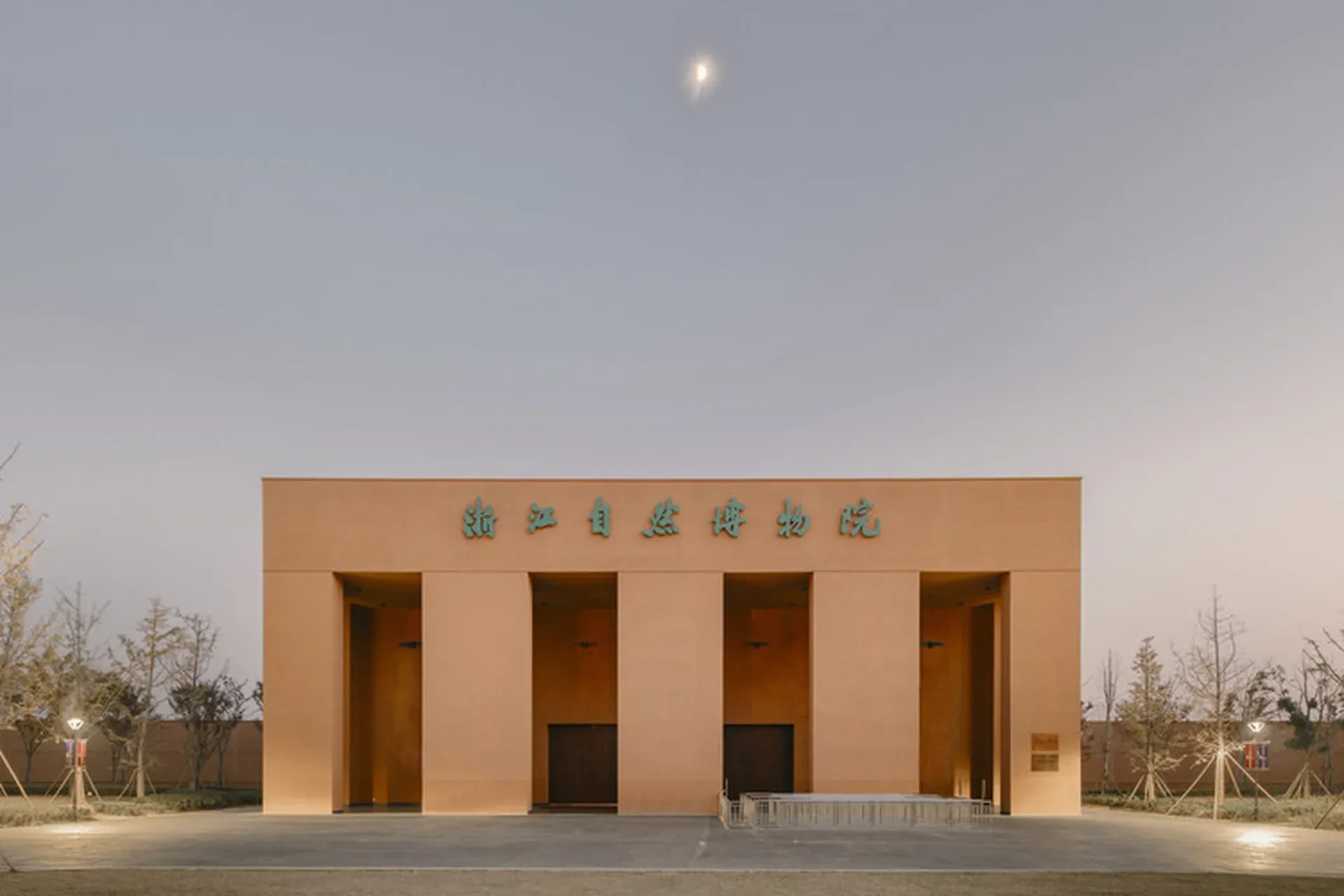
Zhejiang Museum
The Zhejiang Museum (浙江博物院) opened its current West Lake-side building in 2007 at the foot of Hangzhou's Xihu (West Lake), combining a purpose-built modern museum with the historic Le City Dang (乐善堂) building. The collection of 350,000 objects spans Zhejiang's 100,000-year human history, with four main strengths: (1) Hemudu Culture Neolithic archaeology (7,000-5,000 years ago) - rice cultivation and water management discoveries that changed understanding of early Chinese agriculture; (2) Longquan celadon ceramics - the world's finest collection of Song Dynasty Longquan celadon, widely considered the peak of Chinese ceramic art; (3) Southern Song Dynasty history - Hangzhou was the Southern Song capital (Lin'an) from 1127-1279, and the museum has exceptional objects from this period; (4) the King Wuling lacquer screen (越王勾践剑 screen and 百骏图 lacquer screen fragments).
Hangzhou · history museum2026-10-18
Quick Answer
Is Zhejiang Museum worth visiting?
Zhejiang's premier museum at the foot of West Lake — Neolithic archaeology (Hemudu, Liangzhu), Longquan celadon, and Hangzhou's Southern Song history. Free; 3–4 hours.
Quick facts
| Category | history |
|---|---|
| Ticket | Free. Passport required. Timed entry via Zhejiang Museum WeChat mini-program or Zhejiang Museum official website. Special exhibitions charge separately (¥30-80). |
| Hours | 9:00-17:00 (last entry 16:00). Closed Mondays. |
| Recommended duration | 3-4 hours. |
| Best time to visit | Weekday mornings (Tuesday-Thursday, 9:00-12:00). Hangzhou is mobbed during "One Belt One Road" Summit (biennial, May) and China's Golden Week (Oct 1-7). April-May (West Lake in bloom) and September-November are ideal. Summer is very hot (35°C+). |
| How to get there | Metro Line 1 to Yongjinmen (涌金门站), Exit A, then walk 10 minutes to West Lake's north side. Bus routes 4, 12, 31, 42, 51, 52, Y1 (West Lake scenic route) to Zhejiang Museum stop. From Hangzhou Railway Station by DiDi: ¥25-35. From Hangzhou East Station by DiDi: ¥35-50. |
| English signage | Partial |
Why visit
Longquan celadon alone justifies the visit - these pale green-glazed ceramics from Song Dynasty Zhejiang are considered by many collectors to be the most beautiful ceramics ever made. Combined with the Hemudu rice paddy discoveries (which prove sophisticated rice cultivation in Zhejiang 7,000 years ago), the museum provides a complete arc of Zhejiang's civilization from the Neolithic through imperial zenith.
Collection highlights
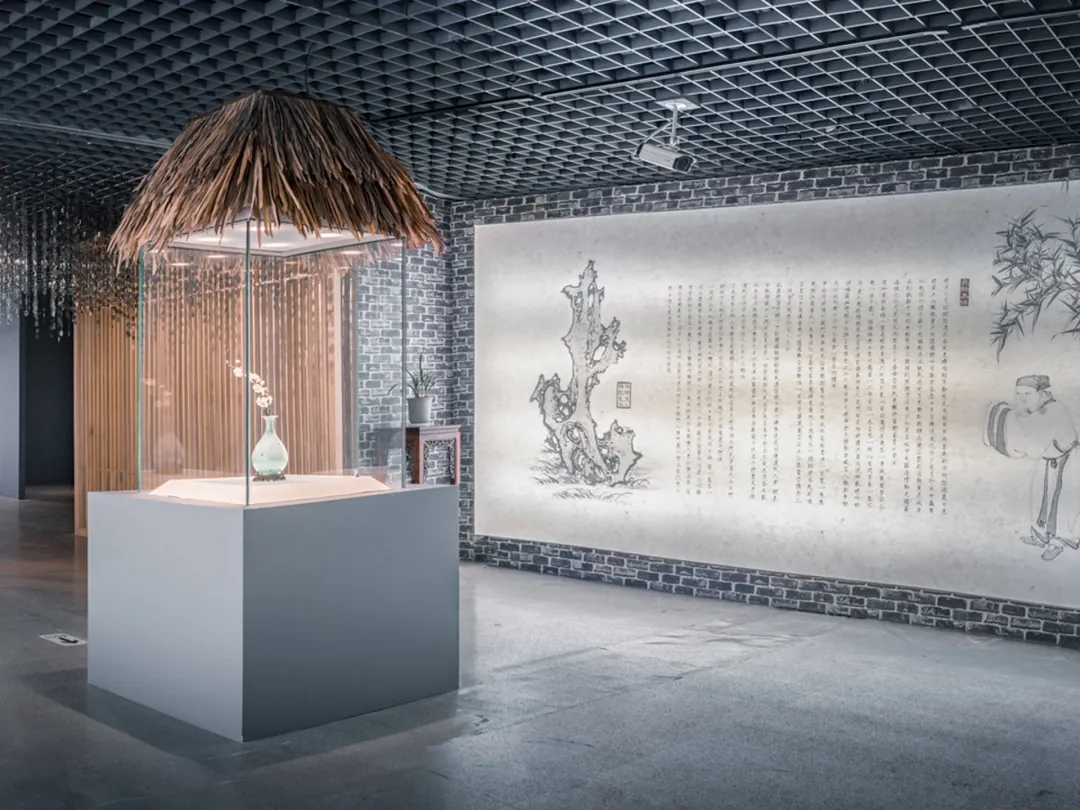
- Longquan celadon collection - the world's largest and finest collection of Song Dynasty Longquan celadon, including the famous "Meiwan" (霉碗) celadon bowl and large architectural ceramics
- Hemudu Culture rice paddy artifacts - 7,000-year-old rice grains, wooden paddles, and water management structures proving sophisticated Neolithic agriculture in Zhejiang
- King Wuling lacquer screen fragments - carved lacquer screens from the Spring and Autumn period (5th century BCE), depicting horses and court scenes with extraordinary detail
- Southern Song imperial artifacts - objects from Hangzhou's period as the Southern Song capital (Lin'an), including gold and silver ritual objects and silk imperial clothing
- "Ten Thousand Mountains Sloping Red" (万壑松风) - an important Song Dynasty painting scroll by the imperial academy painter Li Cheng, on permanent display
- Liangzhu jade ritual objects - jade cong, bi, and axle stones from the 5,000-year-old Liangzhu Culture, China's largest jade-working civilization
Tips
- The museum is on West Lake - combine with a boat ride on Xihu (West Lake), the Lingyin Temple, and a walk along Broken Bridge (断桥残雪) for a full Hangzhou cultural day
- The Longquan celadon gallery is on the 2nd floor - go early before the tour groups arrive
- Hangzhou's West Lake is a UNESCO World Heritage site - allow at least half a day to explore it beyond the museum
- The museum has an excellent bookshop with replica Longquan celadon pieces and Liangzhu jade copies
- Summer humidity in Hangzhou is extreme (July-August) - the museum is well air-conditioned
- Consider the "West Lake in Rain" (雨西湖) experience - visit the museum on a rainy spring morning when West Lake is at its most beautiful
Frequently asked questions
How does Zhejiang Museum compare to the Henan Museum?
Henan Museum is stronger on Shang-Zhou bronze and early Chinese civilization (Anyang, Luoyang history). Zhejiang Museum is stronger on Neolithic (Hemudu, Liangzhu), Song Dynasty ceramics (Longquan celadon), and Southern Song history. Both are top-tier provincial museums - the choice depends on your historical period of interest.
What is Longquan celadon?
Longquan celadon (龙泉青瓷) is a type of high-fired glazed ceramic produced in Zhejiang's Longquan region during the Song and Yuan dynasties (10th-14th centuries). It is distinguished by its pale green glaze color (celadon) and often carved or moulded decorative designs. It is widely considered the pinnacle of Chinese ceramic art and was a major export to Southeast Asia, the Middle East, and East Africa.
What is the Hemudu Culture?
Hemudu (河姆渡) was a Neolithic culture centered on the Yao River in Zhejiang, dating to 7000-5000 BCE. Its discovery in 1973 overturned assumptions about early Chinese agriculture by demonstrating that rice cultivation was practiced in Zhejiang 7,000 years ago - simultaneously with but independently from the Yangshao culture in the Yellow River valley.
Does Zhejiang Museum have English signage?
Partial - the Longquan celadon gallery and Hemudu sections have English labels. The Southern Song galleries have limited English. Audio guides in English are available (¥50 deposit, ¥30 rental).
Can I combine this with a West Lake visit?
Yes - the museum is a 5-minute walk from West Lake's north shore. The ideal itinerary is: museum morning (9:00-12:30) + lunch at Louwailou (楼外楼, Hangzhou's most famous restaurant) + afternoon boat ride on West Lake.
Read next
Other things to do in Hangzhou
Grand Canal (Hangzhou Section)
The 1,776 km Grand Canal's southern terminus — a UNESCO World Heritage site since 2014 — runs through Hangzhou as a working waterway past the 1631-built Gongchen Bridge and free museums.
Hangzhou Museum
Hangzhou's local-history museum, holding nearly 30,000 relics and the Warring States crystal cup (15.4 cm) as its treasure; free, 09:00-16:30, closed Mondays.
Hefang Street (Near West Lake)
Qinghefang is Hangzhou's most famous old street — 1,000-plus years since the Southern Song, free to enter, a 10-minute walk from Metro Line 1, lined with century-old shops like Hu Qingyu Tang.
Hefang Street
Hangzhou's most historic antique-style shopping street, about 1800 m of Ming, Qing and Republican buildings; free entry, shops 09:00-22:00, 10 minutes from Ding'an Road metro.
Leifeng Pagoda
Leifeng Pagoda in Evening Glow, one of the Ten Scenes of West Lake and home of the White Snake legend. CNY 40 buys the climb for sweeping lake views and the excavated underground palace.
Lingyin Temple
Hangzhou's oldest temple, founded in the Eastern Jin dynasty, still thronged with worshippers and rich in precious stone carvings. Combo ticket for Feilai Peak and Yongfu Temple CNY 75.
Longjing Tea Plantation
The heartland of West Lake Longjing tea, home to the 18 Imperial Tea Trees honored by Emperor Qianlong. Wander the tea fields free of charge and taste tea at the source.
Meiling Tunnel Trail
A classic Hangzhou hiking route linking Lingyin with Meijiawu by way of the Meiling Tunnel — about 8 km of quiet woodland and fine tea-terrace scenery.
Putuoshan Island
Buddhist island sacred to Guanyin — 3 major temples, 33 m golden statue. Ferry ¥160 round-trip from Zhoushan. Half-day minimum. Pilgrimage site with a serene coastal atmosphere.
Gongchen Bridge & Grand Canal
The Grand Canal's signature three-arch stone bridge in Hangzhou, built in 1631, with the Xiaohe Straight Street heritage quarter just west — free, and best explored on foot.
Six Harmonies Pagoda
A 60-meter Song-era pagoda on Yuelun Hill above the Qiantang River — 7 interior floors hiding behind 13 exterior eaves, climbable in about 90 minutes for a river-and-bridge view.
Southern Song Imperial Street
The central artery of the Southern Song capital Lin'an, carrying 1,000 years of history and a preserved underground road layer. Free to stroll, linked to Hefang Street, loveliest lit up at night.
Su Dongpo Memorial Hall
Memorial hall to poet Su Dongpo in Hangzhou, built in 2003 with about 2500 sqm of exhibits; free entry 09:00-16:30, closed Mondays, at the south end of the 2.8-km Su Causeway.
West Lake
Hangzhou's defining lake — 6.38 sq km ringed by 15 km of shore, free to all, a UNESCO World Heritage site since 2011. Boats from CNY 55; Metro Line 1 to Longxiang Bridge. Allow 4-8 hours.
Xiang Lake Park
Hangzhou's second great lake and West Lake's 'sister' — about 5 sq km of water and a 15 km cycling loop. Free entry; the Kuahuqiao museum covers an 8,000-year-old culture. Allow 3-5 hours.
West Lake Musical Fountain
Free nightly shows at 19:30 and 20:30 at the Hubin gardens on West Lake in Hangzhou; the 126-m fountain has 333 jets, so arrive early for a spot.
Xixi National Wetland Park
China's first national wetland park — 11.5 sq km of reed beds, lotus ponds, and persimmon groves threaded by water lanes, about 20 minutes west of West Lake.
Museums in Hangzhou
China National Silk Museum
The world's largest silk museum. Live silkworms, weaving demonstrations on 19th-century looms, and 2,000-year-old Silk Road textiles. Free. Hangzhou's most underrated museum.
China National Tea Museum
China's only national-level tea museum, set among actual Longjing tea plantations in Hangzhou. Tea ceremony demonstrations, 1,000+ tea artifacts, and fresh Longjing at the source. Free.
Hangzhou Museum
West Lake cultural history from Neolithic Liangzhu through Southern Song imperial glory. Free entry near Hefang Street. Celadon ceramics and Song Dynasty urban life. Allow 1.5–2 hours.
National Archives of Publications and Culture — Hangzhou Branch (Wenrun Ge)
China's newest national "version" repository, opened July 2022 in a 100,000 sqm hillside complex beside the Liangzhu Ancient City ruins in Hangzhou's Yuhang district.
Zhejiang Museum of Natural History
Hangzhou's natural history museum at West Lake Culture Square — dinosaurs, fossils, minerals, and the biology of Zhejiang's unique ecosystems. Free. Allow 1.5–2 hours.
West Lake Museum
China's first museum devoted to a single lake — West Lake's geology, 2,000 years of dredging and poetry, the Ten Scenes, and the 2011 UNESCO inscription. Free. On the lake's south shore.
Zhejiang Provincial Museum
Liangzhu Neolithic jade (5,000-year-old ritual cong and bi), the world's finest celadon ceramics, and Southern Song imperial artifacts — on the shore of West Lake. Free.