Meiling Tunnel Trail梅灵隧道
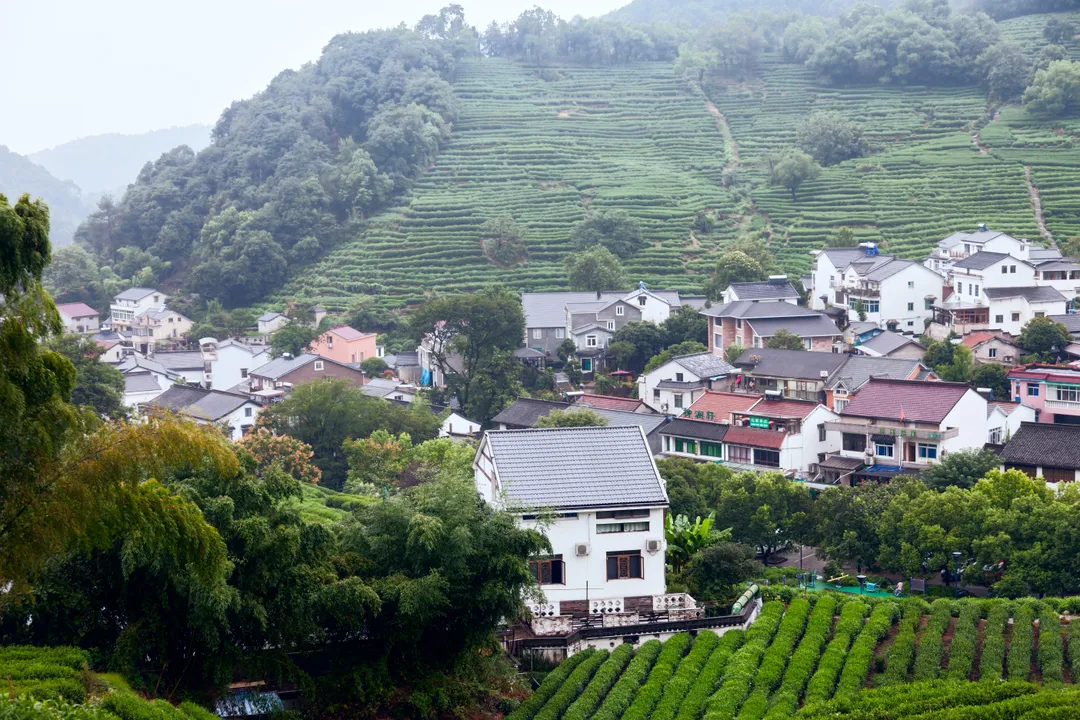
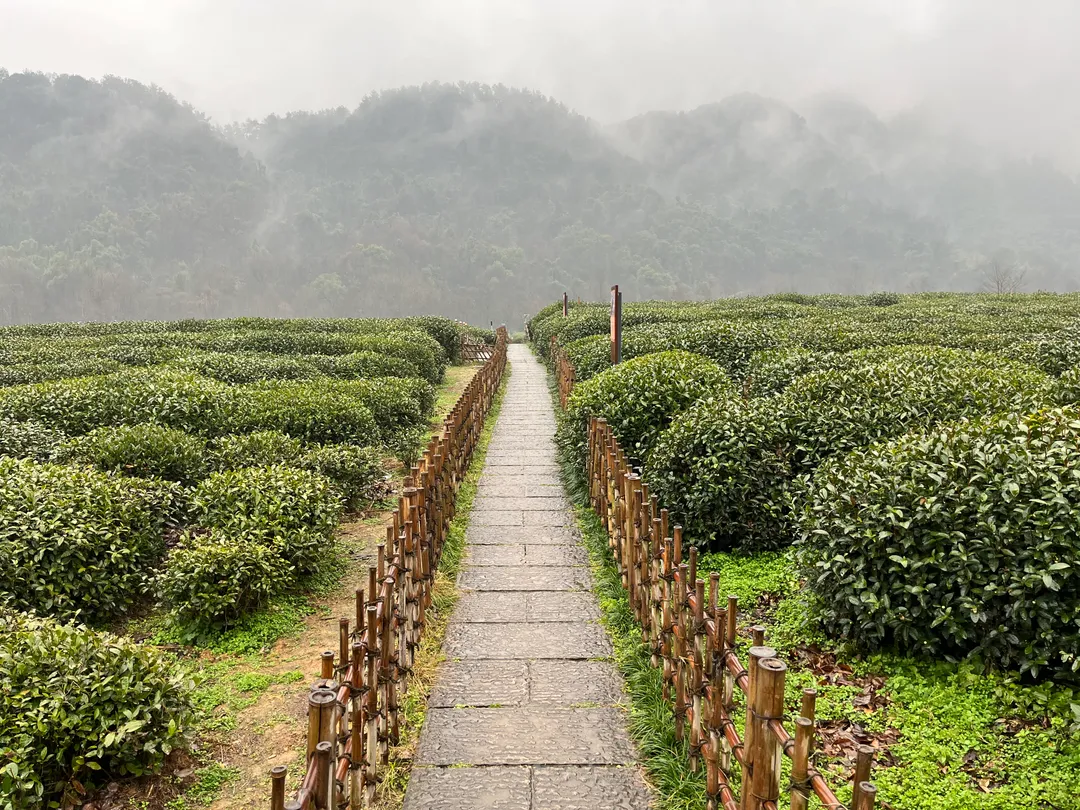
The Meiling Tunnel trail is one of Hangzhou's classic country walks, about 8 km from Lingyin Road near Lingyin Temple to Meijiawu village. It passes the Meiling Tunnel (the tunnel section shares a public road — take care) and threads through plum groves, tea gardens and quiet forest, with clean air throughout — a favourite weekend workout for Hangzhou locals.
Hangzhou · Visitor Guide2026-10-18
Quick Answer
Is Meiling Tunnel Trail worth visiting?
A classic Hangzhou hiking route linking Lingyin with Meijiawu by way of the Meiling Tunnel — about 8 km of quiet woodland and fine tea-terrace scenery.
Quick facts
| Ticket | Free admission |
|---|---|
| Hours | Open 24 hours |
| Recommended duration | About 3-5 hours (depending on pace and stops) |
| Best time to visit | Best in spring (plum blossom in February-March); autumn's cool weather is also ideal; summer is pleasantly cool |
| How to get there | Start — bus 7 or 324 to Lingyin stop. Finish — Meijiawu is served by bus 1314; or taxi to the start and walk back the same way |
| English signage | No |
| Wheelchair accessible | No |
| Route length | About 8 km |
| Elevation gain | About 200 m |
| Difficulty | Beginner to intermediate |
| Type | Hill trail (some sections on public road) |
| Best seasons | Spring (plum blossom), autumn (hiking) |
What to expect
The Meiling Tunnel trail is a classic peri-urban hike linking the Lingyin area with the tea village of Meijiawu, named for the Meiling Tunnel it passes. The route mixes hill paths and tea-terrace lanes, with some stretches on a public road (construction vehicles use the Lingyin to Meijiawu section — take care). Forest runs thick along the way and the air is famously clean — a rare lung-cleansing escape this close to the city.
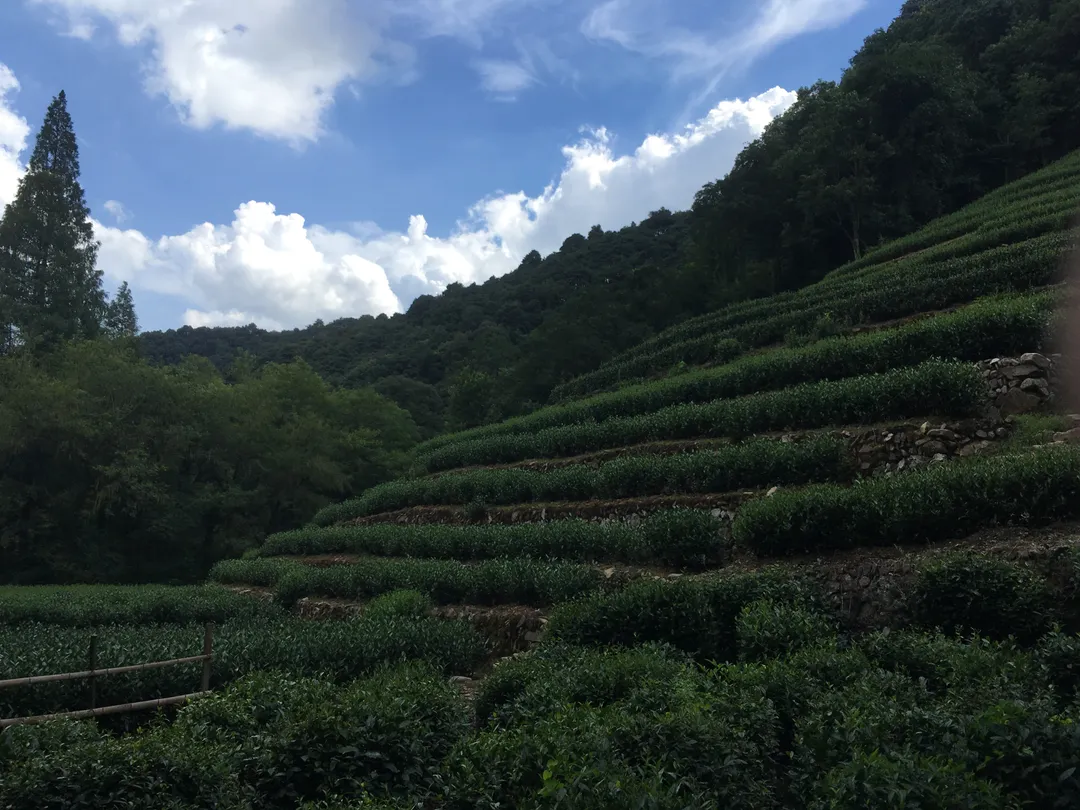
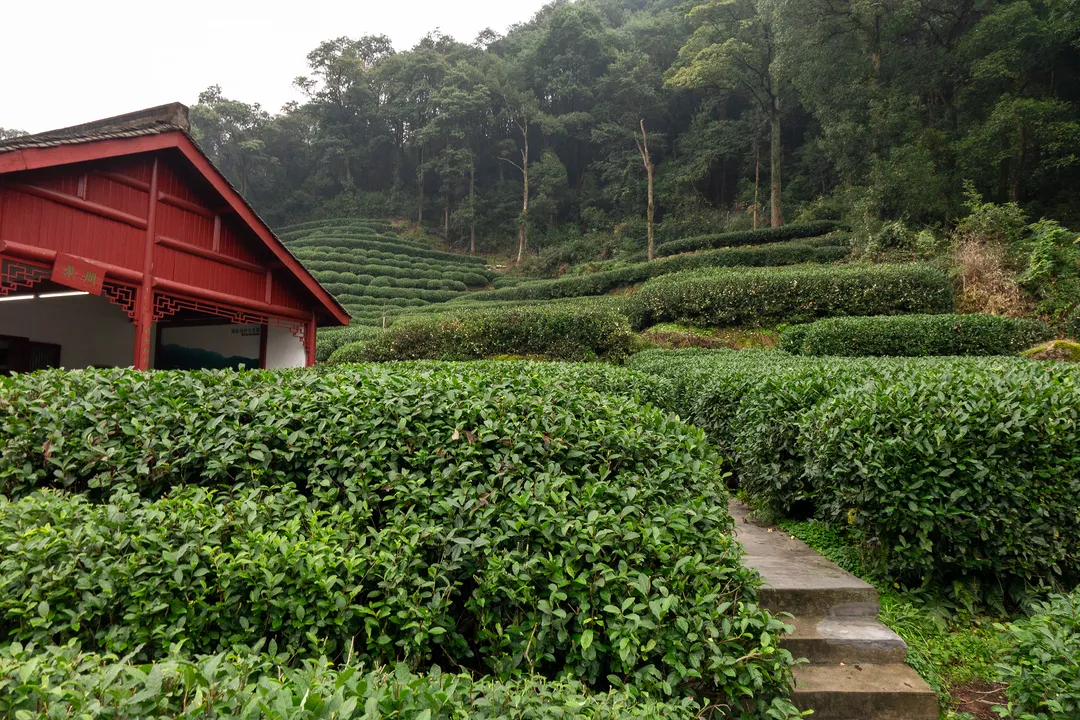
This hillside has long been Longjing tea country. Meijiawu village is one of the core producers of West Lake Longjing, and Premier Zhou Enlai visited its tea gardens several times. The terraces along the trail are still worked today — in spring you will see pickers at it — and stretches of the old flagstone path survive near the tunnel.
Practical notes: wear proper hiking shoes or trainers and carry plenty of water (1.5-2 litres for the whole route) plus simple snacks. Mind the sun and mosquitoes in summer and wrap up in winter. Mobile signal is patchy, so download an offline map first. Some sections are steep — poles ease the strain on the knees. At the finish, Meijiawu's farm restaurants and tea houses make a fine place to eat and taste.
How to get there
Start — bus 7 or 324 to Lingyin stop, then walk about 1 km up Lingyin Road into the hills to the trailhead. Finish at Meijiawu — bus 1314 (the popular "love route") stops there. A taxi from Hangzhou East station to Lingyin is about CNY 30 and 30 minutes.
Best photo spots
- The Meijiawu tea terraces (Longjing fields)
- The Meiling Tunnel entrance (mind the traffic)
- The pine-forest stretch with dappled light
- The old tree at Meijiawu village entrance
- The tea-garden viewing platform over the terraces
Tips
- Avoid hiking after rain — the paths are slick and dangerous; stay out of the hills in downpours
- From the Lingyin end, continue along the road past the scenic-area gate for about 800 m; turn left at the Meiling Tunnel sign onto the trail
- At the Meijiawu end, Zhiweiguan No. 2 and several farm restaurants serve lunch — a bit pricier than town but fair
- Carry rain gear in spring; mountain weather shifts fast
- Short on stamina? Bus to Meijiawu and hike back toward Lingyin — the route becomes downhill
Scams to avoid
- No official fee exists on this trail — anyone demanding a toll is a fraud; refuse, turn back, or call the police
- Some Meijiawu tea houses inflate prices; confirm prices before ordering
Frequently asked questions
How long does the Meiling Tunnel hike take?
Lingyin to Meijiawu is about 8 km — 3-4 hours of walking, or 4-5 with photo stops. Fitter walkers go faster.
Can you walk through the tunnel?
The Meiling Tunnel is a road tunnel with no footpath. Hikers use the hillside path beside it, or share the road with extreme care — locals carry reflective vests to stay visible.
Is the route waymarked?
Signage is patchy and some junctions have no markers. Download offline tracks from a hiking app such as Liangbulu before you set out.
Are there supply points on the way?
Meijiawu village has farm restaurants and tea houses, and there are small shops near the Lingyin trailhead — but nothing en route. Carry enough water and food.
Read next
Other things to do in Hangzhou
Grand Canal (Hangzhou Section)
The 1,776 km Grand Canal's southern terminus — a UNESCO World Heritage site since 2014 — runs through Hangzhou as a working waterway past the 1631-built Gongchen Bridge and free museums.
Hangzhou Museum
Hangzhou's local-history museum, holding nearly 30,000 relics and the Warring States crystal cup (15.4 cm) as its treasure; free, 09:00-16:30, closed Mondays.
Hefang Street (Near West Lake)
Qinghefang is Hangzhou's most famous old street — 1,000-plus years since the Southern Song, free to enter, a 10-minute walk from Metro Line 1, lined with century-old shops like Hu Qingyu Tang.
Hefang Street
Hangzhou's most historic antique-style shopping street, about 1800 m of Ming, Qing and Republican buildings; free entry, shops 09:00-22:00, 10 minutes from Ding'an Road metro.
Leifeng Pagoda
Leifeng Pagoda in Evening Glow, one of the Ten Scenes of West Lake and home of the White Snake legend. CNY 40 buys the climb for sweeping lake views and the excavated underground palace.
Lingyin Temple
Hangzhou's oldest temple, founded in the Eastern Jin dynasty, still thronged with worshippers and rich in precious stone carvings. Combo ticket for Feilai Peak and Yongfu Temple CNY 75.
Longjing Tea Plantation
The heartland of West Lake Longjing tea, home to the 18 Imperial Tea Trees honored by Emperor Qianlong. Wander the tea fields free of charge and taste tea at the source.
Putuoshan Island
Buddhist island sacred to Guanyin — 3 major temples, 33 m golden statue. Ferry ¥160 round-trip from Zhoushan. Half-day minimum. Pilgrimage site with a serene coastal atmosphere.
Gongchen Bridge & Grand Canal
The Grand Canal's signature three-arch stone bridge in Hangzhou, built in 1631, with the Xiaohe Straight Street heritage quarter just west — free, and best explored on foot.
Six Harmonies Pagoda
A 60-meter Song-era pagoda on Yuelun Hill above the Qiantang River — 7 interior floors hiding behind 13 exterior eaves, climbable in about 90 minutes for a river-and-bridge view.
Southern Song Imperial Street
The central artery of the Southern Song capital Lin'an, carrying 1,000 years of history and a preserved underground road layer. Free to stroll, linked to Hefang Street, loveliest lit up at night.
Su Dongpo Memorial Hall
Memorial hall to poet Su Dongpo in Hangzhou, built in 2003 with about 2500 sqm of exhibits; free entry 09:00-16:30, closed Mondays, at the south end of the 2.8-km Su Causeway.
West Lake
Hangzhou's defining lake — 6.38 sq km ringed by 15 km of shore, free to all, a UNESCO World Heritage site since 2011. Boats from CNY 55; Metro Line 1 to Longxiang Bridge. Allow 4-8 hours.
Xiang Lake Park
Hangzhou's second great lake and West Lake's 'sister' — about 5 sq km of water and a 15 km cycling loop. Free entry; the Kuahuqiao museum covers an 8,000-year-old culture. Allow 3-5 hours.
West Lake Musical Fountain
Free nightly shows at 19:30 and 20:30 at the Hubin gardens on West Lake in Hangzhou; the 126-m fountain has 333 jets, so arrive early for a spot.
Xixi National Wetland Park
China's first national wetland park — 11.5 sq km of reed beds, lotus ponds, and persimmon groves threaded by water lanes, about 20 minutes west of West Lake.
Museums in Hangzhou
China National Silk Museum
The world's largest silk museum. Live silkworms, weaving demonstrations on 19th-century looms, and 2,000-year-old Silk Road textiles. Free. Hangzhou's most underrated museum.
China National Tea Museum
China's only national-level tea museum, set among actual Longjing tea plantations in Hangzhou. Tea ceremony demonstrations, 1,000+ tea artifacts, and fresh Longjing at the source. Free.
Hangzhou Museum
West Lake cultural history from Neolithic Liangzhu through Southern Song imperial glory. Free entry near Hefang Street. Celadon ceramics and Song Dynasty urban life. Allow 1.5–2 hours.
National Archives of Publications and Culture — Hangzhou Branch (Wenrun Ge)
China's newest national "version" repository, opened July 2022 in a 100,000 sqm hillside complex beside the Liangzhu Ancient City ruins in Hangzhou's Yuhang district.
Zhejiang Museum of Natural History
Hangzhou's natural history museum at West Lake Culture Square — dinosaurs, fossils, minerals, and the biology of Zhejiang's unique ecosystems. Free. Allow 1.5–2 hours.
West Lake Museum
China's first museum devoted to a single lake — West Lake's geology, 2,000 years of dredging and poetry, the Ten Scenes, and the 2011 UNESCO inscription. Free. On the lake's south shore.
Zhejiang Museum
Zhejiang's premier museum at the foot of West Lake — Neolithic archaeology (Hemudu, Liangzhu), Longquan celadon, and Hangzhou's Southern Song history. Free; 3–4 hours.
Zhejiang Provincial Museum
Liangzhu Neolithic jade (5,000-year-old ritual cong and bi), the world's finest celadon ceramics, and Southern Song imperial artifacts — on the shore of West Lake. Free.