Hangzhou · specialty museum
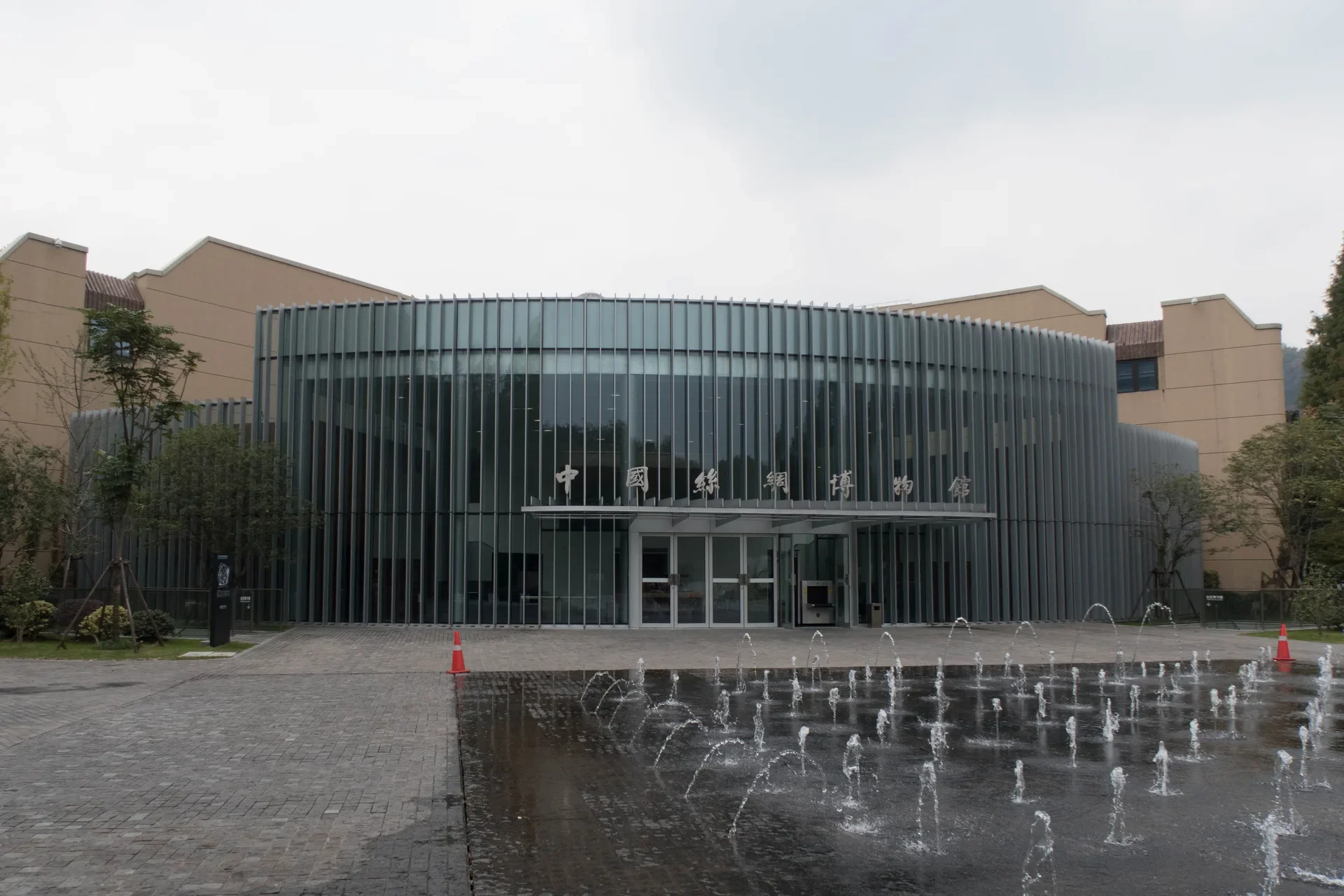
China National Silk Museum (中国丝绸博物馆, Zhōngguó Sīchóu Bówùguǎn)
"The China National Silk Museum, located just south of West Lake, is the largest museum in the world dedicated to silk. Its collection traces the entire history of sericulture (silkworm cultivation) and silk weaving in China — from 5,000-year-old Neolithic silk fragments discovered at the Qianshanyang site, through Han and Tang Dynasty Silk Road textiles, to Qing Dynasty imperial dragon robes and modern fashion. The museum has live silkworms (seasonal, typically April-June) in the sericulture gallery, and a working weaving workshop where artisans demonstrate traditional drawloom weaving on 19th-century looms. The Silk Road Gallery displays astonishingly well-preserved textiles excavated along the Silk Road in Xinjiang and Gansu, including Sogdian, Sasanian, and Chinese silk pieces that trace the exchange of weaving techniques and motifs between China, Persia, and the Mediterranean.".
Last updated:
Quick Answer
Is China National Silk Museum worth visiting?
"The world's largest silk museum. Live silkworms, weaving demonstrations on 19th-century looms, and 2,000-year-old Silk Road textiles. Free. Hangzhou's most underrated museum.".
Quick facts
| Category | specialty |
|---|---|
| Ticket | Free. Passport required. No reservation needed — walk in. |
| Hours | 9:00-17:00 (last entry 16:30). Closed Mondays. |
| Recommended duration | 1.5-2 hours. |
| Best time to visit | April-June for live silkworms in the sericulture gallery. Weekday mornings are quiet year-round. The museum is rarely crowded — it remains one of Hangzhou's least-visited major attractions despite being excellent. |
| How to get there | Bus routes 12, 31, 42, 87, 133, Y2, Y9 to Silk Museum (丝绸博物馆) stop. DiDi from central Hangzhou costs ¥15-25. The museum is on Yuhuangshan Road, 2 km south of West Lake's southern shore. |
| English signage | yes |
Why visit
Watching a master weaver operate a 19th-century drawloom — coordinating foot pedals and hand shuttles to produce a few centimeters of brocade per hour — makes you appreciate why silk was worth its weight in gold. The live silkworms munching on mulberry leaves in the sericulture gallery are unexpectedly charming.
Collection highlights
- Sericulture Gallery — live silkworms (April-June) and a full mulberry-to-fabric explanation of the silk production process. The cocoon display shows the 1,500-meter single filament that each silkworm spins
- Traditional Loom Workshop — master weavers operating 19th-century drawlooms, producing brocade at the rate of 5-10 cm per day. The looms themselves are beautiful wooden machines
- Silk Road Textiles Gallery — 5th-8th century silk fragments from Xinjiang and Gansu with Chinese, Persian, Sogdian, and Greco-Roman motifs woven into the same fabric. Evidence of cross-cultural artistic exchange along the Silk Road
- Imperial Dragon Robes — Qing Dynasty court robes (龙袍) with nine dragons, twelve imperial symbols, and waves-and-rocks borders, embroidered in gold thread and peacock feather filament on silk
- Modern Fashion Gallery — rotating exhibitions of contemporary Chinese fashion designers working with silk. The connection between traditional techniques and modern design is well-curated
Tips
- The live silkworms are only present April-June — outside these months, the sericulture gallery uses video and photo displays instead
- The weaving demonstration runs at 10:00, 11:00, 14:00, and 15:00 daily. Time your visit around one of these slots — the demonstration is the museum's highlight
- I watched a weaver in June 2026 producing a cloud-pattern brocade at about 8 cm per day — after watching for 10 minutes, I could not see any visible progress. The patience required is staggering
- The museum shop sells genuine silk scarves (¥150-500) made on the same looms as the demonstrations — they are significantly higher quality than tourist-market silk and worth the premium
- The museum is a 15-minute walk from the Leifeng Pagoda (雷峰塔) on the south side of West Lake — combine both in a morning
- The museum garden has a small pond and mulberry trees — a pleasant, shaded spot for a break
Frequently asked questions
Can I see silkworms at the museum?
Yes, but only seasonally. Live silkworms (Bombyx mori) are on display in the sericulture gallery from approximately mid-April through June — this is when mulberry leaves are available and the silkworms are actively spinning cocoons. Outside this period, the sericulture process is explained through video, photos, and preserved specimens.
How does the silk museum differ from the tea museum in Hangzhou?
Both are excellent, free, national-level museums set in scenic Hangzhou locations. The Tea Museum is in the Longjing hills amid tea terraces and has a stronger sense of place. The Silk Museum is larger, with more impressive technical demonstrations (the working looms) and more internationally significant artifacts (the Silk Road textiles). Both are worth visiting if you have 2+ days in Hangzhou.
Is the silk in the museum shop genuine?
Yes — the museum shop is one of the most reliable places in Hangzhou to buy genuine silk. Products made on-site by the museum's weaving workshop are marked as such and come with a certificate. Scarves (¥150-500) and small brocade pieces (¥300-1,000) are the best values. Avoid the "silk street" tourist markets — the museum shop is the trustworthy alternative.
How old are the oldest silk pieces in the museum?
The museum holds Neolithic silk fragments from the Qianshanyang site (钱山漾遗址) in Zhejiang Province, dated to approximately 2700 BC — making them about 4,700 years old. The fragments are small (about 2 cm), brown, and displayed under magnification, but they are the earliest physical evidence of silk production in human history.
Do I need to book in advance?
No — the museum is typically uncrowded and walk-in entry is the norm. Bring your passport for registration. It is one of Hangzhou's most under-visited museums despite being world-class in its specialty.
Can I visit the Silk Museum and West Lake on the same day?
Yes — the museum is a 15-minute DiDi ride (¥15) from the southern shore of West Lake. Visit the museum in the morning (9:00-11:00), then walk north to Leifeng Pagoda and the southern West Lake attractions. This is an excellent half-day itinerary that avoids the more crowded northern West Lake area.
Read next
Other things to do in Hangzhou
Grand Canal (Hangzhou Section)
The 1,776 km Grand Canal's southern terminus — a UNESCO World Heritage site since 2014 — runs through Hangzhou as a working waterway past the 1631-built Gongchen Bridge and free museums.…
Leifeng Pagoda
leifeng-pagoda in Beijing: 西湖十景雷峰夕照,新塔40元登塔俯瞰西湖,白蛇传传说源地,新塔内保存古塔遗址地宫,景色壮观。
Lingyin Temple
lingyin-temple in Beijing: 杭州最古老寺庙,东晋始建,香火极盛,寺内有珍贵石刻造像,飞来峰永福寺联票75元。
Longjing Tea Plantation
longjing-tea-plantation in Beijing: 西湖龙井茶核心产区,乾隆皇帝御封的十八棵御茶树所在地,免费茶田漫步,茶文化体验,品茶买茶。. 2026 verified.
Meiling Tunnel Trail
meiling-dragon in Beijing: 杭州经典徒步路线,连接灵隐与梅家坞,穿过梅灵隧道,全程约8公里,山林幽静,茶园风光佳。
Putuoshan Island
Buddhist island sacred to Guanyin — 3 major temples, 33 m golden statue. Ferry ¥160 round-trip from Zhoushan. Half-day minimum. Pilgrimage site with a serene coastal atmosphere.
Gongchen Bridge & Grand Canal
qi-bridge in Beijing: 京杭大运河杭州段标志性三孔石拱桥,建于1631年,桥西为小河直街历史文化街区,免费,漫步最佳。
Six Harmonies Pagoda
"A 60-meter Song-era pagoda on Yuelun Hill above the Qiantang River — 7 interior floors hiding behind 13 exterior eaves, climbable in about 90 minutes for a river-and-bridge view.".
Southern Song Imperial Street
song-dynasty-ruins in Beijing: 南宋都城临安的中轴大道,1000年历史,保存完好地下文物层,连接河坊街,免费漫步,夜晚灯光美。
West Lake
west-lake in Beijing: 杭州标志性湖泊,面积约6.38平方公里,周长约15公里。免费开放(部分景点另付费)。游船55元起。2011年世界文化遗产。苏堤全长2.8公里,地铁1号线龙翔桥站/凤起路站。深度游建议4-8小时。
Xiang Lake Park
xiang-lake-park in Beijing: 杭州第二大名湖,水域面积约5平方公里,西湖姐妹湖。免费进入(展馆另付费)。跨湖桥遗址博物馆免费(8000年文明)。环湖骑行约15公里。地铁1号线湘湖站步行15分钟。建议3-5小时。
Xixi National Wetland Park
China's first national wetland park — 11.5 sq km of reed beds, lotus ponds, and persimmon groves threaded by water lanes, about 20 minutes west of West Lake.…
Museums in Hangzhou
China National Tea Museum
"China's only national-level tea museum, set among actual Longjing tea plantations in Hangzhou. Tea ceremony demonstrations, 1,000+ tea artifacts, and fresh Longjing at the source. Free.".
Hangzhou Museum
West Lake cultural history from Neolithic Liangzhu through Southern Song imperial glory. Free entry near Hefang Street. Celadon ceramics and Song Dynasty urban life. Allow 1.5–2 hours.
National Archives of Publications and Culture — Hangzhou Branch (Wenrun Ge)
"China's newest national \"version\" repository, opened July 2022 in a 100,000 sqm hilltop complex near Hangzhou's Xianghu Lake,.".
Zhejiang Museum of Natural History
Hangzhou's natural history museum near West Lake — dinosaurs, fossils, minerals, and the biology of Zhejiang's unique ecosystems. Free. Allow 1.5–2 hours.
Zhejiang Museum
"Zhejiang's premier museum at the foot of West Lake - strong in Neolithic archaeology (Hemudu/Yangshao), Longquan celadon, Hangzhou's Southern Song history,.".. 2026 verified.
Zhejiang Provincial Museum
"Liangzhu Neolithic jade (5,000-year-old ritual cong and bi), the world's finest celadon ceramics, and Southern Song imperial artifacts — on the shore of West Lake. Free.".