Pingtan Island平潭岛
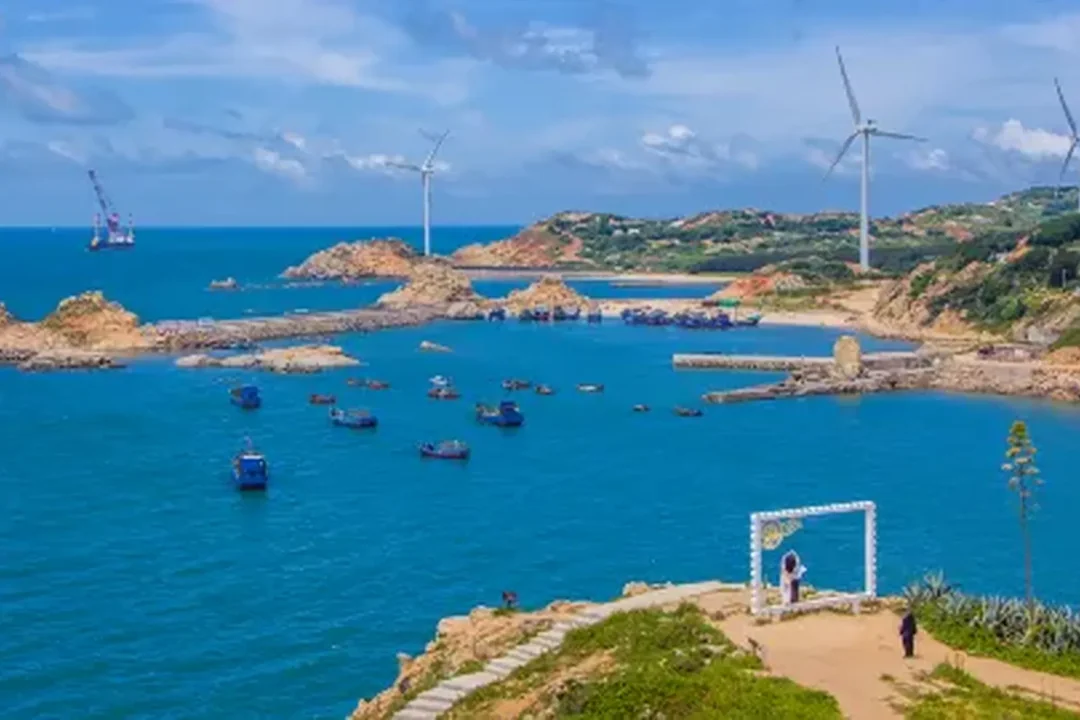
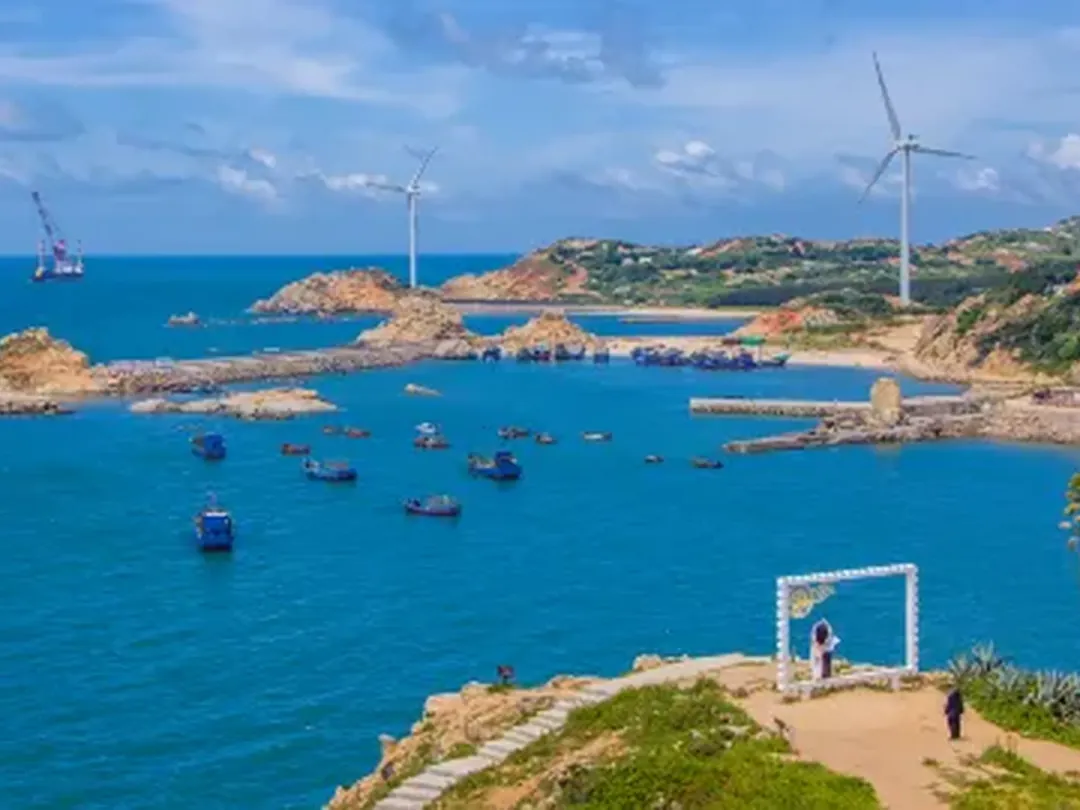
Pingtan Island (ancient name Haitan) is China's fifth-largest island and Fujian's largest, hanging off Fuzhou's coast about 68 nautical miles from Taiwan's Hsinchu — now linked to the mainland by the Pingtan Strait bridges and about 1.5 hours' drive from Fuzhou. Its appeal is elemental: a wind-scoured coast of granite headlands and surfing beaches, villages built of dry-stacked stone (the famous beicuo 'stone houses' of Beigang village), an island ring road strung between wind turbines and the sea, and — in season — the 'blue tears', blooms of bioluminescent plankton that light the night surf an electric blue, peaking April-June with Tannan Bay and Longwangtou the classic viewing beaches. Most of the coast is free to roam; the island rewards a slow overnight loop rather than a day trip.
Fuzhou · Visitor Guide2026-11-17
Quick Answer
Is Pingtan Island worth visiting?
Fujian's largest island off Fuzhou — wind farms, granite 'stone house' villages, wild beaches and the famous blue-tears bioluminescent surf (peak April-June). Island access free; 1-2 days from Fuzhou.
Quick facts
| Ticket | Island and coastline free; beaches, Beigang village and the ring road have no entry fees. Individual commercial attractions (certain scenic zones, boat trips) are ticketed separately. |
|---|---|
| Hours | Open island — accessible daily, year-round; blue-tear viewing is a nighttime activity in season. |
| Recommended duration | 1-2 days for the ring road, stone villages and beaches; a hard day trip from Fuzhou is possible (about 1.5 hours each way). |
| Best time to visit | April-June for blue tears (they peak on calm, warm south-wind nights); spring and autumn for cycling the ring road. Summer brings beach crowds; winter is wild and windy. |
| How to get there | Drive or bus from Fuzhou over the Pingtan Strait Bridge (about 1.5 hours); Fuzhou also runs coaches direct to Pingtan town. On the island, rent a car or scooter — distances are real and buses thin. |
| English signage | Partial |
| Wheelchair accessible | Partial |
| Size | China's fifth-largest island, Fujian's largest (ancient name Haitan) |
| Distance to Taiwan | About 68 nautical miles from Hsinchu, Taiwan |
| Blue tears | Bioluminescent plankton blooms, peak April-June, best on south-wind nights |
| Signature villages | Beigang's dry-stacked granite 'stone houses' (beicuo) |
| Access | Pingtan Strait Bridge from Fuzhou, ~1.5 hours by road |
What to expect
Pingtan is what the Fujian coast looks like before anyone softens it: a broad shield of an island whose granite core has been scoured by wind for millennia, its west coast duned and its south coast surf-cut, the sea always in motion. It was anciently called Haitan, 'sea altar', and it stands closer to Taiwan — about 68 nautical miles from Hsinchu — than almost any other piece of the mainland coast; that geography made it a watchpost, then a poverty-stricken fishing backwater, and today a 'comprehensive experimental zone' strung with bridges, wind farms and long, near-empty roads made for driving.
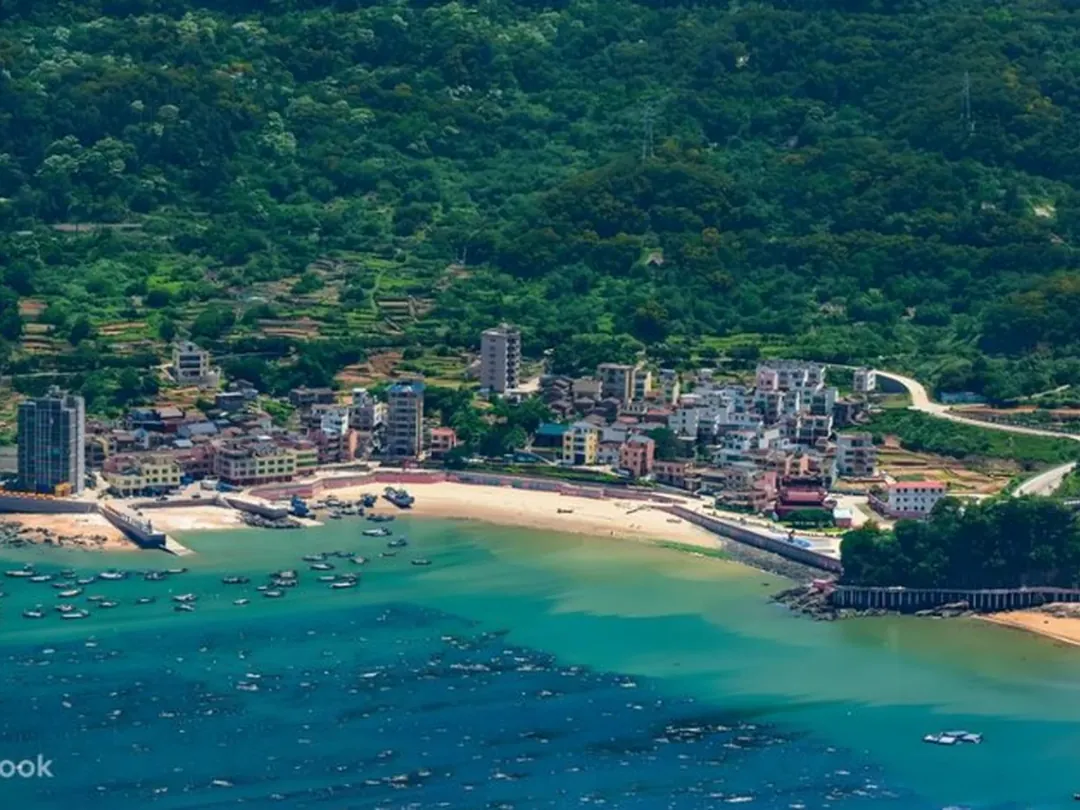
The island's signature scenery is human as much as natural. Pingtan's typhoon gales taught its builders to weigh their houses down with stone: whole villages of beicuo — dry-stacked granite houses with low roofs weighted by slabs and fishing nets — survive along the north and west coasts, Beigang village the most photographed, its grey-walled lanes opening straight onto the surf. The island ring road stitches the coast together, running causeways between wind turbines, fishing harbors and beaches; cycling or scootering it is the island's best single activity.
Then there are the blue tears (蓝眼泪). In season — March to August, peaking April-June — blooms of bioluminescent plankton wash ashore at night, and the breaking surf glows an electric blue where your feet or the bow wake stir it. Sightings depend on wind, tide and luck; Tannan Bay, Longwangtou beach and the harbors of the northern coast are the classic watching spots, and locals track 'blue-tear forecasts' like weather. Combine a night of ghost-light hunting with a day of stone villages and empty headlands, and Pingtan justifies its overnight — the last ferry of light on the ring road is worth staying for.
How to get there
From Fuzhou, drive or take a coach across the Pingtan Strait Bridge to Pingtan town (about 1.5 hours); buses run throughout the day. On the island, hire a car or electric scooter — the ring road and village lanes are the point, and local buses are sparse.
Best photo spots
- Beigang village's dry-stacked stone houses with fishing nets on the roofs
- Blue-tears surf at night on Tannan Bay or Longwangtou beach (April-June)
- The ring road causeways between wind turbines and open sea
- The granite headlands and sea arches of the island's north coast (Houyan area)
Tips
- Chase blue tears with the forecast, not the calendar — calm, warm south-wind nights after dark give the best glow (peak April-June)
- Rent wheels; the island is big and the ring road is the attraction
- Overnight if you can: the last light on the coast and a late-night blue-tears hunt need a hotel, not a ferry clock
- Wind is the island's constant — bring a windproof layer even in June
Scams to avoid
- 'Blue-tears guarantee' tours selling fixed sightings — plankton blooms depend on wind and tide; no one can guarantee them
- Beachside scooter rentals without helmets or deposits paperwork — use established shops and photograph the vehicle's condition
Frequently asked questions
What are the 'blue tears'?
Blooms of bioluminescent plankton that wash ashore at night and glow electric-blue when disturbed — seasonal (March-August, peaking April-June), wind- and tide-dependent, best watched at Tannan Bay and Longwangtou.
How far is Pingtan from Fuzhou?
About 1.5 hours by road over the Pingtan Strait Bridge — coaches and cars run throughout the day from Fuzhou.
How big is the island?
It is China's fifth-largest island and Fujian's largest — big enough that a full loop of the coast takes the better part of a day by scooter or car.
What are the stone houses?
Beicuo — dry-stacked granite houses with slab-weighted roofs, built to survive Pingtan's typhoon gales; Beigang village on the north coast is the most visited and photogenic.
Can I do it as a day trip?
Possible but rushed — the coast, stone villages and a night blue-tears hunt really want an overnight on the island.
Read next
Other things to do in Fuzhou
Drum Mountain
Covering about 48 square kilometers on the east bank of the Min River, Drum Mountain rewards a half-day trip with the 783-meter peak, a 1,000-year-old Yongquan Temple, cliff carvings, and a cable car.
Fuzhou City Markets
Fuzhou's evening stomach — the Maritime-Silk-Road themed Daming Food Street by Three Lanes and Seven Alleys, and Taijiang's Laoyaozhou Street — Daytime wet markets run 06:00–10:00.
Pingtan Island — alias page
Pingtan Island, Fuzhou's island playground — alias page. See the full guide at fuzhou-pingtan-island.
Drum Mountain (Gushan) — alias page
Drum Mountain (Gushan), Fuzhou — alias page. See the full guide at drum-mountain-fuzhou.
Guling Mountain Resort
The hill-station above Fuzhou — a missionary summer retreat founded in 1886, stone villas, cryptomeria giants and mountain mist about 750 m up and several degrees cooler.
Yongquan Temple on Drum Mountain
The 'crown of Fujian temples' halfway up Drum Mountain east of Fuzhou — founded in 783 and rebuilt in 908 by the Min king, so hidden that you enter the mountain without seeing the temple.
Minjiang River Cruise (Fuzhou)
Fuzhou's night cruise — 15 km of lit riverfront from the Taixiang dock past the twin-tower financial district, bridges and flower banks.
Three Lanes and Seven Alleys
Fuzhou's Ming-Qing elite quarter — 'the museum of Chinese urban architecture — Streets and shops around the clock (shops ~10:00–22:00).
Shangxiahang Historic District
Fuzhou's old merchant quarter on the north bank of the Min River — restored guild halls, lanes of Qing-Republican shopfronts — Shops and halls generally 10:00-22:00, liveliest from late afternoon.
Songkou Ancient Town
Fuzhou's only nationally listed historic town — a thousand-year river town in Yongtai county with 160-odd Ming-Qing dwellings, a free old quarter, 1.5 hours from the city.
Fuzhou West Lake Park
Fuzhou's 1,700-year-old classical lake garden — founded in 282 AD, the 'pearl of Fujian gardens', with willowed causeways, island temples and boat ponds. Free; open 5:30–22:30; 1.5–2 hours.
Yantai Hill
The hill of foreign consulates on Fuzhou's south bank — 17 nations' consulates, churches and treaty-port mansions in lanes above the Min River, now a renovated heritage-quarter-meets-streetscape.
Zhenhai Tower
The tower on Pingshan Hill — Fuzhou's 1371 'sea-pressing' watchtower, one of China's nine famous towers, rebuilt in Ming style and free since 2018, with the city-history museum in its base.
Min River (Minjiang River)
Fujian's largest river, flowing past Fuzhou's colonial riverfront. Night cruise shows city's illuminated skyline. ¥100+ for cruise.
Three Lanes and Seven Alleys
Fuzhou's 1100-year-old heritage district of Ming and Qing courtyard houses and scholar gardens; free to wander the lanes, historic-house tickets from 120 yuan, on Metro Line 1 at Dongjiekou.
Fujian Tulou — Nanjing Cluster
Clusters of rammed-earth round towers in tea-growing hills 130 km southwest of Xiamen — about 90 yuan gets you into Tianluokeng and Yunshuiyao for a long, slow day of stepping into courtyards.
Yongding Tulou Cluster
The Yongding cluster holds roughly 23,000 earthen roundhouses in one Fujian county; budget 1 long day (about 10 hours from Xiamen) for the three headline towers — Chengqi, Zhencheng, Yanxiang.